


Never mind the Bayeux! Here’s some other great medieval art – and it’s free
Want to see some old wonders but don’t fancy forking out £33 for 40 minutes with a tapestry? Our critic celebrates the British treasures you can see all year round – from monstrous crypt carvings to the vaulting glory of our cathedrals
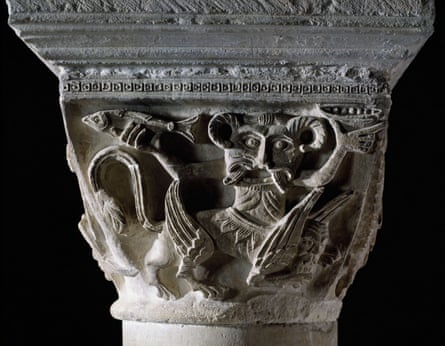
There’s a carved stone character grimacing furiously in the crypt of Canterbury Cathedral and you can see why – a man is sitting on his head, legs apart, holding a fish and bowl in outstretched arms. Other figures perched atop slender stone columns include a creature with a serpent’s tail wrestling a dog-like monstrosity, a gryphon eating a siren, and a (now-detached) carving of a horned devil. All this nefariousness in the depths of England’s holiest shrine.
But then medieval British art is full of wonder, mystery and humour. It is also so abundant that it gets taken for granted. But now, after almost 1,000 years, it is about to have a moment. This week, the rush will begin to get £33 tickets to spend 40 minutes in the company of a medieval British artwork. The Bayeux Tapestry, a 70-metre embroidery depicting the Norman conquest of England in 1066, was almost certainly embroidered by Kent women to a commission by Bishop Odo of Bayeux in the 1070s.
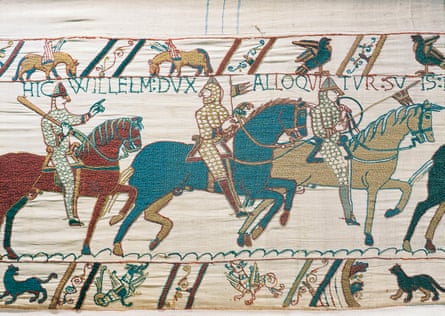
After surviving for centuries as a treasure of Bayeux in Normandy, its loan to the British Museum in London is exciting but ironic – for, while the fuss is understandable, it is not as if we don’t have other superb medieval art and architecture. Perhaps Bayeuxmania should make us dust off our Romanesque and gothic treasures and appreciate them more. And if you quail at the queues to see the Tapestry, it may be a pleasant surprise to find that most of these other marvels involve much less money and hassle.
Medieval art came to Britain with the Normans. I don’t mean to insult Anglo-Saxon England but as the Bayeux Tapestry shows, with its images of William (later known as the Conqueror) and his men charging about on horseback or building a castle, continental Europe was slightly more advanced. By 1066, it had crystallised into feudal societies – the world of lords, knights and peasants bound by oaths and unified by Christianity. This was an artistic golden age in France and across Europe, with the building of great Romanesque abbeys and churches. Immediately after the conquest, this style hit Britain, led by Lanfranc, the Italian monk who was made Archbishop of Canterbury by King William I.
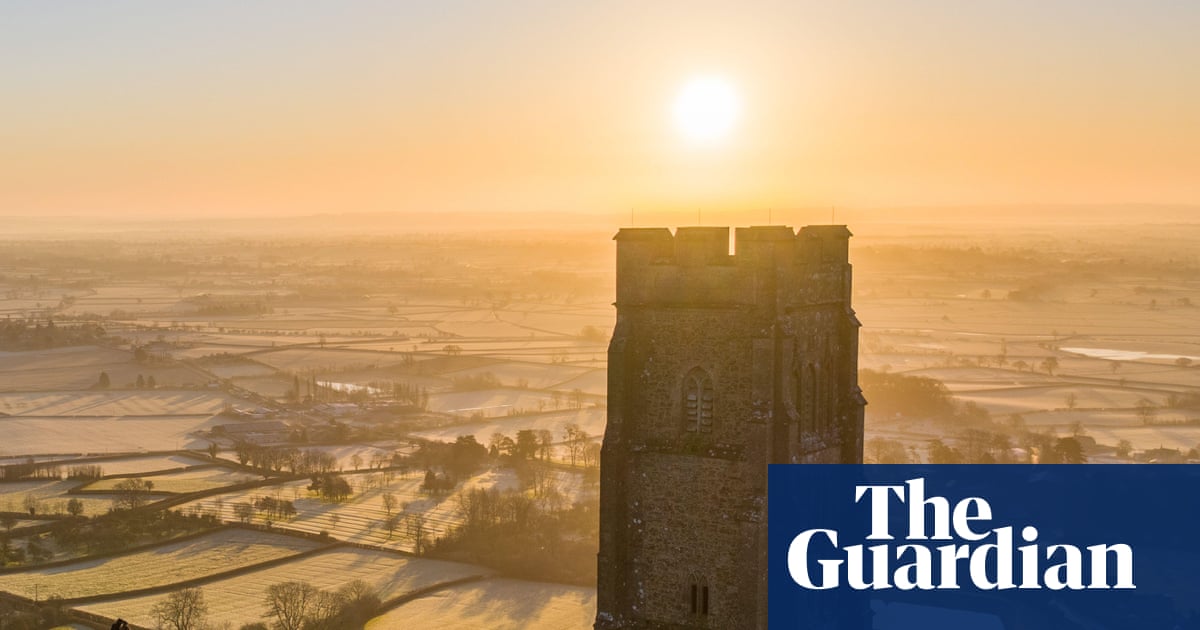
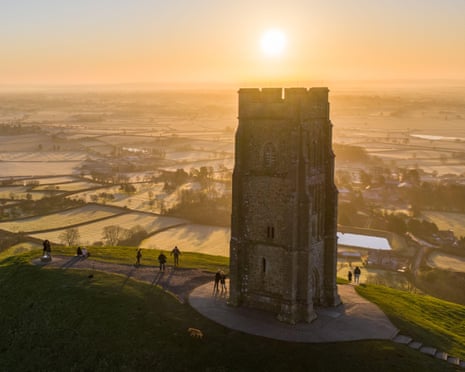
It costs nothing to look at a view and the middle ages created some of Britain’s best. Glastonbury Tor haunts imaginations with its enigmatic tower, built on top of a lonely steep hill. Is it the place King Arthur died? The question endures even though the tower is that of a 14th-century church, its dreamy location typical of the medieval eye for the picturesque.
Conwy Castle at the mouth of the eponymous river occupies a highly strategic position on top of a massive rocky outcrop. Yet you can’t tell me its 13th-century architect, James of St George, didn’t have an eye for beauty. The towers and turrets of this gothic castle dance in a complex rhythm against the mountains and sea. With the original roofs, pendants and banners, it must have looked even more like something from a fairytale.
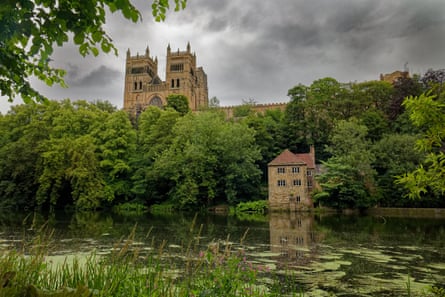
I got my first art thrills as a child gazing up at it. As an adult, I felt that childish excitement again the first time I stood by the River Wear and looked up at the two square towers of Durham Cathedral perfectly poised – as if this were God’s castle – on top of a high promontory to command the wooded landscape, dark flowing river and bridges. These are gold-standard vistas – or so JMW Turner thought, and who’s to argue with him? The landscape artist painted sublime views of these and other medieval sites throughout Britain.
Medieval Britain had a compelling sense of landscape because it was more in touch with nature than we are. In the 14th-century Lady Chapel of Ely Cathedral, blooms and bursts of grape-like seeds and nuts hang in steep-arched niches creating the effect of a spring hedgerow exploding with life. It’s the visual equivalent of Chaucer: “Whan that Aprill with his shoures soote …”
Yet although the medieval world was in touch with nature, it was also addicted to fashion. New styles kept replacing old. Is that stained-glass window Romanesque or gothic? Romanesque arches and vaults, dating from the 11th and early 12th centuries, are semi-circular while the gothic style that soon took over has pointy arches and expanses of glass made possible by flying buttresses that directed the weight of buildings away from their walls. And then there are intricate variations on gothic: the decorated, the perpendicular.
In reality, all these styles evolve upwards (literally) towards the same dream: depicting heaven on Earth. The most ambitious creations of this era, the cathedrals, are as much installation art as architecture, using light, space, sculpture and sheer scale to create a sense of God’s enveloping power. Medieval Christianity was not something you chose. It surrounded you and defined the world. The vaults of cathedrals enclose you, just as in the medieval cosmos the vault of heaven arched over the little Earth with its villages, fields and spires.
Salisbury Cathedral in Wiltshire makes the connection between heaven and Earth explicit with its spire, the tallest in Britain. Is this pure pinnacle, seeming to spurt like a fountain out of the building, architecture or sculpture? Perhaps it’s land art, for as well as pointing up it provides a focus for Salisbury Plain itself, as if channelling the landscape into a single upward bolt of energy.
The interior of Durham Cathedral works in the opposite way: massive circular columns along its nave seem to plant themselves in the earth like the legs of a giant elephant. God’s power seems to have inflated and fattened them – but their mass is lightened by geometry. Each stone cylinder is incised with zigzags, spirals, lozenges or fluting. You start out awed by the immensity and end up entranced by the masons’ ingenuity.
James of St George made the towers of Conwy a game of perfect circles. But he built Caernarfon Castle with no curves at all: its dazzling towers are polygon-shaped. Caernarfon has sculptures too. Three stone eagles glare from it, embodiments of the power of Edward I, who commissioned these castles to quell the Welsh. Conquest and kingship: we’re back to the themes of the Bayeux Tapestry. The art and architecture of medieval Britain creates visions of order: you are meant to be overwhelmed by cathedrals, intimidated by castles.
Yet even in the early middle ages, that sense of discipline, of gazing up at God’s heaven and the king’s rule, produced, by a kind of natural revulsion, images of disorder. The grotesque carvings in Canterbury’s crypt are the antidote to the cathedral’s solemnity. This is a universal underside of medieval art, with monstrosities and miscreants inhabiting the margins of manuscripts, naked people cavorting on the Bayeux Tapestry’s borders, and a mermaid with exposed breasts carved in the chapel of Durham Castle.
Gradually, the margins overran the centre. Christian austerity and martial strength were transformed into a fantasy realm of gallant knights fighting tournaments to woo their ladies. Beaumaris in Anglesey seems like a play castle, with low towers surrounded by reflective water. Chivalry and courtly love even infect gothic religious art. One reason Ely’s Lady Chapel so offended Protestant iconoclasts, who smashed its statues, is that it was a huge sculptural hymn of love to the Virgin Mary, wooing Our Lady with artistic gifts.
after newsletter promotion
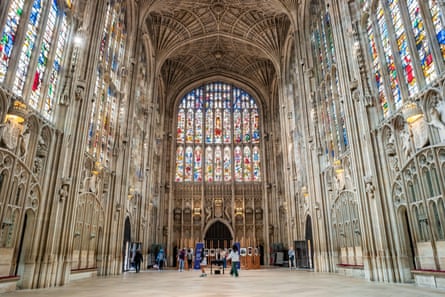
Late English gothic gets swept away with sensual, wispy romance. Fan vaulting, a uniquely English style, is far from the tough-minded godly power of Durham. The interior of King’s College Chapel, Cambridge, seems like a cluster of fairy mushrooms growing from the ground on tall stone stalks, radiating above you in a near hallucinogenic canopy of exaggerated natural forms.
Sensuality almost defeats religion in the Wilton Diptych, a portable aid to prayer painted for King Richard II in 1395-99. Richard kneels before a vision of the Virgin Mary and a host of blue-and-white-winged angels: the play of blue against gold and the king’s self-regarding, romanticised relationship with Our Lady is a long way from the singleminded Normans. It is an anonymous painting, but by the 15th century more artists were becoming celebrities. In the 1470s, Edinburgh’s Chapel of the Holy Trinity commissioned a great altarpiece with organ-playing angels and a saint in shining armour from the famous Flemish painter Hugo van der Goes. Today the painting is in the Scottish National Gallery, while Trinity Chapel survives as a much-reduced husk in the Old Town, where it was moved to make way for the city’s Victorian railway station.
If the art of feudal Christendom came to Britain with the Normans in 1066, its end can also be exactly dated. When Henry VIII started the state destruction of monasteries in 1536, a whole cultural world was demolished. Yet it’s amazing how much medieval British art survives – to set our imaginations alight with its sublime messages from another world.
Great medieval art you can see for nothing
Durham Cathedral
Entrance to the most stupendous British cathedral of all is free, although a £5 donation is good manners and it’s well worth buying a ticket for its museum to see St Cuthbert’s relics.
The Lewis Chessmen
These Scandinavian-carved ivory chess pieces portray feudal society in all its ranks, including knights like those on the Bayeux Tapestry. In the British Museum’s free permanent galleries.
Norham Castle
The towering keep of this castle in Northumberland once guarded the border country and later inspired one of Turner’s wooziest paintings – English Heritage, no entry charge.
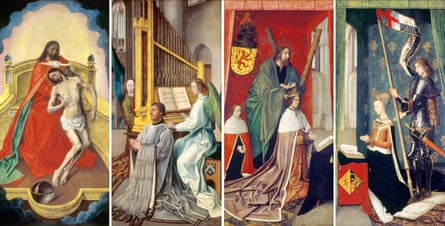
Edinburgh’s Holy Trinity Chapel commissioned Hugo van der Goes to paint this gothic masterpiece with its organist angel and a saint in shining armour. Free at the Scottish National Gallery.
Flint Castle
This free entry seaside ruin in north Wales is where Richard II sat on the ground and told sad stories of the death of kings, waiting to be deposed by Bolingbroke.
-
Tickets to the Bayeux Tapestry at the British Museum, London, go on sale 1 July
Explore more on these topics