


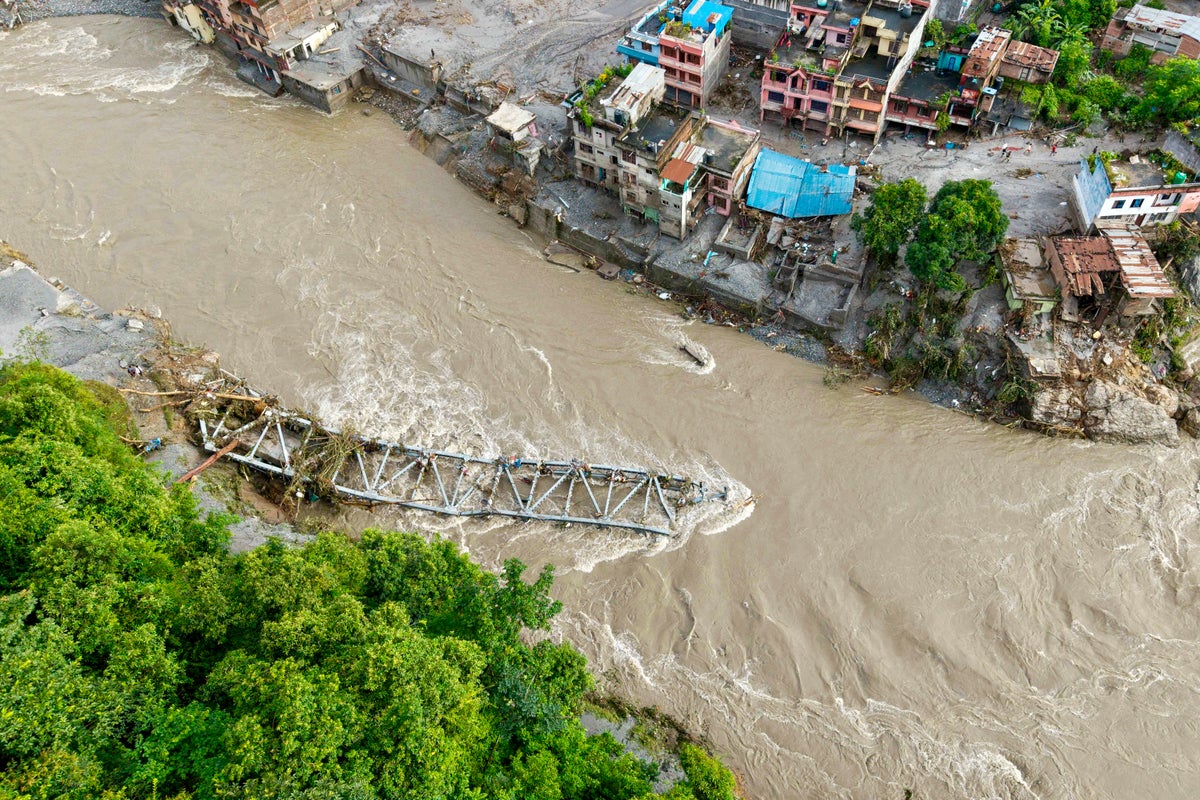
Nearly 1,500 people are missing across Nepal and Tibet, authorities said on Thursday, as rescuers used helicopters to search a Himalayan valley devastated by flash floods a day earlier.
Police in Nepal said they expect the death toll, already above 160, to rise further as search teams reach areas cut off since Wednesday.
Almost 600 foreigners were among 826 people missing in Nepal, police and tourism officials said, with travellers from more than two dozen countries unaccounted for.
 open image in gallery
The largest group, 177 people, were from India, followed by 63 from the United States, 34 from Australia, 33 from Britain and 25 from Canada.
In Tibet’s Gyirong county, the missing tally stood at 558, including 260 foreign nationals, Chinese state broadcaster CCTV reported.
Follow our live updates from Nepal here.
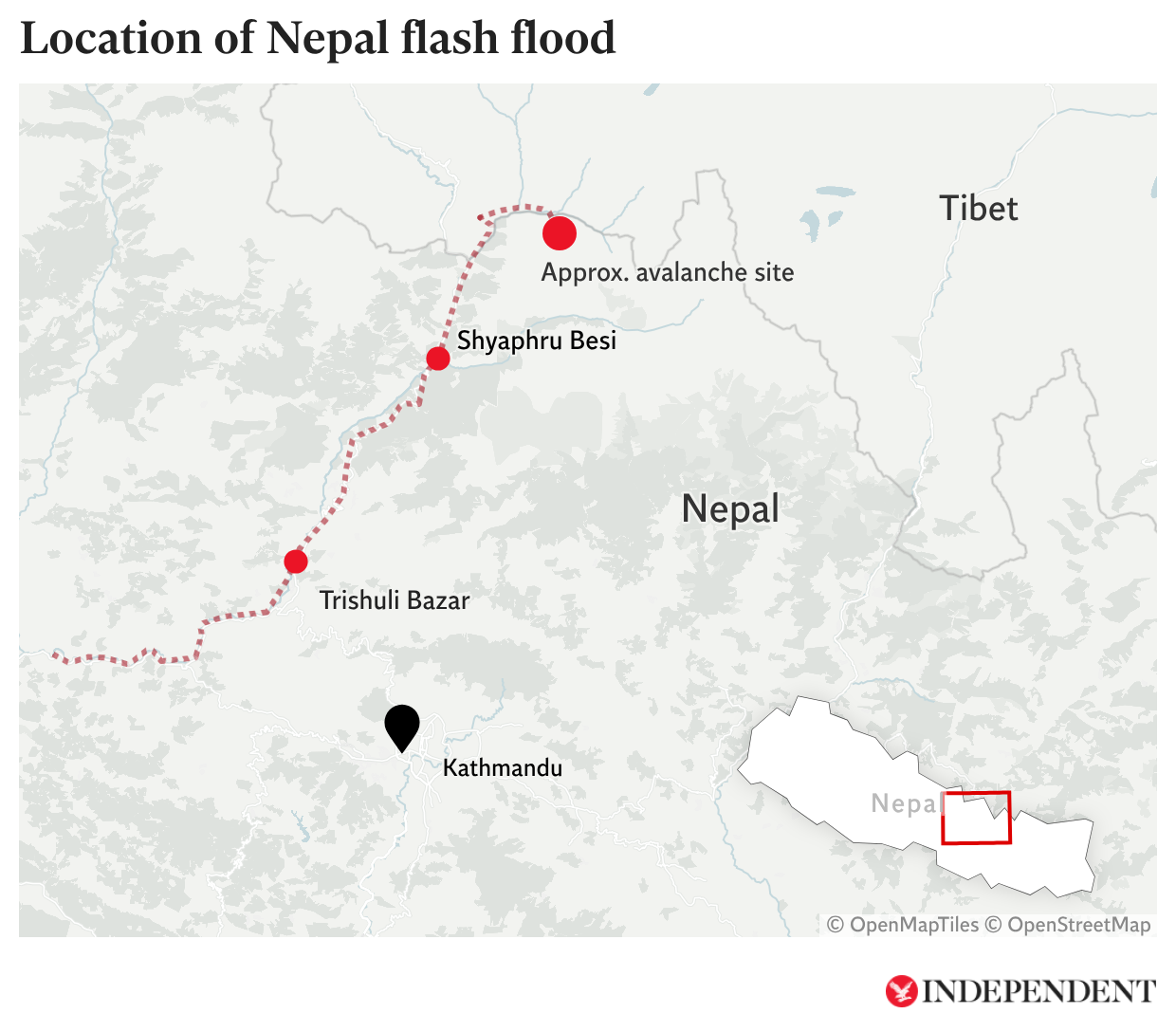
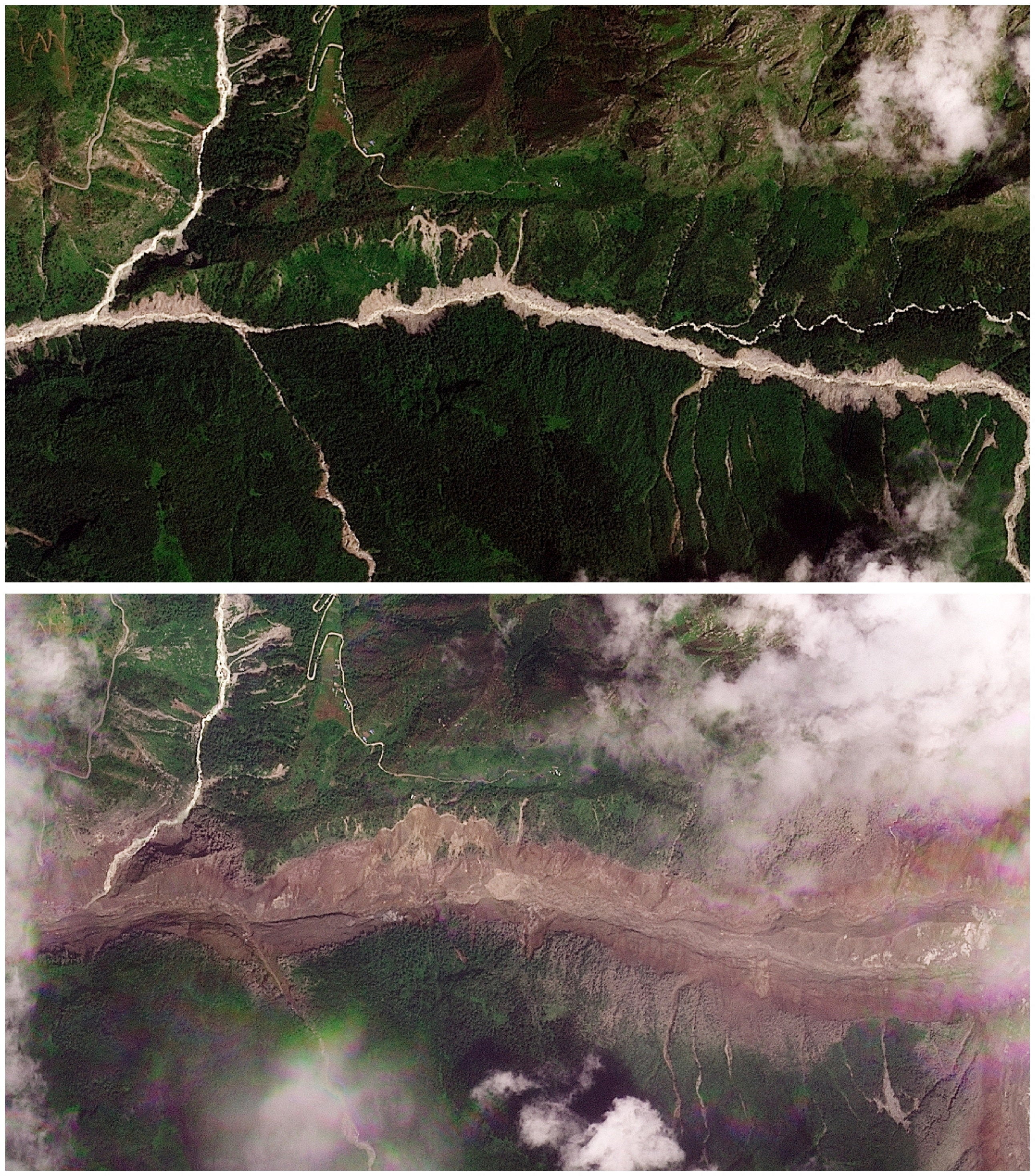
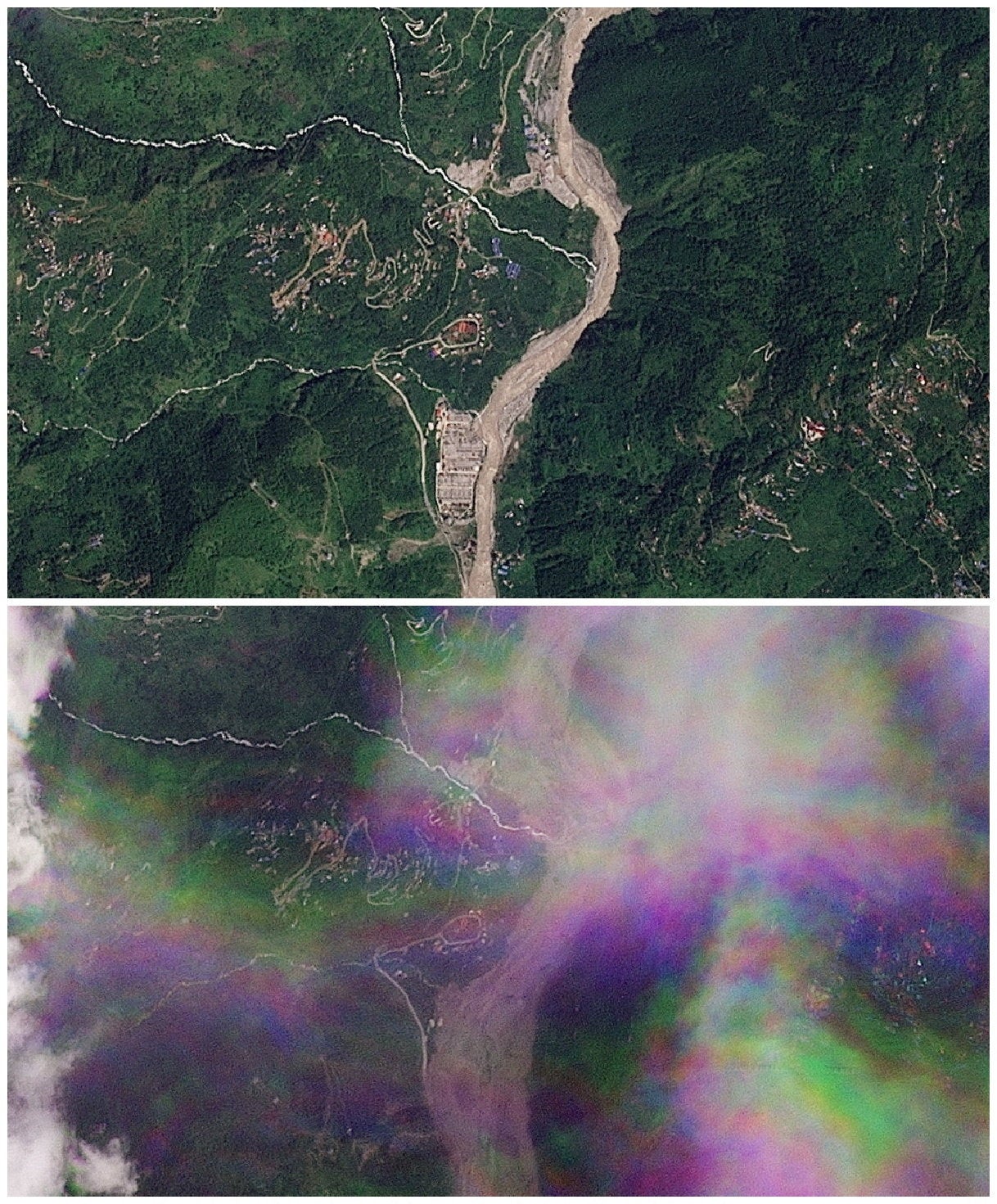
The disaster began when a landslide of ice and rock struck the Lhende river, a tributary that meets the Bhotekoshi roughly 20km northeast of the Rasuwagadhi border crossing with Tibet, according to an initial analysis of satellite imagery cited by Nepal’s disaster management authorities.
 open image in gallery
The collapse sent a debris-laden surge down the Lhende into the Bhotekoshi, then into the Trishuli river, carrying mud, rock and water through the border town of Gyirong on the Tibetan side before crossing into Nepal’s Rasuwa district.
Chinese authorities have since warned of a further risk from a separate, still-dammed lake upstream of the border crossing in Gyirong county, which they said could complicate rescue efforts.
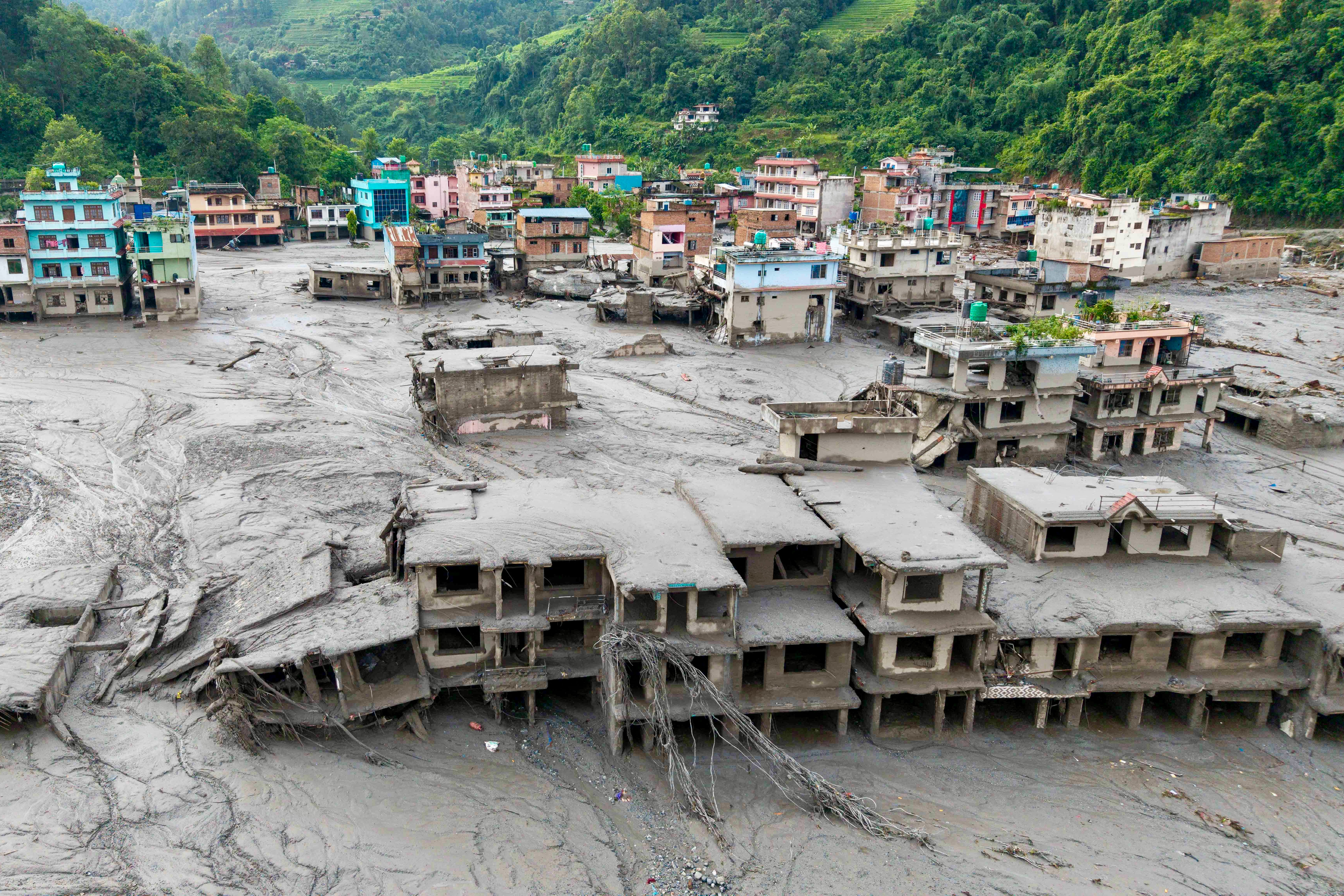
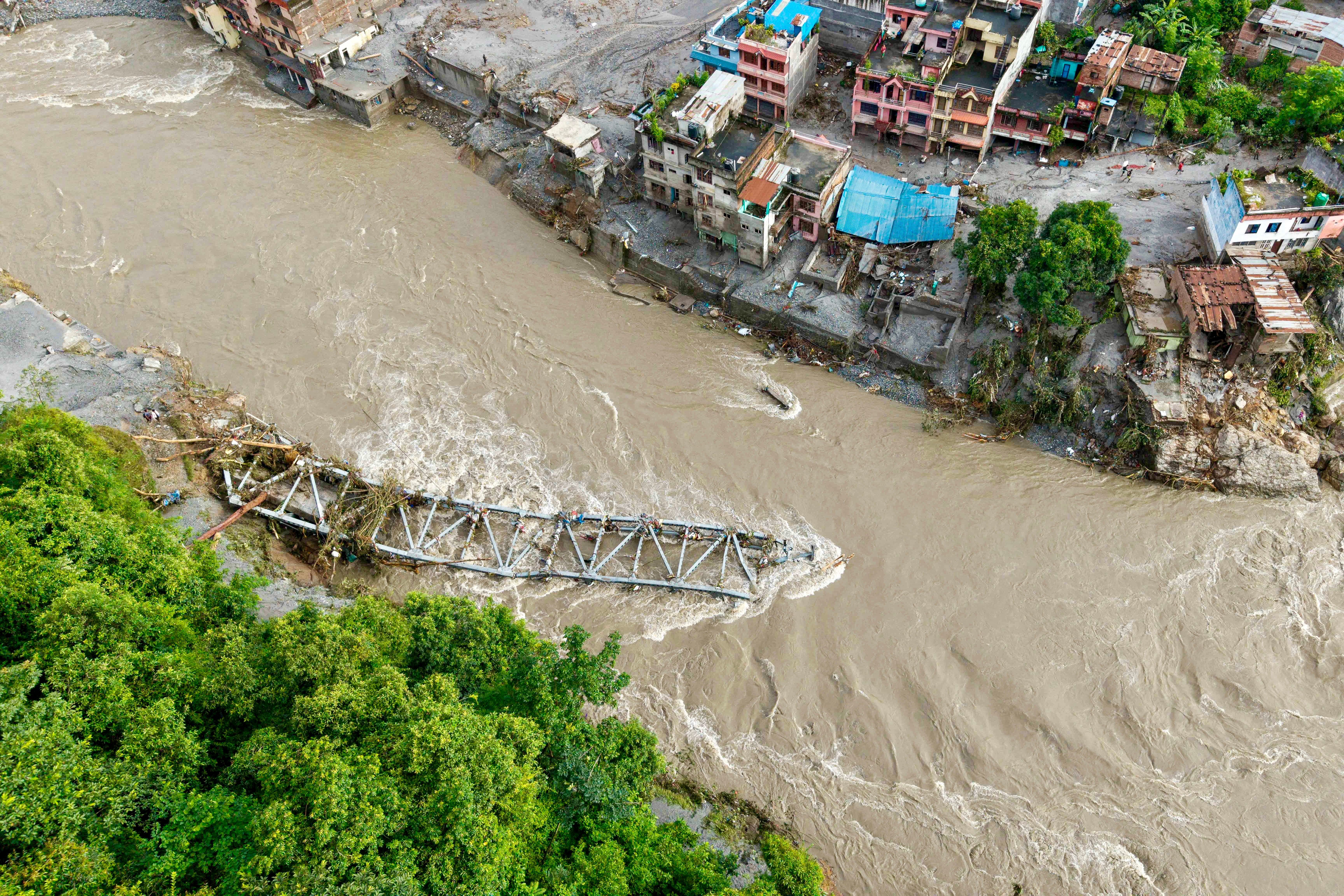
Villages including Manakamana and Khadga Bhanjyang, both in the flood’s direct path, were largely destroyed.
Downstream, the surge passed through Nuwakot and Dhading districts, where families gathered near an army training centre being used as a base for helicopter rescue operations.
 open image in gallery
Survivors described the water arriving without warning.
Keshav Prasad Baral, a 68-year-old being treated in hospital, told Reuters he tried to pull his wife to safety as mud engulfed their home. “As it got closer, it kept rising higher and higher,” he said.
“I tried to grab my wife’s hand and take her to the terrace, but she was swept away by the mud.” He was airlifted to safety four hours later.
Another survivor said he saved himself by clinging to a mango tree as he watched the house where he had been working disappear.
 open image in gallery
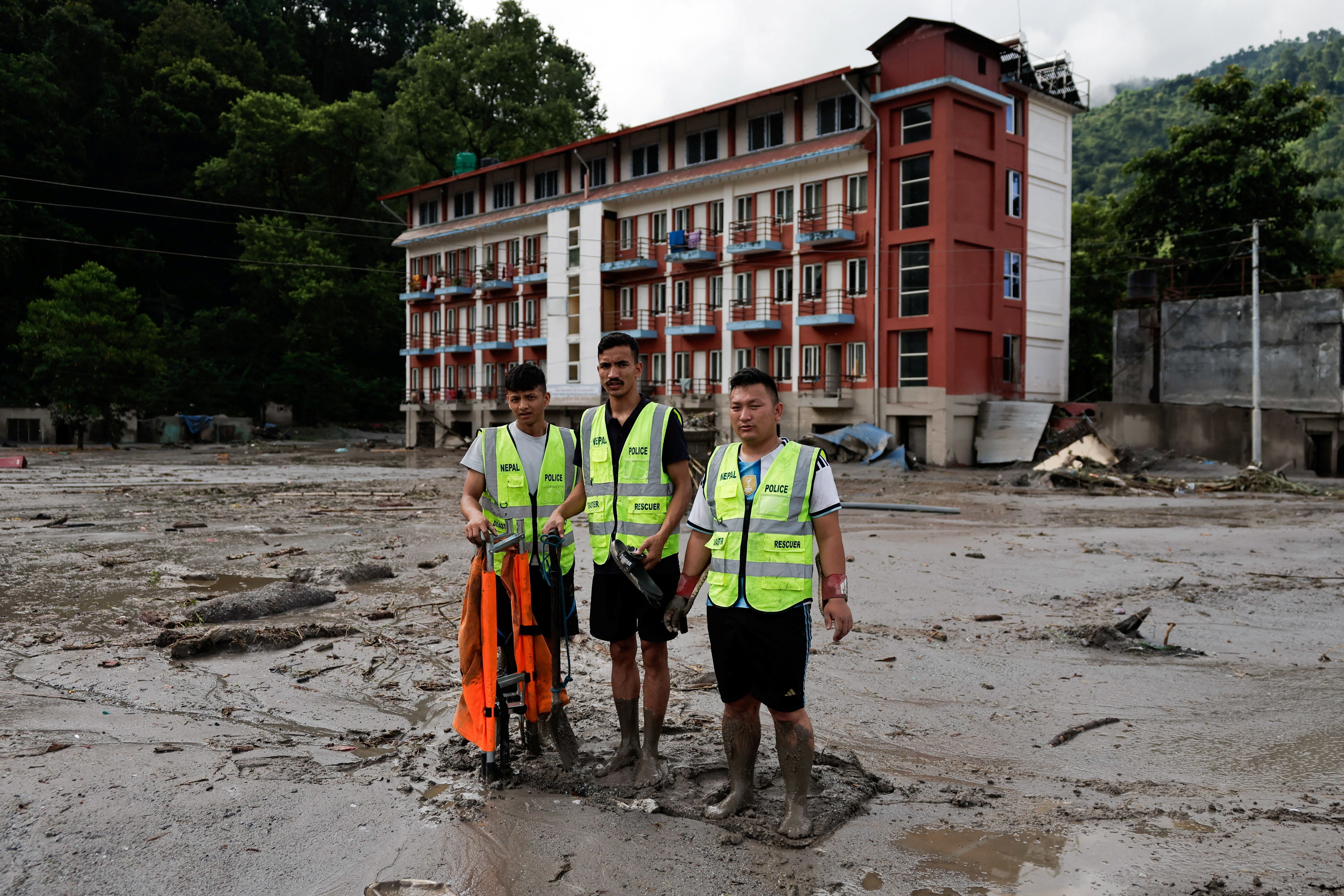
More than 5,000 army and police personnel have been mobilised to search for survivors and recover bodies, Raja Ram Basnet, a spokesperson for Nepal’s army, told Reuters.
Helicopters have been dropping tents, food and other emergency supplies provided by India to communities cut off by the disaster.
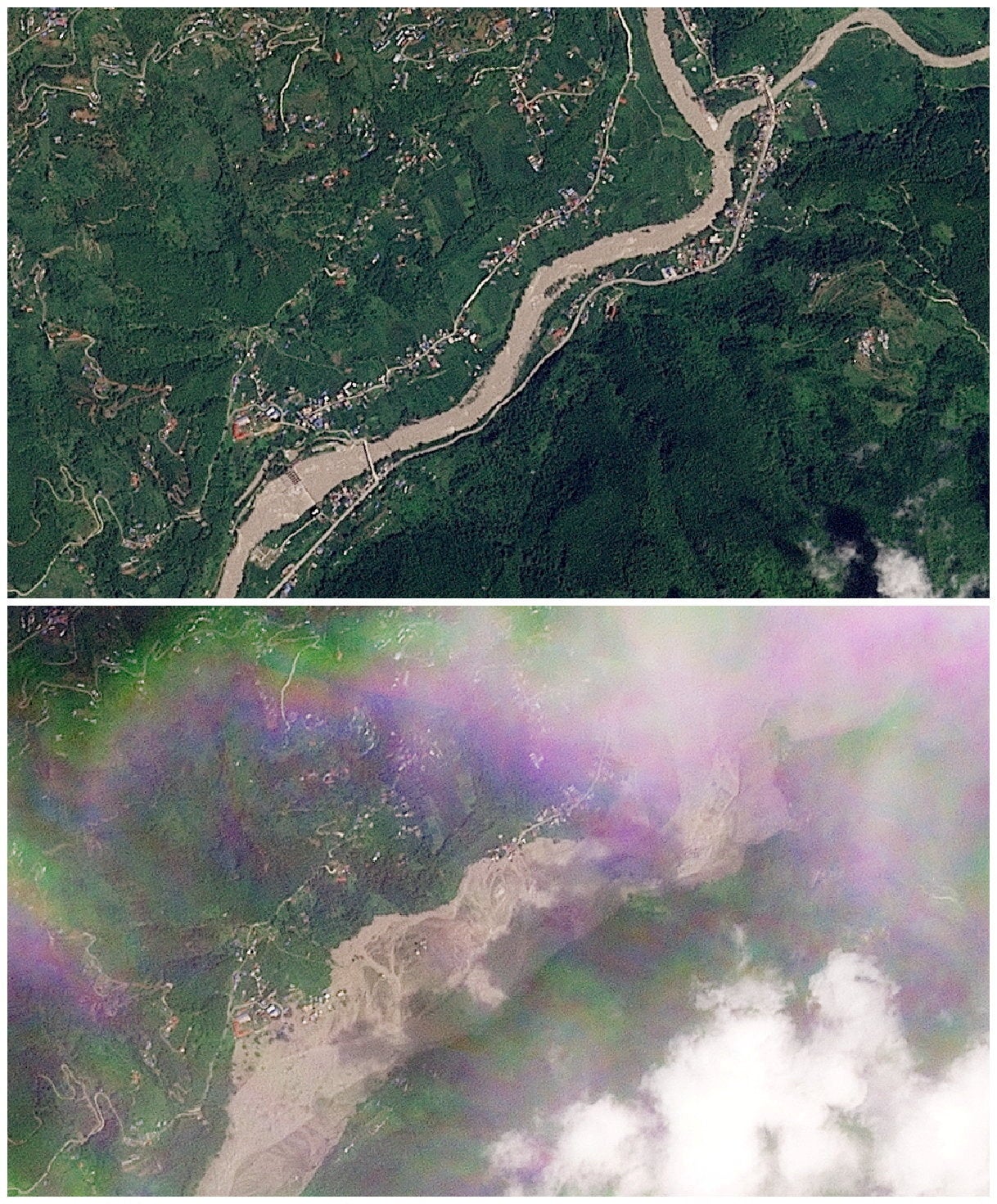
The flood’s reach has extended well beyond Nepal’s own river system. India’s National Disaster Response Force said a sudden rise in the Trishuli River was detected at Furke Khola, around 160km from the Indian border, and warned the flood wave was expected to continue downstream into the Gandak river.
 open image in gallery
Response teams have been deployed to vulnerable districts in Bihar and Uttar Pradesh as a precaution.
Early reports had suggested a separate earthquake triggered the glacial collapse, but the US Geological Survey has since clarified that the magnitude-4.4 reading it initially logged was in fact the seismic signature of the glacial rock-and-ice collapse itself, rather than a distinct tremor that caused it.
“This is a very unique disaster, in terms of intensity and speed, which had a distinct blueprint of impact on communities, and activities around immediate response and recovery,” Nader Naderpajouh, who leads the Organising Risk and Resilience research lab and is Head of the School of Project Management at the University of Sydney, said.
 open image in gallery
“The reports suggest the flood and landslide were caused by a buildup of water in the glacier, which was triggered by seismic activity.
“With global warming, there is an expectation that similar patterns of disasters will recur. We can benefit from the implementation of a warning system, similar to those triggered for tsunami warnings after 2004’s tsunami.”
 open image in gallery
The disaster has drawn pledges of support from several governments. The US said it was sending a disaster response adviser and $500,000 in assistance, while Canada, Australia and the United Nations have also offered help.
Indian prime minister, Narendra Modi, spoke to his Nepali counterpart, Balendra Shah, to convey condolences and pledge “all possible humanitarian assistance.”