


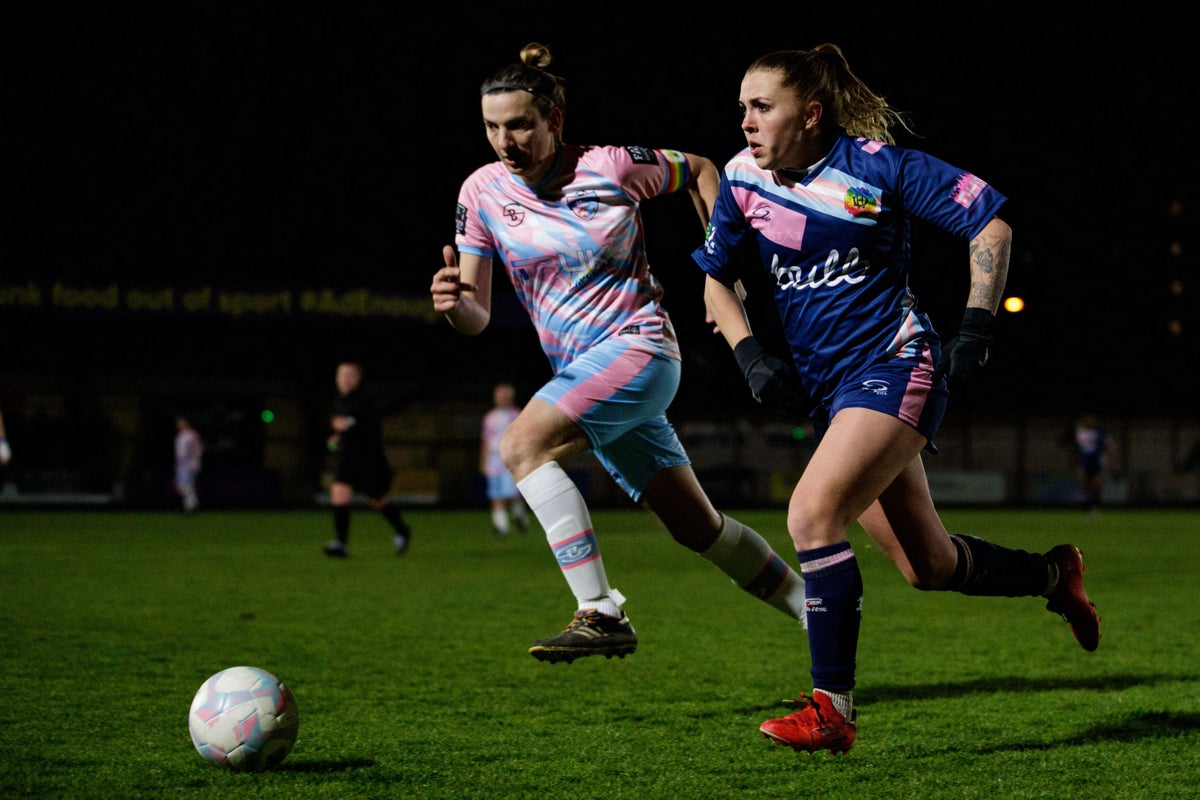
For Natalie Washington, she never imagined there would be a final whistle which would mark the end of her decade-long football career.
“I hadn’t really had the chance to step back and think, ‘Wow this could be the last game,’ and think about not playing competitive organised football again, ever,” she told The Independent. “I’m quite glad I didn’t have time to think of it.”
But instead, she experienced a “very surreal” moment where she had to hug her teammates from her beloved Rushmoor FC, based in Hampshire, goodbye after playing with them for the last time.
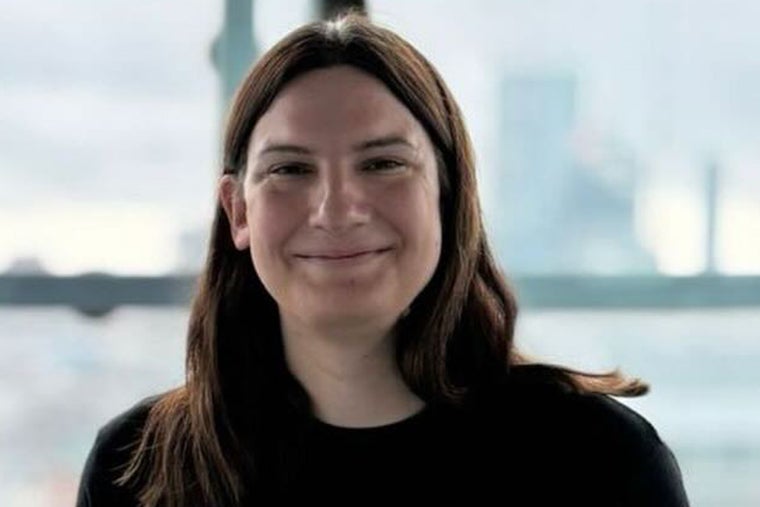
Washington, 42, was forced to step back from her team after the Football Association‘s (FA) decision to ban transgender women from playing affiliated women’s football. It began in June 2025, following April 2025’s UK Supreme Court ruling that decided for the purposes of the Equality Act 2010, the legal definition of “woman” and “sex” is based on biological sex at birth.
 open image in gallery
The ban has been criticised as a knee-jerk reaction to what Washington calls “incessant lobbying” from anti-trans groups, and she claims it didn’t properly take into consideration its impact on people’s mental and physical health.
She said the blow was felt even harder considering the FA’s slogan is “For All”, and the ban’s start date coincided with the start of the UK’s Pride Month celebrations.
When reality did eventually sink in, Washington said she became “a bit low-key depressed for a while” as she wasn’t active, and found it difficult to motivate herself.
For now, she’s channelled her energy into the advocacy work she started 10 years ago, which has never felt more important for her fellow trans football-playing community.
After reading data that said LGBTQ+ people had a lower level of activity, and were less likely to take part in team sports, Washington decided to get involved in campaigning within the sport she loved.
 open image in gallery
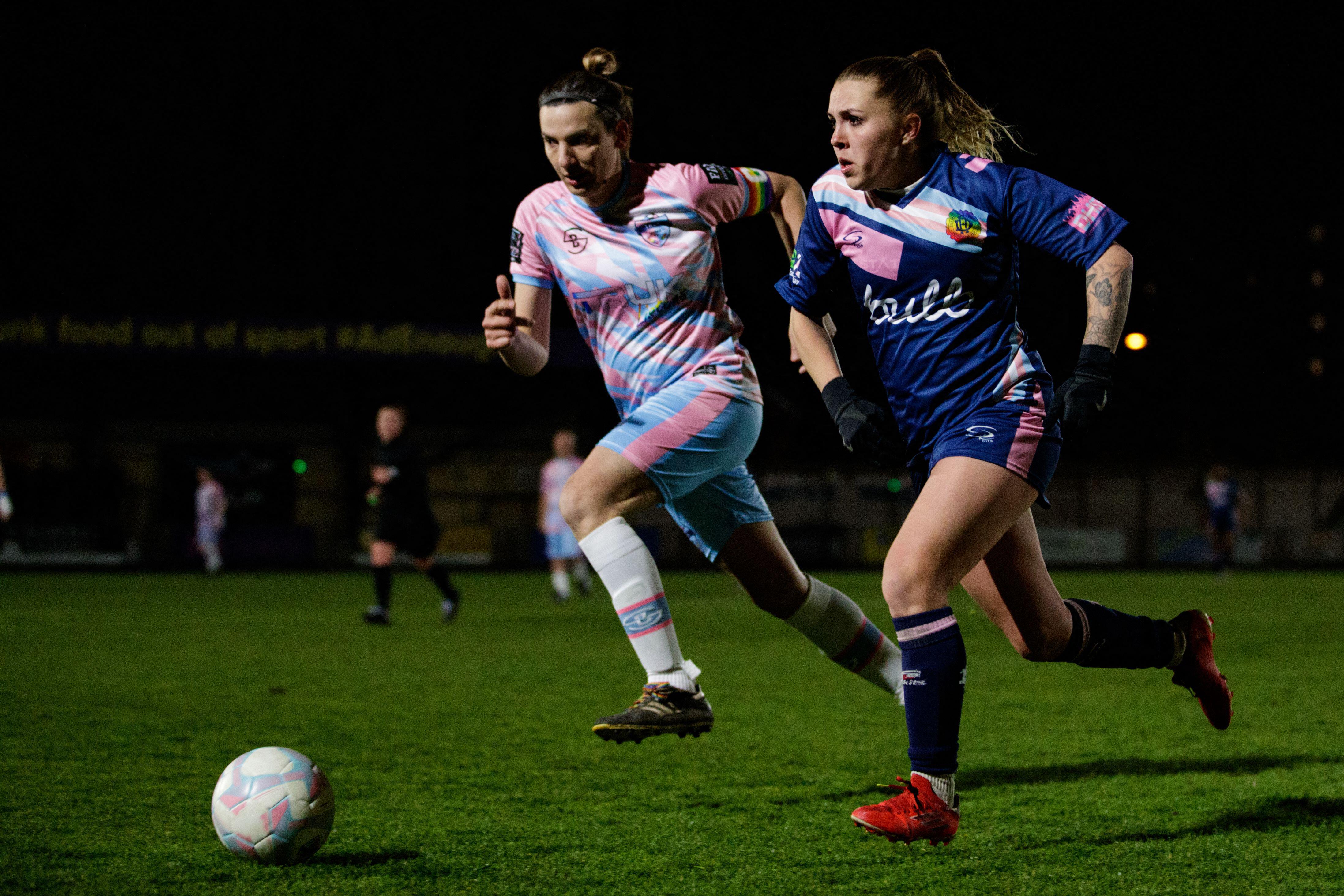
She’s now the director of the Football v Transphobia campaign which she founded in 2019, after working on the Homophobia v Football campaign since 2016 – both run by Pride Sports, an LGBTQ+ sports charity.
Washington said one of the campaign’s best aspects is its ability to “reach people through football that we can’t reach in other ways… who don’t have any positive role models of queerness” within the sport.
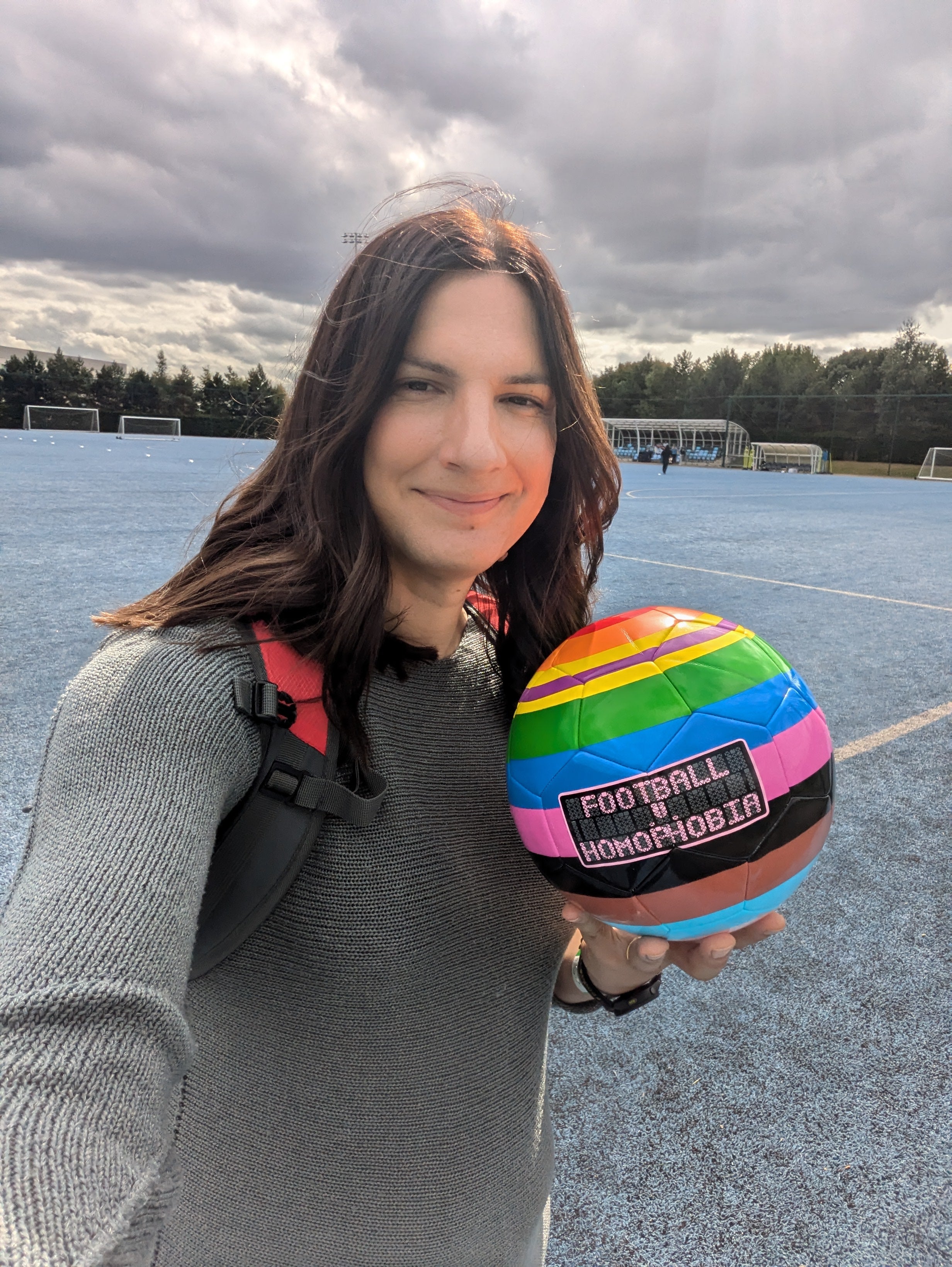
She has also been named on The Independent’s Pride List 2026 for her advocacy work, after she was given the prestigious EGLSF (European Gay and Lesbian Sports Federation) Advocacy Award at the EuroGames last summer.
 open image in gallery
Since the ban, Washington and the Transphobia v Football team wanted to assess the damage caused, and collated the findings in a report: “They say football’s for all, but it’s not anymore: The lived reality of the English and Scottish FA’s new trans exclusion policy for women’s football,” authored by social justice scholar Dr Jack Lopez.
“We heard the psychological impact of being banned was obviously a big thing,” Washington said. “Because of the context of what’s going on at the time, people sort of expected it, but it still was a hammer blow to a lot of people’s mental health.”
She said the ban was felt hardest by those whose football team was also their friendship group and social community. It also outed some people who then felt their identity was challenged.
“Some people felt very low, because it was their lifeline,” she explained. “Others weren’t able to train with their team anymore, while some weren’t informed of the ban by their clubs or the FA and only found out via the news. Others weren’t offered the therapy sessions the FA had said would be available.
“It seemed like there was a bit of a mess in how it was enacted.”
 open image in gallery
A spokesperson from the FA said: “Following the Supreme Court’s ruling… we decided that ultimately we had to change our policy as the legal guidance changed.
“We operated our previous policy for many years and understand that this change was very difficult for people who simply want to play the game they love in the gender by which they identify, and we reached out to our previously registered transgender women to explore how they can continue to stay involved in the game.”
For many, the FA’s suggested options to continue trans women’s involvement in football were feeble, which included coaching or becoming a referee. “A lot of people had a bit of a chuckle about it,” Washington explained.
She said it was “a non-starter” for her and many others, considering the level of abuse referees already receive – without adding in the fact they are transgender.
The FA added it has recently approved mixed football as a new playing option for adults, in a push for what it calls making the “game as accessible to as many people as possible”.
 open image in gallery
Washington feels lucky that she still has a strong connection to football, but fears the ban is mostly going to affect younger players who are just starting their footballing careers.
“It’s ended with lots of people no longer playing sport, as unless people live in bigger cities, other options don’t exist,” Washington added, referring to clubs like London’s Goal Diggers FC, for all women and non-binary people. The IT director lives in a village in West Sussex and now plays less football, apart from a six-a-side on a Sunday.
Looking to the future, Washington is unsure if there could be a ban reversal. “In the current climate, I think we could be in this situation for years,” she said. “We need some bravery from sport leadership to make that happen.”
Washington is keen to emphasise that, despite the past few years feeling like a barrage of relentless bad news for trans people, she does feel there’s still positivity.
She sees this in the form of many queer – and non-queer – people finding their voices in these challenging times, who are speaking up for human rights more widely, and not just trans rights. “I see people energised by that and a growing coalition of people who want to do good,” she added.
“It’s been tricky before, a lot of people will remember this, and they got through it, and so will we,” she concluded, quite triumphantly.
You can read The Independent’s Pride List 2026 here.