


N’Assembly threatens sanctions against MDAs defying legislative oversight
July 24, 2026 1:51 am

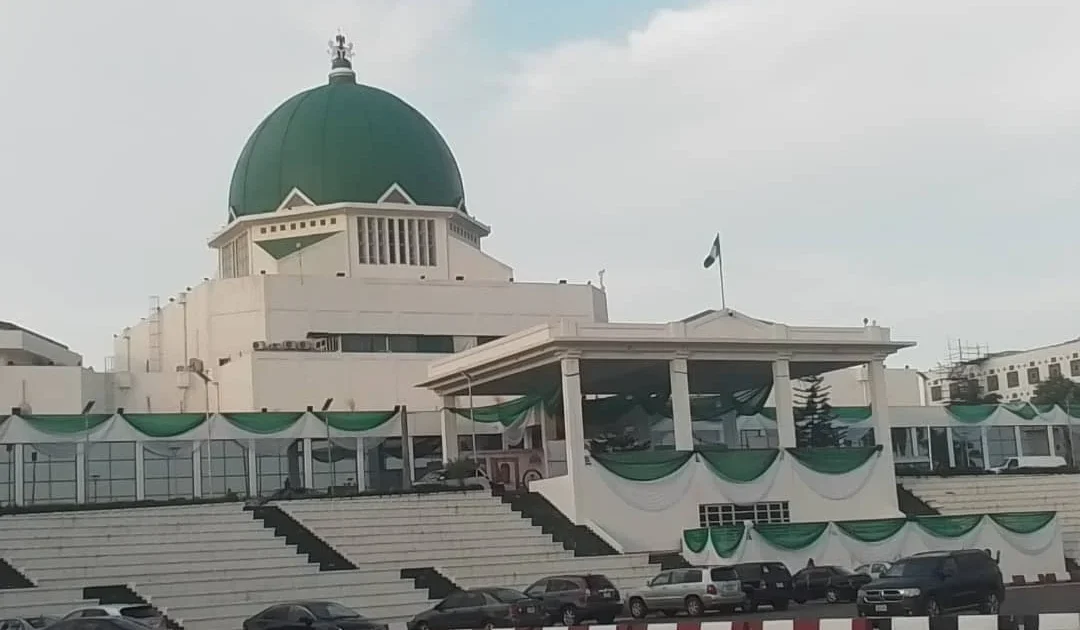
File: National Assembly complex
Adebayo Folorunsho-Francis and Dirisu Yakubu
The Senate and the House of Representatives have threatened to impose constitutional and legislative sanctions on heads of Ministries, Departments and Agencies and government-owned enterprises that fail to honour invitations from the National Assembly.
The Senate issued the warning on Thursday following a debate over the repeated refusal of some MDAs and GOEs to appear before its committees.
This is as the House Committee on Federal Character ordered the immediate suspension of recruitment activities by the Nigeria Revenue Service over the alleged defiance of its summons by the agency’s Executive Chairman, Dr Zacch Adedeji.
The Senate, presided over by Senate President Godswill Akpabio, unanimously adopted resolutions directing government agencies to comply with invitations from its committees or face sanctions under the 1999 Constitution and other relevant laws.
The resolution followed a motion on the repeated refusal of several agencies to appear before the Senate Committee on Finance, chaired by Senator Sani Musa.
Leading the debate, Abdul Ningi said the National Assembly could no longer continue pleading with government agencies to perform what he described as their constitutional obligation.
According to him, the persistent refusal of some agencies to appear before legislative committees amounted to a direct affront to the authority of the National Assembly and posed a threat to Nigeria’s democracy.
“We must start by calling their attention that this is the last warning.
“Secondly, we will write to the President to inform him that this arm of government is not being respected.
“Thirdly, no budgetary allocation to any organisation that refuses to come,” Ningi declared.
Contributing, Adams Oshiomhole (Edo North) absolved President Bola Tinubu of responsibility for the conduct of the agencies, insisting that the blame rested with the heads of the defaulting institutions.
He argued that many of the agencies had also failed to comply with the Fiscal Responsibility Act and Treasury circulars, describing their conduct as harmful to the national economy.
“Mr President should not be bothered about this matter. It is an indictment on the agencies that did not comply with the Fiscal Responsibility Act or Treasury circulars. I consider this an act of economic sabotage,” Oshiomhole said.
Orji Uzor Kalu (Abia North) maintained that the Senate already possessed sufficient constitutional powers to compel attendance and should exercise them without seeking intervention from the Executive.
“This is not the job of the President. Our job is to do oversight. Sections 88 and 89 are there. If they don’t come, we raise a warrant,” Kalu said.
Halilu Ahmed (Nasarawa West) also reminded lawmakers that Section 89(1)(d) of the Constitution empowers the National Assembly to compel attendance through the issuance of warrants.
“The power of the Senate to issue a warrant to compel attendance is fairly spelt out in the Constitution under Section 89(1)(d).
“The Clerk should write to all those MDAs, failing which the Senate should invoke its constitutional powers,” he said.
Some lawmakers, however, urged caution, advising that the Senate should insist on compliance while exercising its powers within the law and with decorum.
“We have the powers under the Constitution, but we should not speak to people without decorum. When they falter, then we make an example of them within the Constitution and our Standing Orders,” they said.
At the end of the debate, the Senate directed the Secretary to the Government of the Federation, the Head of the Civil Service of the Federation and all ministers to instruct agencies under their supervision to promptly honour invitations from the National Assembly.
Lawmakers further resolved that any agency or institution that deliberately refuses to honour Senate invitations or obstructs legislative oversight would be sanctioned under the 1999 Constitution, the Legislative Houses (Powers and Privileges) Act, the Fiscal Responsibility Act and the Senate Standing Orders.
A proposal seeking to compel the Senate President to immediately issue bench warrants against defaulting agency heads was withdrawn following procedural objections, while another prayer contained in the motion was also expunged before its adoption.
In a separate resolution, the Senate passed a motion sponsored by Adamu Aliero directing all MDAs to regularly submit their audited financial statements to relevant Senate committees in line with Section 85(2) of the Constitution.
Aliero said timely submission of audited accounts was essential for effective legislative oversight and accountability in the management of public resources.
“We cannot do oversight without seeing the books,” the senator said.
Meanwhile, the House Committee on Federal Character ordered the immediate suspension of all recruitment activities by the Nigeria Revenue Service and threatened to invoke its constitutional powers against Adedeji over his alleged repeated failure to honour invitations from the National Assembly.
The committee also criticised the Federal Character Commission and its Chairman, Hulayat Omidiran, for allegedly disregarding its directives and failing to appear before the panel.
The resolution followed a meeting in Abuja at which both Adedeji and Omidiran failed to appear despite separate invitations.
The Chairman of the committee, Idris Wase, said the panel had exhausted all avenues of engagement with the NRS leadership without success.
According to the committee, a letter dated July 15, 2026, titled “Request for Nominal Roll/Invitation to Meeting,” directed Adedeji to submit a comprehensive and up-to-date nominal roll of the service and appear before the committee on Wednesday, July 22, at 2:30 p.m. in Room 247 of the House of Representatives Wing of the National Assembly Complex.
However, Adedeji did not attend the session.
Lawmakers disclosed that the latest invitation followed at least seven previous correspondences, all acknowledged by the NRS, but allegedly ignored.
The letters were dated October 13, 2023; November 7, 2023; March 14, 2024; July 3, 2024; July 16, 2024; April 1, 2026; and July 15, 2026.
The committee said the continued refusal to respond to its requests constituted a violation of the principles of accountability expected of public institutions.
The latest confrontation also centred on recruitment waivers reportedly granted by the Federal Character Commission to the NRS despite an earlier directive from the House committee instructing the commission not to approve any recruitment exercise for the revenue agency pending legislative scrutiny.
Omidiran also failed to appear before the committee.
In a message to lawmakers, she attributed her absence to official travel and subsequent illness.
The explanation, however, did not satisfy members of the committee, who said her absence was part of a pattern of repeated failure to honour invitations.
The lawmakers described the conduct as “unacceptable and inconsistent with the standards of accountability expected of public officeholders.”
The committee further described the commission’s decision to grant recruitment waivers to the NRS as “a direct affront to the constitutional oversight responsibilities of the House of Representatives and a disturbing disregard for the authority vested in the National Assembly by the Nigerian people.”
Consequently, the committee directed the FCC to immediately suspend all recruitment activities involving the NRS until both institutions appeared before the panel and fully complied with the ongoing oversight exercise.
Speaking after the meeting, Wase warned that the House would not tolerate attempts by government agencies to ignore lawful directives issued by Parliament.
“The National Assembly is the voice of the Nigerian people. Its constitutional oversight powers are not symbolic. They are binding instruments of accountability. No agency, commission, or public official is above the Constitution or beyond the reach of parliamentary oversight,” he said.
He added that legislative oversight “is not optional, nor is it a matter of convenience for heads of government agencies.”
The committee also cautioned that repeated refusal by public officials to honour invitations from the House could weaken democratic accountability and erode public confidence in governance.
It reaffirmed its determination to invoke every constitutional and legislative mechanism available to compel compliance with its directives.
All rights reserved. This material, and other digital content on this website, may not be reproduced, published, broadcast, rewritten or redistributed in whole or in part without prior express written permission from PUNCH.
Contact: [email protected]