


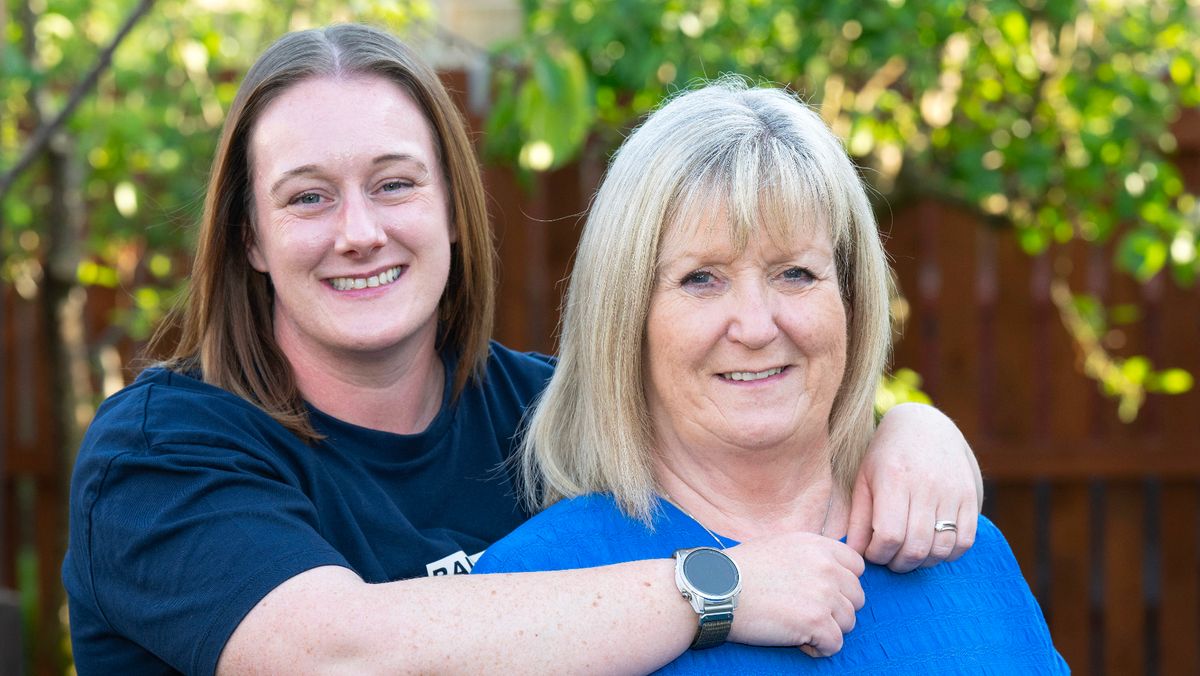
A Motherwell woman has shared her cancer story as a charity encourages members of the public to stay safe in the sun during the summer months.
New analysis from Cancer Research UK has revealed that the number of cases from the most serious form of skin cancer – melanoma – have hit record highs in Scotland, as the charity urges people to stay safe in the sun.
The charity warns that these numbers are set to soar. By 2040, there could be a record around 2,500 new cases of the disease every year. That’s an increase of 90% in men, and 31% in women.
Mum of two Michelle Harris, of Motherwell, was diagnosed with melanoma in November 2019. She was on a family holiday to Finland in the summer of 2019 when her husband Alistair Harris, 46, first flagged that a mole on her back had changed shape and was growing larger.
Michelle had also noticed that the mole had become itchy. She made a GP appointment and was referred to University Hospital Monklands in Airdrie for tests which confirmed she had cancer.
Breaking the news to her children Abby, 18, and Kaden, 14, was tough.
Michelle, now 39, said: “I was very matter of fact and open when I told the children I had cancer.
“I explained the doctor had told me it was stage 2b melanoma so they had got the cancer early. Although I had to go through an operation I was going to be okay.
“I just had to get on with things. It was good the NHS was there to look after me so well and my GP was fantastic.”
Michelle, a teacher, had day surgery on November 30 2019 to remove the mole as well as lymph nodes from under her arms. She recovered well.
No further treatment is now required but she has regular check ups on other areas of her body where there are moles. Michelle has joined the running club, the Strathaven Striders and last year completed Cancer Research UK’s Race for Life in Glasgow.
Michelle said: “I think it’s really important to raise awareness about skin cancer.
“We need to get a message out there that it’s vital to protect your skin. This includes covering up with clothes, a wide brimmed hat and spending time in the shade, especially between 11am and 3pm.
“I think there are so many steps we can take to prevent melanoma from happening to people in the future.”
Overall, women are more likely than men to be diagnosed with melanoma skin cancer at younger ages. However, in later life, rates are higher in men.
Higher rates in younger women are likely to be driven by more sun exposure, including sunbathing and sunbed use.
For older men, higher rates may be linked to long-term sun exposure. It’s also likely that overdiagnosis, diagnosing cancers that wouldn’t go on to cause harm, could be playing a role in rising rates.
With sunny weather expected this bank holiday weekend, Cancer Research UK wants people to enjoy the sun safely.
The charity is advising people to spend time in the shade, cover up their skin and apply sunscreen with a minimum SPF of 30 and a four or five star rating.
 View 2 Images
Michelle Harris with her daughter Abby(Image: WSH)
Chief executive officer of Cancer Research UK, Michelle Mitchell, said: “It’s concerning to see the rising number of people being diagnosed with melanoma skin cancer.
“The fact that most of these cases are preventable underlines the importance of people taking sun safety seriously.
“Take care when the sun is strong by seeking shade, covering up and applying sunscreen and, if you notice any unusual changes to your skin, contact your GP.
“Whether it is a new or changing mole, a sore that doesn’t heal, or an area of your skin that looks out of the ordinary, it’s important to get it checked out.
“It probably won’t be cancer, but if it is, getting it diagnosed and treated early can make all the difference.”
Around eight in 10 melanoma cases in Scotland are caused by too much UV radiation from the sun and sunbeds, so staying safe in the sun is key to reducing the risk of skin cancer.
Overall increases in skin cancer cases largely reflect Scotland’s growing and ageing population. Meanwhile, an increased public awareness of melanoma has also contributed to more people being diagnosed with, and treated for, the disease.
Fortunately, vital developments in research, early diagnosis and treatment are helping people with melanoma skin cancer to live longer, better lives.
With warmer weather fast approaching, more people are likely to head outside when the UV index is moderate or high. Cancer Research UK and NIVEA Sun have joined forces to share advice and tips on how people can enjoy the sun safely:
- Seek shade – Especially between 11am and 3pm in the UK. Take a break under trees, umbrellas, and canopies, or go indoors.
- Cover up – With clothes, a wide-brimmed hat and UV protection sunglasses. Clothing should cover your shoulders. The more skin that’s covered by your clothing, the better the protection.
- Apply sunscreen – With at least SPF 30 and four or five stars. Make sure to reapply it regularly and generously, especially after swimming, sweating, or towelling.
Head of health information at Cancer Research UK, Fiona Osgun, said: “Sunburn is a clear sign your skin has been damaged. Whether you are enjoying being outside abroad or at home, it’s important to protect yourself from the sun.
“Sunburn doesn’t only happen when it’s hot – it can happen on cooler or cloudier days too. The best way to protect your skin when the sun is strong is to use shade, particularly in the middle of the day, cover up, especially your shoulders, and wear a hat and sunglasses and finally, wear sunscreen, with at least SPF 30 and four or five stars.
“Make sure you put plenty on and reapply it regularly. Even if you’ve been sunburnt before, it’s never too late to start protecting your skin.”
For more sun safety advice visit cruk.org/sunsafety
*Don’t miss the latest headlines from around Lanarkshire. Sign up to our newsletters here.
Article continues below
And did you know Lanarkshire Live had its own app? Download yours for free here.