


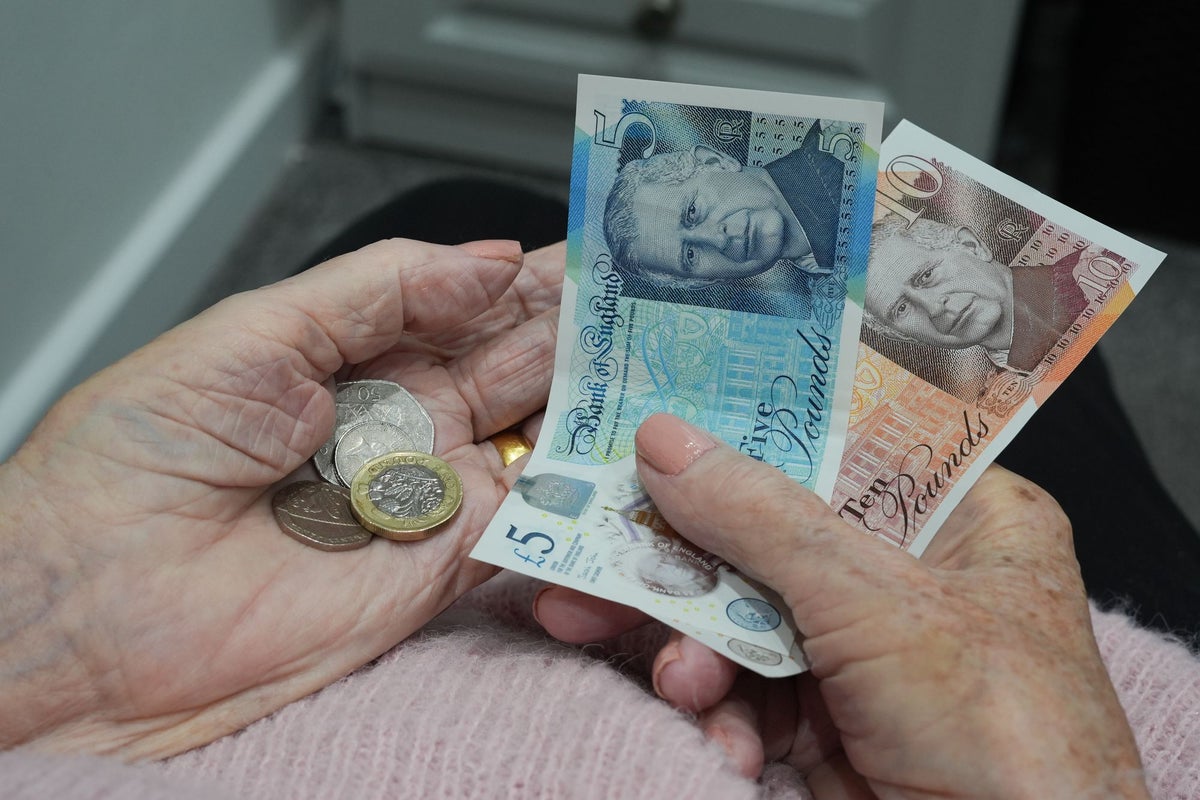
Around 12.2 million adults across the UK face the prospect of being unable to cover their fundamental financial needs during retirement, a new report estimates.
However, the analysis published by Scottish Widows indicates a notable improvement compared to the previous year, when an estimated 15.3 million individuals were not on track to meet even the minimum required for their later years.
This positive shift has been partly attributed to individuals not saving into a pension experiencing gains elsewhere, such as pay rises, increased non-pension savings, or higher rates of homeownership, the report found.
A reduction in energy costs has also contributed by lowering the benchmark for household living expenses.
However, researchers cautioned that this progress could swiftly be reversed, as global events are already pushing energy prices upwards once more.
Scottish Widows’ national retirement forecast incorporated retirement living standards established by Pensions UK, which are designed to help pension savers visualise their potential lifestyle in retirement.
The Scottish Widows forecast projects retirement outcomes for people aged 22 to 65 based on their savings, behaviours and income sources, comparing expected income to potential living and housing costs in retirement and is based on a survey of around 6,000 people.
YouGov carried out the survey in February.
Some groups of people are particularly likely to be at risk of poverty in retirement, the report found.


Get a free fractional share worth up to £100.
Capital at risk.
Terms and conditions apply.
ADVERTISEMENT
Get a free fractional share worth up to £100.
Capital at risk.
Terms and conditions apply.
ADVERTISEMENT
The report said: “Fewer than one in five full-time employees face pension poverty, whereas more than a third of those who are in part-time employment or are self-employed face a less than minimum retirement lifestyle.
“While increases to contribution levels under automatic enrolment can reduce pension poverty, it’s important to remember that those self-employed and those that work part-time jobs below the earnings threshold are not currently automatically enrolled.”
It added: “Focusing specifically on those with physical or mental health conditions that impact their day-to-day lives, we see that fully half (50%) face pension poverty.”
Pete Glancy, head of pension policy at Scottish Widows, said: “This report paints a complex picture.
“While the fall in pension poverty compared to a year ago is a step in the right direction, this shift in retirement fortunes is complex and the current state of the nation’s savings is still polarised.
“The factors we can control, like how much we save or how much we expect to receive in retirement, may improve, but can easily be thrown off course by shifting external factors like increases to energy and general cost of living.”
Scottish Widows said it recommends policy measures including increasing the statutory level of saving into workplace pensions through automatic enrolment from 8% to 12% and creating an equivalent of auto-enrolment for the self-employed sector.
Mr Glancy added: “Most people are unlikely to have enough in their pension pots alone to fund their desired retirement, so pensions can no longer be viewed in isolation.
“Considering pensions alongside other savings, investments and housing wealth and advancing the Government’s open finance agenda will be key to improving retirement outcomes for all.”
Helen McGinty, head of financial advice distribution at Skipton Building Society, said: “The earlier you start planning, the more options and flexibility you’ll have later on.
“It’s also important to consider how best to spread your retirement pot across your lifetime, especially as health and lifestyle needs change.
“Small steps taken today can make a huge difference to how comfortably – and confidently – you’re able to live in the future.”