


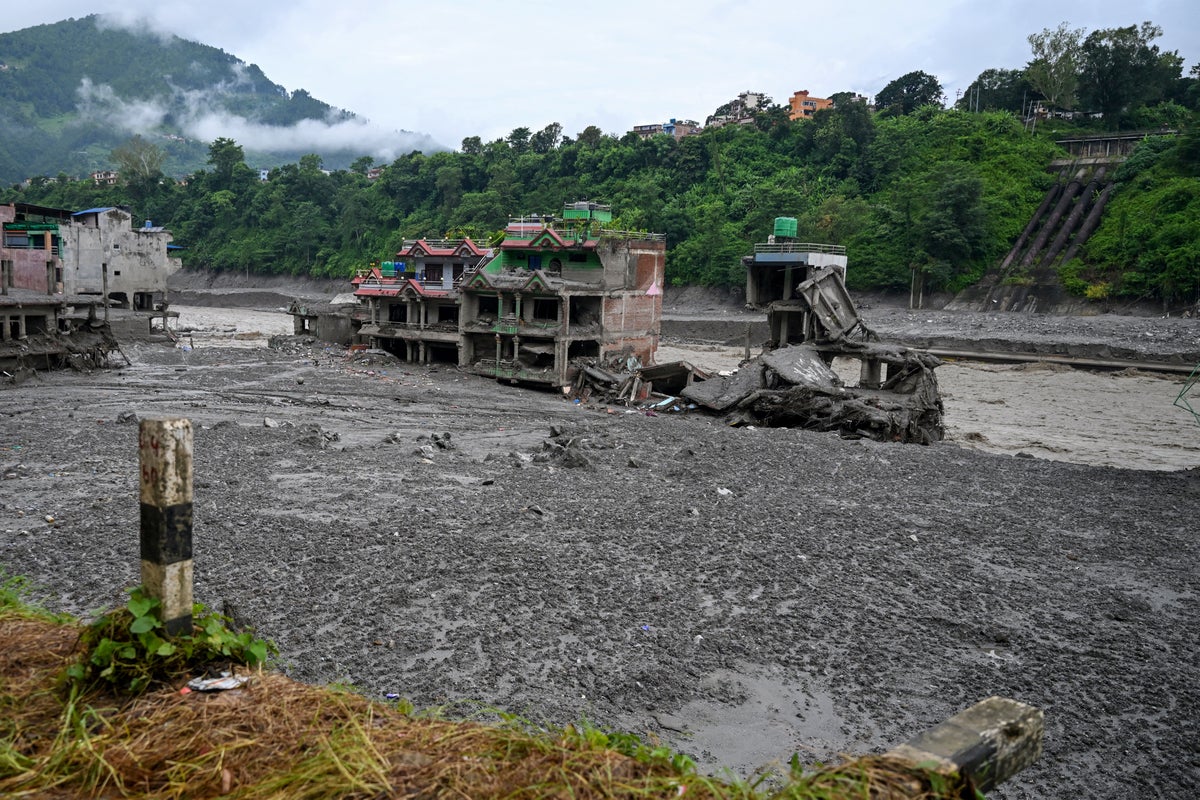
A turquoise-coloured house in Nepal has become a striking symbol of survival after raging floodwaters, mud, and debris swept through Trishuli, destroying everything in their wake – except that one dwelling.
A viral video showed its inhabitants watching the floodwaters tear through their neighbourhood from the upper floors of the house that is now being hailed for its structural design and construction.
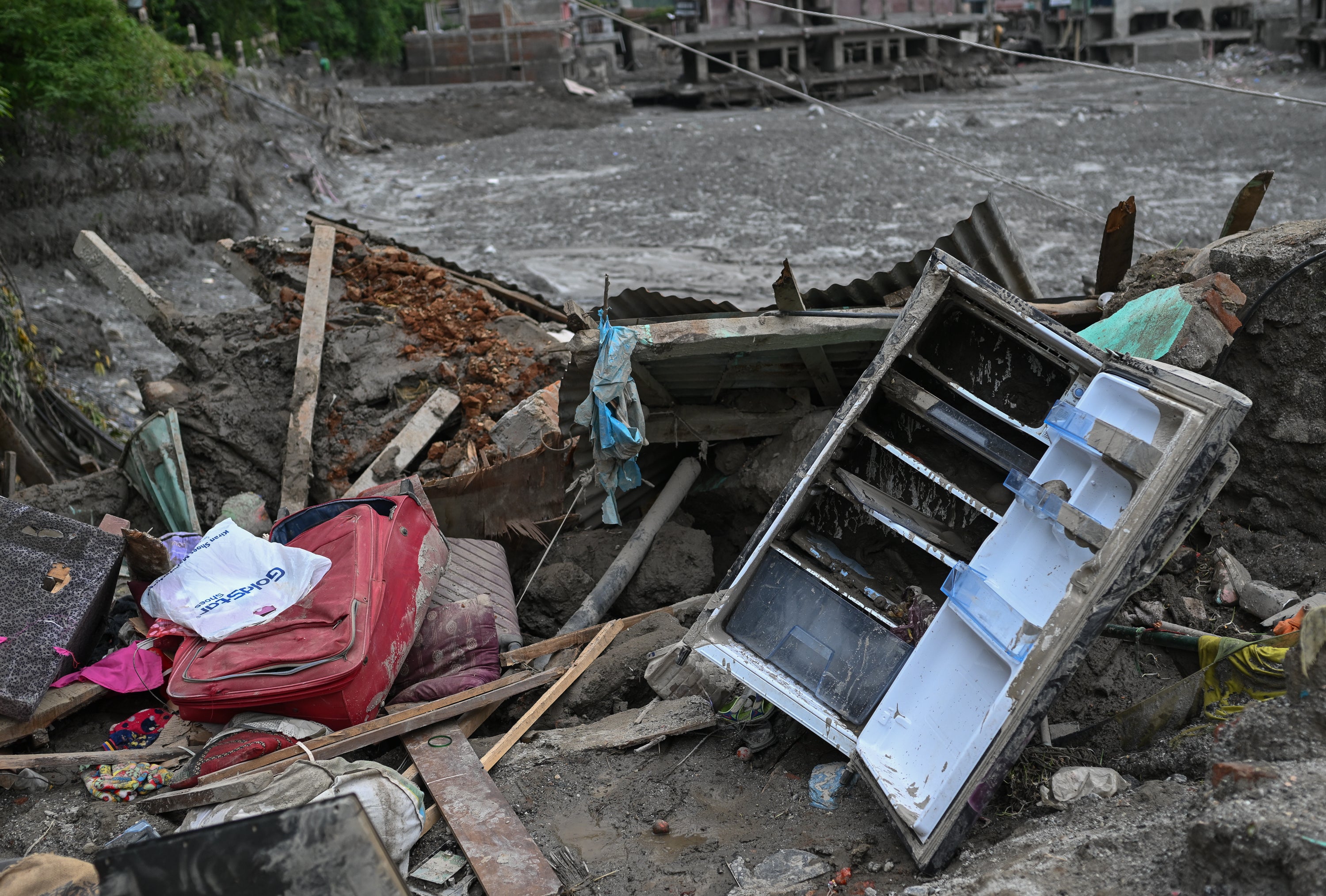
A section of a Himalayan glacier sheared off and crashed into a valley near the Nepal-China border last Wednesday, unleashing catastrophic flash floods packed with massive rocks, trees and mud. The floods wiped out entire settlements, destroyed roads, bridges, buildings and communication lines, and cut off many remote communities.
The death toll across Nepal and China was revised to 908 on Monday and the number of missing to over 3,000.
The dwelling in the Trishuli Bazaar area of Nuwakot district has come to be dubbed the “miracle house” and the “green house” on social media, with pictures showing it standing tall in a landscape wrecked by the floods.
Social media videos from the day of the disaster show torrents of water surging through the lower floors of the house, covering them in mud and tearing away doors and windows, as the inhabitants shelter on the upper storeys. The main frame of the reinforced-concrete building holds firm, however, allowing the family to survive unharmed.
The residents have been identified as Prakash Pandey Pyakurel, 45, his wife, their two children, and his elderly parents.
 open image in gallery
The husband and wife were in a nearby shop when the floods hit the village, their seven-year-old son had left for school 15 minutes earlier, and their 11-year-old daughter was about to leave.
With little time to move to a safer place, the couple ran to the house, and the family remained trapped there for nearly two hours, Ms Pyakurel told The Telegraph. They watched as the floodwaters, packed with ice and debris, battered the house from all sides, shaking it.
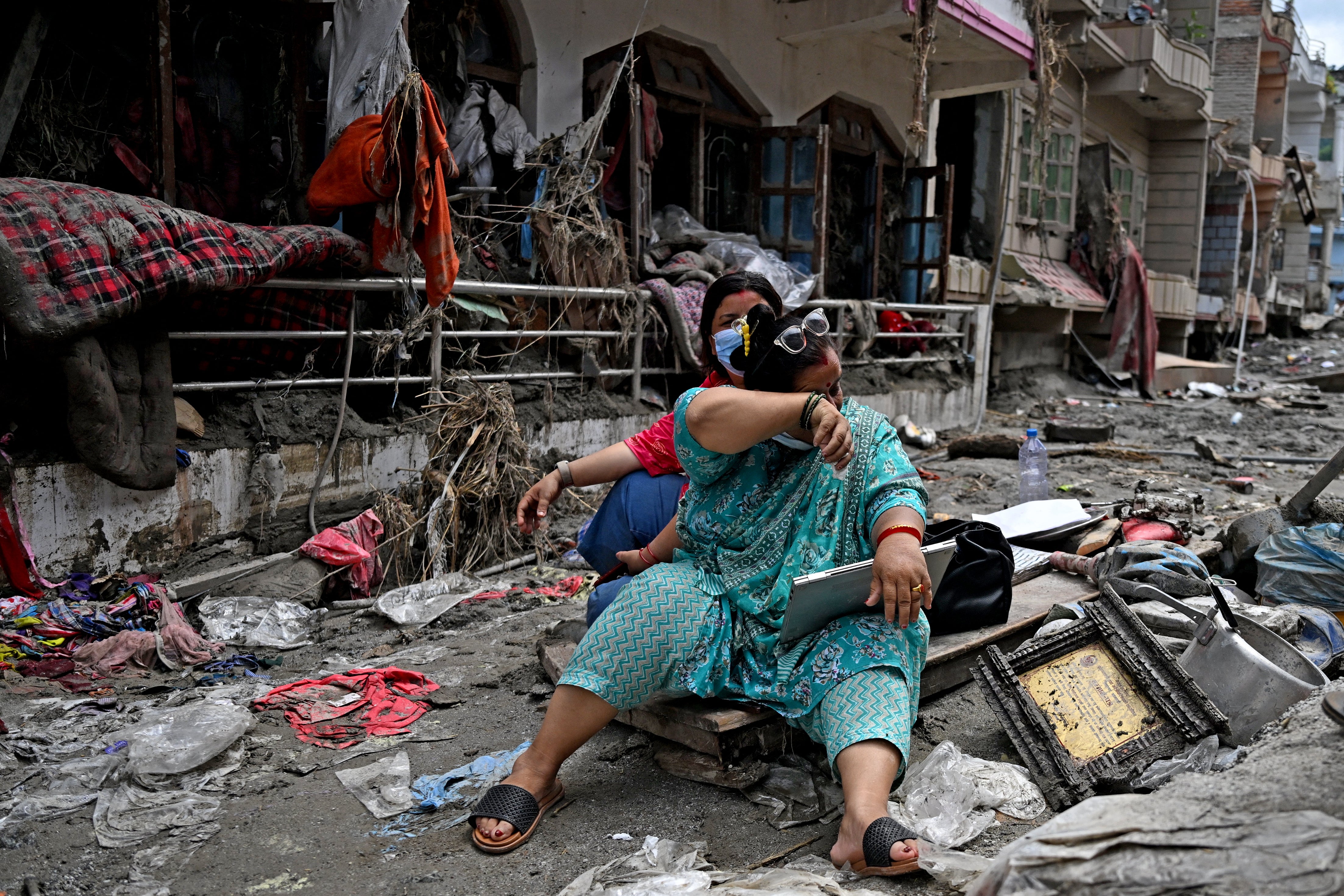
“We were frightened. We prepared ourselves, these are the end times. I told everyone that we had to die together,” Ms Pyakurel told the outlet. “We have got a new life. Everyone is saying that it’s a miracle. We still can’t believe we are alive. After seeing the videos, we are not able to believe how we are alive.”
The son also survived because his school was in a safe area.
Subsequent videos of the house showed a family member waving a red flag to call for rescue by helicopter.
 open image in gallery
The deluge blasted through Nepal at 8.32am local time, giving little time to people to flee the huge wall of water, mud and rock hurtling down the rivers, surveillance footage showed.
Twenty six minutes later, Binod Parajuli, a government hydrologist, got a call from the chief of the National Disaster Risk Reduction and Management Authority, alerting him to a flood in the Trishuli river. His team found that a border monitoring station had not transmitted any data since 8.40am.
At 9.13 am, after contacting local authorities to confirm the flooding, Mr Parajuli’s team sent a public alert to mobile phone users.
By then at least four monitoring stations had been destroyed by the flood that rampaged 168km downstream from the Nepal-China border, according to a Nepali government assessment.
 open image in gallery
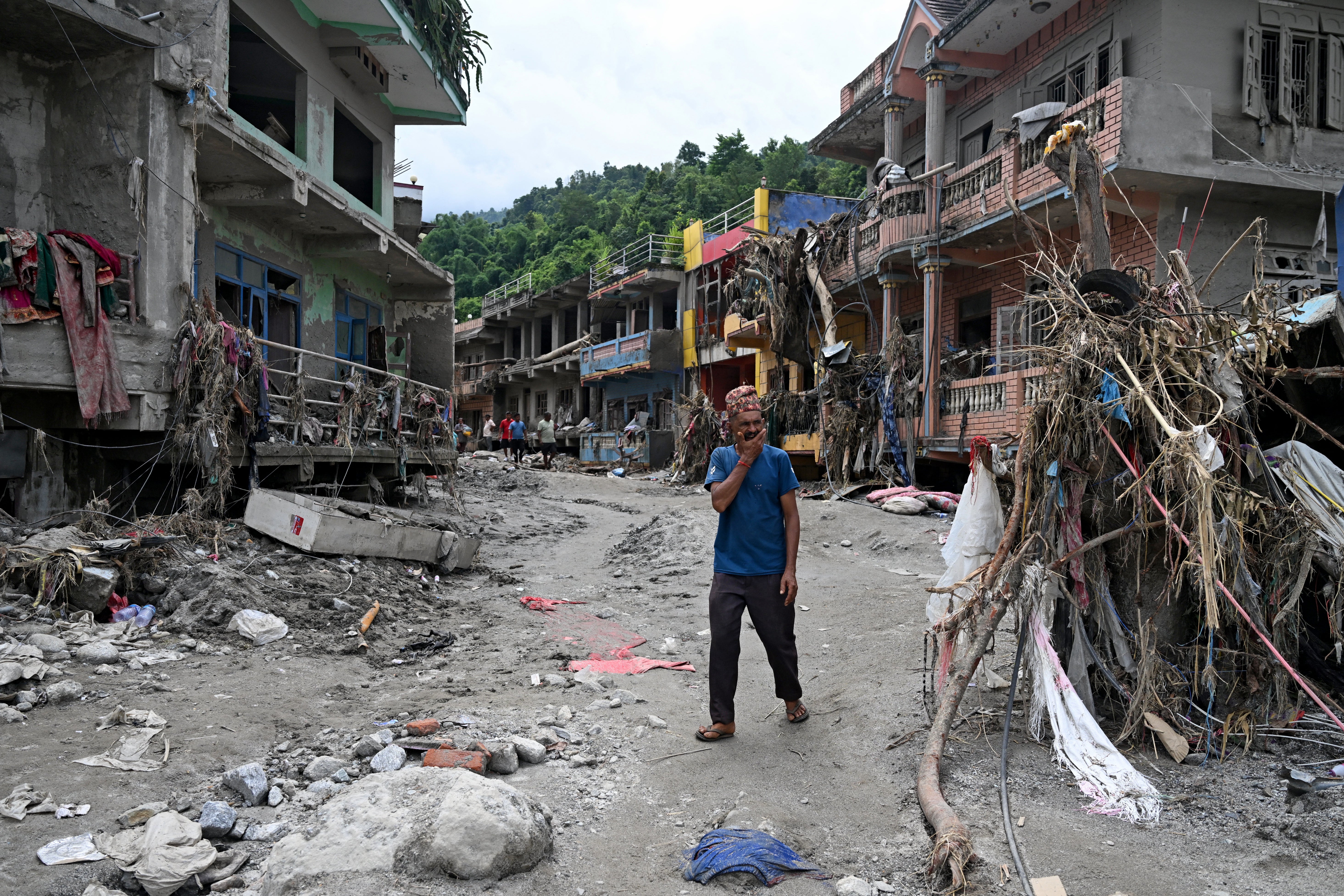
Surging floodwaters dislodged giant boulders and pulled large buildings into the overflow and damaged 19 bridges and 40kms of highway. They also knocked out over 10 per cent of Nepal’s power-generation capacity, according to the Stimson Center.
“It wasn’t water. It was a huge gush of mud coming straight at us,” said Keshav Prasad Baral of Tupche village, about 25km downstream of the border.
“I tried to grab my wife’s hand, but she was swept away by the mud.”