


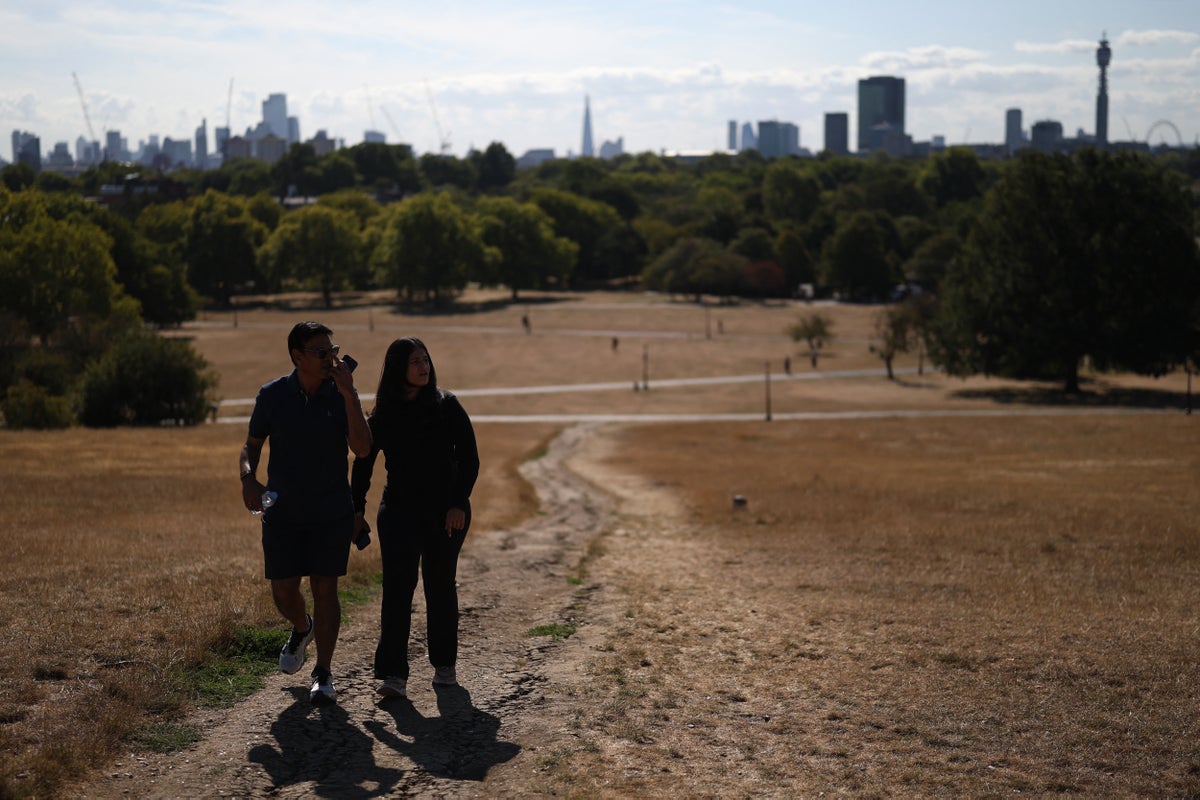
The hot and dry weather is expected to continue into Wednesday with nearly three-quarters of England and all of Wales now suffering from drought conditions.
Temperatures are expected to peak around 33C in the Midlands and the south-east ahead of highs of 38C on Thursday, as a fifth heatwave of the year puts the UK on track for its hottest ever summer.
Some 71.3 per cent of England has been plunged into drought after a record dry July and a very dry start to August, putting immense pressure on water resources for homes and the environment.
Officials from the National Drought Group said on Monday that there are now 45 million people living in drought conditions, with 27 million already under water-use restrictions.
That came after adding the East Midlands, Lincolnshire and Northamptonshire, Kent and East Sussex, and Solent and the South Downs to the growing list.
The North East and Yorkshire were also recategorised as having ‘prolonged dry weather’ – the stage before drought – with nowhere now deemed in normal status.
Where droughts have been declared:
Tony Grayling, strategic drought lead at the Environment Agency and chair of the National Drought Group, said: “Drought conditions are worsening and will continue to do so until we see significant and sustained rainfall.
“We know the hot and dry weather is taking a real toll on farming and there will be long-lasting impacts on our environment.”
The drought continues to pile pressure onto farming, freight shipping and energy production after the country saw its driest July in 190 years.
August has so far seen just five per cent of the expected rainfall for the month, with warnings of more dry weather and highs of 38C to follow this week.
A drought usually refers to a period of prolonged, unusually dry weather that affects nature, the environment, and people.
 open image in gallery
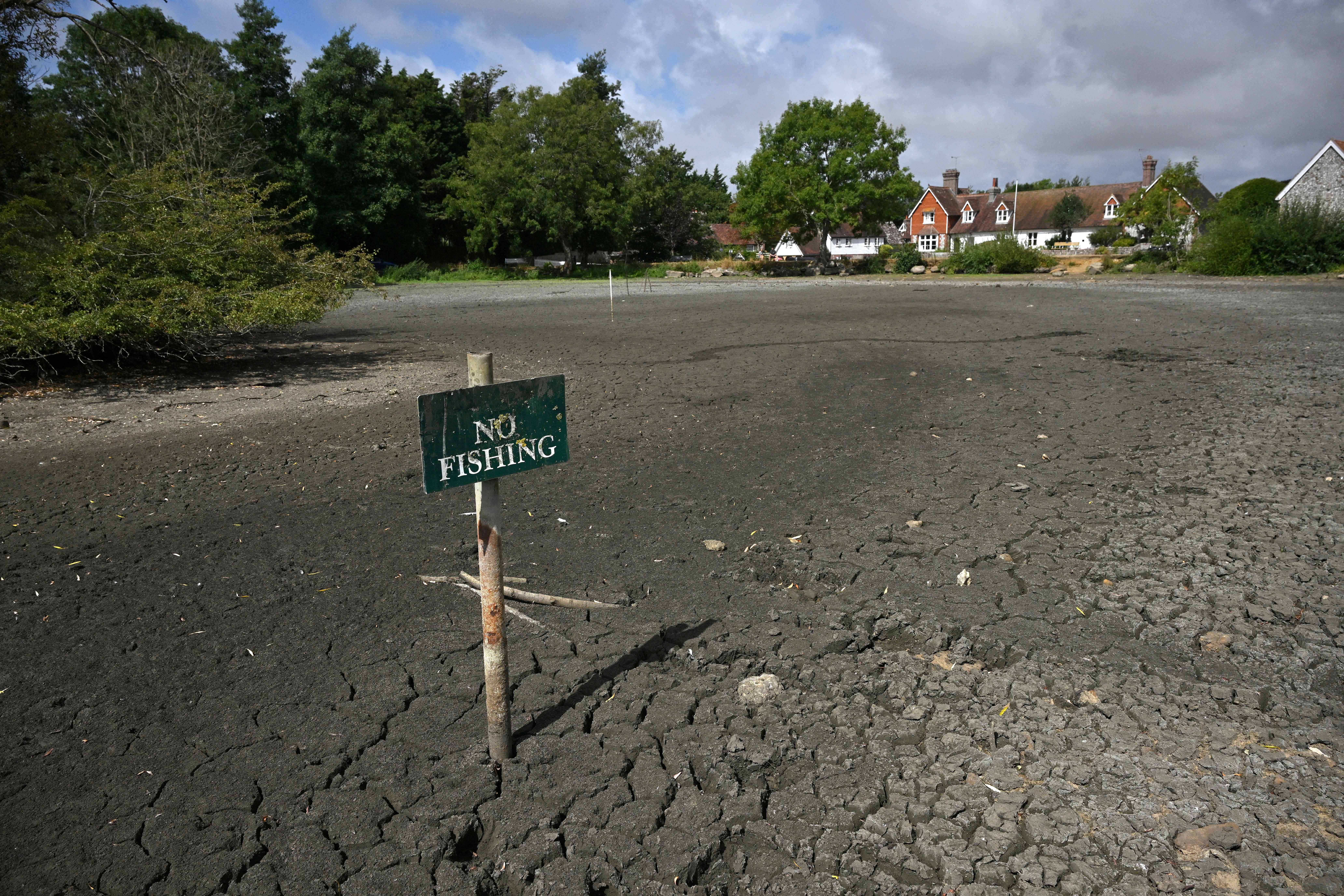
In July, 19 counties across England recorded effectively no rainfall – 1mm or less – across the whole of the month, the Met Office figures show, causing river levels to fall and leaving ground dry and at risk of wildfires.
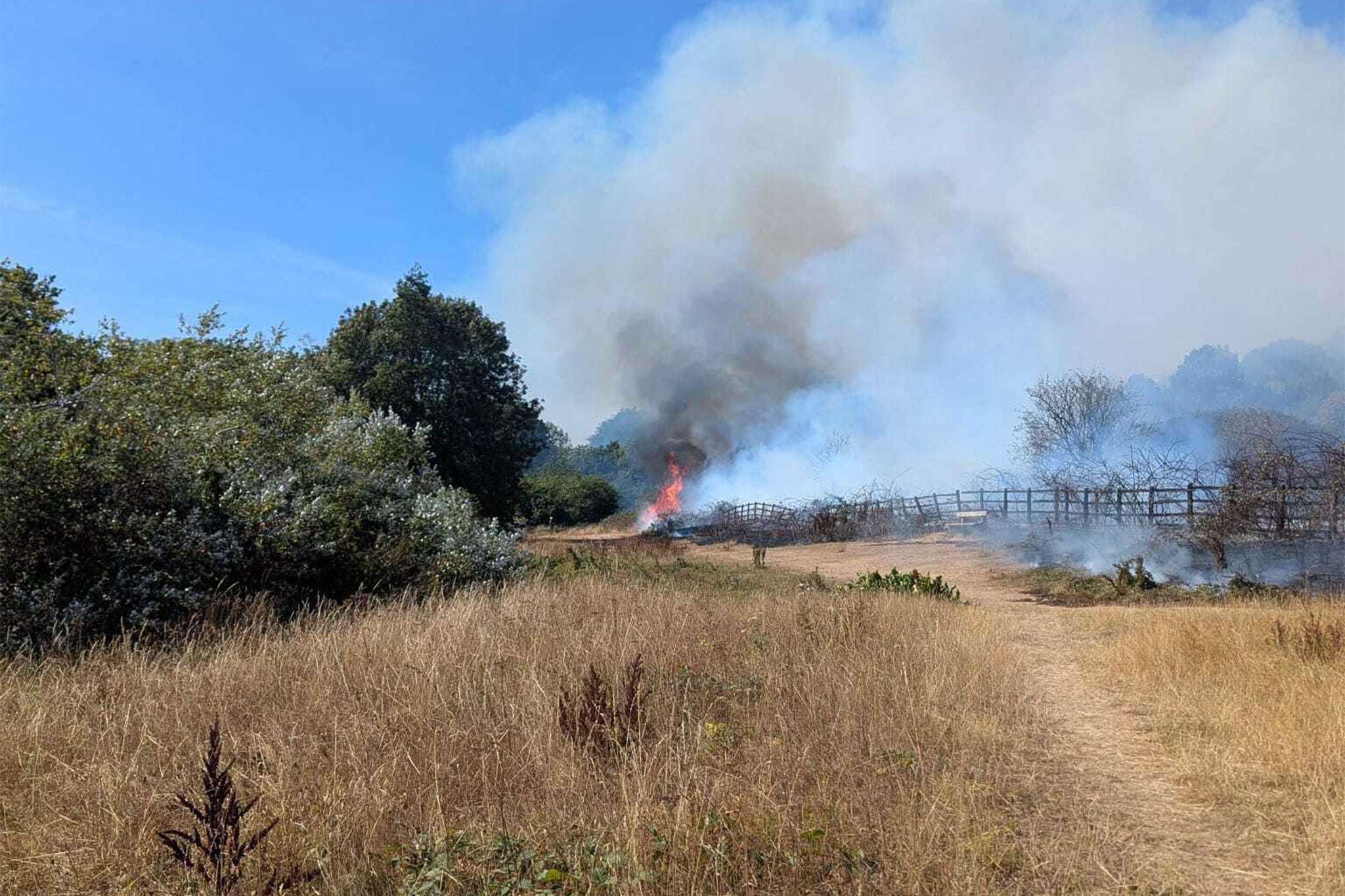
Firefighters raced to battle a major grass fire at a park in Exeter on Tuesday as conditions worsened in the south.
Devon and Somerset fire and rescue service said a large grass fire had broken out at Mincinglake Valley Park just before 3pm and advised people to stay away.
The summer of extreme weather has seen two record-breaking heatwaves, in May and June, which led to more than 2,800 excess deaths, and two more heatwaves in July which have fuelled drought and wildfires.
But the hot weather is set to continue as temperatures are forecast to soar into the mid-30s across the country on Wednesday, Thursday and Friday.
 open image in gallery
Yellow heat health alerts issued by the UK Health Security Agency are in place for the East Midlands, West Midlands, South East, South West, East of England, Yorkshire and the Humber, and London.
The alerts were to continue until 9pm on Tuesday, but may well be extended as the hot weather continues.
Meanwhile, the Met Office is considering issuing rare extreme heat warnings ahead of the scorching temperatures forecast later in the week.
“We sometimes issue extreme heat warnings, amber and red warnings, which we did back in June, so that’s under consideration at the moment,” Met Office meteorologist Tom Morgan said.
More than 25 million people have restrictions on water use, the Environment Agency said, with millions under hosepipe bans, including all South East Water and Thames Water customers.
Green Party leader Zack Polanski criticised prime minister Andy Burnham for failing to convene a meeting of the Cobra crisis committee to deal with the impact of the summer heatwave and drought.
He said: “This is the greatest crisis this country has faced since the Second World War and to complacently dismiss the demands for immediate action by saying everything is under control is gross negligence, blatantly untrue and misses the severity of the crisis.”