


An experimental treatment on the NHS, with “groundbreaking” findings, has put the lupus disease into remission, trials in the UK have shown.
For the first time in the UK, people with severe lupus have been treated with CAR T-cell therapy, which experts believe may also work for illnesses such as multiple sclerosis. This therapy, which only needs to be given to someone once, could revolutionise treatment and remove the need for lifelong medication. One of the first patients to receive the treatment, Katie Tinkler, said life before and after was “like night and day”.
Lupus is a chronic autoimmune disease in which the immune system attacks healthy tissues, causing widespread inflammation and damage to organs such as the kidneys, lungs and heart.
 View 3 Images
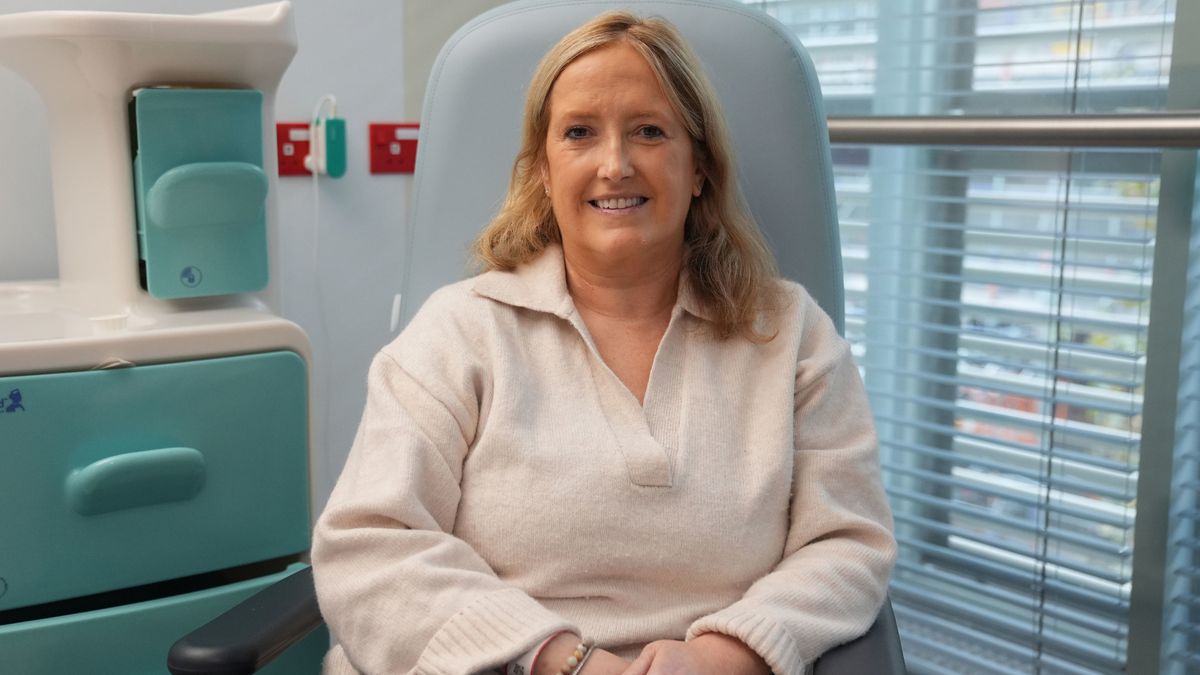
Katie receiving the treatment(Image: Lucy North/PA Wire)
CAR T-cell therapy works by genetically modifying cells to allow the body’s own immune system to recognise and attack problem cells. Until now, this therapy has only been offered to cancer patients on the NHS. In the new NHS trial, led by University College London Hospitals NHS Foundation Trust (UCLH) and University College London (UCL), five out of six patients with severe lupus went into remission within a few months of receiving CAR-T.
Katie Tinkler said she forced to leave her job as a fitness instructor because of debilitating pain and fatigue caused by severe lupus, which she has suffered with since she was 20. The condition also caused Katie to deal with swollen and painful joints, kidney damage that meant she was close to needing dialysis, lung and heart disease, and a tendency to develop blood clots.
She also suffered sepsis and multi-organ failure due to lupus, and was put in a coma in intensive care. Now, the 52-year-old from Guildford, Surrey, who is married and has three children, is in remission thanks to CAR-T she had at UCLH.
 View 3 Images
Tinkler said she was forced to give up her job due to lupus but said her life has now changed(Image: Sharon Spiteri/UCLH/PA Wire)
Katie said: “Thinking about how life was for beforehand and how it is now, it’s like night and day. My whole system was affected by lupus and my joints were so painful that sometimes I couldn’t walk. I couldn’t use my hands to pick up mugs. My kidneys, heart and lungs were all getting worse. But now I don’t have these problems any more.”
The 52-year-old revealed that she is now able to do certain things that her condition stopped her from doing, which included going on a ski trip for the first time in 10 years and dancing at her daughter’s wedding. She said: “My youngest child, he’s 20 this year, so for 10 years now he can’t remember me previously. My children can’t remember me participating in things before now.”
Katie has been able to come off all steroid treatment and the other cocktail of drugs that were keeping her alive. She now takes just two tablets a day to prevent blood clots and keep her blood pressure low. She said: “It’s miraculous for me. My life two years ago versus now, it’s unrecognisable.”
Around 69,000 people in the UK are thought to have the condition, which mostly affects women. The new study enrolled nine patients with active, severe disease who had not responded to multiple treatments for lupus. Six patients received a lower dose of CAR-T while three were given a higher dose so results could be compared.
After infusion, patients showed strong expansion of CAR-T cells and deep depletion of problem B cells. Over time, B cells began to return, typically between three and six months, but were predominantly early-stage cells, rather than the more mature populations associated with causing issues in lupus.
Researchers said the findings show that the therapy may be enabling an “immune reset,” rather than just suppressing the immune system – which is an important objective in treating autoimmune diseases.
Professor Karl Peggs, director of UCLH’s biomedical research centre, said CAR-T could offer people the chance of a cure, although bigger studies were needed. He said: “These findings are truly groundbreaking and offer fresh hope to people living with lupus.
Article continues below
“While more research is needed, the possibility that CAR T-cell therapy could deliver an immune reset and potentially free patients from the cycle of chronic autoimmune disease marks a remarkable step forward. If these results are confirmed in larger studies, the prospect of a cure for lupus may no longer be out of reach.”