


Next week two 24 hour tube strikes are planned, which will mean journeys need careful planning across the capital. The Rail, Maritime and Transport (RMT) union voted on walkouts back in February, and April saw 48 hours of strikes – but some other planned industrial actions have been called off, in March and May.
If the dispute between Transport for London (TfL) and the RMT is not resolved ahead of the planned industrial action, the capital will see major travel disruption across two full days, which could continue into the following morning after the strikes. Journeys will need to be carefully planned ahead during the strike days, but these might be the final occasion London sees such disruption for some time, because at this stage the RMT have not announced any other dates they plan to strike.
The RMT have alleged that TFL are trying to force a four day working week on their members, but TfL Chief Operating Officer, Claire Mann, has pushed back on this assessment, insisting the new working schedule would be “voluntary” and that “there would be no reduction in contractual hours and those who wish to continue a five-day working week pattern would be able to do so.”
The Mirror breaks down everything you need to know about the upcoming industrial action – and how to get around the capital smoothly during the disruption.
 View 5 Images
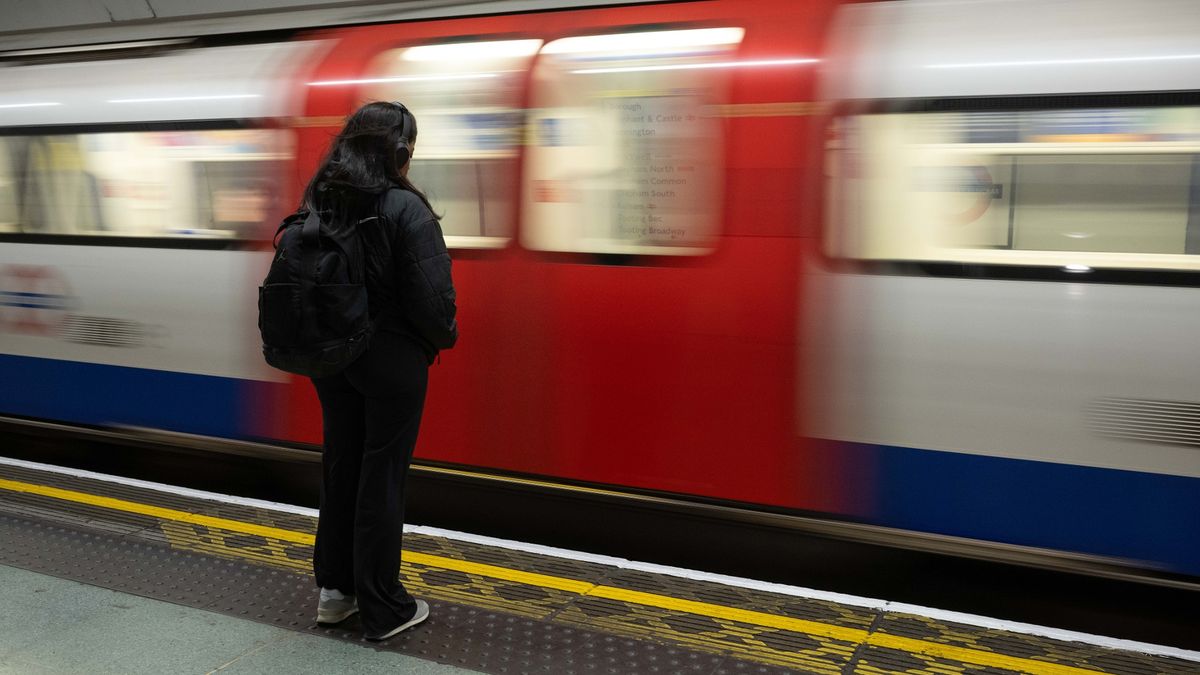
Services that are running will be busier than usual(Image: James Manning/PA Wire)
The strikes will take place a day apart and last a full 24 hours each, with disruption expected the following mornings as the services start to resume.
- Tuesday June 2 (midnight to 11.59pm)
- Thursday June 4 (midnight to 11.59pm)
Previous industrial action by the London Underground drivers planned for May 19 and 21 was called off at the last minute by the RMT. The day before the strikes were due to start the RMT said, “at the 11th hour the employer has shifted its position allowing us to further explore our members concerns around the imposition of new rosters, fatigue and safety issues”.
It remains to be seen if a last minute cancellation of industrial action will be brought about this week, but when the last strike days were cancelled, TfL said they were “pleased” and added “We look forward to further discussions on the implementation of these proposals with all of our trade unions.”
The RMT is protesting the implementation of a voluntary four day week which would see its members work longer, but condensed hours. They cite safety concerns as a major reason behind their position, believing less flexibility and longer shifts could make drivers more tired, and their working conditions less safe.
However, not all unions have taken the same position. ASLEF, a train drivers union, have accepted the proposals that their members can volunteer to work condensed hours across four days, instead of five. ASLEF called it “exactly the sort of deal every trade union should be trying to achieve”, pointing out it would give their members 35 more days off each year “in return for some fairly minor changes to working conditions”.
 View 5 Images
There will be disruption across the TfL network(Image: Getty)
The RMT has said it has “a different perspective from ASLEF” instead claiming the suggestion by TfL is a “fake four-day week that amounts to five days’ work compressed into four”. The disagreement between the two unions means that during the planned strikes, ASLEF member train drivers will still be going into work.
Strikes hit the bottom line across a wide range of industries, and it is these ripple effects that make the collective action of the RMT such an effective bargaining tool to ensure the best conditions possible for their members.
The Centre for Economics and Business Research (CEBR) estimated in April that two 24 hour strikes that month cost the economy directly between £130m and £250m in lost working days – both those of the RMT drivers themselves, and commuters unable to get to their place of work across the city. However, they admit due to the increased popularity of cycling schemes and remote working, the direct cost of lost work days is much higher than it would have been a few years ago.
 View 5 Images
Strikes are set to cost the London economy up to £760m(Image: ZUMAPRESS.com / Avalon)
But the cost is not simply in working days – sectors like hospitality and retail take a major hit when there is a tube strike, particularly businesses located in central London which sees a massive drop in foot traffic and “less consumer spending” says the CEBR.
Ahead the April strike days pubs and restaurants were braced for nearly 40 percent loss in sales, whilst cafes and coffee shops were predicted to lose 34 percent, per trade body UKHospitality who put the figure around £600 million.
There is no services expected on two lines, and on sections of two others – whilst some lines will be running, major disruption should be expected across the entire TfL network. TFL say that commuters should complete their journeys across the capital before 9pm on both strike days, and that in the early morning – before 6.30am – there will be limited service “because services will start late and finish early”. They have also warned that the number of trains running will vary across the network.
- No service on Circle Line
- No service on Piccadilly line
- No service between Baker Street and Aldgate on Metropolitan Line
- No service between White City and Liverpool Street on the Central Line
However, all the other lines will be affected even though services are planned to run, because they will be far busier than normal, facing delays, and a reduced number of trains will be running.
- Bakerloo Line
- Jubilee Line
- Northern Line
- District Line
- Hammersmith & City Line
- Victoria Line
- Waterloo & City
The strikes are running from midnight on each strike day until 11.59pm. Though some lines will be running, as will buses and Overground lines, services that are available will begin later than normal and will stop earlier than they usually do, so journeys must be carefully planned ahead and must be finished by 9pm.
On Monday June 1, services are expected to run as normal before the planned strike day begins as the clock ticks over at midnight. There may be some delays and continued disruptions in the mornings of June 3 and 5, but otherwise TfL says there will be normal coverage across the network.
All lines on the Overground network – Lioness, Weaver, Liberty, Mildmay, Windrush and Suffragette lines – as well as the DLR, and the Elizabeth will be running on the strike days, but they will be very busy as commuters are prohibited from taking their usual routes.
Buses will also be running, as will trams, but you should expect higher numbers than usual to be travelling on them and plan accordingly, leaving more time than you might usually for your journey. Make sure to check the TfL journey planner before heading out to ensure you’re on the best alternative route.
 View 5 Images
Commuters at the London Liverpool Street bus stop during rush hour (Image: Marcin Nowak/LNP)
Cycling on a hired e-bike proved to be a popular choice during the last spell of industrial action in April. Per Time Out, Lime Bikes said they enjoyed “22 percent week-on-week spike in trips on April 23, while Forest saw evening rush hour rides soar by more than 50 percent,” as commuters sought alternative options.
Major stations in London act not only as access points in and out of the city and to the rest of the UK, but to Europe itself. These stations will likely be busier than normal, but the Mirror breaks down how to ensure you reach them as easily as possible during the strike days.
- Paddington: Users of Great Western Railway, which provides transport to Bristol and Wales amongst many others will need to access Paddington, as well as anyone looking to jump on the Heathrow Express here. The Elizabeth Line – which is not technically part of the underground network and will be running – services Paddington, so it’s the best bet of getting to this major arterial station if you’re heading west out of the capital.
- Kings Cross St Pancras: The Eurostar operates out of St Pancras, providing direct lines to Brussels, Lille and Paris. Six national train operators run services from this station, providing transport to Yorkshire, Edinburgh, and Cambridge, amongst many others. Kings Cross St Pancras is best accessed through the Thameslink service on strike days.
- Victoria: Offering services south out of the city to the coast and to Gatwick Airport, Victoria might be hard to access on strike days except through buses, many of which serve the major station – however ensure you have used TfL live journey planner before heading here.
- Euston: Three major rail operators run from Euston, including Caledonian Sleeper, Avanti West Coast, and West Midlands Railway. This station will also be tricky to access directly on strike days, but luckily its a short walk from Kings Cross St Pancras – accessible by Thameslink – or Tottenham Court Road, accessible via Elizabeth Line. Because you will likely have to walk from a station close by, ensure you leave more time than usual to get here.