


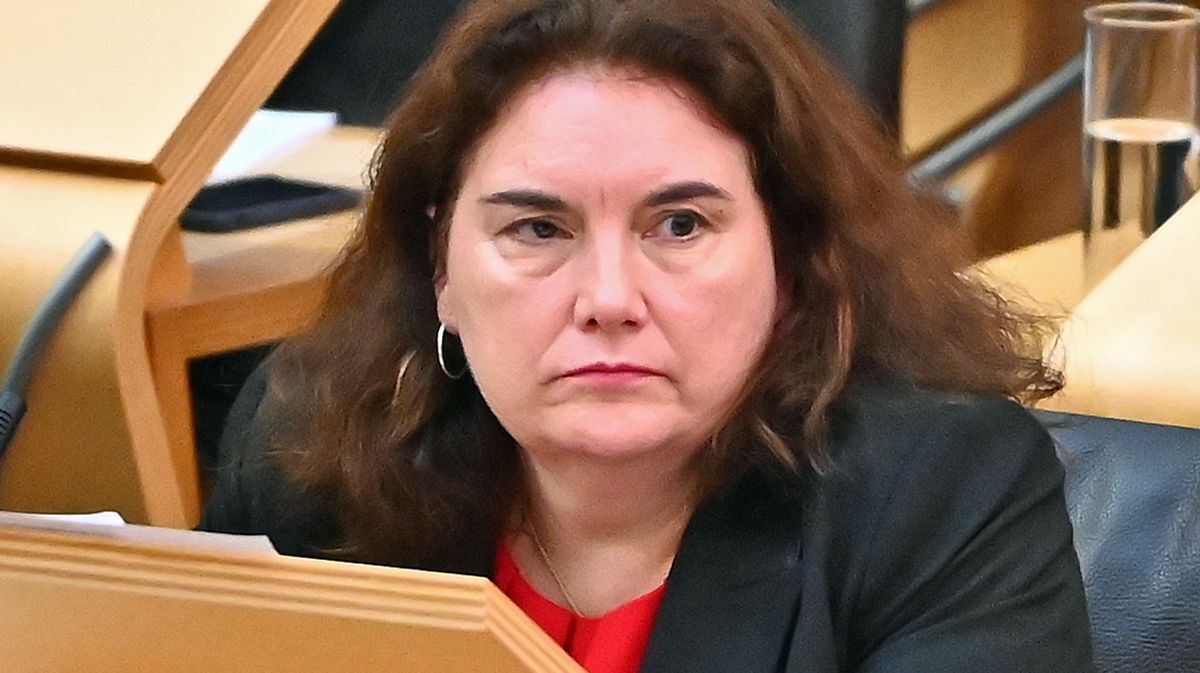
A left-wing MSP has announced she will not be standing for the vacant Scottish Labour leadership.
Katy Clark instead issues a series of policy challenges to potential candidates on public ownership and the trade unions.
Speculation had mounted that Clark, a West Scotland MSP, would join Holyrood colleagues Michael Marra, Joe Fagan and Monica Lennon in trying to get on the ballot.
The contest was caused when Anas Sarwar quit as leader after he joined the House of Lords and Andy Burnham’s Government.
Clark has confirmed she will not be in the race and backed the return of bus, leisure and education services from the private sector.
She did not say if she would nominate any of the other three contenders, which presents an obstacle to Lennon becoming a candidate.
To become a candidate, hopefuls need the support of trade unions and local members, but also three Labour MSPs and three Scottish Labour MPs.
Lennon, a fellow left winger, is struggling to meet the threshold for parliamentarians. Nominations open this morning.
Clark said: “Over recent decades, privatisation and outsourcing have led to our public services being run to generate private profit rather than delivering for ordinary people.
“Putting our public services into the hands of private companies and multinationals has led to poor value for money and little democratic control.
“Scottish Labour must argue for insourcing and demonstrate why public ownership works.
“That means demanding that all outsourcing and contracting out is reversed and that services such as home care are provided in the public sector.
“Rather than re-tendering involving multinationals, when contracts for justice services such prisoner transfer come to an end, public sector provision needs developed.
“Public funding models used in the UK are very expensive compared to other countries and cannot continue to be used in their current forms.”
Clark also said Scottish Labour must identify much more closely with trade unions.
She said: “We need to remember that we are a socialist party. We were created by the trade unions and others to be a voice for working-class people.”