


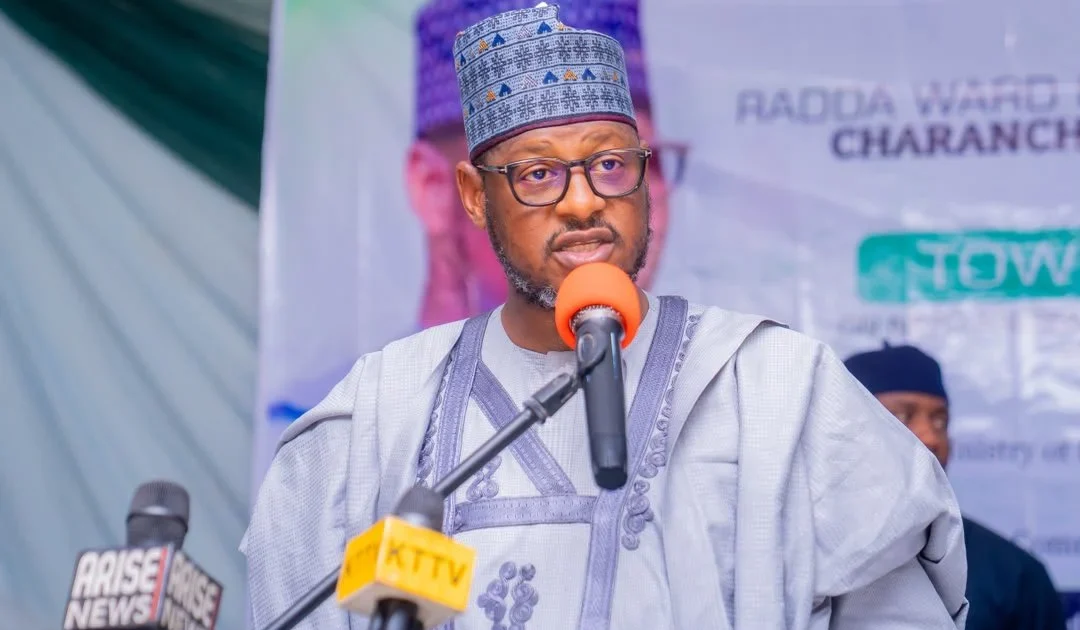
Katsina gov combats food insecurity with 90,000-bag grain relief
August 20, 2026 8:50 am

Katsina State Governor, Dikko Radda. Photo: X | Dikko Radda
By Esha Aliku
Katsina State Governor, Dikko Radda, has flagged off the distribution of 90,000 bags of assorted grains to vulnerable households across the state’s 34 Local Government Areas, describing the intervention as part of efforts to cushion the effects of economic hardship and strengthen food security.
The ceremony was held in Kaita LGA of the state on Wednesday, where he directed officials and stakeholders involved in the exercise to ensure that the grains reach the intended beneficiaries without discrimination or diversion.
He said the intervention was designed to provide immediate relief to vulnerable families while complementing his administration’s long-term investments in agriculture and other sectors aimed at reducing food insecurity.
“Our philosophy has remained clear: development must reach the grassroots, and the people must feel the presence and impact of government in their communities and daily lives,” he said.
The governor said the latest distribution was part of a broader social intervention programme through which his administration had previously supported women engaged in some businesses across the state’s 361 wards during the Ramadan period.
He also recalled the government’s intervention for 7,220 widows across the state, with 20 beneficiaries selected from each ward and provided with 25kg bags of rice and N10,000 cash assistance, as he further acknowledged the contribution of the Aliko Dangote Foundation to food security efforts in the state through the distribution of rice to vulnerable residents.
He said lessons from the previous exercise had enabled the government to improve its grassroots distribution mechanism, particularly through Community Level Committees.
“The objective is not simply to distribute more, but to distribute better to improve targeting, strengthen accountability and ensure that government support reaches those for whom it is intended,” Radda said.
The governor, however, stressed that palliative distribution alone could not provide a lasting solution to food insecurity, saying his administration was pursuing a dual approach of immediate relief and sustainable economic empowerment.
He said the government had supported farmers with subsidised fertiliser and other agricultural inputs, while expanding irrigation through solar and petrol-powered pumps, tube wells and other interventions.
“These investments are deliberately designed to strengthen food production because the most sustainable response to food insecurity is to empower our farmers to produce more food, reduce the cost of production, create rural employment and improve household incomes,” he said.
Radda said the grain distribution and agricultural interventions were interconnected, with the former providing immediate support to vulnerable households and the latter strengthening the capacity of communities to become self-reliant.
On the distribution process, the governor directed local government officials, traditional and religious leaders, community-level committees and other stakeholders to ensure fairness, transparency and accountability.
He warned that personal relationships, social status or other considerations must not be allowed to deny deserving citizens access to the grains.
“The government cannot claim to have solved every challenge, but we will continue to listen, continue to improve and continue to deploy the resources available to us responsibly in addressing the needs of our people,” Radda said.
Earlier, the State Coordinator, Community Development Programme, Kamaladden Kabir, said the intervention demonstrated the administration’s commitment to taking government programmes closer to citizens at the grassroots.
He said the CDP’s structures would be used to ensure that the grains reached vulnerable households, particularly widows, elderly persons, persons with disabilities and low-income families.
“This intervention is not simply about distributing food items; it is about ensuring that government support reaches communities in an organised, transparent and inclusive manner,” Kabir said.
The Chairman, Kaita LGA, Bello Lawal, described the intervention as timely and beneficial to residents, saying the Radda administration had also implemented projects in agriculture, education, healthcare and social welfare.
“We are really happy with this initiative. We appreciate the efforts of the administration and will continue to support its programmes,” he said.
All rights reserved. This material, and other digital content on this website, may not be reproduced, published, broadcast, rewritten or redistributed in whole or in part without prior express written permission from PUNCH.
Contact: [email protected]