


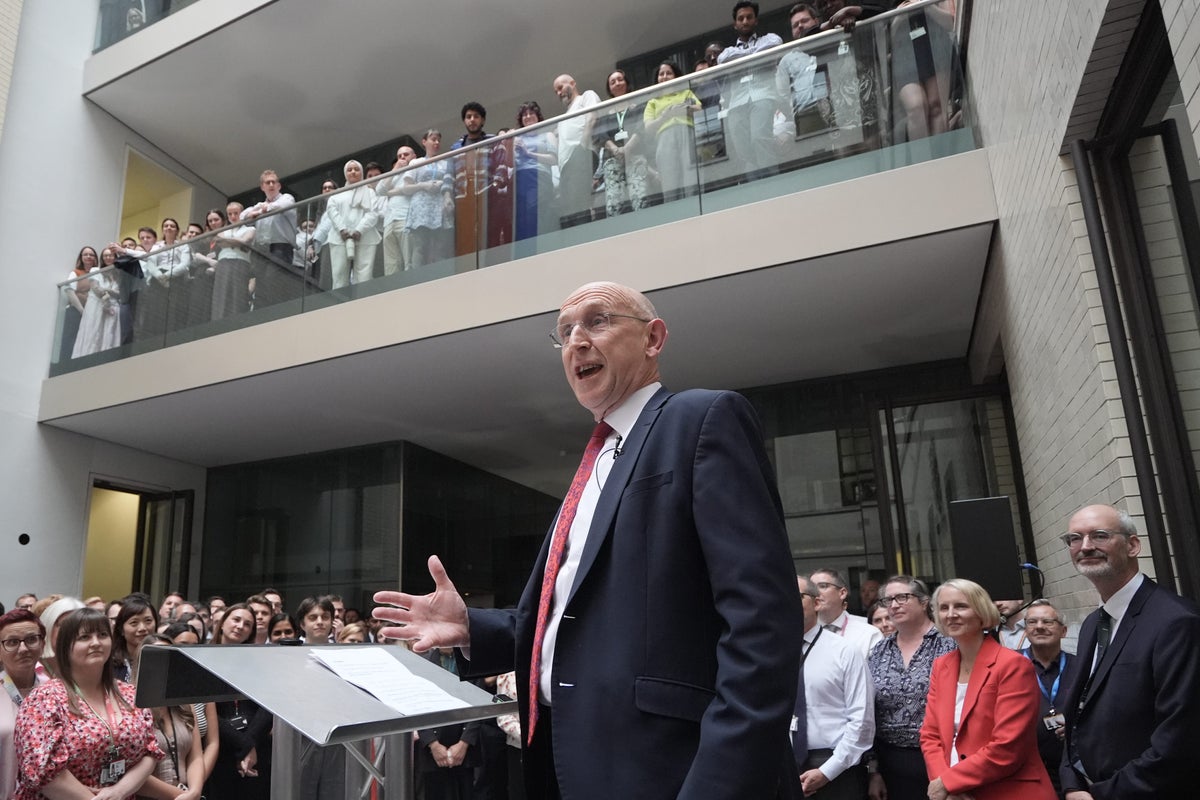
The Chancellor will unveil a £150 million fund for fast-growing northern firms as he sets out plans to grow the economy through an “active” state.
John Healey will seek to tell an “optimistic story” about Britain in a major speech on Monday, echoing Prime Minister Andy Burnham’s push to strike a more upbeat note than his predecessor.
But it comes against a challenging economic backdrop ahead of Mr Healey’s first Budget on October 28, with a leap in Government borrowing costs amid concerns about the inflationary impact of the Iran war threatening his fiscal headroom.
 open image in gallery
Mr Healey will detail plans to spread growth more widely across the UK by using public investment to attract private capital.
The British Business Bank will commit up to £150 million to a new fund “to get behind the most innovative and fast-growing firms”, the Chancellor will say.
“This is not sentimentality, it’s supply side economics.”
The pot, using money already allocated to the Government-owned bank, will offer investments of between £5 million and £15 million to help university spin-outs and other innovative companies across the North of England expand.
The Treasury hopes the fund will draw in additional private cash, as part of Mr Healey’s vision of an “active state” working with private businesses to create opportunity.
Mr Healey will also task the British Business Bank and National Wealth Fund with doing more to support investment and innovation across the UK.
As part of this, the National Wealth Fund has agreed strategic partnerships with mayoral authorities in South Yorkshire, Liverpool City Region and the North East, as well as Cardiff Capital Region.
This will give local leaders direct access to the fund’s investment expertise to help develop infrastructure projects, the Treasury said.
Speaking at a manufacturing site, the Chancellor is expected to say: “The Prime Minister laid out a clear diagnosis of what has gone wrong in the past. The solution is a fundamental shift that starts with putting power in the right places.
“The next chapter of Britain’s growth story will be written in more places.”
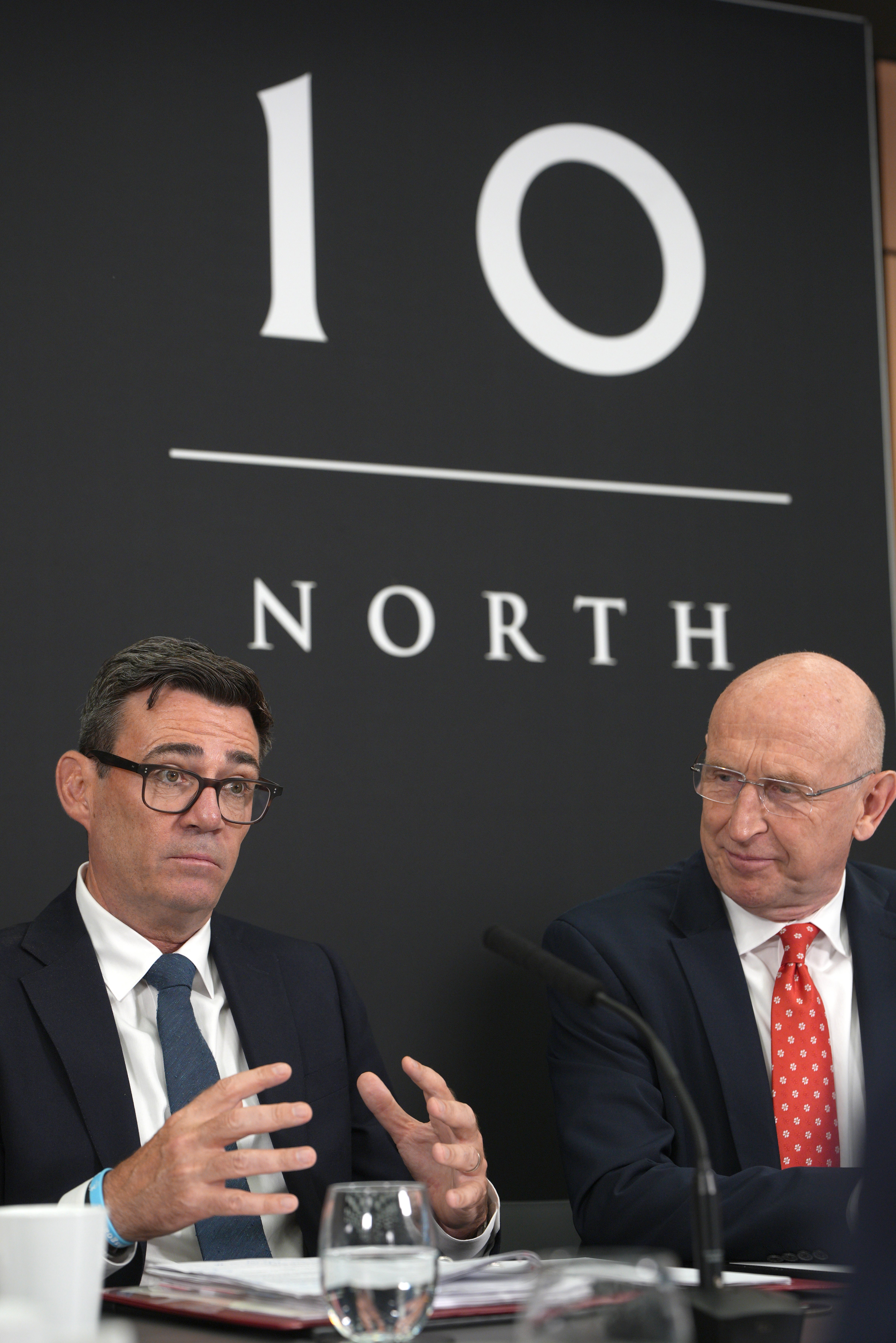
He will say that No 10 North was set up as “a strong, strategic centre wired to enable local leaders and their ambitions” by “removing obstacles” and red tape.
“I want to see wealth creation in this country. I want to see businesses make a profit,” the Chancellor will say.
“And to create the conditions for that we need an active, accountable state at all levels to remove blockages and create the conditions for more investment.”
On the partnership between Government, local leaders and businesses, he will say: “This is new. City regions with real power, supported by a stronger state, creating local industrial strategies and using public investment to unlock private investment, to support our innovation economy, and to create the new jobs their areas need.”
Mr Healey will say that boosting growth must go hand-in-hand with maintaining fiscal discipline, particularly at a time of global uncertainty.
And he will say that growth will help Britain navigate that turmoil with “an optimistic story – one of resilience, pride, huge latent potential”.
“A country turning a corner. A country whose people, businesses and communities are ready to seize the opportunity of new technologies and new ideas.”
Economists have warned that Mr Healey may need to raise taxes or cut departmental spending to protect the fiscal buffer built up by his predecessor Rachel Reeves at her last budget.
The Tories described the trail of Mr Healey’s speech as a “policy-light word salad”.
Shadow chancellor Andrew Griffith said: “It will do little to comfort hard-working families and businesses across the country who are worried about more tax rises or the fact that government borrowing rates are near a 28-year high.
“Commitments to reduce red tape are welcome but given this Government’s track record with its Employment Rights Act and other anti-business measures, people will rightly question their sincerity.
“We are facing serious threats from Russia and Iran on our doorstep, as well as threats to the Falkland Islands. Yet the Chancellor, the man who resigned over defence spending, seemingly does not want to mention our Armed Forces or how we will reach 3% of GDP on defence.”
Liberal Democrat deputy leader Daisy Cooper accused the Chancellor of undermining his growth ambitions by “ignoring the Brexit trade barriers choking our exporters” .
She continued: “Re-announcing £150 million across the entire North of England will barely shift the dial on growth. Liberal Democrats are demanding that Labour move faster to strike a Growth and Defence Deal that will make the UK stronger and more prosperous.”
Reform UK’s economic spokesman Robert Jenrick said: “Even Rachel Reeves had more vision than this guff. Days after a market meltdown, when grip and direction are required, John Healey has revealed himself to be an empty vessel with no idea about how to rescue our economy.
“He won’t cut the ballooning benefits bill, foreign aid, or net zero subsidies so taxes on working people will inevitably rise at the Budget.”