


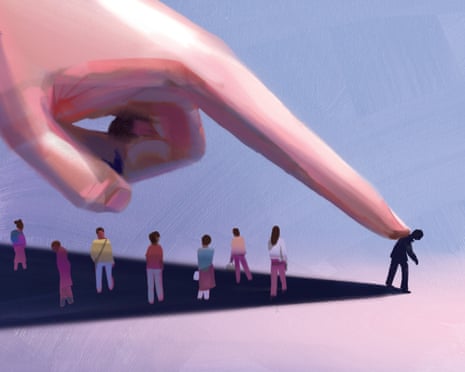
Jason Arday is now the stick the right will use to beat back racial equality. Don’t let that happen

The UK is far from equality in academia or society. You don’t need a Cambridge degree to see that Arday’s story is being used to stop any progress in its tracks
In 1987, a college at the University of Cambridge considered offering a prestigious position to a black man in what would be the first appointment of its kind. Not only did the man not have a degree, but he had left school at the age of 13, struggling with dyslexia and – at the time – unable to read or write. That he would later to go on to accumulate 20 honorary doctorates and become a professor of creative writing is only one way, and in my view not the best one, of measuring his talent.
The man was the late, great poet Benjamin Zephaniah. And he had been nothing but transparent about his lack of credentials. In fact it was his background that made him eligible for this fellowship, which was designed to reach out to somebody in the community who didn’t have a degree, to give them the opportunity to have a connection with the university.
Zephaniah had been privately offered the role but a formal offer had not yet been made when it was leaked to the rightwing press. The Sun and the Daily Mail newspapers enjoyed a feeding frenzy at the prospect of a black man – one with locs, no less – becoming a fellow at Cambridge.
“Would you let this man near your daughter?” asked the Sun. “Just what are his qualities which have appealed to Trinity College?” the paper asked. Then, not bothering to hide its starkly racist views, it answered that there were none. No qualities, only problems, listed in order of severity: “He is black. He is a Rastafarian. He has tasted approved schools and Borstals.”
The Sun offered no evidence whatsoever for the implication that Zephaniah was a rapist, as the headline suggested. Apparently none was needed – the audience already understood that a black man from Handsworth, Birmingham, who had “tasted Borstals” could not possibly be an appropriate or safe person to be associated with Cambridge University.
In the years since Zephaniah did not receive the fellowship that should have been his due, Cambridge – like many elite universities – has been mired in actual scandals of rape, nepotism, plagiarism and more. Remember them? You probably don’t, because they barely made the news.
For a period beginning in 2019, Trinity Hall, Cambridge, was embroiled in controversy after it emerged that not one but three people who worked at the college had been accused of sexual misconduct by students. The ensuing outcry led the master to resign.
In 2023, a professor from the same college was allowed to keep his job after having been found to have plagiarised material from a student essay.
In 2015, a row broke out in which the renowned University of Leeds sociologist Zygmunt Bauman was accused of multiple instances of “self-plagiarism”. Colleagues claimed those allegations were motivated by another scholar’s “personal agenda” and said they were “tantamount to a form of intellectual violence wrapped in objective scholarship that plagues the academy”.
Maybe it’s just my algorithm, but social media seems flooded with hot takes on Jason Arday. I have worked with him – we were developing a project together at one point – and I have thought a lot about him in the years since.
The fact is that many of Arday’s black peers in academic sociology have been voicing concerns about him for a while. He seemed, to them, to have come out of nowhere. His performance at high-profile academic events did not match the credentials that were being touted. I have had various conversations with sociology professors in which this has been the main topic of conversation, and their questions began to mount into a list. They did not voice them publicly because we all know that whatever the truth or the outcome, he would be unlikely to be treated fairly and we would all be damaged in the process. As for me, I was an interested observer to allegations the veracity of which I couldn’t personally verify. But hearing them from fellow black academics I respect was enough to put me on alert and raise a red flag for anyone who asked me whether publicly supporting him was a good idea.
Some of the people who did sign those letters are now feeling very angry that Arday did not protect them from what he must have known to be lies before they used their own reputations to defend his. Others are angry that he appears to be using his neurodivergence as an excuse for dishonesty, which of course it’s not.
The media cannot conceal its excitement about his transgressions. Arday doesn’t need to be a fantasist to be the kind of man commentators would rather not see at a university like Cambridge – being black is enough. For them, the fact that he made stuff up is simply a massive bonus. Which explains why they have moved so quickly from identifying mistakes he has made to indulging in an orgy of delight at the prospect of smearing all black academics.
Indeed, I seriously question whether Donald Trump received as much scrutiny for starting a war with Iran as Arday did for exaggerating his athletic and academic credentials.
Nor does the media care about protecting students, by the way. That is not an issue that sells newspapers, drives clicks or feeds the agendas of the rightwing billionaires who own most of our media.
I have lost count of the number of emails, text messages, DMs and WhatsApps I received asking me to condemn the allegations against Arday. Not one of these messages asked me first if I know him, what my opinion about the allegations is or whether I actually agree with their assertion that they are baseless.
It probably looks as if I support a lot of open letters and petitions, and I do. In recent months these have addressed unlawful deportations, the intimidation tactics of the far right, Labour’s imitation of the far right, the crackdown on free speech rights and protests for Gaza.
after newsletter promotion
The due diligence involved in joining these causes includes checking the facts and legal basis of the petitions, and researching the backgrounds of individuals and organisations involved. I love that we show up for each other. I love that we take a stand. But knowing exactly what it is that we are supporting is essential.
I have no idea what made Arday say things that are obviously fabricated. I hope he is OK, and I am unequivocal about condemning the media pile-on, which ranges from overt to dog-whistle racism, and which is completely disproportionate.
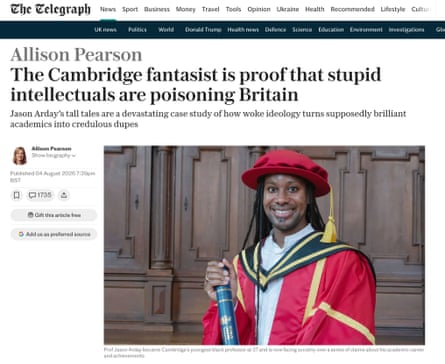
What I do have to say about Jason Arday is really very simple. The overwhelmingly white dons and administrators at Cambridge chose one academic – unrecognised by many of his black peers in the field – and felt his was an appointment with which they could feel comfortable. This resembles a pattern we see elsewhere in public life, where the disproportionately few black people who are selected by white gatekeepers are sometimes chosen for reasons that seem to have little legitimacy among black peers.
Black academics, and black people in general, have never and – it’s my confident prediction – will never demand the right to plagiarise, lie or fabricate our credentials. What we have been demanding is to be treated equally. To be appointed to the levels commensurate with our actual credentials, to have our work taken seriously by intellectual peers, and to be paid fairly and on equal terms for our labour. To not have opportunities taken away because of our race. To have our work, performance and legacy held to the same standards as everyone else’s.
We are very far from anything resembling this. You don’t need a Cambridge degree to see how conveniently the Arday story is serving as a distraction while the media drags us even further in the wrong direction.
I said people signed the petitions for Arday because we are overwhelmed by very legitimate, abundant instances of racism and the sometimes onerous task of doing the due diligence. The last takeaway from this sorry saga relates to this last point, and it’s important. I have heard people say that they assumed the allegations against Arday were baseless because Cambridge said so.
We are too quick to look up to the institutions of the British establishment, and this makes us vulnerable. This is the same reason we accept OBEs, even as they insult our ancestry, and celebrate black “power” even when what that means is high status positions in companies, political parties or organisations that are harmful to our community.
I’m not saying we can avoid these institutions – we are all navigating the same society. But we can be much smarter about how we interact with them, and whether we do so from a place of awe, or whether we do so from a place of strategy, with our eyes wide open.
-
Afua Hirsch is a writer, broadcaster and academic. This is a version of an article first published on her Substack
Explore more on these topics