


Japan’s central bank has raised its benchmark interest rate from 0.75 per cent to one per cent – the highest level since 1995 – as it tries to respond to rising inflation and a weakening yen.
The decision by the Bank of Japan (BOJ) was reportedly influenced by higher energy costs due to instability in the Middle East. A weak yen, hovering around 160 yen to the US dollar, also raised fears of market intervention.
The situation had also increased pressure on the Bank of Japan to tighten monetary policy, with some investors arguing that the central bank has been too slow to respond to changing economic conditions.
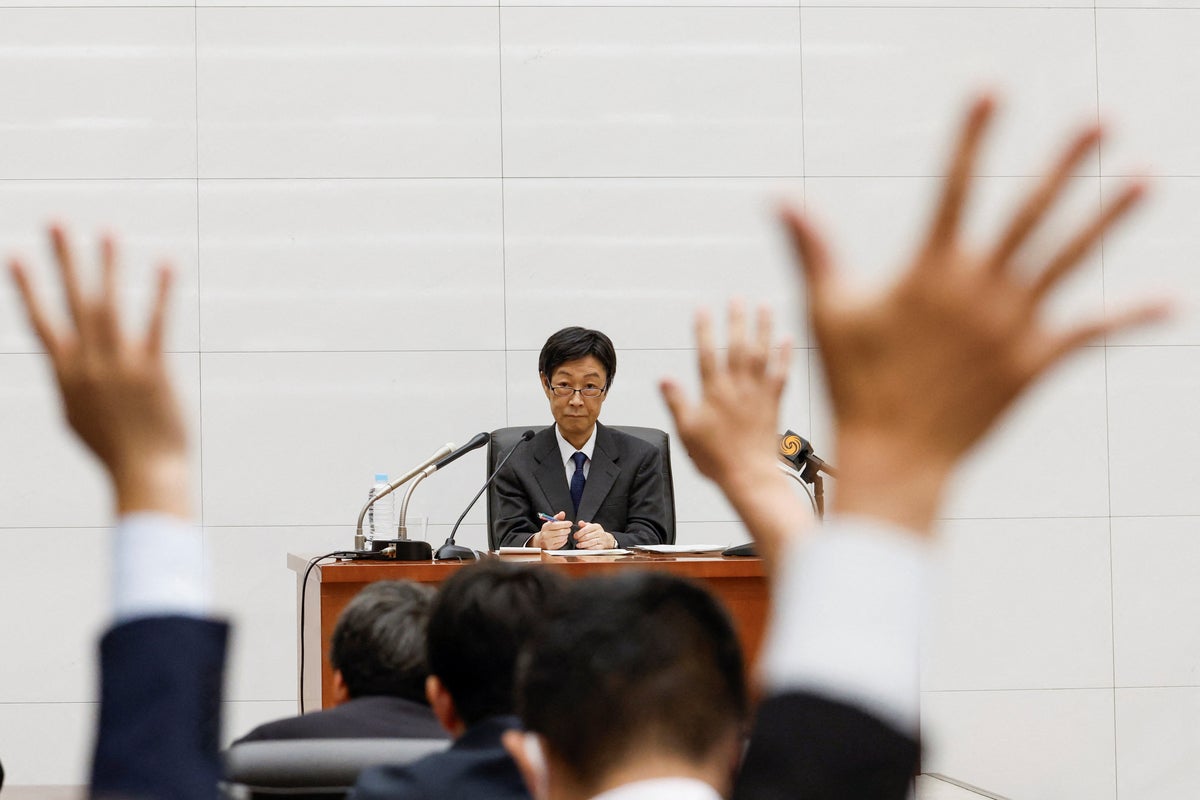
Bank of Japan said it would continue to assess economic and price data as it considers further interest rate hikes. BOJ deputy governor Shinichi Uchida said during a press conference on Tuesday: “Price rises are broadening, and there is a risk that underlying inflation may deviate from our target. With underlying inflation approaching 2 per cent, it’s important to ensure we achieve our target stably.”
Bank of Japan governor Kazuo Ueda did not attend the policy meeting, according to The Japan Times, as he is reportedly receiving treatment in hospital for a liver cyst infection. In his absence, the decision was made by the eight board members who attended the meeting, which was led by deputy governor Ryozo Himino.
The BOJ also announced that it would halt further reductions in its purchases of Japanese government bonds from April 2027, saying it wanted to maintain stability in financial markets.
The central bank started scaling back its bond-buying programme in August 2024 to give market forces a bigger role in determining long-term interest rates. Before that, it had spent years buying large amounts of government bonds to keep yields within a range of 0 to 1 per cent.
“Bond market function has improved significantly, so there was less need to keep tapering. On the other hand, the BOJ has diminished its presence in the bond market, so there was a need to give time for banks, individuals and other domestic investors to take our place. Even then, our balance sheet will be reduced at a sufficient pace,” Mr Uchida said in his comments during the press conference, reported by Reuters.
“We haven’t set in advance how long we will keep buying at 2 trillion yen per month. We believe the reasons we decided to pause our bond paper won’t change easily. But that could change depending on progress domestic investors make in adjusting their portfolios. We could change our plan in the future, while being mindful of the need to give markets predictability.”
US treasury secretary Scott Bessent had earlier repeatedly argued that the most effective way to tackle the yen’s weakness would be for the Bank of Japan to raise interest rates more quickly.
While Washington and Tehran have reportedly agreed to a peace deal aimed at reopening the Strait of Hormuz, uncertainty persists over whether the ceasefire will hold and whether disruptions to global energy markets have truly eased.
“After twenty years of deflation, Japan is now in an inflationary upcycle,” Japan economist Jesper Koll was quoted as saying by the BBC. “Emergency/crisis management monetary policy is no longer needed and the BOJ wants to get back to a normal monetary policy,” he said.
While Japan’s inflation rate remains below the BOJ’s 2 per cent target, wholesale prices have risen sharply, increasing pressure on policymakers to act.
The rate hike is also intended to support the Japanese yen, which has weakened against major currencies. However, higher interest rates could also increase borrowing costs for businesses and the government.
“We’re always watching currency moves closely. We don’t directly target exchange rates in guiding monetary policy. But we engage in monetary policy discussions on the view that currency moves have a crucial impact on economic and price developments. With companies’ wage- and price-setting behaviour becoming more active, the pass-through (of the weak yen) may have a bigger impact on underlying inflation,” Mr Uchida said.
“It’s hard to judge now when our policy rate will achieve levels deemed neutral to the economy … Once we reach that level and financial conditions are no longer accommodative, we will guide monetary policy in a different approach.”
Prime minister Sanae Takaichi has previously not supported an interest rate rise.
“Today’s decision was based on the need to address broadening price rises and the risk of underlying inflation deviating from our target. This would help Japan’s economy achieve sustainable growth and thus is consistent with what the government is doing,” Mr Uchida said.
Naohiko Baba, chief Japan economist at Barclays told The New York Times that the central bank had spent weeks signalling that inflationary pressures were building, making a rate hike all but inevitable. “If it hadn’t happened, everyone would have literally fallen out of their chairs.”
According to the Barclays economist, Ms Takaichi continues to hold a strong belief that a weaker yen and low borrowing costs benefit Japan’s economy. However, he said growing pressure from the United States and the currency’s steep decline have left her with little room to resist tighter monetary policy.
“No matter how much she herself opposes a rate hike, she has no choice but to passively accept it.”