


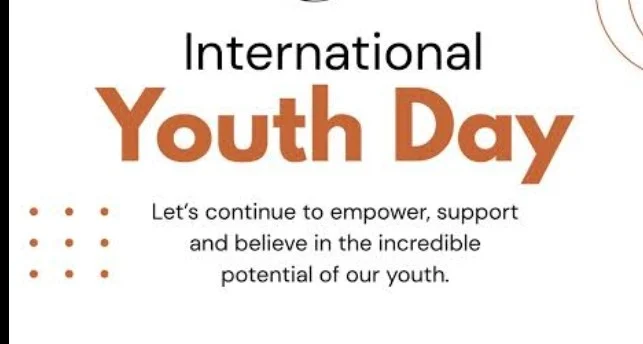
IYD 2026: Jigawa youths seek govt empowerment
August 12, 2026 10:48 pm

Jigawa youths on Wednesday called on governments at all levels to move beyond slogans and match words with action on youth empowerment.
PUNCH Online gathered that this came as the world marked the 2026 International Youth Day with this year’s theme, ‘Different Contexts, Common Aspirations’.
The youths said they would continue to demand accountability until empowerment translates into real jobs and wealth.
It could be recalled that youth empowerment is one of the key components of Governor Umar Namadi’s 12-Point Agenda, with the Jigawa State Government allocating about N12.7bn for Youth Empowerment and Employment Initiatives with the approval of N901.8bn 2026 budget, tagged “Budget of Innovation and Transformation for Greater Jigawa II.”
While commemorating the day, the youths, who spoke in separate exclusive interviews with our correspondent in Dutse, Hadejia and Kazaure, said years of programmes and announcements had yielded little impact for genuine entrepreneurs and skilled youths at the grassroots.
They challenged the Federal Government, state governments, local councils and some partner non-governmental organisations to rethink their empowerment models, which they described as politicised and wasteful.
According to them, most empowerment schemes end up in the hands of persons close to politicians and government officials who have no interest in self-reliance and eventually sell off the tools given to them.
In Dutse, a 28-year-old fashion designer, Hadi Sani, said genuine business owners were often sidelined.
“I have been sewing for five years, and I need just one industrial machine to expand, but the people they gave machines last time are not tailors. Two of them came to my shop to sell the machines to me,” he said.
Similarly, a youth farmer from Hadejia, Usman Dankoli, told PUNCH Online in a telephone interview that genuine farmers were being abandoned.
“We are already into rice and sesame farming. What we need is support with inputs and water pumps, but they give it to civil servants’ children in town who don’t even know the farm. At the end, they sell it,” Dankoli lamented.
Another youth, Bashari Kazaure, a graduate and owner of a small bakery in Kazaure, said youths wanted sustainable tools, not token handouts.
“Empower us beyond slogans. Give us market linkage, affordable loans and training that leads to certification,” he said.
Also speaking via telephone interview with PUNCH Online, Naziru Adamu, a resident of Ringim town and a phone repairer and phone accessories dealer, said the government must audit beneficiaries.
“If you empower the wrong person, you have empowered waste. We who are already in the business and need a small push are ignored because we don’t have godfathers,” he stated.
The youths jointly argued that empowerment should be needs-based and community-verified, rather than based on lists generated by political offices, adding that this was why many schemes had failed to reduce unemployment in Jigawa and Nigeria at large.
They also accused some partner NGOs of following the same pattern, alleging that items and funds meant for vulnerable youths were channelled through political allies.
Efforts by our correspondent to get the reaction of the Jigawa State Government proved abortive, as calls to the Commissioner for Information, Youths and Sports, Sagir Ahmad, were not answered or returned as of press time on Wednesday.
The commissioner also did not respond to a text message sent by our correspondent seeking the government’s comment on the youths’ claims and the state’s plans for this year’s IYD.
Reacting to the development, a Jigawa-based activist, Inuwa Babale, said the anger of the youths was legitimate and reflected failed implementation not only in Jigawa but across the country.
Babale, who spoke in an exclusive interview with our correspondent in Dutse, said, “You cannot keep empowering people who are not in business and expect self-reliance. That is why poverty persists. Empowerment has become political settlement.”
He added, “Government must publish names of beneficiaries, involve trade unions like tailors, farmers and welders’ associations in selection, and monitor usage for six months. Anyone who sells the tool should be blacklisted.”
The activist urged the Federal, state and local governments to create a unified youth database and partner with credible cooperatives rather than political structures to ensure transparency.
All rights reserved. This material, and other digital content on this website, may not be reproduced, published, broadcast, rewritten or redistributed in whole or in part without prior express written permission from PUNCH.
Contact: [email protected]