



‘I’ve sat at the very precipice of life’: Clarke Carlisle on gambling, depression – and survival
The former professional footballer has struggled with his mental health for most of his life. But it took five suicide attempts for him to admit how badly he wanted to end it. He talks about how he turned the corner – and his hopes for his new post with the charity Mind
‘How are you?” I ask Clarke Carlisle. Usually when you meet people it’s a nicety. Not with Carlisle. He smiles ecstatically. “I’m incredibly well, thank you. Yeah, really, really good,” says the former footballer and incoming chair of the mental health charity Mind. “I have been consistently well – not just stable, but well – for three or four years now.”
Few people understand what it is to be mentally unwell quite like Carlisle does. And few understand what recovery means like he does. “It doesn’t happen by accident. Once you get stable that’s not the end of the journey. And that seems to be the MO of our society these days. You do something, you go into hospital and they patch you up, then send you on your way. And that’s the same with mental health. You might get some pills, have a counselling session, you might have a hug and a chat with someone, and they think that’s the end of the journey. And it’s not.”
It has taken him a lot of work to get to the stage where he holds down a senior day job with the gambling support charity Betknowmore, believes in himself again, enjoys family life and truly wants to live.
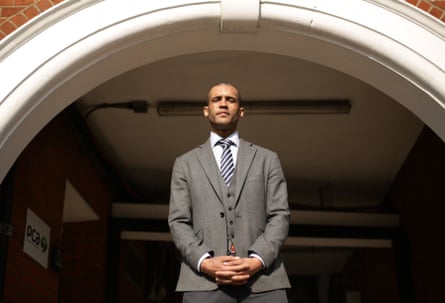
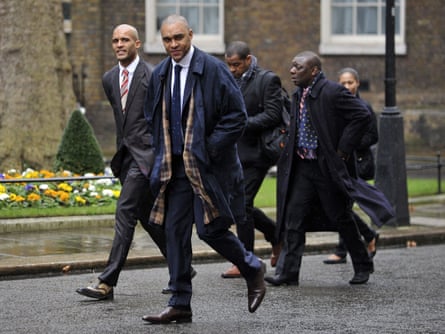
In his 20s, Carlisle looked as if he had it all. He was a handsome centre-back playing for clubs including Blackpool, Queens Park Rangers and, at his peak, in the Premier League for Watford and Burnley. He was also the chair of the Professional Footballers’ Association (PFA), hugely respected by his fellow players. Clarke appeared on the BBC’s Question Time, more than holding his own with MPs on the hot political topics of the day. In 2002, he beat 11 other players to win a TV quizshow hosted by Carol Vorderman called Britain’s Brainiest Footballer.
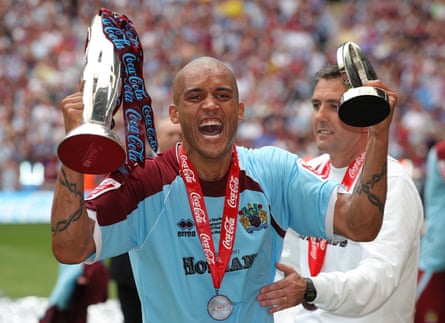
After making more than 500 appearances for nine clubs in a 17-year career, he hung up his boots in 2013. Carlisle was one of the last footballers you would have expected to struggle on retiring. There were so many opportunities for him – in business, media, coaching, you name it. But struggle he did. In December 2014 came the shocking news that Carlisle had tried to kill himself by jumping in front of a lorry. It wasn’t his first attempted suicide. Nor was it to be his last. There have been five in total, Carlisle says.
For most of his life, he has suffered with depression. Despite Carlisle’s success, he believed he was a failure. Retirement exacerbated this. After his experience with the PFA, he thought he would walk into a senior executive role. But, he says, he was patronised by the corporate world. “The condescending nature of business to sports people is off the scale. They said things to me like: ‘You’re very intelligent, aren’t you?’ For what? ‘You’re very well spoken, aren’t you?’ For what? Is it for a black man, or is it for a footballer, or for both?”
Fortunately, he got himself a £100,000-a-year contract as a TV pundit for ITV. But he was still finding it hard to adapt from his footballer lifestyle. He and his first wife were due to make a down payment on a £675,000 house when Carlisle heard that ITV wasn’t renewing his contract. Yet again, he told himself he had failed. He tried to gamble his way out of it, as he had done many times before. So many athletes are attracted to gambling, he says, because their life is predicated on win or lose. “When I went in the doors of the casino, I was coming out with half a million pounds or nothing.” He came out with nothing. Two days later, he jumped in front of the lorry.
Astonishingly, Carlisle survived. But he was a mess. He was airlifted to Leeds general infirmary, where he was stitched back together over the next two days. “I remember being in the air ambulance and the paramedic said: ‘This guy is DOA.’ Dead on Arrival. And I remember thinking: ‘Happy days!’ But I wasn’t.” He pauses. “Thank … God,” he says fiercely. A short while later, the crew asked him his name and what year it was. “‘Clarke Carlisle, 2014,’ I said. Then I went: ‘Fucking hell! I’ve not even got amnesia!’”
Carlisle, 46, has always had a good sense of humour. He talks incredibly movingly and perceptively about depression, but you sense he could just as easily turn his hand to mental health standup.
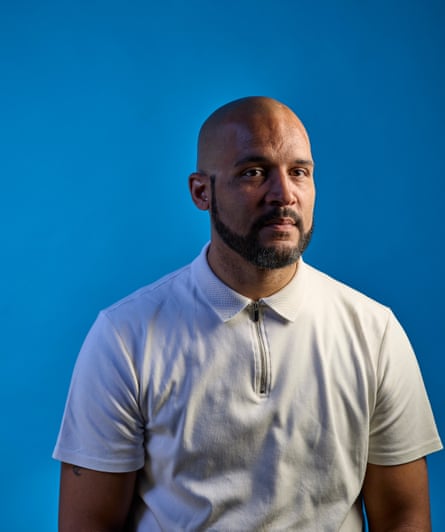
Today, he lives in Newcastle, where his wife comes from, but we meet at the Guardian’s office in London. He’s dressed in shorts and a polo shirt on another fizzing summer day. Carlisle is little changed from his footballing days: now bearder with a few extra scars. He always had plenty of scars – the souvenirs of a defender’s life. But these are more painful reminders. The most dramatic slices are from his crown to his left eyebrow, like a steep contour – a result of his 2014 suicide attempt. He’s got a dog-tag tattoo on his upper arm to mark the date of it. “Small steps,” it says.
The young Carlisle was gifted. He left school with 10 grade A GCSEs (five of them A*s), then went into his football apprenticeship. But nothing he did seemed good enough for his father, a former semi-professional player and God-fearing old-school disciplinarian. All the young Carlisle wanted was approval, and he rarely got it.
In professional football, he found it much the same. But now it was machismo rather than God that dictated the terms. He appeared hard as nails, bantered with the best of them, but the culture was eating away at his insecurities. After his first training session at Leeds United, he returned to the changing room to find his new shirt and shoes shredded – a practical joke, an initiation ceremony, call it what you will; he drove home in tears. In professional team sport, he says, your best friend can also be your greatest rival – an injury for you is an opportunity for them. The football narrative “You’re only as good as your last game” invites insecurity. And if you show vulnerability, it’s pounced on. Despite his success (three appearances for England under-21s and an £8,000-a-week salary at Burnley) he was struggling. His drinking and gambling spiralled.
Carlisle has often been labelled an alcoholic and gambling addict. He says it’s up to others how they see him, but he doesn’t accept those terms. If you do, he says, you render yourself powerless. Today, he doesn’t gamble. He says he could happily drink and leave it at one or two pints, but he chooses not to. Alcohol was not really the cause of his problems, he insists, just the symptom. He had to deal with the motivation behind his drinking. “Once you address your motivation and put positive coping strategies in place, the action is largely irrelevant.” He used alcohol to obliterate his fears and to escape.
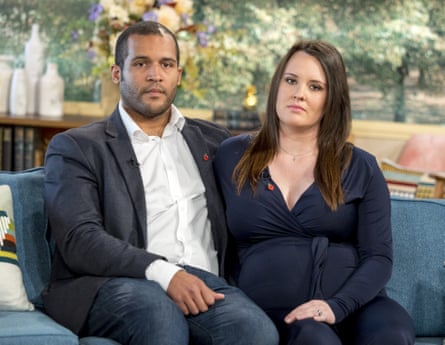
After the suicide attempt in 2014, Carlisle was diagnosed with recurrent complex depression disorder and borderline personality disorder. He left hospital with a cocktail of meds, dismantled what was left of his life and began to rebuild it. He and his wife, with whom he had two children, separated. In 2016, he met Carrie Armstrong. They married the following year, and now have two children aged eight and six.
It felt as if his life was falling back into place. But there was a terrible fallout from what happened in 2014. The lorry driver, who suffered PTSD, successfully sued Carlisle. Seven months after the incident, a 24-year-old van driver who had swerved to avoid the prone Carlisle, and then went to his rescue, took his own life. He had spoken publicly about being traumatised by the incident. While many people were sympathetic to Carlisle, some were less so. His former friend and ex-housemate, the actor Ralf Little, tweeted that Carlisle was going to “get away with it – AGAIN”. In his memoir, Carlisle admitted he took Little’s bank card to buy petrol and then used it to fund a two-day drinking and gambling bender.
I ask him if he ever made up with Little. “I’ve not spoken to Ralf for a long time. I apologised to him and he heard that apology, but it didn’t reconcile the relationship.” And that’s fair enough, he says. “I undertook behaviours and actions that had huge impacts on other people’s lives. I can be as contrite as I want, but those actions hurt people, Simon. There’s no getting away from that, whether it’s Ralf or my ex-wife, my children, my parents, whether it’s the lorry driver and his family. My actions impacted other people’s lives. That’s why I’m so passionate about the work I do now. Because it’s never just about the person experiencing adverse mental health; it’s the affecting others around them and the butterfly effect. The factors of multiplication are so far-reaching.”
In September 2017, four months after and he and Carrie had married, Carlisle went missing. He was spotted by a stranger 12 hours later in Liverpool, sitting on a bench. The man sat down with him, told him that he had just lost a close friend to suicide, and begged him to phone home. Carlisle agreed to let him call Carrie, who was pregnant with their first child. “I’d thrown my wallet away, thrown my phone away,” he says today. “I was trying to find the most suitable location and manner in which to take my own life.”
I ask if this is because of what had happened in 2014, and mention the van driver. He gulps. “One of the first people on the scene took their own life, yeah,” he says quietly. “Yes, I was looking for a responsible way to take my own life. Where would the first responders be happy to find me? Where would my wife like to find me? Where would nobody find me? These were the measurements I was taking with that unwell mind; trying to factor in the human impact of the choice, but still from an incredibly illogical base.”
The crux of that illogical base was his conviction that the world would be better off without him; that he would always be a drain on loved ones. Was he glad that the stranger stopped him? “Not immediately, no. That first week in psych hospital I decided to be brutally and unapologetically honest with what was going on in here.” He points to his head. “So when my mum and dad and Carrie came to see me and said how are you, I said: ‘I want to die.’” Had he never said that to them before? “No, never. No. From 2010 to 2017 I’d been very honest about my depression, but I’d never been honest about my suicidal ideation.”
This is when he started to turn his life around, with the help of his family. He says he doesn’t want to go on too much about Carrie because he’s aware that plenty of struggling people don’t have a Carrie for support. But he can’t help himself. “My wife, my human, is the most incredible woman I’ve ever met.” He beams from cheek to cheek.
During that time in hospital, he started doing the work he should have been doing for decades. He looked back to 2014 and realised all he had done was medicate himself out of the immediate crisis.
For all he had believed he was a mental health expert, he now realised he wasn’t. And for all that he thought he understood himself, he didn’t. He was introduced to cognitive analytic therapy. “You mind-map all your thoughts, beliefs and values. It was so enlightening for me.” Ever since getting back to a good place, he’s worked hard to stay there: healthy diet, early nights, exercise, therapy and, of course, plenty of talking.
Having got through the worst, though, he was left broke. The exec jobs he dreamed of never materialised, so he went to work for Amazon as a van driver. “Those shifts are brutal,” he says. But he loved it. “I went from training to training other drivers within 10 days.” He applied himself with the same rigour he did to football. “You’ve got to do it as efficiently as possible. Can you imagine how much that played into me? Elite athlete mindset perfection. I had my nine-hours shift done in about five hours, then I was going around sweeping other people’s shifts up.”
He gave it up after six months when he was appointed business development executive at Betknowmore – a job he’s every bit as invested in as the voluntary office of chair at Mind, which he takes up in September. He already has a firm grip of his agenda at the mental health charity. “First of all, we need open access to mental health services, and a single point of access.” In other words, when people are in crisis they need to know where to go. “Then we need to break up the system into crisis, recovery, wellness. Distinct parts that everybody understands. It’s a traffic light system, and if people know where they are then we can give a clearer understanding of the services that are needed at each point. That. Must. Happen.” Crisis means the NHS; recovery takes place in community hubs, which should help with everything from complementary therapies to social clubs and financial advice; and finally, wellness is up to the individual to actively maintain, with help when needed.
Carlisle says he needs a wee. “Remind me when I come back to talk about young people and mental health.” The 2014 lorry incident affected his bladder for a while, he tells me on his return. “OK, young people. When it comes to children and young people, we’ve got people of our generation trying to create and impose systems for our young people. What do I know about what it is to be a young person these days? We don’t know what it’s like to have grown up through Covid and the digital age.” Young people are so much more emotionally literate than his generation, he says, and we’ve got to respect this. “We need to have our children and young people inform the services we construct and deliver.”
It’s wonderful to see Carlisle back, and so determined to use his experiences to help others. And, as he says, who could be in a better position, having survived all he has? “I genuinely believe I can convey a message,” he says. “I’m a man who has sat at the very precipice of life.” His voice is getting more fervent by the second. Now he sounds like an evangelical preacher – not for God, not even for good mental health, but for life itself. “I have been in end-of-life care, I have been in crisis care, I have been in psychiatric hospitals, I have been in multiple therapeutic services; not only have I been through them, I live them every day, Simon, and I live them now to a point where I am so well.” And finally he takes a breath. “So well.”
Long may it stay that way.
Explore more on these topics