


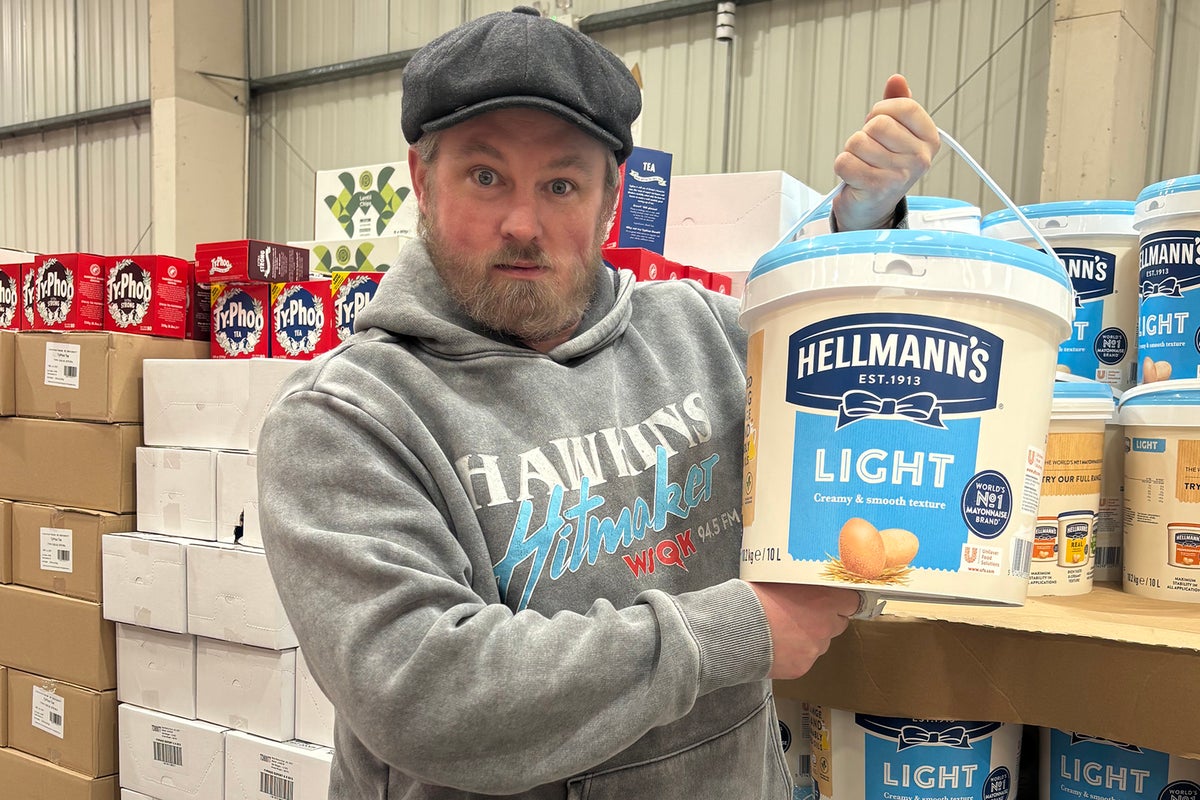
It was eight years ago that Mike, who goes by the name UK Urban Prepper, began stockpiling food and water for his family.
The 42-year-old feared the Earth could be hit by a record-strong coronal mass ejection (CME) from the sun known as a solar flare, taking down satellite communications and key infrastructure.
But now, he says, he is preparing for all manner of national emergencies, including threats posed by wars across the globe, food shortages caused by severe climate change and the boom in AI – which he claims could result in “Terminator rising up and killing us all, or just massive joblessness”.
“I‘m pleasantly optimistic and hope we muddle through – as Brits do – but everyone I speak to now is saying a national emergency is likely in the next 12 months,” says Mike.
Mike, from Greater Manchester, is known as a “prepper” who proactively prepares for disasters.
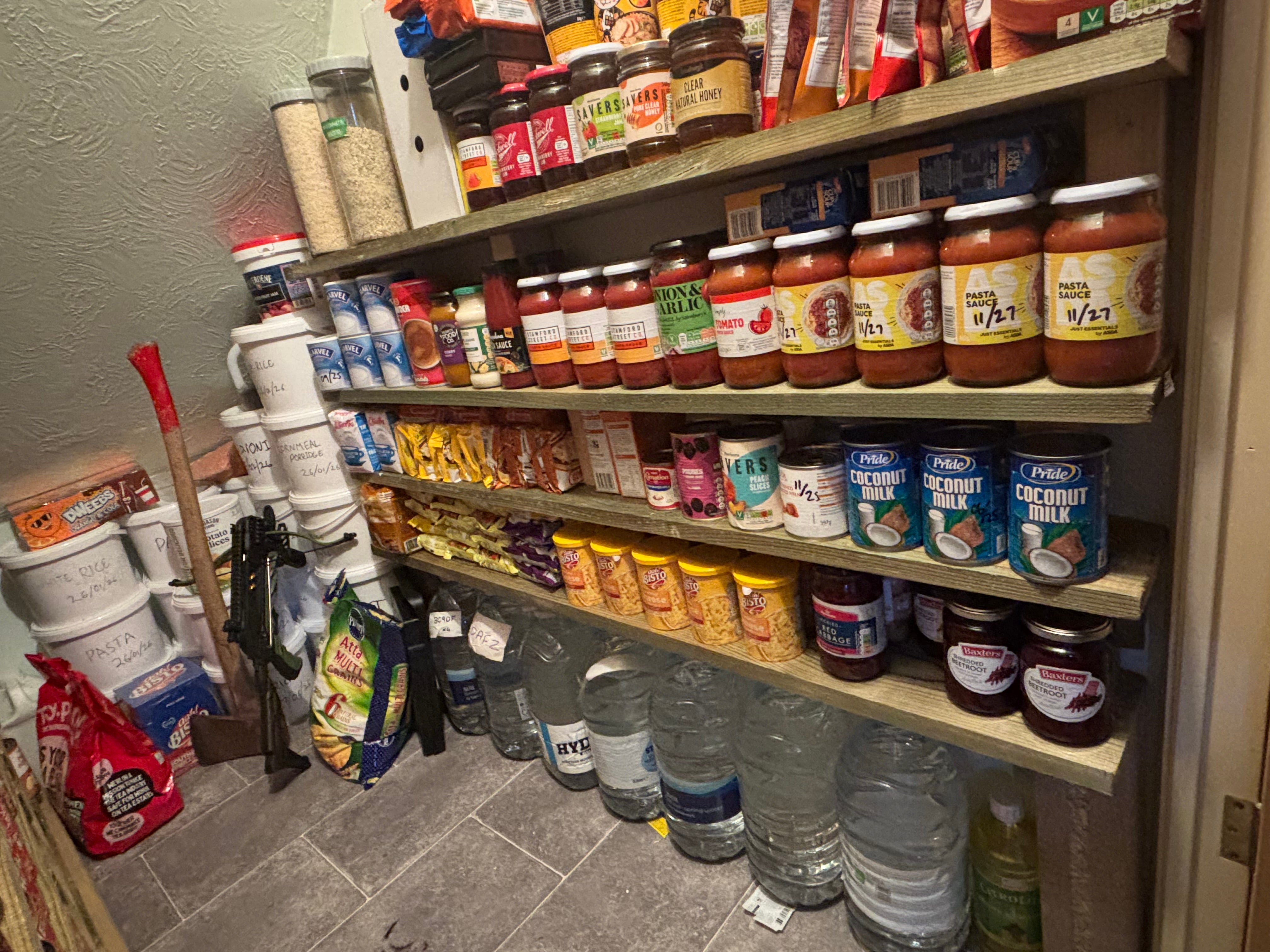
Inside his three-bedroom terraced home he shares with his finance and two-year-old daughter, Mike has packed, shelved and logged glass jars, tins and packets of food across kitchen cupboards, under the stairs, in the dining room and even in the Ottoman bed.
Categorised into three tiers – with the first being tinned foods and the third being freeze-dried packed meals – Mike has enough food supply to last his family around 250 days.
 open image in gallery
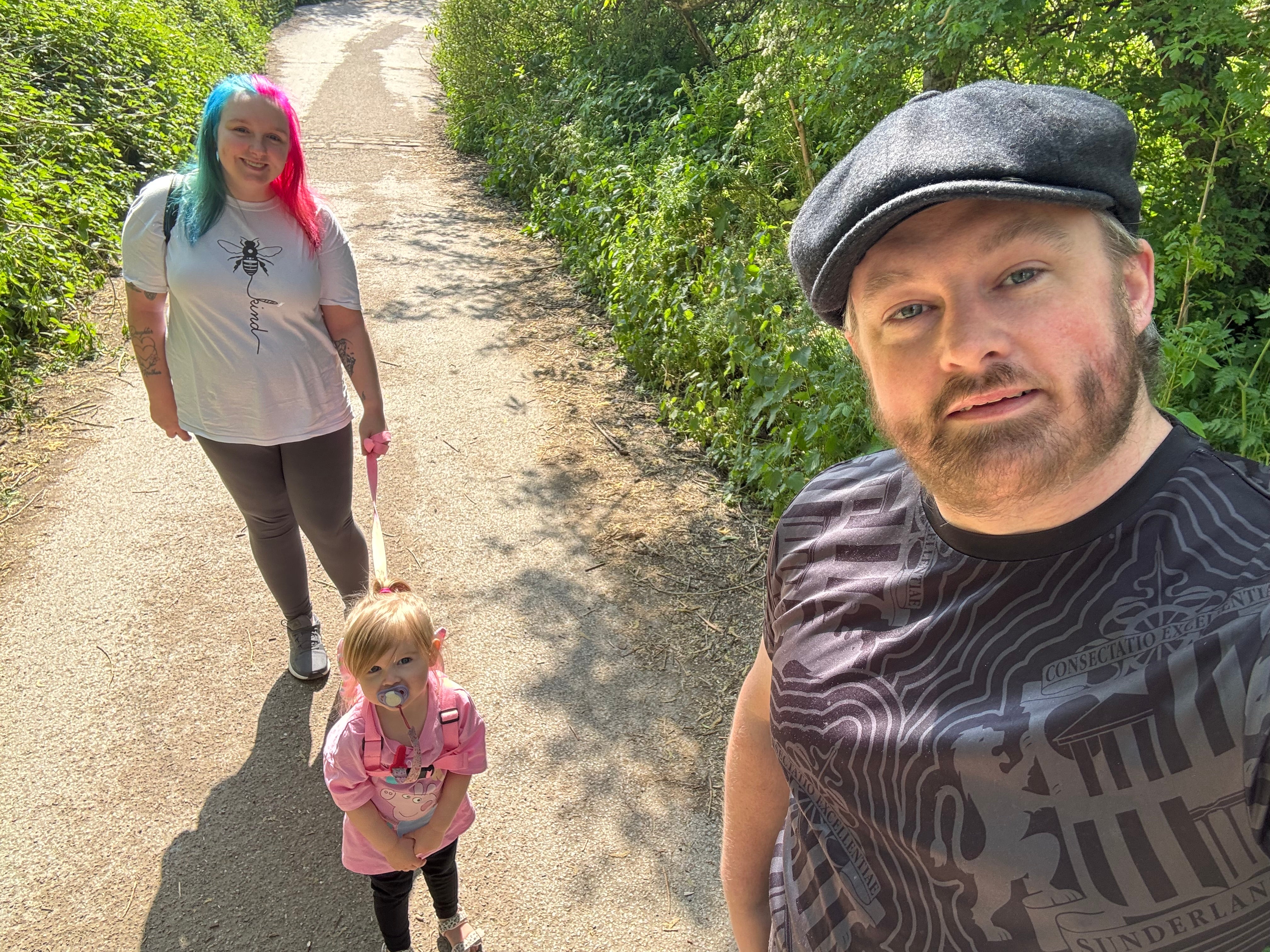
He is also one of the leading faces of a growing survivalist community in the UK with a YouTube channel with more than 15,000 subscribers.
Recent videos include a dramatised home escape during a virus outbreak to an underground bunker. In another, he commentates on a 90-day scenario following a “British collapse” with a ticker predicting 90 per cent of the population would be wiped out.
“The biggest thing with preppers is we could be wrong on 365 days of the year,” Mike tells The Independent. “And every time we’re wrong it will justify people who don’t prep or say ‘I told you nothing would happen’.
“But the one time, if we are right once, we’re OK, but for everyone else it will impact their life massively. It doesn’t affect me if I’m wrong. I get to go on holiday, I do lovely stuff with my kids. I don’t want to be right, but what if?”
Mike is not alone in his views. More than half-a-dozen UK-based social media groups feature posts on advice from batch cooking curries to conspiracy theories warning of future disasters.
Geographical zones have also been created for survivalists to create secret meet-ups or share emergency alerts.
A group called Silent Legion, calling itself the largest community resilience organisation in the UK and boasting members of all walks of life including carers, veterans and “everyday folks”, offers support with food security and tactical movement.
 open image in gallery
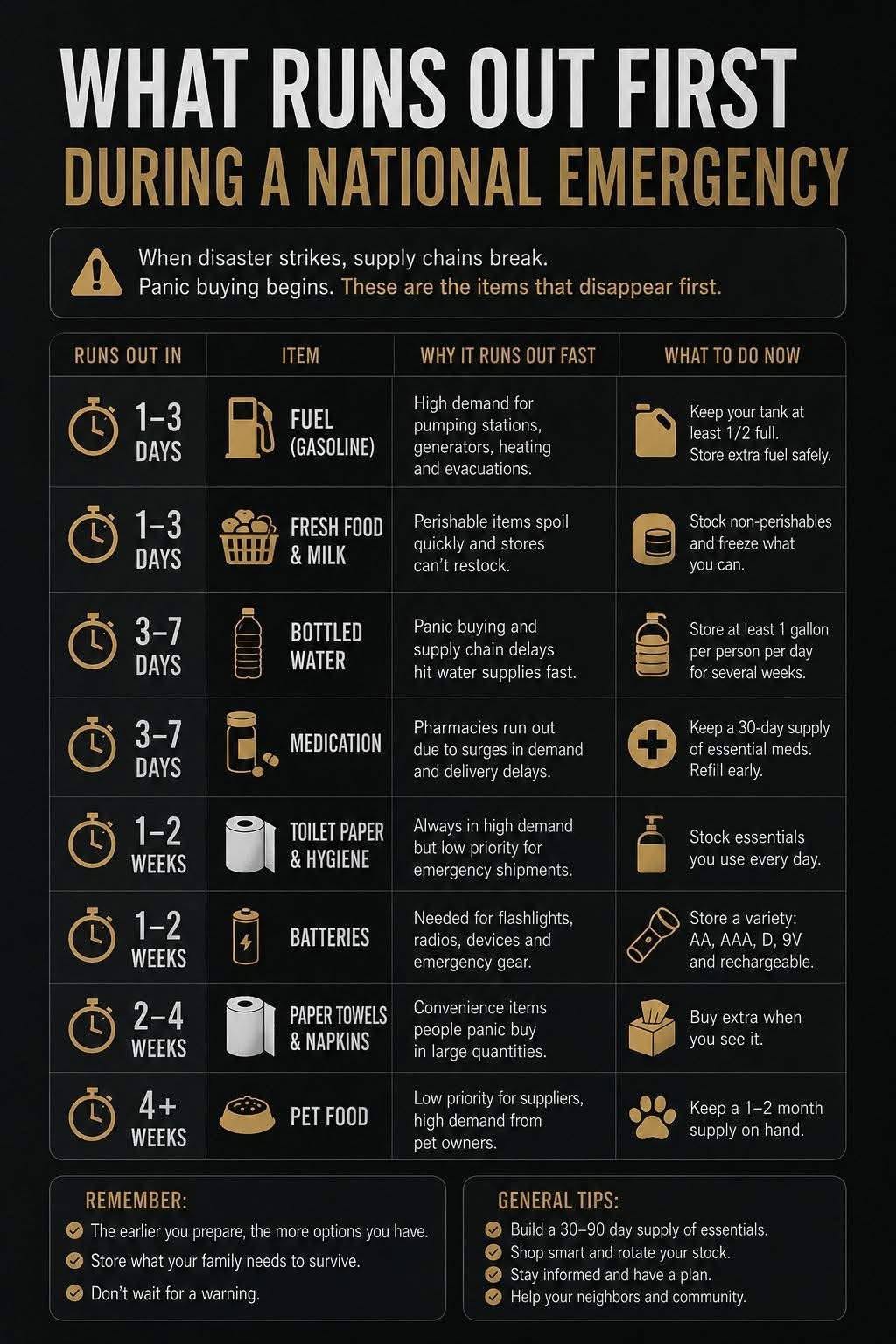
The growth in the online community comes amid the launch of a government campaign called “get prepared for emergencies”, providing small steps during an emergency including having a back-up supply of non-perishable food and bottled water to last “a few days”.
Andy Burnham’s government is now reportedly looking to go further with a social media campaign featuring advice to help people deal with the impacts of extreme weather. “It will be common sense, not scaremongering,” a source told the newspaper.
Mike believes current world issues justify the message to the public.
The El Niño, a powerful climate phenomenon that is pushing up global temperatures, is already leading to food shortages, he says. And he believes coffee drinkers should stock up on two years’ worth before growing regions are affected.
 open image in gallery
Mike, who is shortly releasing an app for preppers to list items they stockpile, highlights the “worry and risk” facing the UK from the wars in Iran, Ukraine and Israel. He also fears the rise in AI, which he says has hardened his challenge in finding work as a web developer, could lead “artificial general intelligence” [when AI matches or surpasses human capabilities] as early as next year, as predicted by some scientists.
”Whether that means Terminator rises up and kills us all or whether that just means massive joblessness, it’s irrelevant, it’s going going have an impact us on all,” Mike says.
On spreading his message to the public, he says: “It’s hard having a conversation with anyone that got the ‘somebody will come and save me’ attitude or ‘something goes wrong the government will sort it’ mindset.
“That is a lovely blissful place to live in, but resilience is the message – not prepping, not doomsday prepping, not survivalism – just resilience, it’s as simple as that.
 open image in gallery
“You’ve got to think smaller scale, if you had to get out of your house because of flooding, because your neighbour’s house is on fire, can you grab a bag, can you go somewhere? Then you need to think what food have I got if something happens. It goes from there.”
Other preppers approached by The Independent in the community do not want to speak to the media, but one prepper shared items he had stored, including canned meats and fish, spam and canned beef, tea and coffee. He also has stored toilet rolls, a first aid kit and a crank radio to hear emergency alerts.
“I am on a small budget so have had to just buy little bits every month, so little by little,” he says.
He adds: “I am a single person in a one-bedroom upstairs flat so storage is an issue.”
 open image in gallery
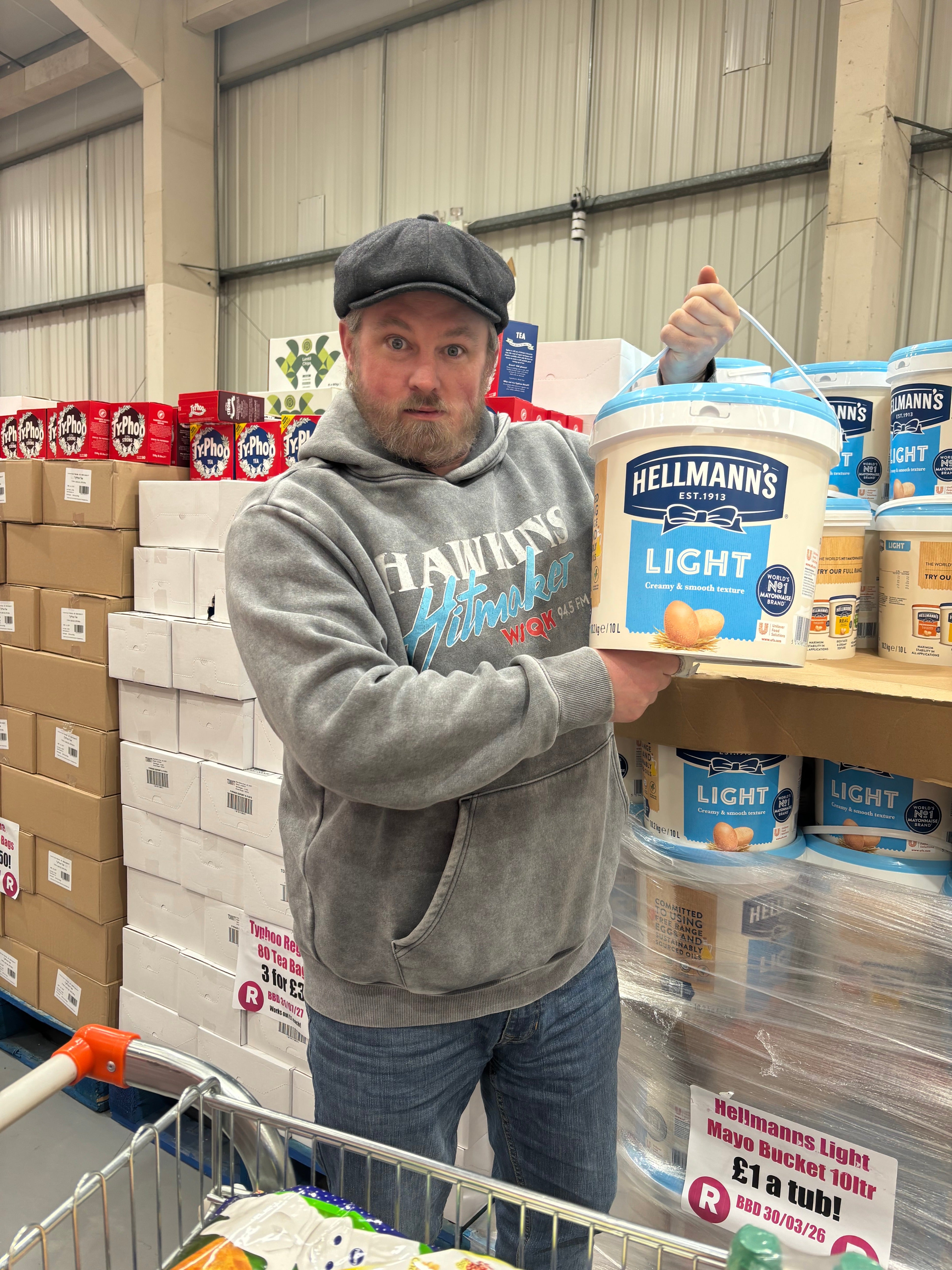
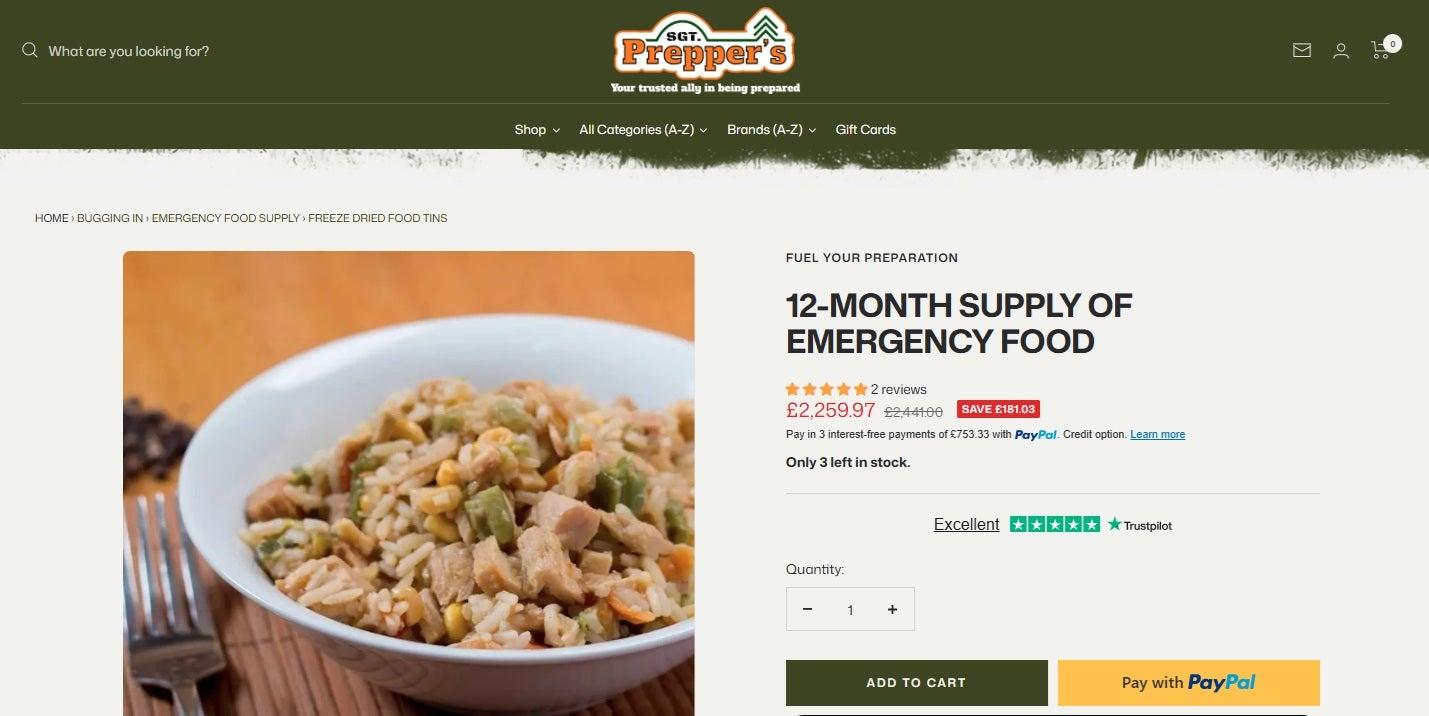
Preppers often buy items from Costco and other bulk-buying stores, but there also specialist online shops like Sgt Prepper selling gear for resilience and survival. Items include a 12-month supply of emergency food for £2,259, to a freeze dried pot of 30 servings of green peas for £41.25.
Gas masks are on sale from £205 as well as hazmat suits for children and adults from £102.
WorkerJosh says business has been busy since the start of the Iran war with people buying gas maks to live outdoor for three days. The sale of freeze dried food had almost doubled, he says. He adds: “I don’t like the word ‘prepper’. It should be normal as the supply chain of food, when it comes under pressure, is so fragile.”
The Bug Out shop in Maesmynis, Powys, also sees spikes in business “when something big comes on the news”, says owner Lee Price. Food and shelter equipment are among the popular items bought up by customers.
He says: “People buy thing sfor an array of things. Not alot of people open up to it, but it’s making sure they have enough supply in their home to look after their family. They are not talking about running around like a headless chicken from zombies, but just making sure they are prepared for if the power goes off or food runs out at supermarket.”
Research published this year by Link group, the UK’s ATM network, found many people had already taken steps to prepare for major disruption by stockpiling food and battery-powered torches.
Dr Kezia Barker, associate professor in environmental futures at Liverpool John Moores University, who has been studying the prepper community for 10 years, said the demographic of a typical prepper was widening from a white British man mistrustful of academics to a concerned parent or disabled person.
She said: “The boundary lines of a prepper are becoming blurred as more people consider taking sensible action by following government advice in prepartion of an emergency.”