


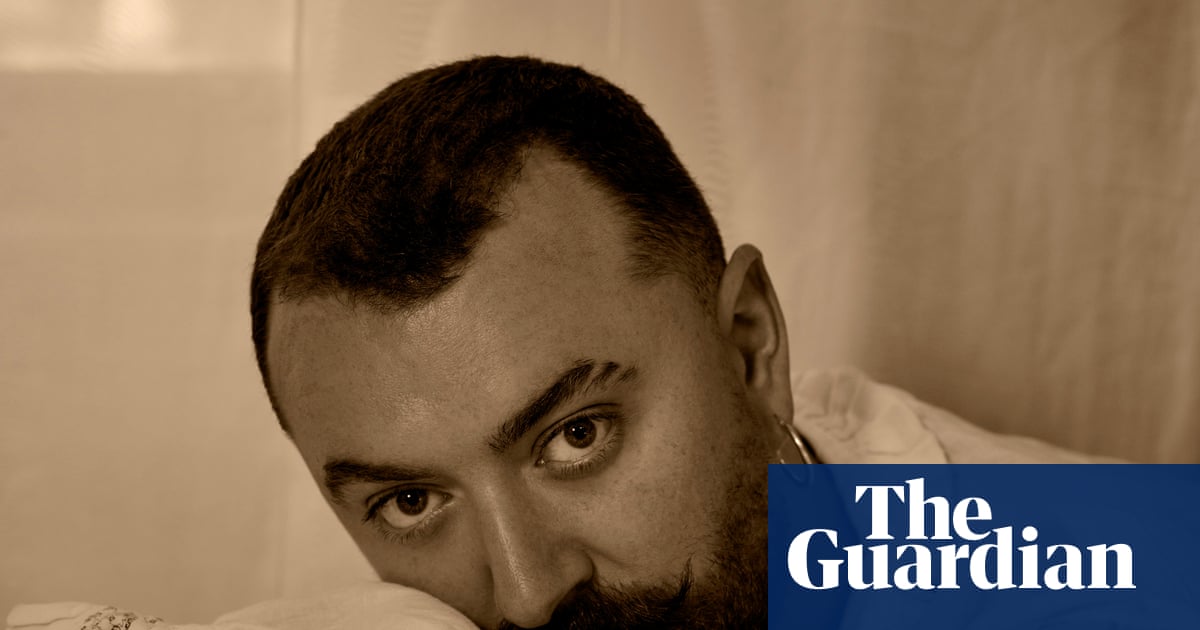
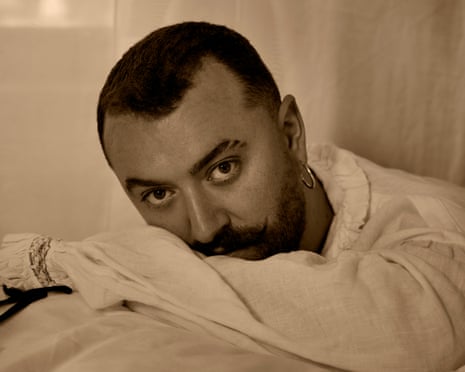
‘It was lonely being a young queer artist’: Sam Smith on finding health, happiness – and their hazel-eyed fiance
On their new album, Smith is subverting their singer-songwriter roots to tell a queer love story. They talk about their shifting fanbase, the nasty undercurrents of fame – and finding sanctuary in New York City
Sam Smith logs on to our video call with the username “Lily of the Valley”, the May-born singer’s birth flower. It sets a serene tone. They’re in Guadalajara, Mexico, for the latest stop of a residency tour, titled To Be Free, in support of their fifth studio album. Instead of Smith’s usual jet-lagged arena itinerary, this lower-key excursion stops at smaller venues in only six cities and sheds the ostentatious theatricality of their last outing.
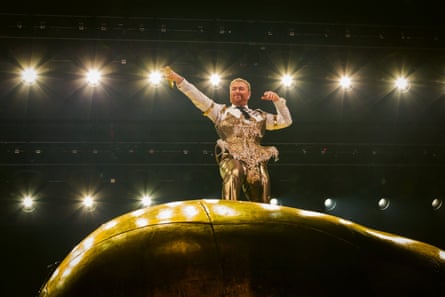
On stage on their last tour, “I was flailing around on a massive gold bum and had, like, seven costume changes,” Smith says with a chuckle. It’s intimacy they’re after now, the ability to satisfy their “craving to look at people again”, which matches the romantic feeling of their fifth album, Hazel Eyes. But for Smith, whose genre-shifting stardom has been accompanied by harsh controversies, it’s also a chance to observe who’s still in their corner: “There’s some wonderful people that have stayed, but it’s a completely different room than it was with In the Lonely Hour,” their 2014 debut.
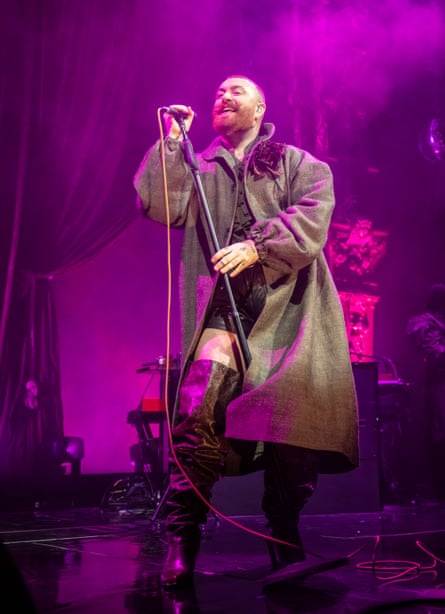
Smith broke out at 20, as the featured vocalist on Disclosure’s massive 2012 hit Latch. That 2014 debut, featuring the mega-hit Stay With Me, heralded them as a soulful chart-topper, if one whose knack for heartbreak could verge on self-pity. It was good enough for Bond: in 2015, Smith sang the Spectre theme Writing’s on the Wall and won an Oscar. Their subsequent releases veered into a glossier pop sound and generally remained as successful. But since coming out as non-binary in 2017, the British singer has frequently been attacked and vilified by rightwing commentators. The peace that emanates from the 34-year-old during our call, and from this latest album, was largely achieved after relocating from the UK to New York three years ago to be with their fiance, the (hazel-eyed) designer Christian Cowan.
“When I got here and was able to walk in the street and feel no judgment, I realised that I was very happy to have found a sanctuary in New York City as a queer person,” they say. Smith, who has been wearing “makeup and wild femme clothing from a very young age”, found that “tensions were a little high” after the 2023 release of their expressive last album, Gloria. “With a body like mine and the person that I am, it created a bit of a media storm.” (The videos for Unholy and I’m Not Here to Make Friends were accused of being oversexualised, with a rhetoric that felt transphobic to many observers.) “But I moved to New York for positive reasons. I wasn’t running away from anything.”
After Gloria, Smith “was looking for safety and comfort in music”, something to capture “the bloom of falling deeply in love” and buoy their cross-continental move. They found it by downsizing their process. Simon Aldred, with whom Smith had co-written one song on their debut, had long told Smith to call whenever they were ready for a more intimate collaboration. For Hazel Eyes, Smith took him up on it.
The result is a more clear-eyed assessment of the reality of relationships than Smith’s lovelorn previous albums. They wrote the first half of what became the smoky opener, Everlasting Love, the night before meeting Cowan; the second half reflects on their three years together. It’s also Smith’s first time co-producing an album. “I’ve always been very hands on with my music, but I never felt like I could really put my name on the credit,” they say. “I’ve realised that I’m not just a singer and a songwriter, I’m an artist.” Hazel Eyes’ soundscape channels a dusky, 70s blend of blues and folk, R&B and outlaw country.
The process was looser than Smith’s past experiences in more professional, structured writing rooms, where they felt that recording had to be done “completely sober and all had to happen between the hours of 10am and 5pm”. Hazel Eyes was written at all hours, thanks in part to their near-constant conversations with Aldred; Smith mentions tequila-tinged 1am studio sessions with the Dap-Kings, the late Sharon Jones’s band, as a high point: “It just felt so freeing, what music’s about.”
These relaxed, more intimate collaborations scared Smith, who says they had operated as “a pop ho for a long time – in the best way. I loved it, and I will be that again, but every two, three records were written with a different group of people. It was like a speed-dating process of making music.”
Hazel Eyes is also a return to the singer-songwriter style of Smith’s debut. They don’t see it as a rehash, but a new angle on traditional songwriting tropes. “A song like My Guy, that lyric is so simple and one that maybe we’ve all heard before – ‘He’s mine, mine, mine, he’s my guy’ – but you haven’t heard it from a non-binary person who’s 34 years old in 2026. I was very interested in that type of lyric-writing for this album, to take the traditional and sing it through my lens and sing it freely.”
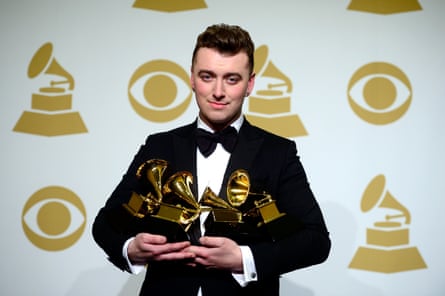
It was only after the success of Unholy, their 2023 duet with Kim Petras, that Smith found the freedom to return to that classic sound. With its baroque electropop and panic-baiting live performances (at the Grammys, Smith sported a pair of devil horns in a red-lit, fiery set), the global No 1 single earned them a Grammy – and condemnation from conservatives. “When Unholy happened, I felt like I’d been fighting for that song for a long time,” says Smith – they had always wanted to top the US charts, having previously peaked there at No 2 with Stay With Me.
Global competition is no longer a concern for Smith. “As a queer artist, I have different parameters and rules, so it’s just not a healthy way for me to think,” they say – that for any artist whose existence is, to some, contentious, fame is always rigged with a nasty undercurrent, no matter how quantifiable their success. Smith says they were at their “most depressed or creatively stunted” during that chase. With Hazel Eyes, they wanted to focus on emotional truth rather than “worrying about hooks, even though I love hooks”. They’ll return to that, says Smith, “but it’s my prerogative to choose when I want to use that tool”. This led to some “uncomfortable moments” with their label, with Smith having to say “I just wanted to keep the business out of the music”.
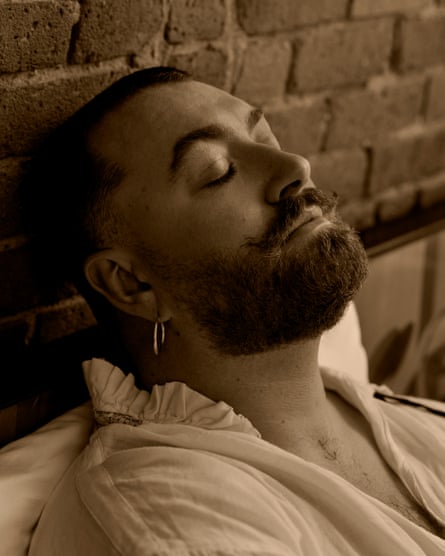
Hazel Eyes was the first time Smith set a colour palette (“this brown, sepia filter”) and ethos to which every song must be upheld: a familiar guiding image, based on a lifelong affinity for rivers born out of a bucolic spot near their Cambridgeshire home town. Any ideas, sounds or lyrics, even the more urbane, New-York-inspired ones, would have to sound at home in that domesticated image in order to make it on to the record. They found that rigour liberating – it allowed Smith to lean into the maximalism of carrying through a single idea. “I like spilling over the sides,” they say. “There’s something for me in the imperfection of it that feels so pop.”
It’s a point of pride for Smith to have reset their relationship with the public on their own terms. Becoming a celebrity at 20 meant that they quickly found an “incredibly traumatic” side to fame, “especially to a younger, queer brain, because it felt quite lonely at times within the industry”. For a few years, from 27, they shunned the “huge part of the job” that is constantly taking selfies with fans. Doing so allowed them to recover some semblance of privacy, but led to depression, “because I felt like I was upsetting people all day”.
After a lot of therapy, they say, “I actually have started to find the happiness and the joy of meeting people. I’m a healthy person right now, so I’m able to juggle more. The trajectory of fame that I went through at such a young age, and trying to navigate my life as a gay person, then changing my pronouns – the weight of doing that so publicly in my 20s meant that I could juggle less.”
Occasionally, there is a protective edge to Smith’s conversation, such as when they point out that they “juggled a lot, because I brought out four records and toured the world multiple times”. But it doesn’t feel confrontational; more demarcating well-defined boundaries and a hard-won ability to claim their achievements.
It’s true that controversy has hounded Smith from day one. They have never concealed their sexuality and have evolved almost entirely in the public eye, which has included some stumbles. In 2016, when collecting the Academy award for best original song for their Bond theme, they incorrectly claimed to be the first openly gay Oscar winner (that was John Schlesinger as best director of Midnight Cowboy, in 1970); shortly into the 2020 lockdown, they were ridiculed for sharing photos depicting their “quarantine meltdown” that some felt to be tone deaf.
Whatever anyone says, Smith’s sales and streaming figures put them in the echelons of Elton John and Freddie Mercury in terms of queer pop success stories, although Smith is cautious about placing themselves within that legacy. “George Michael was always a beautiful inspiration to me,” they say, but they’ve found a “deep comfort and understanding about the type of artist I am” from conversations with the artist Anohni, with whom they’ve grown close, “because I am not like George Michael. I’m a femme queer and when it comes to that, and the people that came before me in the UK, it’s a different type of lineage.
“What I’ve experienced as a queer femme artist on the global pop stage, I don’t think there’s others that I can compare my career to,” they continue. “I’ve learned to see that as a strength when, at times before, I just found that incredibly isolating. I’m trying not to compare or to look left and right in that sense any more.”
Smith finds that, after a period of increased LGBTQ+ acceptance in the UK and abroad, the pendulum has swung back. “For trans people in the UK, it’s incredibly hard.” I ask if they ever find solace in the thought that history will probably only remember their successes: Michael’s cruising scandal, I point out, has been almost entirely vindicated on queer social media. Smith takes a beat to think.
“I want to answer this honestly,” they say. “I’m encouraged sometimes, especially by straight people around me, to think of that. It doesn’t necessarily bring me comfort, because of the state of things. I think it’s important to be educated as a queer person, to know that things could get better, but things could also get worse in my lifetime, and we have to work hard for kindness and peace.” Two years ago, they established the Pink House foundation, a charity that will provide support for the LGBTQ+ community. It gives Smith a chance to “focus on the realities of situations and hope for a better future”, they say, more than focusing on their own legacy.
But there’s at least one tribute to Smith’s life in New York. Julius’ is a gay bar in the city’s West Village with a history of community and rebellion. Alongside shots of icons such as Judy Garland and John Cameron Mitchell, some images of Smith line its walls. They were taken there by a friend, years ago. “I’m English, right? I love a pub.” It’s since become their favourite haunt; some of Hazel Eyes was written on the counter.
With a self-effacing grin, they point out that those photos are “in the back” of the venue. Still, one is by the noted fashion photographer Alasdair McLellan. “I love Alasdair McLellan – so that’s just a slay.” The other is of Smith and Alicia Keys from a small performance they hosted at the bar for a 10th anniversary celebration of In the Lonely Hour. “It was such a beautiful, triumphant moment for me, as someone who was moving to New York, to get to sing with Alicia fucking Keys in this gay bar.” Smith beams. “If I could be part of the legacy of Julius’, that’s a legacy I’m proud to be a part of.”
With all but their third album topping the UK charts (Love Goes peaked at No 2), there’s a confidence that, no matter what they release, Hazel Eyes will find an audience. “I’m a political artist, whether I want to be or not, so my audience is in flux at times,” Smith says. “I am singing for me, ultimately, and I’m singing to the sky and whoever hears it.”
Explore more on these topics