


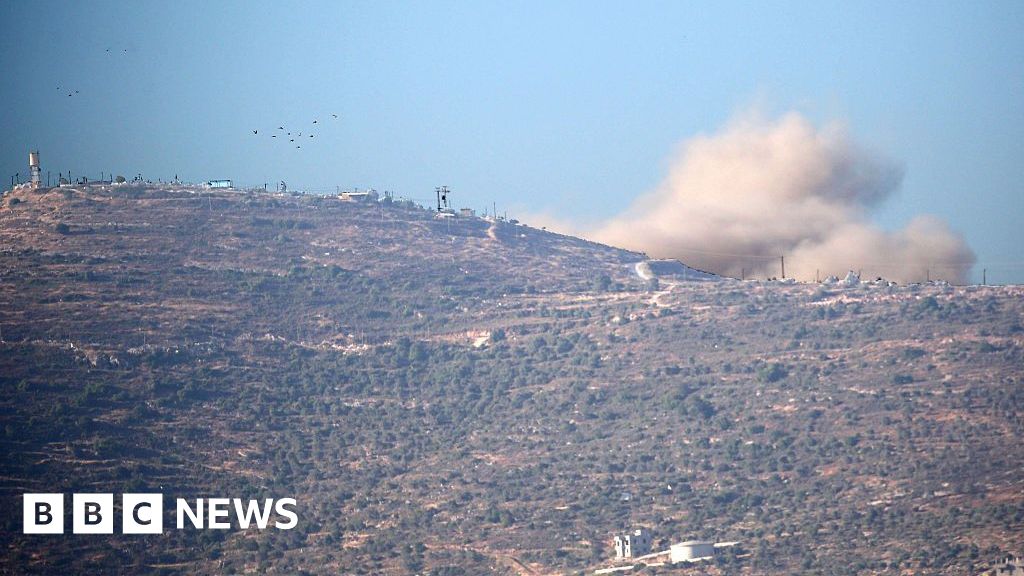
Iran and Israel say they will pause strikes but warn of retaliation if ceasefire breached again
35 minutes agoShareSaveAdd as preferred on GoogleDavid GrittenandAmy Walker

 Reuters
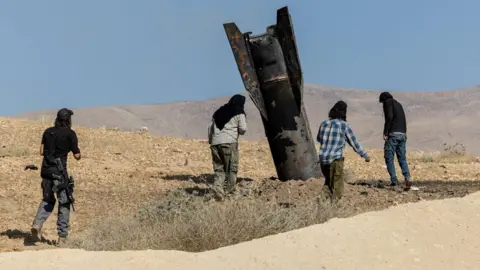
Iran and Israel say they have halted attacks on each other, after the two countries exchanged fire for the first time since April’s truce.
Israel’s Prime Minister Benjamin Netanyahu said on Monday that his country was holding fire “at the moment”. But he stressed that the struggle against Iran and Hezbollah was “not finished”.
It came hours after Iran’s armed forces said it had stopped operations following the delivery of a “painful response” to Israel. It promised “more severe and crushing measures” if Israel carried out more strikes, including in Lebanon, where Israeli forces are fighting the Iran-backed group Hezbollah.
Tehran launched missiles at Israel on Sunday in retaliation for a strike on Beirut.
Israel responded in the early hours of Monday morning by targeting what it said were military sites in the Islamic Republic.
In a call with the BBC, US President Donald Trump denied that Netanyahu had defied his wishes by launching strikes.
“No, no. They had already gone. They had already gone. They were already on their way,” he said.
The White House confirmed that Trump had called Netanyahu to discuss the crisis. An Israeli official said Israel had halted its strikes at his request.
Asked how he had persuaded Netanyahu to stop attacking Iran, Trump responded: “All I did is say, ‘We have to use sense’. We’re very close to signing a very powerful deal, a very good deal.
“No nuclear weapons, no nothing. You know, we have to use a lot of common sense. It was fine.”
Trump also said of Netanyahu: “If I tell him to do something, he does it.”
The president told US news outlet Axios he had told Israel’s prime minister he might find himself fighting alone if he went back to war with Iran.
“I said, ‘Bibi, you better be careful, or you will be on your own very soon,'” Axios quoted him as saying.
In his televised statement on Monday, Netanyahu said he had told Trump that “Israel has a full right to self-defence, and we are exercising it as required”.
Sunday’s exchange of fire had continued on Monday morning, with Iran launching more missiles towards Jerusalem and central and southern Israel, according to Israeli authorities.
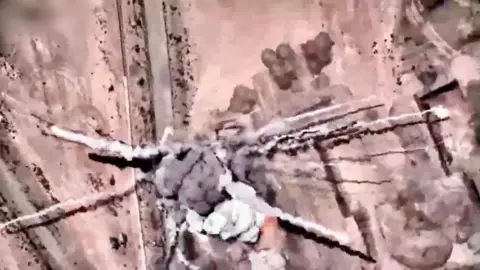
The Israel Defence Forces (IDF) said a second wave of air strikes had targeted a petrochemical complex in the south-western Iranian city of Mahshahr, where an Israeli military official said chemicals used for ballistic missiles were produced.
Iran’s Emergency Organisation chief, Jafar Miadfar, told Tasnim news agency that the strikes injured 14 people in Mahshahr and one in Tehran.
Casualties were also reported in Lebanon, where the health ministry said five people had been killed and eight wounded in an Israeli strike on Tyre in southern Lebanon on Monday. The Red Cross said four of its rescuers were among the injured.
Hezbollah, meanwhile, said it had fired a rocket barrage at a group of Israeli army vehicles and soldiers in southern Lebanon on Monday morning.
Trump publicly told both countries to “immediately stop ‘shooting'” because they were jeopardising negotiations between Washington and Tehran on a deal to end the regional war.
“Israel and Iran… are looking to do an immediate CEASEFIRE! Final negotiations on ‘Peace’ are proceeding, subject to ignorance or stupidity getting in its way,” he wrote on Truth Social.
The war began on 28 February, when Israel and the US launched a joint attack on Iran, killing Supreme Leader Ayatollah Ali Khamenei and several other top officials.
The hostilities spread quickly across the Middle East, as Iran retaliated by launching missiles and drones at Israel and Gulf Arab states hosting US military facilities. Iran also effectively blocked the crucial Strait of Hormuz waterway, causing a surge in the price of oil.
Lebanon was drawn into the conflict on 2 March, when Hezbollah launched rockets into Israel in retaliation for Khamenei’s assassination. Israel responded with air strikes across Lebanon and a ground invasion of a significant part of the country’s south.
A US-brokered ceasefire deal between the Israeli and Lebanese governments has failed to end hostilities. Hezbollah has rejected the agreement, demanding a full Israeli withdrawal.
In recent weeks, the US has been pressing Israel to scale back its campaign to allow room for a wider deal with Iran, which has demanded that it also cover the conflict in Lebanon.
According to the US news outlet Axios, the Israeli strikes were carried out despite Prime Minister Netanyahu being told not to retaliate by President Trump, who was already angry that his warnings not to attack Beirut had been ignored.
Earlier, he reportedly told the Financial Times that the Israeli prime minister would have to accept any deal that the US secures with Iran because he “won’t have any choice”. “I call all the shots. He doesn’t call the shots,” he was quoted as saying.
The Israeli ambassador to the US, Yechiel Leiter, wrote on X: “No self-respecting country in the world would tolerate such an attack, and neither will Israel.”
Iran’s top negotiator Mohammad Baqer Qalibaf said in a Telegram post on Monday evening that “ceasefire violations and naval blockades” – in reference to the US’s blockade of Iranian ports – had “been the cause of recent tensions”.
He added that: “We are not going to fight or negotiate, but we are going to fight on our own time and negotiate on our own time.”
 IDF handout via Reuters
At least 3,468 people have been killed in Iran during the war, according to the country’s Martyrs Foundation. Iran’s Human Rights Activists News Agency (HRANA) has put the death toll from US and Israeli attacks at 3,636, including 1,701 civilians.
Another 3,613 people have been killed in Israeli attacks on Lebanon, the country’s health ministry says. Its figures do not differentiate between combatants and civilians.
Israeli authorities say 20 civilians have been killed in Iranian missile attacks in Israel, while four Palestinians have been killed in the occupied West Bank. Thirty Israeli soldiers and four civilians have been killed on both sides of the Israel-Lebanon border during the fighting with Hezbollah.
Another 29 people have been killed in Iranian attacks on Bahrain, Kuwait, Qatar, Saudi Arabia and the United Arab Emirates, according to local authorities.
Thirteen US service members have been killed, seven of them in Iranian attacks in the Gulf.
Iranian military says it’s stopping strikes on Israel, but will resume if Israel attacks Lebanon
Bowen: ‘Middle East is in turmoil’ as Iran and Israel attack each other
Israel strikes Beirut suburb days after US-brokered truce
United StatesIsraelHezbollahIranIran warLebanon