


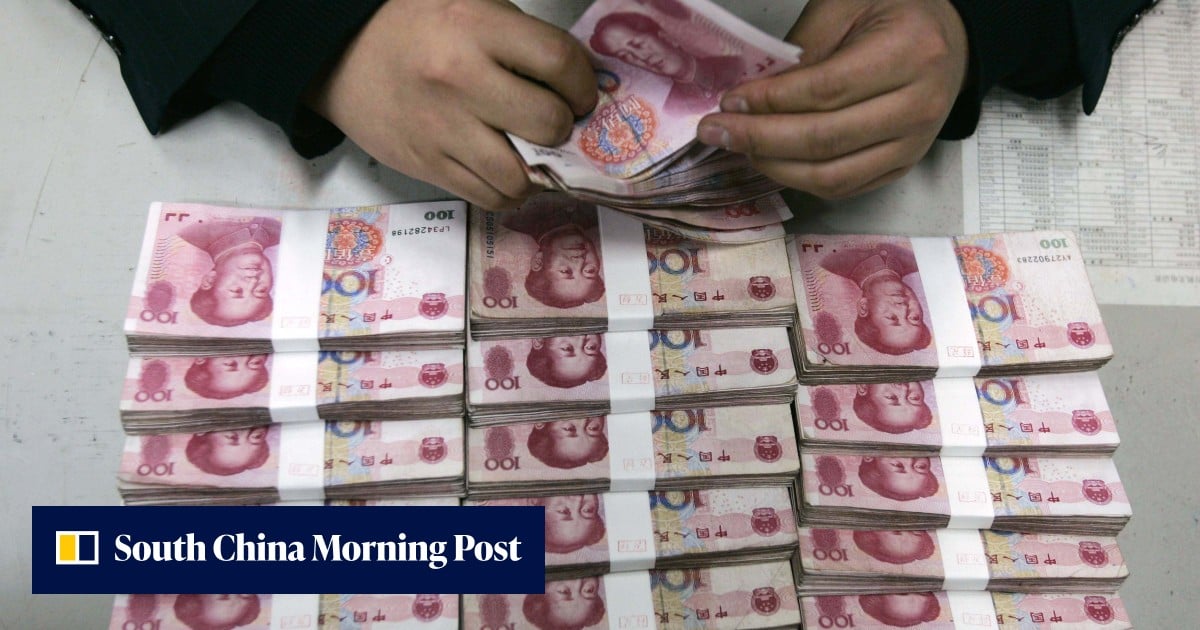
Investment surge in Central Asia drives calls for expanded use of Chinese yuan
2-MIN READ2-MIN Listen
Ralph JenningsandChristina ZhaoPublished: 9:00pm, 10 Sep 2026
Expanding use of the Chinese yuan in fast-growing Central Asia, where China is a top investor, can reduce risks and costs for infrastructure firms, part of a broader trend that sees the currency gaining ground wherever commercial flows create demand for it, according to speakers on an investment panel in Hong Kong on Thursday.
Smoother access to the yuan would lower risks inherent in currency exchanges, particularly when the more internationalised US dollar is trending strong, and bring down the costs of exporting equipment from China, speakers said during a discussion on yuan internationalisation at the Belt and Road Summit.
“The internationalisation of the renminbi is particularly important to us because most of our equipment is manufactured in China and shipped over,” said Long Jisheng, chairman and CEO of the Shanghai-based waste management firm SUS Environment.
In the infrastructure industry, where margins are razor-thin, exchange-rate fluctuations could wipe out profits entirely, he noted. To resolve this, Long said that Chinese enterprises needed a closed-loop financial system fully denominated in yuan, spanning investment, financing, procurement and returns.
This financial strategy is becoming increasingly critical in the five-county Central Asian region, which has captured global attention in recent years because of untapped mineral resources. According to the Yorktown Institute, more than 11,000 enterprises with Chinese capital operate there. SUS is one of them.
“Many of these countries are small, and it’s difficult to achieve complete domestic production there due to their limited scale,” Long said. “Therefore, internationalisation allows us to reduce our financing costs and mitigate exchange-rate risks. We are very much looking forward to this.”
Panellists pointed to use of the yuan in Southeast Asia and Africa as proof the Chinese currency, though unconvertible in much of the world, had a role where there was demand.
AdvertisementSelect VoiceSelect Speed1xAI-generated voice