


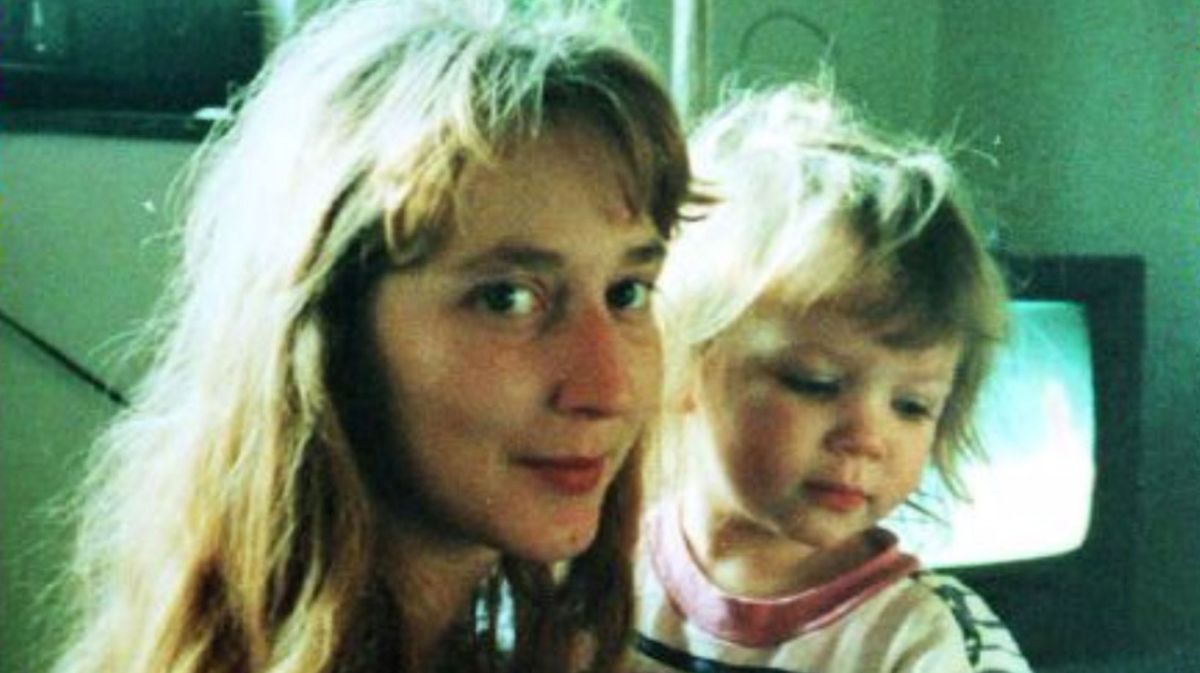
In November 1993, a team of detectives walked into a crime scene so disturbing that it continues to haunt even the most seasoned of professionals to this day.
Samantha Bisset, 27, a part-time model and “super mum” to her four-year-old daughter Jazmine, had been sexually assaulted, mutilated and killed at her home in Plumstead, south east London. Her little girl was also found dead in her bed beneath a duvet, suffocated and sexually assaulted.
The flat was a scene of such unimaginable horror that the responding police photographer took two years off work on stress leave afterwards, unable to work. Speaking to the Mirror, Detective Sergeant Roger Boydell-Smith shared how he can still picture the tragic sight that met him that morning, recalling how young Jazmine initially looked as though she was “just sleeping”.
 View 7 Images
Samantha and Jazmine were murdered by Robert Napper(Image: Daily Record)
“I’d say, in my 30 years, I’d never seen anything as bad as that,” Boydell-Smith said. “Neither had my boss, Mickey Banks, nor even the laboratory sergeant, DS Barkley, who had been to hundreds of murder scenes.
“I see Barkley twice a year at police events, and he always tells me that he still has the odd nightmare about that particular room. That is saying something for a man who has seen hundreds and hundreds of murder scenes.”
One thing was immediately clear to the investigators – the level of depravity meant there was no chance that the killer was a first-time offender. As DS Boydell-Smith put it: “If you start off with that level of violence, you must have done something like that before.”
 View 7 Images
The Mirror spoke with Detective Sergeant Roger Boydell-Smith, who appears in the documentary(Image: Courtesy of Netflix)
In their initial investigation, the team quickly noticed chilling similarities to another high-profile case that had unfolded 16 months prior.
On July 15, 1992, Rachel Nickell, a 23-year-old mother and former model, was sexually assaulted and stabbed to death in broad daylight on Wimbledon Common. The only witness to the attack was her two-year-old son, Alex Hanscombe, who was found clinging to her bloodied body.
The case captivated the nation and Scotland Yard quickly zeroed in on their prime suspect, Colin Stagg, who walked his dog on the common, before launching a controversial “honeytrap” operation to secure a confession.
 View 7 Images
The team knew instantly that the killer must have struck before he killed Samantha and Jazmine, pictured(Image: Mirrorpix)
Undercover officer “Lizzie James” tried to seduce Stagg, promising a relationship in the hope that he would open up and admit he had killed Rachel. But as the Bisset Team, as they called themselves, pieced together Samantha’s final moments, the parallels were impossible to ignore.
Both victims were attractive, blonde, 20-something mothers killed alongside their young children in frenzied knife attacks. “We often said that if there were two different men out there capable of doing this, then you had two severely sick monsters on the loose at the very same time,” Boydell-Smith recalled. “We couldn’t fathom it. We thought, there has to be a link.”
Seeking answers, the team brought in Dr Richard Shepherd – the forensic pathologist who had examined Rachel Nickell – to conduct a second post-mortem. Dr Shepherd confirmed their suspicions, noting that Samantha had suffered a near-identical pattern of approximately 49 stab wounds.
 View 7 Images
16 months before Samantha and Jazmine’s death, 23-year-old Rachel Nickell had been murdered in Wimbledon Common in front of her son(Image: Netflix/PA Wire)
However, when they approached the Wimbledon Common task force, they were met with immediate hostility. The team was convinced they had their man in Colin Stagg, who was sitting in custody awaiting trial.
“They did engage with us, but I think their approach was quite hostile,” Boydell-Smith revealed. “it was like, ‘How dare you suggest that we’ve got the wrong man?’. They weren’t really open to any suggestions. At the end of the day, egos and reputations were possibly [placed] above common sense.”
The investigation was further derailed after high-profile forensic psychologist Professor Paul Britton, officially ruled out a connection. Britton argued that because Rachel was killed in a public park and Samantha was targeted inside her home, the crimes could not have been committed by the same person.
 View 7 Images
Robert Napper was a serial rapist(Image: SWNS)
The two teams couldn’t have been more different. While the Nickell investigation team boasted up to 100 staff, working out of leafy Wimbledon under intense scrutiny, the Bisset team consisted of just a dozen detectives plus a handful of support staff, operating out of a cramped portacabin based in the backwaters of Thamesmead.
Despite being sidelined, the Bisset team trusted their instincts. When officials identified fingerprints at the scene as belonging to Samantha, Boydell-Smith’s boss Mickey Banks – described as a “proper old-school detective” – refused to accept it and demanded they be re-examined.
It revealed that they actually belonged to Robert Napper, a local Plumstead man with a history of violent stalking. Napper was arrested in May 1994 and convicted at the Old Bailey in October 1995, after pleading guilty to the manslaughter of the Bisset’s, alongside a string of horrific rapes on the nearby Green Chain walk.
 View 7 Images
Little Jazmine would now be 37 years old(Image: Mirrorpix)
Meanwhile, the case against Colin Stagg collapsed after a judge threw out the “reprehensible” undercover evidence. He was freed by an Old Bailey judge in 1994 and later received £700,000 compensation from the Home Office.
In 2001, a murder review group reinvestigating Rachel Nickell’s death contacted Boydell-Smith with the news they had long expected: advanced DNA testing on Rachel’s clothing had yielded a partial match to Robert Napper.
His footwear was matched directly to the mud profiles taken from Wimbledon Common, and microscopic paint flakes matching Napper’s toolbox were discovered trapped in the hair of two-year-old Alex Hanscombe.
 View 7 Images
A previously unseen pic of Rachel Nickell before her murder (Image: Netflix)
Crucially, the Bisset team had preserved some of Napper’s belongings in storage for years. While there was a sense of “relief”, it was mixed with regret that it had taken so long to get justice, as DS Boydell-Smith put it: “It was closure for everyone, albeit far too late.”
Napper finally pleaded guilty to the manslaughter of Rachel Nickell on the grounds of diminished responsibility in 2008, and was detained indefinitely at Broadmoor Hospital, where he remains to this day.
Reflecting on the gruelling case, DS Boydell-Smith regards his work as the proudest of his career. Though three members of the squad have since passed away, the surviving eight still meet annually to raise a glass to the victims
“We wouldn’t do that for any other murder,” he said. “They’re still in our hearts. I often think that Jazmine would have been 37 now, probably with her own children, and that’s so sad. We met them in the most unfortunate circumstances, I’m afraid.”
The Witness, which is accompanied by the standalone documentary The Murder of Rachel Nickell, is available to stream on Netflix on June 4.
Article continues below
If you’ve been the victim of sexual assault, you can access help and resources via www.rapecrisis.org.uk or calling the national telephone helpline on 0808 802 9999
Do you have a story to share? Email me at julia.banim@reachplc.com