


IFAB says VAR made mistake in Embolo’s World Cup red card
July 28, 2026 4:29 pm

Korede Oluwadare
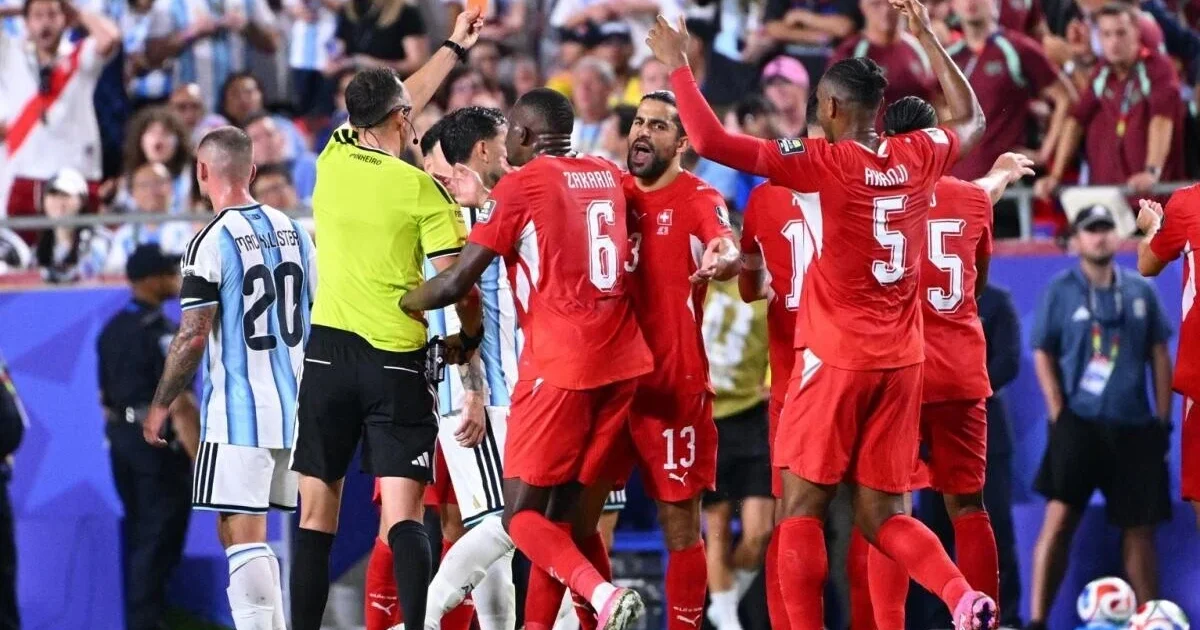
The International Football Association Board has clarified that Switzerland striker Breel Embolo should not have been sent off during the 2026 FIFA World Cup quarter-final against Argentina.
According to French sports daily L’Equipe on Tuesday, IFAB, which governs the Laws of the Game, issued a circular confirming that the Video Assistant Referee protocol was misapplied in the incident.
The body stated that “a yellow card, which is not a second yellow card, can only be reviewed to identify the player who committed the foul; the foul itself cannot be reviewed/modified.”
L’Equipe reported that the IFAB established VAR could intervene in cases of error over the identity of a cautioned player, “but not to reverse the sanction, particularly in simulation situations.”
The error made by VAR and the referee in this situation was that they should not have reversed the initial decision, as there was no mistake regarding the identity of the player being sanctioned.
In the match played on July 11 in Kansas City, referee Joao Pinheiro initially booked Argentina midfielder Leandro Paredes for a challenge on Embolo.
VAR intervened, prompting the official to review the incident on the pitchside monitor, Pinheiro then cancelled Paredes’ yellow card and instead cautioned Embolo for simulation.
The decision drew strong criticism at the time from Switzerland coach Murat Yakin, who described the rule application as having “destroyed the game.” Embolo left the field in tears after the dismissal.
Online reactions followed L’Equipe’s report on social media #pepemariachi stated: “Regardless of whether it is valid or not, if we had to hand out a yellow card for simulation, the Argentines would have finished the matches with 7 or 8 players.”
#Olive98715 added “And as if by chance, once again in favour of Argentina.”
While #SorineYvan said “A sending-off that of course changed nothing about the shape of the match anyway…”
The IFAB clarification makes clear that officials should not have reversed the original sanction because there was no genuine error in identifying the player who had been cautioned.
The episode adds to ongoing debates about the expanded powers of VAR during the 2026 tournament and the consistency of its application in high-stakes matches.
All rights reserved. This material, and other digital content on this website, may not be reproduced, published, broadcast, rewritten or redistributed in whole or in part without prior express written permission from PUNCH.
Contact: [email protected]