


Jamestown is a district of secrets. Accra‘s oldest neighbourhood always seems to have something happening just out of sight. A burst of laughter behind a closed door. Music drifting from a narrow alleyway. A figure disappearing down a shaded alley just before you can properly register them.
The history of this district is on display everywhere you turn. Fishing boats sit beneath colonial-era warehouses and boxing gyms occupy fading merchant buildings. It is intense, intoxicating and oddly magnetic all at once.
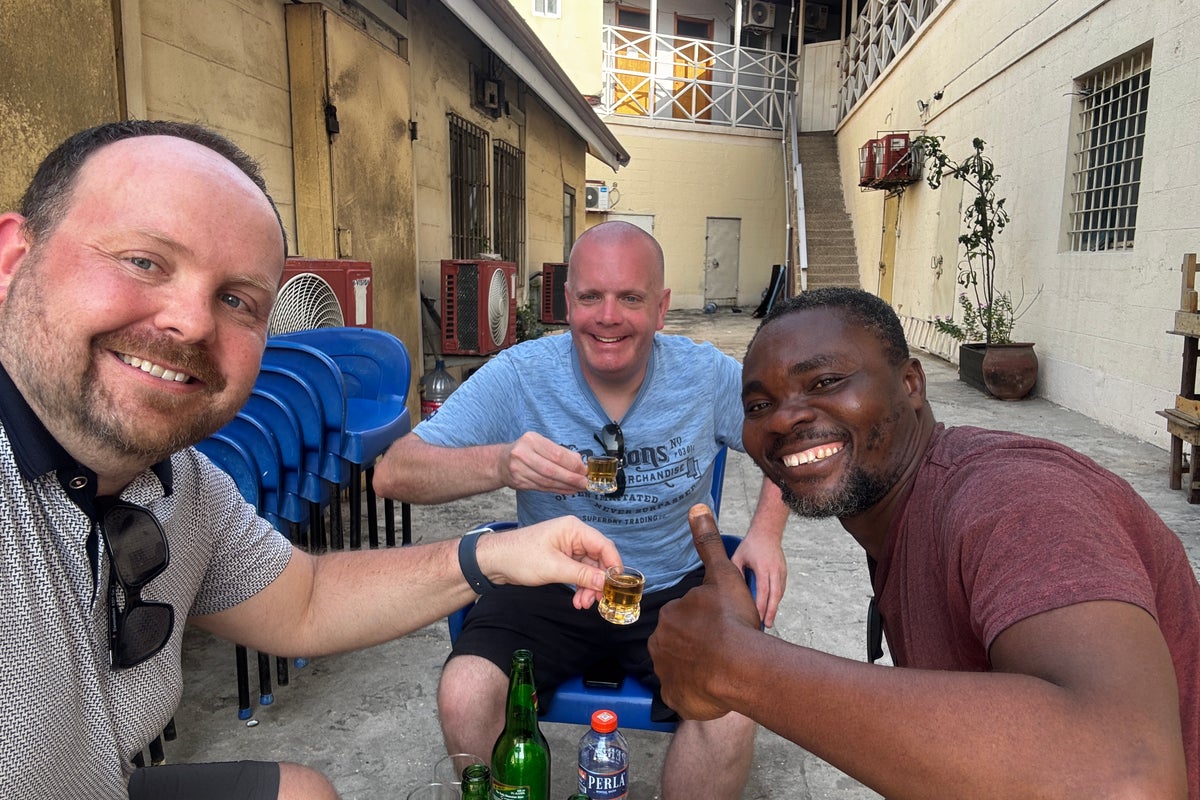
Collins, my guide, is about to reveal another secret. Promising a beer, he stops outside a large garage door and knocks twice. A metal latch clanks open from below and we’re beckoned inside. It’s unlike any pub I’ve visited before. Mainly because, until recently, the pub was a a working car wash.
Tourist itineraries often divide cities neatly into attractions, restaurants and nightlife. Though Accra cannot be defined in this way.
 open image in gallery
Read more: The best luxury hotels in Mauritius
As an increasing number of UK tourists discover Accra, the city has seen a boom in micro-tours that focus less on major landmarks and more on helping visitors experience everyday life, while bringing revenue back into local communities that don’t always reap the benefits of increased tourism. Jamestown Walking Tours was among the first to realise the potential in helping visitors experience less-visited neighbourhoods and community traditions.
It’s a warm and breezy April afternoon when I join three others on this walking-cum-pub tour, all of us intrigued by the prospect of exploring a district four centuries old in the company of an expert local guide.
“Most visitors are a bit embarrassed to admit they wouldn’t know where to start a visit here” explains Collins, the co-founder of Jamestown Walking Tours, before we set off. “That, and they’d just get lost”.
Within minutes, we’re threading through a maze of courtyards and alleyways, stepping around tailors stitching sofas, women pounding cassava to make fufu – the ubiquitous starchy dish of West Africa – and coffin makers putting the finishing touches to elaborate wooden caskets. Death is a public matter here.
Obituary posters cover walls and doorways announcing that somebody has “gone on to glory”, or received a “home call”.
Scattered throughout Jamestown is a vast network of chop bars, Ghana’s shorthand for informal pubs. Some operate from front rooms, others from crumbling warehouses or improvised roadside shelters. Outside, men nurse bottles of Club beer while concentrating fiercely on games of chequers. Spectators gather behind them offering a stream of advice and the occasional taunt.
 open image in gallery
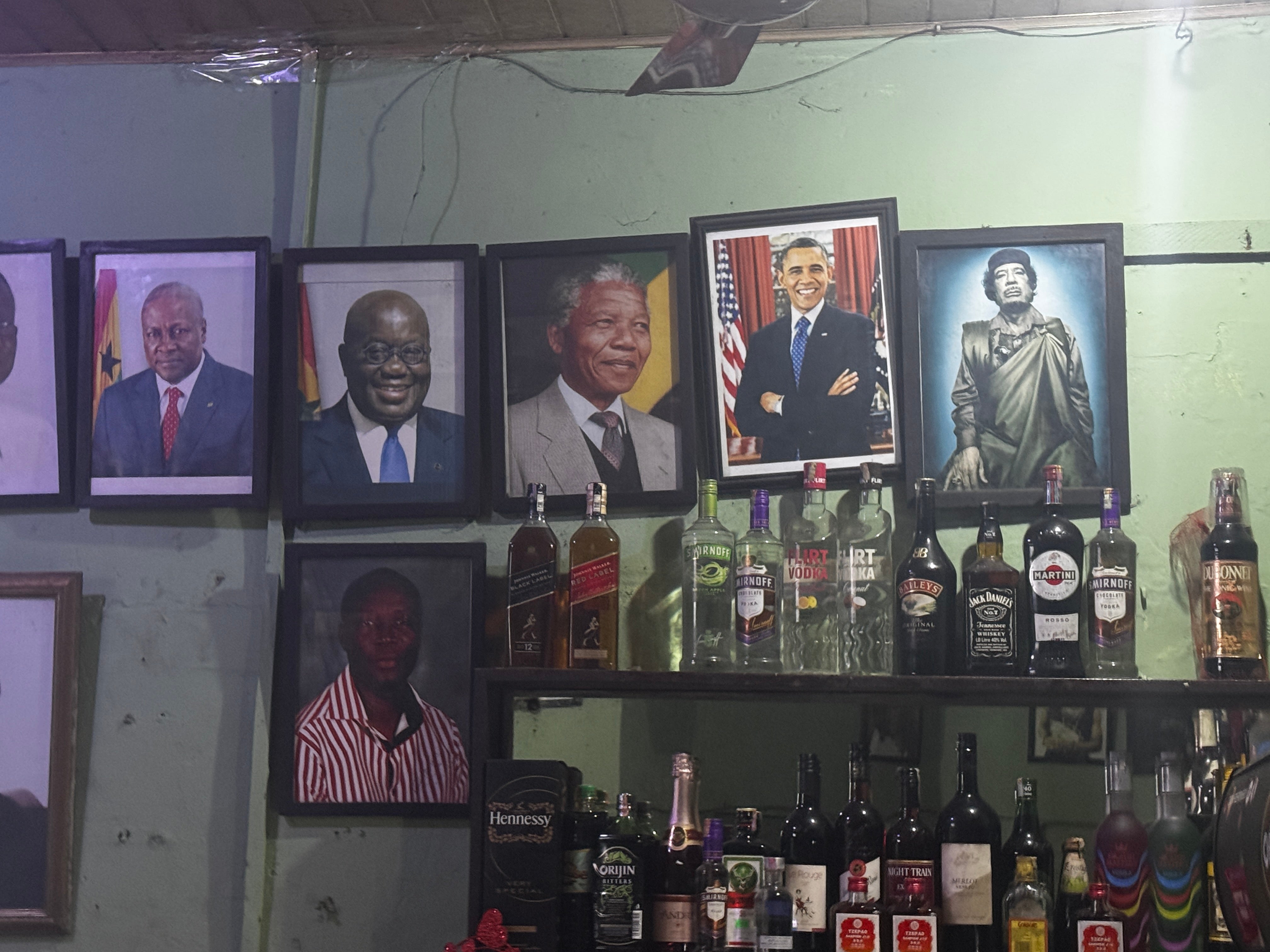
Collins hopes bringing visitors here doesn’t just bring economic benefit but also encourages them to seek out more authentic experiences with local residents. He explains this outside a boxing gym called House of Pain, which I hope represents the limit of the participatory element.
After our evening in Jamestown, we’re ready to see another side of the city the following morning.
“Anyone who wants to understand Ghana – I tell them to ride a tro-tro,” explains my next local guide, Ibrahim.
These minibuses are the circulatory system of the capital, named after the original threepence fare charged during the colonial era. We squeeze aboard alongside women balancing baskets of coconuts on their laps, and giggling schoolchildren in immaculate uniforms.
Most tro-tros are adorned with names and decor reflecting their owners’ interests, which makes for a colourful rush-hour scene. “The Blood of Jesus” and “Inshallah” jostle for space at a junction, until “Pikachu” and “Minnie Mouse” steal ahead of them.
Directly in front of us, we see the slogan “God Is Good”, somewhat undermined by a prominent middle-finger decal. During rush hour, roadside sellers balancing vegetables, drinks and household goods on their heads often move faster than the traffic itself.
Getting off the tro-tro and crossing the street is an equal adventure. The road resembles a torrent of vehicles, weaving into whatever space they can find. Ibrahim explains the trick is to step into the road and just walk steadily in one direction, trusting the traffic will manoeuvre around you. “It’s the closest you’ll get to being Moses” he laughs.
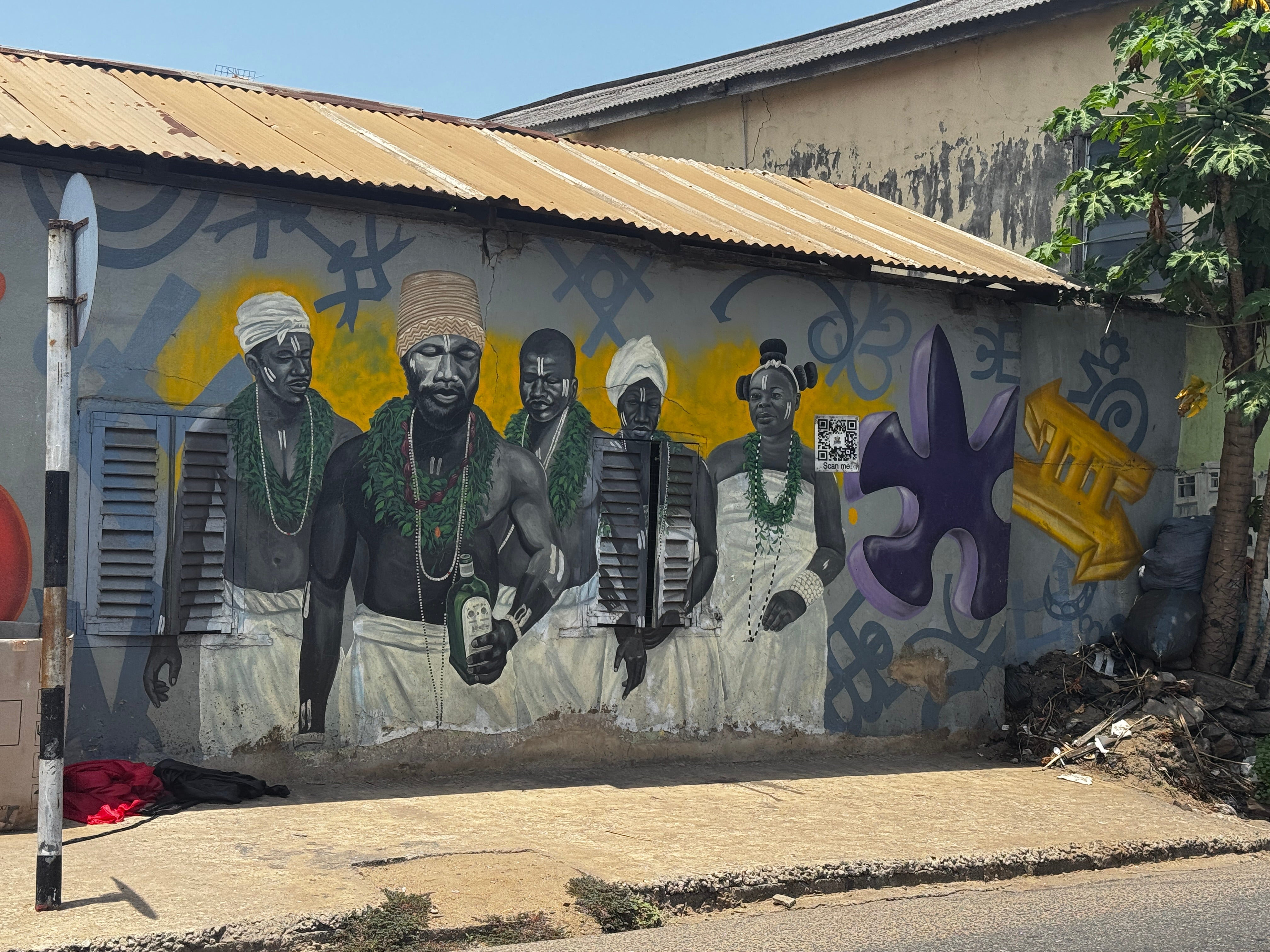
As the journey progresses, Ibrahim points out murals that have become increasingly common across the city. One transforms a wall into a collage of fishermen, traders and musicians. Another declares “Justice for Africa” with a series of raised fists. The artwork grounds modern Accra in its history while tackling corruption, inequality and the irritations of urban life.
We disembark at Osu Castle which embodies much of Ghana’s complex history. Built as a trading fort and later used in the transatlantic slave trade, it eventually became the seat of government after independence.
The contrast is stark: above former slave dungeons sit the state rooms that later hosted visiting heads of state, including Queen Elizabeth II during her famous 1961 visit. She brought her own bed.
 open image in gallery
Read more: Why it’s worth flying to South Africa for winter sun
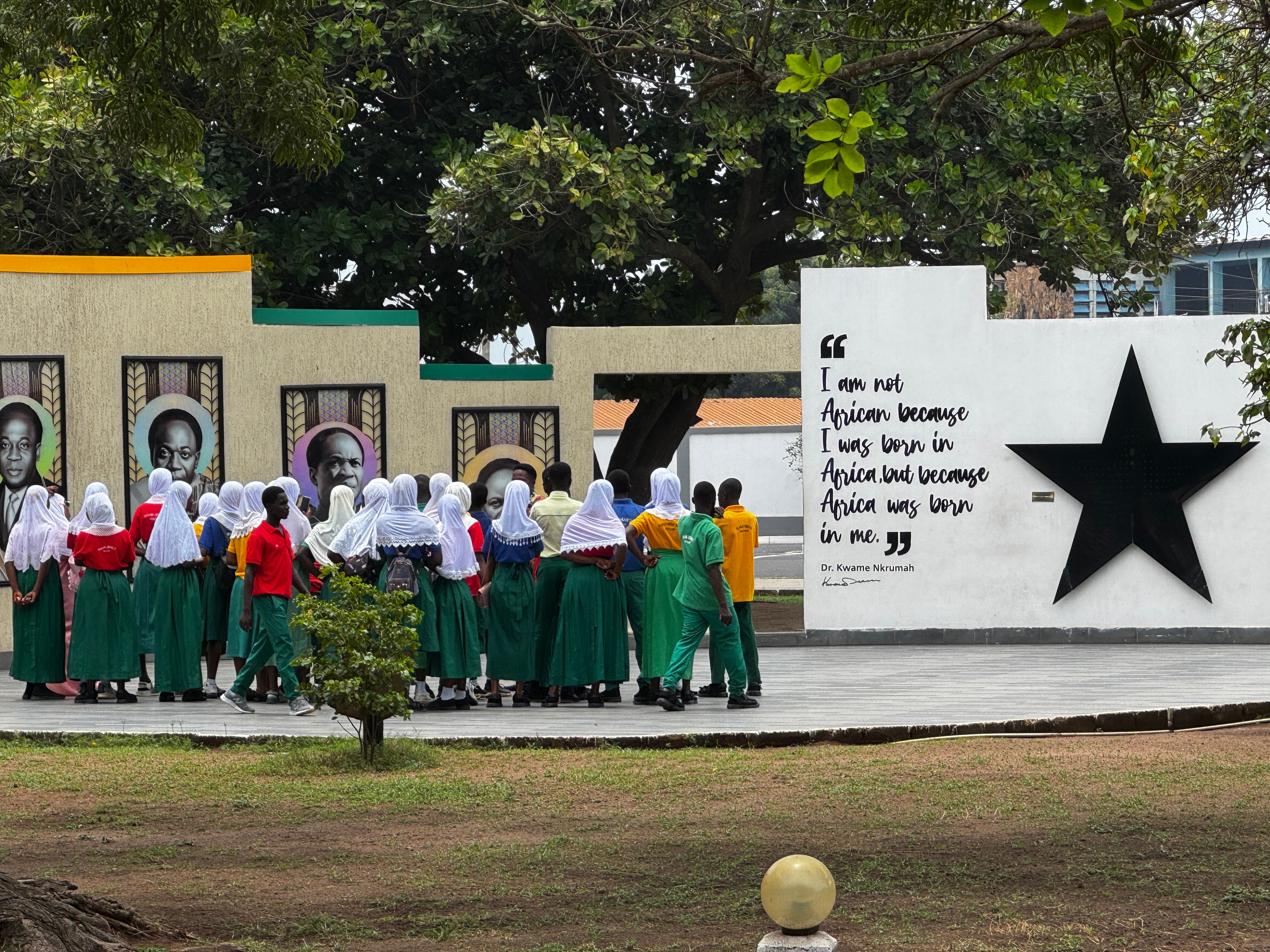
The influence of Kwame Nkrumah, Ghana’s first post-independence president and leader of the fight to free the country from colonial rule, remains visible throughout Accra, but nowhere more so than at the memorial park that bears his name. Beneath a 30-foot bronze statue, Ibrahim recalls his most famous maxim: “Forward ever, backward never.”
“Many visitors come looking for the history of slavery,” he explains. “But it’s not the only story – we also want people to understand the history of our independence.”
As Ghana approaches the 70th anniversary of independence in 2027, the first sub-Saharan African country to reach this milestone, it’s a distinction that feels increasingly significant.
Back in Jamestown with Collins, we have one final stop on our tour. He leads us into what appears to be somebody’s front room, where beer crates fight family photos and the TV for wall space. Our drink is akpeteshie, a potent spirit distilled from palm sap. Collins explains that in Ga tradition newborn children are presented to the rising sun before a day of celebration begins with those gathered taking a shot of this stuff. I’m about to say this sounds familiar but he already knows my response.
“Yes, it’s like The Lion King,” Collins grins. “But Disney missed the akpeteshie – it’s not a celebration without it.”
Before glasses are raised, a small amount is poured onto the stone floor as an offering to ever-watchful ancestors.
“Keshi!” Cheers.
Everyone empties their glass in one movement. The sweetness lasts only a moment before the inevitable burn arrives, which is all too visible on my face.
As laughter ripples around the room, it’s increasingly clear why micro-tours are proving so popular. Visitors increasingly want memorable experiences and, in Accra, such stories aren’t hidden. They’re ever-present across front rooms, tro-tros and the occasional car wash. You simply need somebody willing to share the secret.
Read more: No crowds and comfort throughout – experiencing Africa’s wildest coast
Where to stay
Bays Lodge is located close to the beach and a great budget option, with friendly and attentive staff and breakfast included. Transfers and tours around Accra can be arranged on request. Rooms cost from £25 per night.
Olma Hotel & Suites is extremely popular with couples and offers a pool, lush garden courtyard and thoughtfully decorated rooms. Rooms cost from £65 per night.
The Diamond In City provides large studio apartments, and has a great on-site restaurant serving local dishes, as well as a pool and supermarket. It’s close to the airport with transfers offered. Rooms cost from £95 per night.
How to get there
British Airways flies direct to Accra daily from London Heathrow, with flights starting at £700 and lasting around six hours and 40 minutes.
How To Do It
UK visitors require a visa to enter Ghana, starting at £60 for a single-entry visa. A yellow fever vaccination certificate is also required.
To get around Jamestown, Jamestown Walking Tours offers different excursions to discover the city, including the Saturday afternoon pub crawl. Tro-Tro tours and Here is Ghana both offer customised city tours of Accra and beyond.
Tro-tros no longer cost threepence but are still by far the cheapest way to get around Accra, with fares between five and 10 Cedi (30-60p). Confirm your destination before boarding and pass cash forwards to the driver’s mate. You can read more tro-tro etiquette tips here. For the less adventurous, Uber also operates in Accra, including to and from Jamestown.
Accra – and especially Jamestown – remain largely cash-based. Stock up on Cedi early from FX vendors or ATMs. An eSIM from Holafly is a sensible way to keep phone roaming costs down.