


‘I hadn’t seen people smiling until I arrived in the UK’: one man’s harrowing journey from Yemen to safety
After being arrested, beaten and targeted for conscription, Amal Sahel realised he needed to leave his country. But his journey to Europe was fraught with danger
When Amal Sahel* was 15, he and his friends found a long length of metal lying abandoned in the street. The boys thought immediately of its best use: a sword. Over the past year, they had grown used to seeing strange debris – what Sahel calls “interesting pieces of metal” – in their neighbourhood.
The debris had been left behind by repeated air raids on Sahel’s home city in Yemen: a previously quiet location in a country gradually collapsing into civil war.
“We didn’t know they were dangerous and saw them as, you know, this weird thing,” he says. “[My] friend was playing with one like a sword, going ‘swoosh’ through the air with it. I had to leave them soon after because I was going to the gym for boxing training.” He was inside his house when he heard the detonation.
“I turned and started running to see what was going on and saw my friends full of blood and running in different directions … One of them just ran and fell down in front of me and another one had a shell piercing his neck. I think he was already dead at that moment.”
One of the metal pieces they had played with was an unexploded bomb that had gone off, catching six boys in the blast.
“We called for anyone with a car to come and then took them to the hospital … After two hours, they came and told us, my three friends were dead. I didn’t show any feelings because I couldn’t believe it.”
It was the first of four near-death experiences for Sahel, now 23. In the following years he would narrowly escape military conscription as a rebel fighter in Yemen’s brutal civil war, before coming close to drowning and then being shot at as he fled to Europe.
Before the war began, growing up in Yemen had been a dream, says Sahel, whose father was a university professor: safe and friendly, with beautiful landscapes and a gentle climate, “the best location in the Gulf”.
That all changed in September 2014, when the fighting started. “I woke up to the sound of bombs,” says Sahel, remembering the first day of Yemen’s civil war, in which more than 350,000 people died before last year’s ceasefire between the US and the Houthi rebel group.
Soon his home city in the west of the country was surrounded by guards and flooded with weapons as the Houthis took control. “I remember going outside some days and seeing the sand was black because of all the bombs,” says Sahel.
As war intensified over the following years, armed groups roamed the streets – but Sahel focused on his studies. “I tried to ignore everything,” he says.
His ambition had always been to start his own business. But it was his work as a part-time photographer and model that would ultimately catch the attention of the Houthis and force him to flee the country.
“We were setting up a photoshoot in a park when they came with their weapons,” he says. The soldiers accused him of being a spy and photographing military sites. “They grabbed the camera and even after seeing the photos, still took me to their barracks and started beating me.
“They kept telling me that I speak English and that I must be working for the UK and the US and taking photos for them. They told me I should come be a soldier with them. When I’d say, ‘Guys, I’m a civilian, I don’t want to get involved with any of you,’ they would say, ‘No, that means you’re with the enemy. Why don’t you fight with us?’”
Although he was eventually released, Sahel felt like a “hunted man”. Men repeatedly came to his home and told him he had to join the military.
“They told me, ‘We see you as a good man and educated and you know how to speak. Don’t worry, we’re not going to put you in war – we’ll keep you safe. We’ll make you an admin.’ But I knew they were taking children as young as 14 before bringing a dead body back to the family and telling them ‘he’s in heaven now.’ I didn’t want to die.”
In 2023, at the age of 21, Sahel left for Egypt, one of the few countries Yemenis could travel to without a visa. Once there, he says he was repeatedly threatened with deportation back to Yemen.
“They have no mercy that you would get killed, they just send you back. Many of my friends suffered this fate.” Told that it was only a 15-minute trip from Turkey to Greece, he took friends’ advice to try to reach Europe.
It would result in his third close encounter with death.
After paying to join a boat crossing from Turkey, Sahel and a group of other people were forced to swim ashore as the smuggler tried to avoid the attention of the patrolling Greek coastguard. “I had reached the shore, but could see a man and a child drowning.”
He got back into the water.
“It was the worst experience of my life. The boy was 16 or 17, but big and fat and unable to swim. He was trying to stay afloat and kept pushing my head down into the water … I was drowning and didn’t know how to get him out. I saw death with my eyes that day. I ended up going to his back, pushing and swimming so he can’t catch me.”
After finally making it back to shore, Sahel helped a group of people including his two survivors navigate a five-hour trek across mountains.
The group made it to a police station and he says they were told to sleep in the street. Sahel ended up staying in Greece for three months, but says he was treated like a criminal. Friends told him he would never be granted asylum in Europe. “They said the only country that still gives that is the UK.”
In late 2024, Sahel travelled to Calais in France to try to make the perilous journey across the Channel. The day of his crossing in early December was cold and rainy.
“I asked about the people dying trying to cross, but the smuggler said it was because these people wanted to be heroes,” he says. “[I thought:] if I die, it’s OK. I’ll take my chance for the high possibility of being free.”
As it turned out the biggest danger came not from a capsizing boat, but from another smuggler having a violent dispute with the man organising Sahel’s crossing.
“They got their guns out and shot at us. They wanted to kill us for I don’t know what reason, but we just kept running and hid. Even with all the shooting, the police didn’t show up.”
Later that evening, Sahel and about 60 other people managed to board another boat – and this time made it to the UK.
His arrival has been a shock – in terms of the weather, and his relief at the welcome he says he has received. “I had gone a long time not seeing people smiling until I arrived in the UK. I felt welcome. You can find humanity and kindness here. I’m not going to be killed. I’m safe.”
Legally able to stay and look for work in the UK since earlier this year, Sahel says he can reflect on both his good fortune and his sense of loss for Yemen, which he describes as “heaven in the hands of the devil”.
“I really miss it, but hate the things that happened to me. I don’t want to get shot in the street and die with no meaning. I want to be something big in the world and known as a good person. That’s the thing I am looking for.”
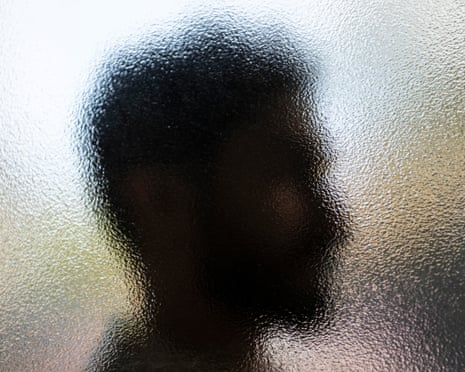
* Name changed to protect his identity
Explore more on these topics
- Yemen
- Rights and freedom
- Middle East and north Africa
- Immigration and asylum
- Conflict and arms
- Migration and development
- features