


How children in West Bank are being killed by Israel ‘without accountability’
IDF has killed 235 children in territory since 7 October 2023 with no indictments in what activists say is ‘licence to kill’
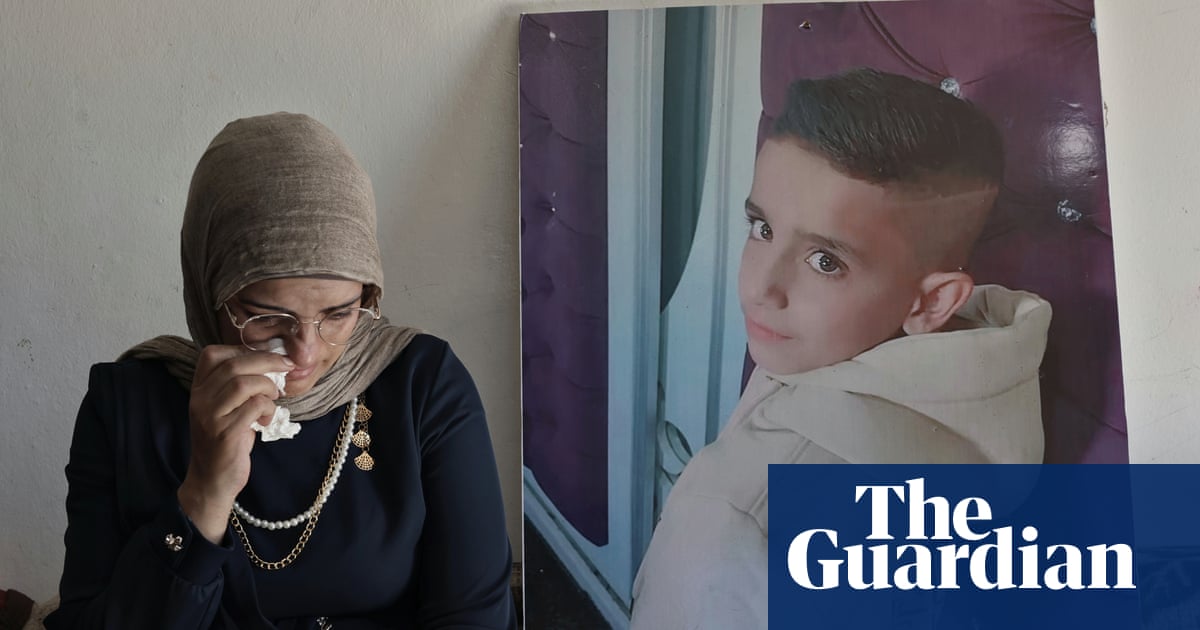
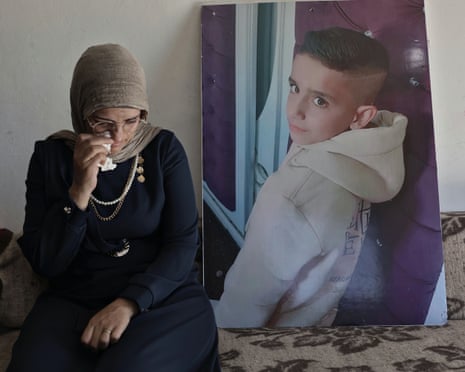
On the day he died, Mohammad al-Halaq had been jubilant about a new school bag he had been given in class, printed with the logo of the UN child protection and advocacy agency, Unicef.
“He was extremely happy. It was something out of the ordinary for him to be given a bag,” recalled his mother, Aliyah. “He came knocking on the door to tell me had this new bag to put pencils and pens in.”
The nine-year-old ran home then raced back to school to ask, unsuccessfully, if he could get another bag for his brother. After lunch, he went outdoors to try to catch birds in a net he had rigged up. He caught one and showed it off to his friends. Full of energy, he then wanted to go to his grandparents’ house nearby.
The al-Halaq family live in ar-Rihiya, in the hills south of Hebron, which have become notorious for Israeli settler violence abetted by an increasingly politicised army. So Aliyah was nervous about Mohammad going anywhere out of her sight, but she had to go to the shops and her son was determined, waving goodbye to her as he sprinted away. It was the last time she saw him alive.
Mohammad was shot in the pelvis by an Israeli soldier at about 4pm that day, 16 October last year. He had been playing football with other boys in a school playground when two army Jeeps drove up. The boys scattered in all directions. By one account, a couple of the older teens threw stones towards the Jeeps, while others shouted at the soldiers once they had reached what they thought was a safe distance.
A video shows a soldier get out of the Jeep and aim his rifle towards the hilltop where some of the boys were watching. Shots were fired and Mohammad took a couple of steps before collapsing. Others tried to reach the bleeding boy but were held back by more shots and teargas fired by the soldiers below.
Aliyah was at the shops when the call came. It was her uncle calling her father, but she had an instinct and grabbed her father’s mobile.
“I asked him directly: ‘Is it my son Muhammad? Please tell me the truth. Is it my son?’ And he hung up when he realised it was me,” Aliyah said.
Muhammad died in hospital, one of 235 Palestinian children and teenagers killed by Israeli forces on the West Bank – plus another five killed by settlers themselves – since 7 October 2023. That date marked the start of the Gaza war, triggered by a Hamas attack on southern Israel which killed about 1,200 Israelis (of which about 800 were civilians and 38 were children).
The reprisals were not just against Gaza, where more than 72,000 Palestinians have been killed (21,000 of them children), but also in the West Bank, where military rules of engagements have been loosened and impunity is the norm.
“The widespread and unprecedented killing of Palestinian children and teenagers in the West Bank is the result of Israel’s broader policy that allows the killing of Palestinians without accountability,” said Yuli Novak, the executive director of the human rights group B’Tselem, which published a report on Monday titled Unshielded Childhood. It focuses on 54 Palestinian children and teenagers killed by Israeli forces in 2025 alone.
“The system does not merely back the shooters – it effectively gives them a licence to kill,” Novak said, pointing to recent remarks by Maj Gen Avi Bluth, the head of the army’s central command, deployed in the West Bank, claiming “we are killing like we haven’t killed since 1967”.
Bluth also claimed that “96% of those killed were involved in terrorism”, but B’Tselem called that a “blatant lie”. Its analysis of the minors killed in 2025 found no evidence that any of them posed any threat, or were members of any militant group.
A spokesperson for the Israel Defense Forces (IDF) said that the army did not “intentionally target uninvolved civilians”.
“Every allegation of harm to uninvolved individuals is examined and investigated,” the spokesperson said. “The IDF and Israel’s security forces will continue to operate to thwart terrorism and protect the citizens of Israel, while remaining committed to Israeli and international law and taking measures to mitigate harm to civilians whenever possible.”
According to data from another human rights organisation, Yesh Din, no Israeli has been indicted for the killing of a Palestinian since October 2023.
In a separate report last week, a UN independent international commission of inquiry found that: “Israeli authorities and security forces have deliberately targeted Palestinian children resulting in genocide, crimes against humanity and war crimes in the Gaza Strip and war crimes in the West Bank.”
“The evidence shows that Palestinian children have been deliberately targeted and killed by the Israeli security forces,” said Srinivasan Muralidhar, chair of the commission. Even after the partly observed Gaza ceasefire last October, Muralidhar said, “children continue to be killed and seriously injured, with continued disregard by Israel for the ceasefire and for the protection owed to Palestinian children under international law”.
Rimas Amuri was 13 when she was shot just outside her family home in the Jenin refugee camp in February last year. It was a Friday and she was playing with cousins outside. There was no sign of any security alert, and traffic was passing normally. Her father, Omar, said the family live close to a military checkpoint in an area which is normally considered secure.
“We were just living our life normally. If I had known that something was wrong, I would never give my daughter permission to go to play outside.”
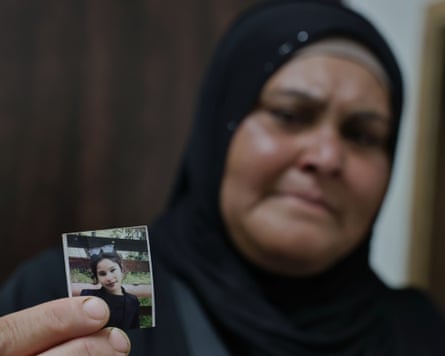
The IDF told Haaretz after the shooting that its soldiers “identified a suspicious figure moving near forces operating in the area. The troops initiated a suspect-arrest procedure, which included calling out to the figure. When she failed to respond, they fired at her lower body.”
B’Tselem’s investigation found that at 40 metres’ range, the soldiers should have been able to see Rimas was a young girl. None of the witnesses heard any warning calls, and according to the medical report, “Rimas was shot in the back, suggesting she may not have been aware of the soldiers’ presence at all”.
Military police questioned witnesses but the family have heard nothing of any inquiry.
“If such a thing has happened with an Israeli girl, what would the reaction be?” Omar Amuri asked. “We are against the killing of anyone. We are the same like every other person.”
The majority of the children killed in the West Bank were playing outside when they lost their lives. But two-year-old Layla al-Khatib was inside her family home sitting in her mother’s lap when an Israeli soldier shot her in the head in January last year.
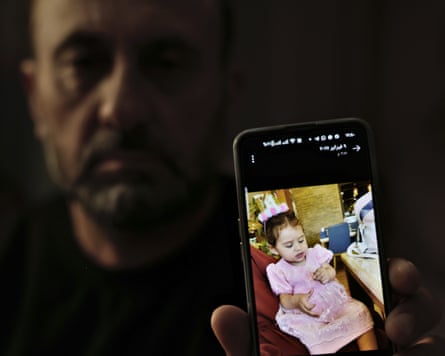
The 25-year-old mother, Taymaa, is still too traumatised to speak. Her father, Bassam, Layla’s grandfather, said the family was sitting down to a Saturday evening meal in the second-floor flat in Muthallath a-Shuhada, near Jenin, when they heard a commotion in the nearby streets.
Israeli soldiers had arrived in the neighbourhood in three civilian vehicles with Palestinian licence plates, and commandeered a building near the al-Khatib flat. Such incursions are commonplace and the family carried on eating until suddenly the gunfire was frighteningly close.
“My wife and I threw ourselves to the floor, and then I heard our daughters screaming and they kept shouting Layla’s name,” Bassam recalled. He went into the bedroom where his daughters had sought refuge and took Layla in his hands carrying her out on the street where he found the house surrounded by soldiers.
“I asked the officer there: ‘Why did you fire on us? Why did you kill my granddaughter? ‘The officer called one of the soldiers to give her first aid. The soldier said: ‘I can’t help her,’ so the officer said they would call an ambulance. That took about 15 minutes.”
Layla was pronounced dead at the hospital.
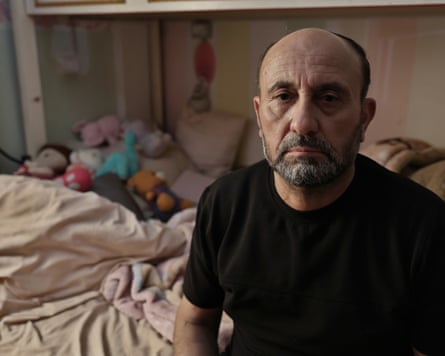
“This is a small example of what is happening to our people,” Bassam said. “What is the aim of this? Is it an aim of the Israeli government to kill our children? Please let Layla’s story mark an end to the killing of more children and killing humanity.”
An IDF spokesperson said the al-Halaq, Amuri and al-Khatib cases were “currently under investigation by the Military Police Criminal Investigation Division”.
“Upon completion of the investigations, the findings will be submitted to the military advocate general’s corps for review,” the spokesperson said, adding that “vast majority of Palestinians killed by IDF troops were involved in terrorist activity”.
A military spokesperson added: “In recent years, armed terrorist cells have developed in Palestinian cities and camps, carrying out and facilitating numerous attacks against Israeli civilians. Since 2023, and even more intensively following 7 October, the IDF has been operating extensively to dismantle these terror cells through targeted counter-terrorism operations, and the elimination of armed and wanted terrorists.”
Explore more on these topics