


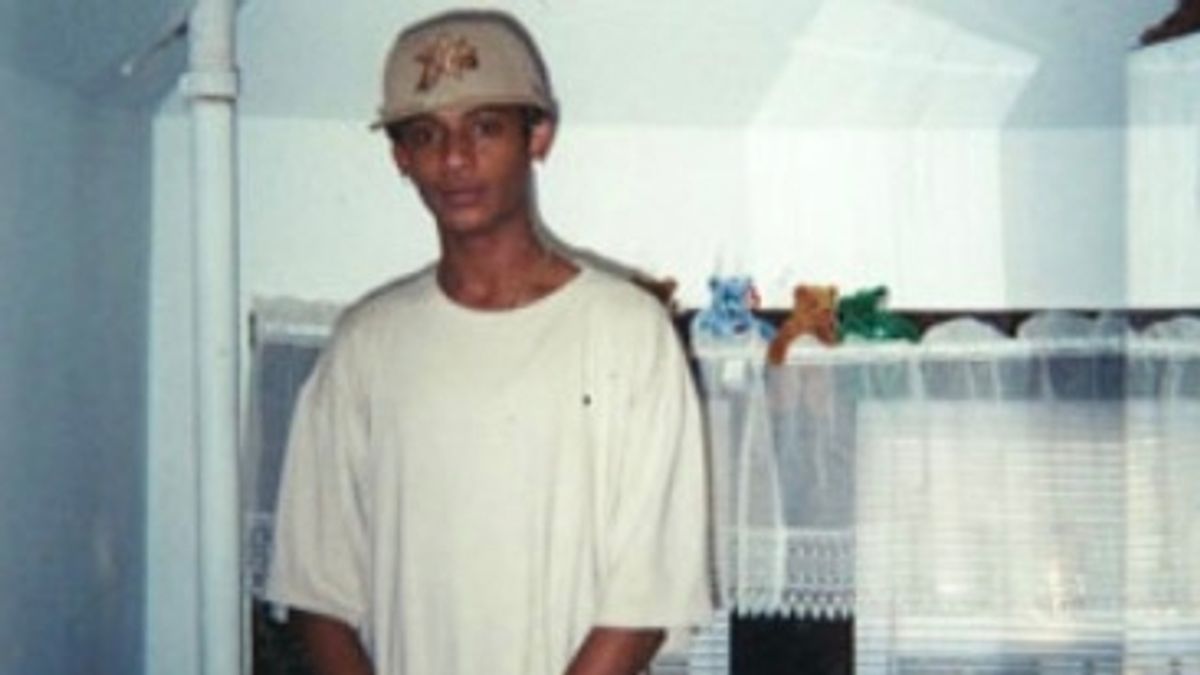
A traumatised family was still grieving the death of their son who was torn away from them in a tragic car crash when they were told the 17-year-old’s brain was being held in a labelled jar in hospital.
Andre and Korisha Shipley had lost their son, Jesse, just two months earlier when students from his New York high school delivered chilling news after a field trip to the morgue.
The Staten Island forensic science club was dumbstruck at what they saw in a cabinet in the medical lab. “They saw this jar with a brain in it labeled Jesse Shipley,” Korisha told CNN.
Horrifically, it was Korisha’s daughter who found out her brother’s brain was being stored in this way and came home in floods of tears telling her mum what she had heard.
“They knew Jesse and he knew them. They were looking at his brain, and his brain was looking right back at them,” Andre said.
Jesse died from blunt force trauma in a car accident in January 2005. His family agreed to an autopsy but thought they were burying their son with all of his organs in tact.
With his cause of death clear, they thought there was no reason for authorities to keep Jesse’s brain.
The Shipleys’ attorney, Marvin Ben Aron, said Jesse’s brain, parts of the liver and testes were later returned and buried in a small casket with their son’s body. The family was re-traumatised by the handling of their son’s organs.
“For them, whenever they remember their child, part of their memory is holding a jar of organs in their hands that they never should have known existed,” he said.
Jesse’s father said: “I feel bad for those people who found out in the past and even worse for those who never will. We buried our son, and then two months after we had chunks of him coming back to us. This is not the way it’s supposed to be.”
The couple began the process of suing New York City for the emotional distress caused by the handling of their son’s remains.
In 2012, the city was held liable for failing to inform them Jesse’s brain had been removed and retained for study, which caused the family severe emotional distress and forced them to disinter their son for a second burial, as per Law Justia.
“As far as we understand, during an autopsy you cut open the body, you look for the cause of death, you check out the organs and you put them back in. In this case, it was a little more than that,” Andre said.
In a statement to CNN in 2005, the attorney representing the city wrote that although officials sympathize with the family, “it was within the Medical Examiner’s discretion to perform an autopsy, and in appropriate cases, to remove and retain bodily organs for further testing.”
Dr Victor Weedn, a forensic pathologist and a spokesperson for the National Association of Medical Examiners, said the case was more complex, adding what happened was common practice when they think other organs are important.
“To say someone died of a motor vehicle accident, doesn’t really tell us anything,” Weedn said.
“For example, if a passenger in the backseat was epileptic, their fit could have distracted the driver and led to the death. So, from the outside it may not be so obvious why the person actually died.”
Weedn said the brain is preserved so that it is firm enough for a coroner to examine it at which point the cause of death can be determined as a result of criminal activity or not. Weedn also said it is typical for the deceased to be buried within this time frame.
He added: “We have a certain authority to investigate death for public health and public safety reasons. That is a right pitted against the individual right, and sometimes that does upset families.”
However, not all of the experts agreed with these explanations. The University of Pennsylvania medical ethicist Art Caplan said it is recognised that examiners have to rule out crime, but that does not justify keeping organs.
Caplan said: “The state says we’re going to take this body and examine it to see what might have happened, but we promise you, we’ll give everything back. When you don’t do that, you’re breaking a basic covenant with society and with families.”
The College of American Pathologists sample autopsy form from the time showed that the consenter allows for the “the removal, examination, and retention of organs….as the pathologists deem proper for diagnostic, education, quality improvement and research purposes.”
But it also said “organs and tissues not needed for diagnostic, education, quality improvement, or research purposes will be sent to the funeral home or disposed of appropriately.”
Caplan, said the laws are clear but that it is up to the families to enquire as to whether all the remains have been returned.
Court documents indicated that medical examiners had authority but this was not unlimited.
The trial court “found that questions of fact existed with regard to whether Jesse’s brain had been lawfully retained for scientific purposes, and whether the defendants unlawfully interfered … by failing to advise [the family] at the time the body was released for burial that the brain had been removed and retained.”
Weedn said approaching the family with this information is a point of contention for medical examiners. “Some forensic pathologists would say going to the family and asking, ‘Can I keep this?’ would further upset them at a time of grieving,” he said. “But, there are others who say we really should be asking the family every time.”
However this is further complicated by the fact that if you do ask the family, they themselves may be connected to the cause of death.
Rebecca Skloot wrote a book, The Immortal Life of Henrietta Lacks, which explores the history of tissue research in the United States. Skloot thinks cases such as the Shipleys’ contribute to a growing mistrust in the medical system.
She said: “It’s all about trust. People worry things are being done to them without their knowledge, and so they don’t trust doctors,” Skloot explains.
Article continues below
“It doesn’t matter if you take it out and put on your shelf or send it off to do research, it’s still taking something without people’s knowledge.”
Dr Cyril H Wecht, a forensic pathologist and attorney, said the medical examiner was right to take out the brain for investigation but was wrong to openly display Shipley’s name on it.
He said: “You’re talking about a matter of sensitivity and common sense. Certainly if you’re going to have student visitors, then you should not have names and numbers available to see.”