


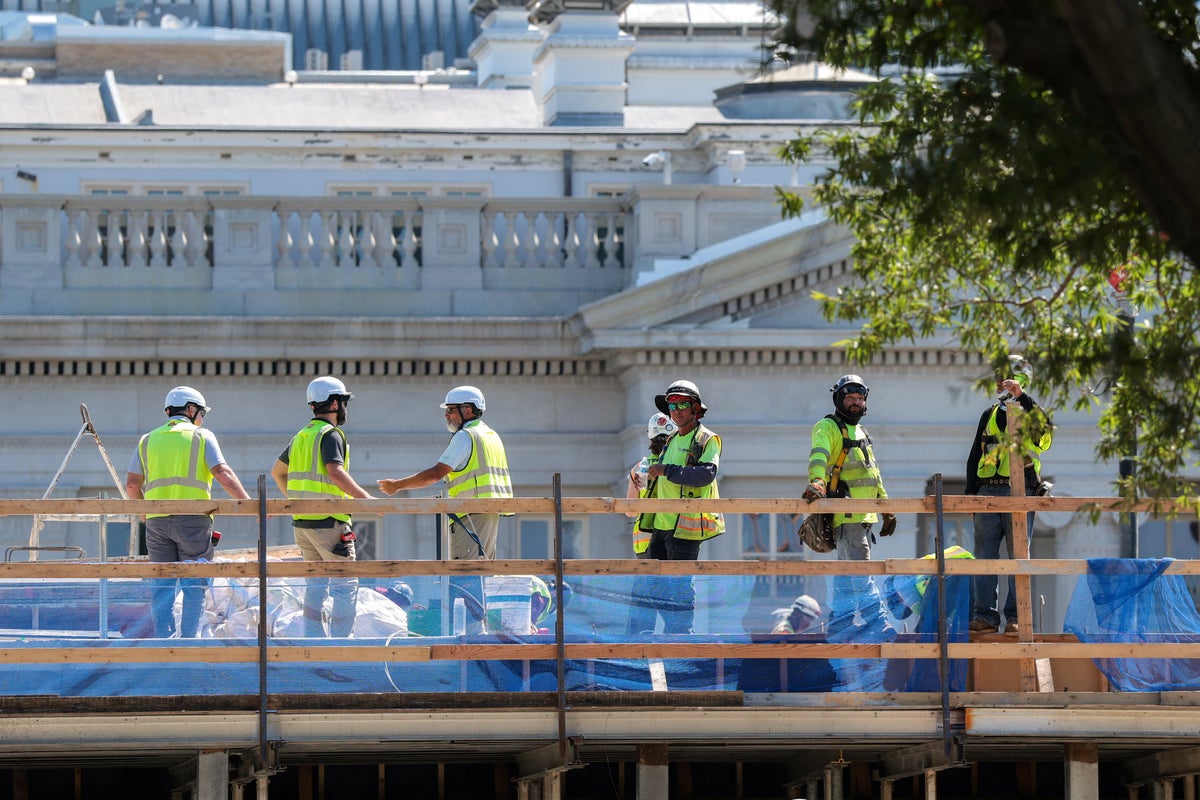
President Donald Trump might not “think about Americans’ financial situation” as his approval ratings continue to sag amid his unpopular Iran war and failure to address cost-of-living issues, but he appears to be very in tune with the mental health of at least one group of workers — those who are toiling on the White House ballroom he has been obsessing over for nearly a year.
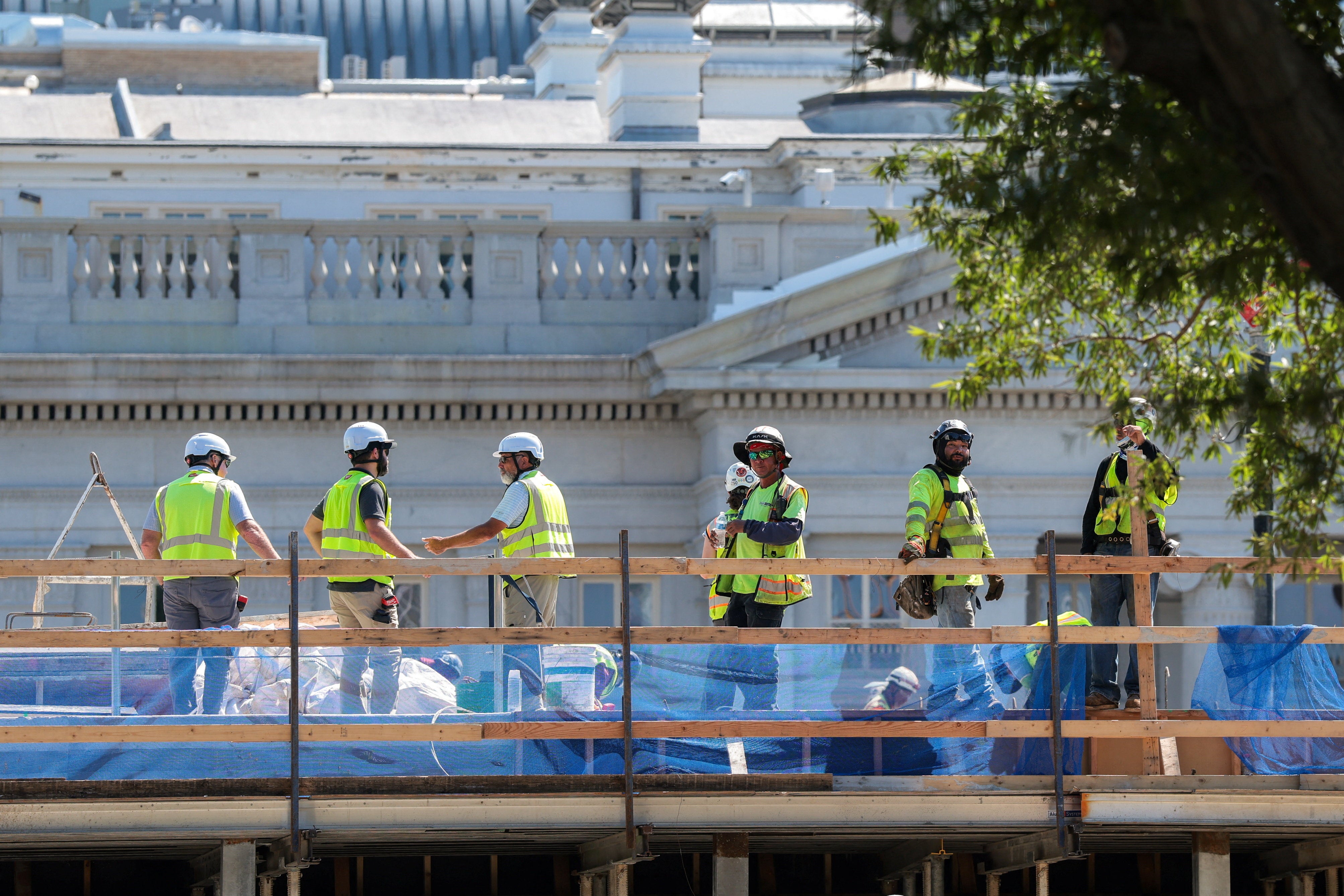
Writing on Truth Social Wednesday, the president said there are “hundreds of happy construction workers” working on what he described as “building the finest Ballroom/Military complex anywhere in the World” just a day after a five-vote majority on the Supreme Court — including the three justices he appointed during his first term — allowed the controversial construction project to continue by pausing a lower court’s decision to halt it in response to a lawsuit from a preservation group.
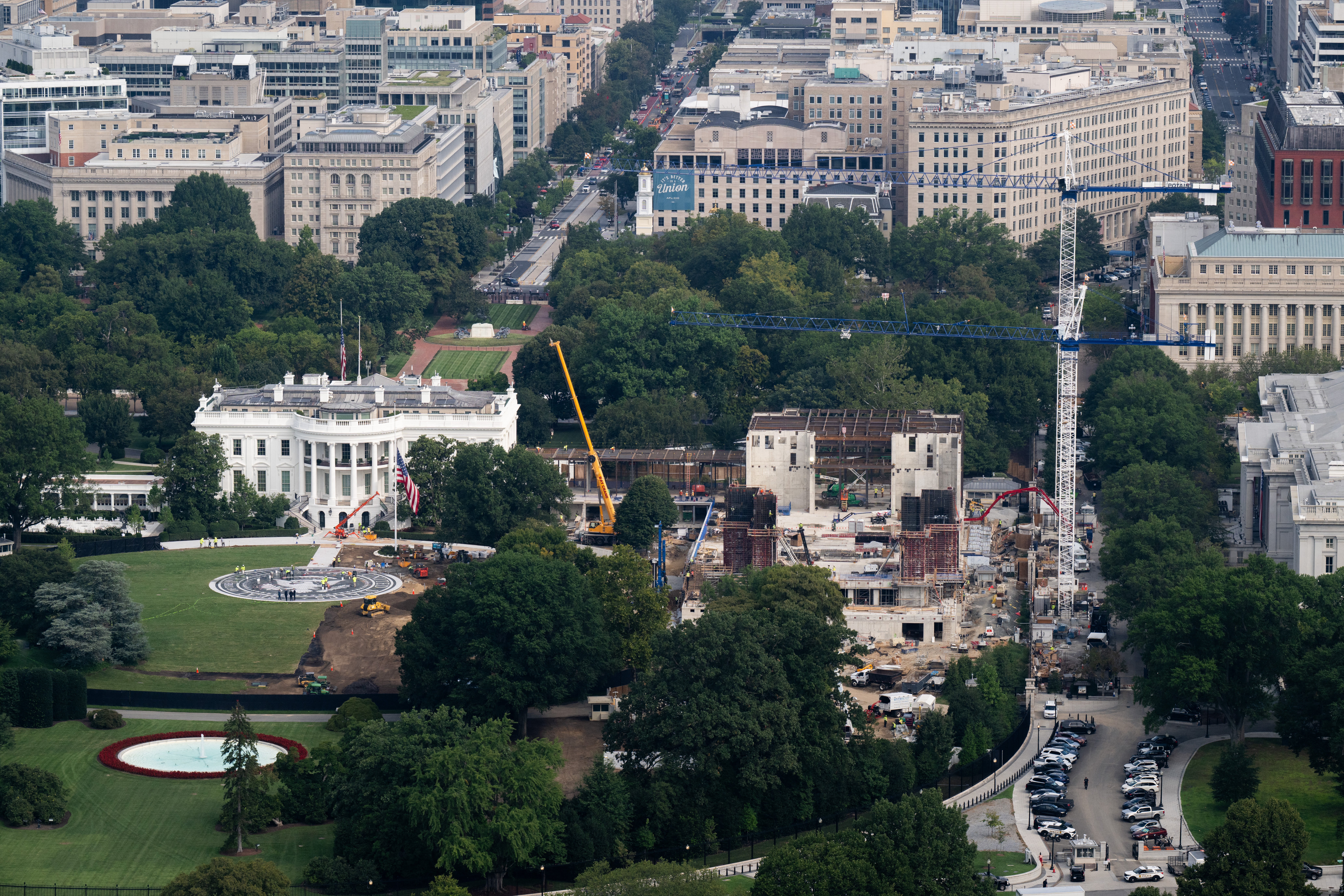
“There is nothing like it, and never will be! It was a long, hard, fight in the Court System, but the winner is, as always under ‘TRUMP,’ the U.S.A.,” the president posted. Trump added that the massive new building would be a “400 Million Dollar gift to America” even though the project is using hundreds of millions in taxpayer dollars that Congress had earmarked for security upgrades to the 18-acre White House complex.
The president’s gloating social media missive follows the High Court saying that the National Trust for Historic Preservation lacked the standing to bring a lawsuit that challenged his authority to unilaterally alter the White House grounds without consent of Congress.
In an unsigned opinion, the majority argued the ruling did “not pass upon the legality of the government’s East Wing project” but only concluded that “the government is likely to prevail in showing that the Trust lacks … standing to challenge the project in federal court.”
 open image in gallery
 open image in gallery
The court left unresolved the question of whether Trump possesses the unilateral authority to alter White House grounds.
The National Trust had argued that long-standing federal statutes mandate express congressional approval for major structural construction on public land in the capital. But the court’s majority said “mere offense, disagreement, or distaste does not qualify as a concrete and particularized injury” upon which a lawsuit could be filed.
But in a rare sign of daylight between him and the president’s muscular assertions of executive authority, Chief Justice John Roberts wrote in a separate dissent that the ongoing construction was “likely unlawful.”
“The White House is not just any building,” Roberts wrote. “In failing to appreciate as much, the court misconceives the plaintiff ’s injury, allowing the executive’s likely infringement of the legislature’s power of the purse and authority to regulate federal property in the District of Columbia to continue.”
The ruling removes the final legal barrier for a 250-person construction crew operating on 20-hour daily shifts to finish the structure. Government filings indicate the development — which includes an extensive subterranean facility designed for secure medical and operational needs — was already 65 percent complete as of late August.