


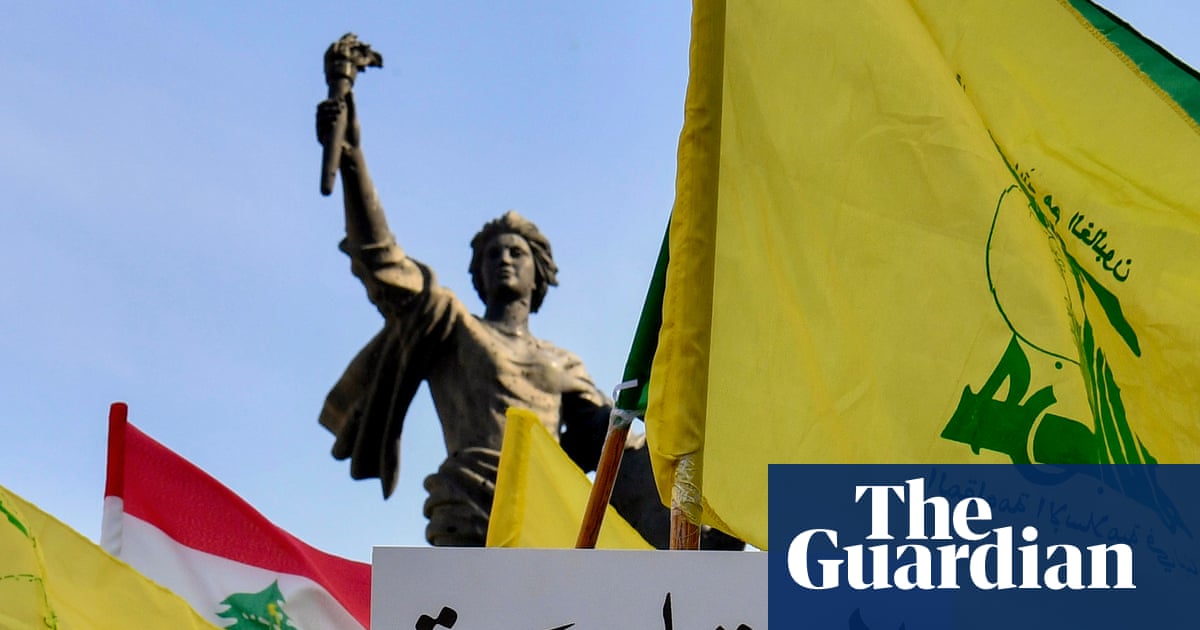
Hezbollah rejects Israel-Lebanon truce as Trump scrambles to end Iran war
Group calls ceasefire a ‘roadmap to annihilate part of the Lebanese people’, throwing regional peace talks into doubt
Hezbollah has rejected a US-brokered ceasefire plan agreed by the Lebanese and Israeli governments, throwing the future of a truce in Lebanon and regional peace negotiations into question.
The group’s leader, Naim Qassem, called the ceasefire plan a “roadmap to annihilate part of the Lebanese people” in a statement delivered on Thursday.
He demanded a complete ceasefire and withdrawal of Israeli troops from Lebanon, and said that as long as Lebanese villages were being bombed, northern Israel would not be safe.
“As long as the occupation exists, the resistance will continue,” he said. “We call upon the officials to put an end to this farce and humiliation called direct negotiations.”
The Israeli and the Lebanese governments had agreed a ceasefire to end hostilities on Monday night. The deal called for a complete cessation of fire from Hezbollah, which is aligned with Iran, and the evacuation of all its fighters south of the Litani River.
Despite the agreement between the two governments, the Lebanese army is not a party to the conflict because the fighting has been between Hezbollah and Israel. The Lebanese government has been negotiating with Israel without Hezbollah as part of its effort to reassert control over the country and disarm the group.
Hezbollah’s rejection of the ceasefire flies in the face of the Lebanese government’s announcement that it would come into effect in 24 hours, and raises further questions about how the Lebanese government can negotiate a ceasefire with Israel without Hezbollah at the table.
It also calls into question the arrangement in Lebanon after the 17 April ceasefire, under which Washington constrained Israel from striking Beirut in return for a halt in Hezbollah fire towards northern Israel.
The group’s rejection of the ceasefire seems to echo demands from Tehran, which said hours after the ceasefire was announced that Israel should withdraw to its prewar positions.
The head of the Quds Force, part of Iran’s Islamic Revolutionary Guard Corps, said: “Supporting the resistance in Lebanon is the duty of all of us, and removing Israel from the region is an attainable goal for Muslims.” Esmail Qaani wrote in a post on a domestic social media platform: “The minimum demand of the resistance is the withdrawal of the usurping regime to the position it held before the start of the 40-day war.”
Tehran has previously said that its own ceasefire with the US and Israel must include a halt to the fighting in Lebanon. It is unclear how Hezbollah’s rejection of a ceasefire in Lebanon will affect Tehran’s negotiations with Washington.
Despite the earlier joint commitment to a ceasefire, both sides continued fighting on Thursday. Israel carried out several airstrikes in the Nabatieh area of southern Lebanon and the western Bekaa valley, killing four people, while Hezbollah targeted Israeli soldiers in the village of Qantara, southern Lebanon, according to a statement by the group.
Israel’s defence minister, Israel Katz, said his country had “freedom of action, backed by the United States, to strike Beirut in response to attacks on Israeli communities and territory”.
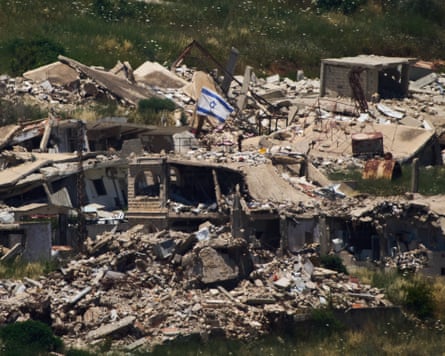
He said Israeli troops would remain in south Lebanon to maintain a “buffer zone”, which Israel says is designed to protect its residents in the north. It controls more than 600 sq km (230 sq miles) of territory in southern Lebanon, and has destroyed dozens of border villages, preventing hundreds of Lebanese people from returning to their homes.
Lebanon and Israel, which do not have formal diplomatic relations, also agreed to create “pilot zones” in which the Lebanese armed forces would “take exclusive control of the territory to the exclusion of all non-state actors”. Lebanon’s president, Joseph Aoun, told reporters he had suggested the first pilot zone be in the area of Beaufort Castle, which Israeli soldiers captured earlier in the week.
Lebanese media reported on Thursday that Israeli troops had begun withdrawing from the villages of Dibbine and Marjayoun and were being replaced by their Lebanese counterparts.
The meetings in Washington were the fourth round of direct talks between Lebanese and Israeli diplomats since fighting erupted on 2 March, when Hezbollah launched attacks against Israel in support of Iran, which had been bombed by the US and Israel. The joint statement said the meetings would continue to flesh out a ceasefire and implement it in phases.
In substance, the joint statement resembles a previous ceasefire between Hezbollah and Israel in 2024, in which Hezbollah agreed to pull back from south of the Litani River so Lebanese armed forces could deploy there. The full disarmament of Hezbollah failed and Israel carried out more that 10,000 strikes in violation of the ceasefire in the following 15 months.
Donald Trump said on Wednesday that he wanted to separate talks on the conflict in Lebanon and those on the war with Iran, but Tehran insists the two situations are linked and this week threatened to suspend talks with the US in protest against Israel’s offensive in Lebanon.
The US president said on Monday that he had stopped an imminent Israeli strike on Beirut and had spoken to Benjamin Netanyahu, and Hezbollah representatives who had agreed that “all shooting will stop”.
He also confirmed reports that he had described the Israeli prime minister as “crazy”, saying he was “a little bit perturbed” that Israel’s campaign against Hezbollah was complicating US-led efforts to advance peace talks with Iran.
According to analysts, Israel wants to inflict as much damage as possible on Hezbollah before any peace deal with Iran stops its offensive.
Israeli strikes have killed at least 3,516 people in Lebanon, while Hezbollah strikes have killed two civilians in Israel and at least 21 Israeli soldiers in southern Lebanon.
Trump is under pressure to resolve the Iran war as rising energy prices and economic uncertainty threaten Republican prospects in the US midterm elections and hamper global trade.