


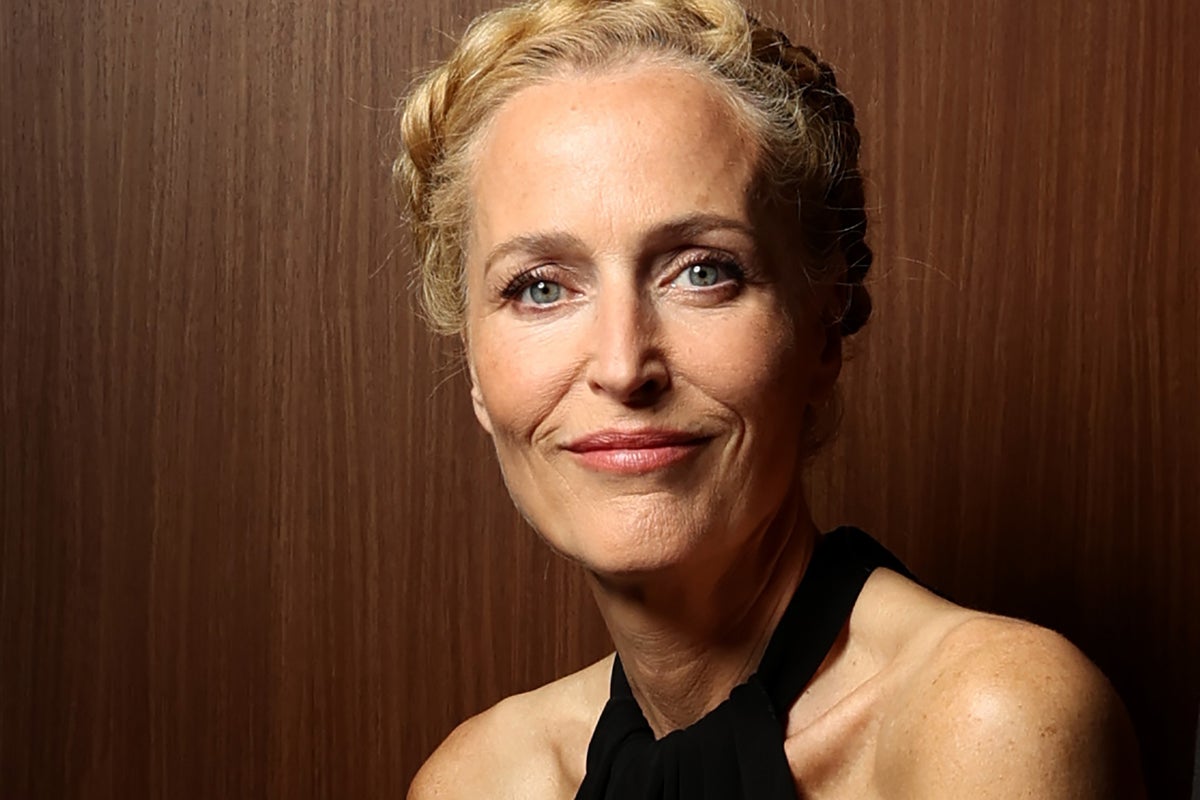
Every week in the 1990s, Gillian Anderson would throw on a sensible, well-pressed pantsuit and face off against a parade of extraterrestrials and boogeymen. Being a famous woman of the Nineties, Anderson also found herself somewhat inevitably facing off against the era’s IRL boogeymen, such as Harvey Weinstein, the huffing, puffing uber-producer who shaped the film industry back then. He’d always want her to star in “scary things” for him, she once recalled, as if TV’s most prolific monster magnet would want nothing more than to replicate her day job on the big screen, too.
“I mean, he’d try to get me to do his films, period,” Anderson, 58, says today, with the cool, husky drawl of a Wild West gunslinger. She’s famously bidialectal, due to her upbringing between London and Grand Rapids, Michigan, and today is on a video call from France – a neutral ground, maybe, but one she’s chosen to speak with an American accent in. Anyway, she remembers her interactions with Weinstein always involving “a kind of bribery” with an element of quid pro quo. “He’d say, ‘if you do this for me, I’ll do that for you.’ That kind of thing.” She leans her head to her right, before firing off a very Dana Scully-coded roll of the eye. “I didn’t buy into that at all.”
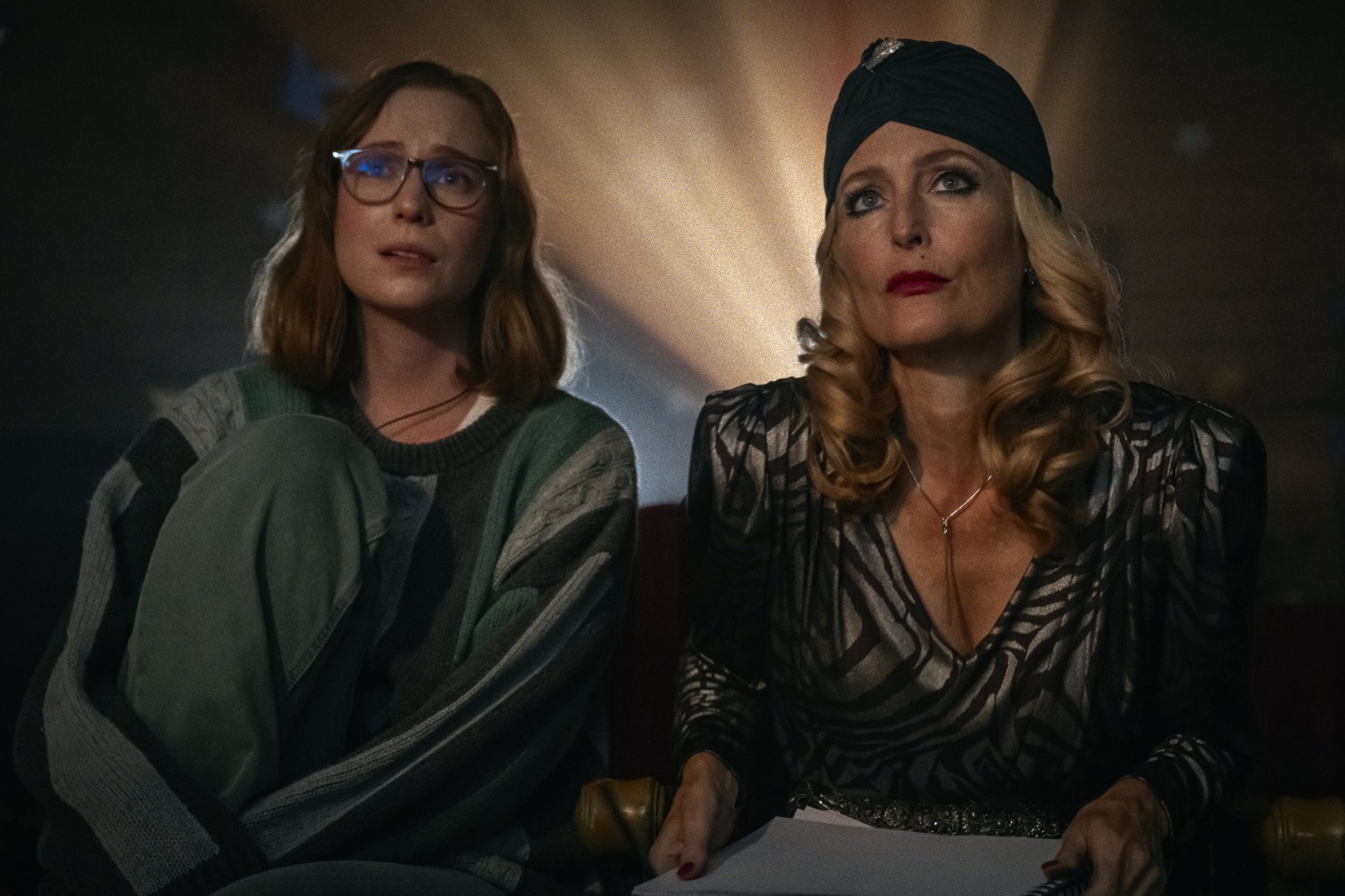
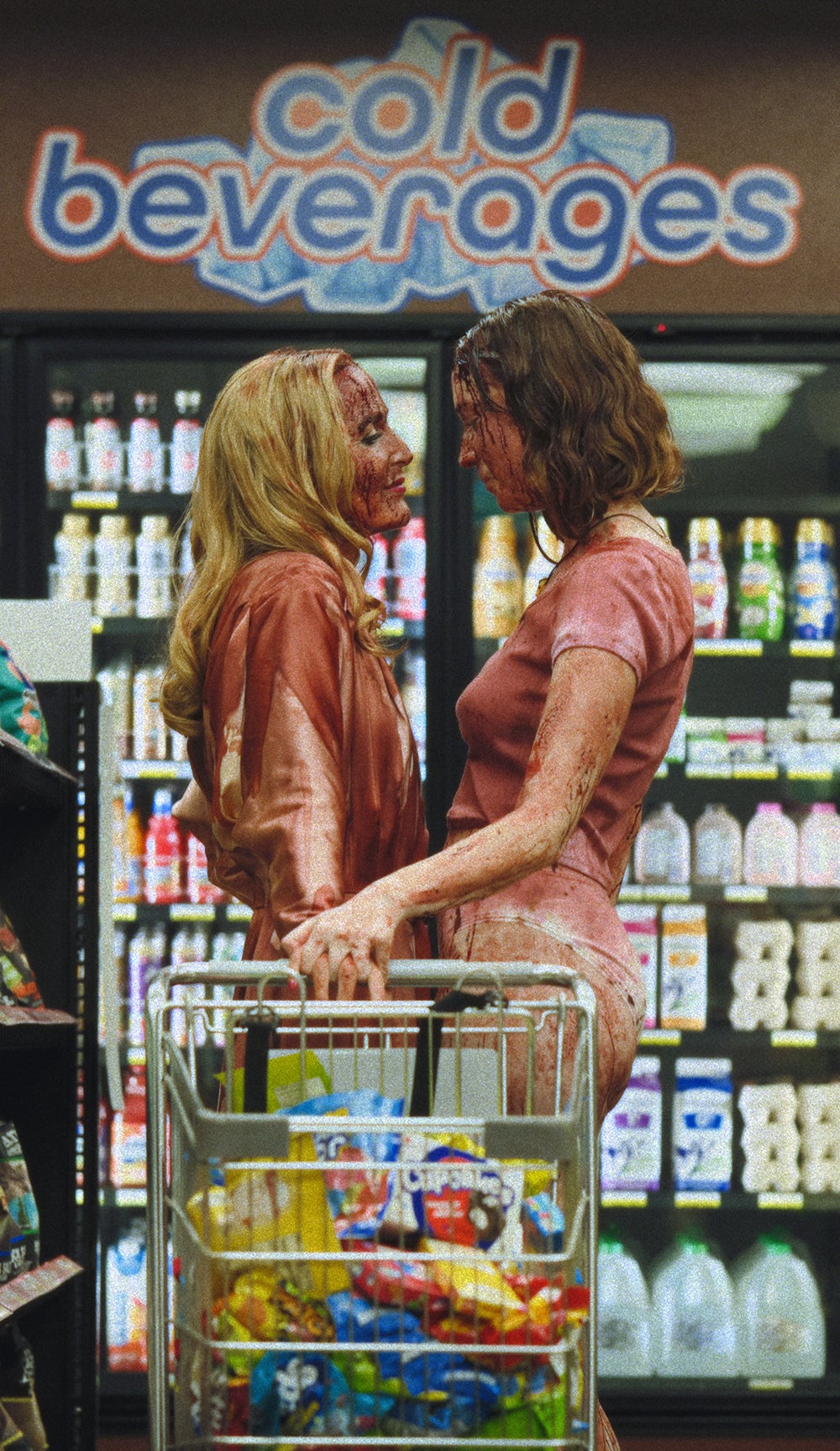
Weinstein is invoked early in Anderson’s new erotic thriller, Teenage Sex and Death at Camp Miasma, a glowy, sultry celebration of the slasher movie, which also doubles as a bit of a meta commentary on Anderson herself. Playing Billy Presley, a horror icon famed for a starring role in a B-movie film franchise, Anderson tells the prodigious young filmmaker (the actor and comedian Hannah Einbinder, of the acclaimed Hacks) hoping to work with her that she doesn’t scare easily – after all, Billy says, she auditioned for The Burning, a real-life Friday the 13th knock-off that served as Weinstein’s first producer credit.
Anderson’s casting in Camp Miasma is in tribute to writer and director Jane Schoenbrun’s early love of The X-Files. “That show took up probably 50 per cent of my imagination as a kid,” Schoenbrun tells me. “Gillian was always in my life back then, so there was this ephemeral feeling while working with her of having always known them, even though I’d just met them.”
Financiers want to hear a sob story. They always want a minority filmmaker to talk about how their life has been hard, and why they’re dysfunctional
Jane Schoenbrun
Plus there’s the sex of it all. Camp Miasma is about horror, but it’s also about orgasms. The earliest thoughts of sexual longing felt by Kris, Einbinder’s character, came as she watched archetypal horror heroines flee from masked men – usually while dressed in their underwear, occasionally right before they were horribly butchered. It’s the kind of fantasy that would make Freud’s eye twitch, but also not trouble Anderson in the slightest. She’s about to publish her second collection of erotic fantasies, crowdsourced online. One woman wrote to her about wanting to be tied down by her own dentist; another admitted she craves the sexual freedom that would be instigated by her husband’s demise. In Camp Miasma, it is Billy who grants Kris the freedom to voice, then indulge, those fantasies of hers. It’s as if Anderson took her brilliantly frank sex therapist from Netflix’s Sex Education, drenched her in blood, then sent her overseas to save the world’s libidos one person at a time.
Upon receiving the Camp Miasma script, Anderson began to see the parallels. “It made perfect sense for me to play Billy,” she says, “because of how many layers of the role aligned with what I’ve been talking about quite avidly over the last years.” She gleefully stepped into what she terms “the meta world” of the film. “How bizarre that this would come into my life at this very moment,” she adds. “I felt like I had to do it.”
 open image in gallery
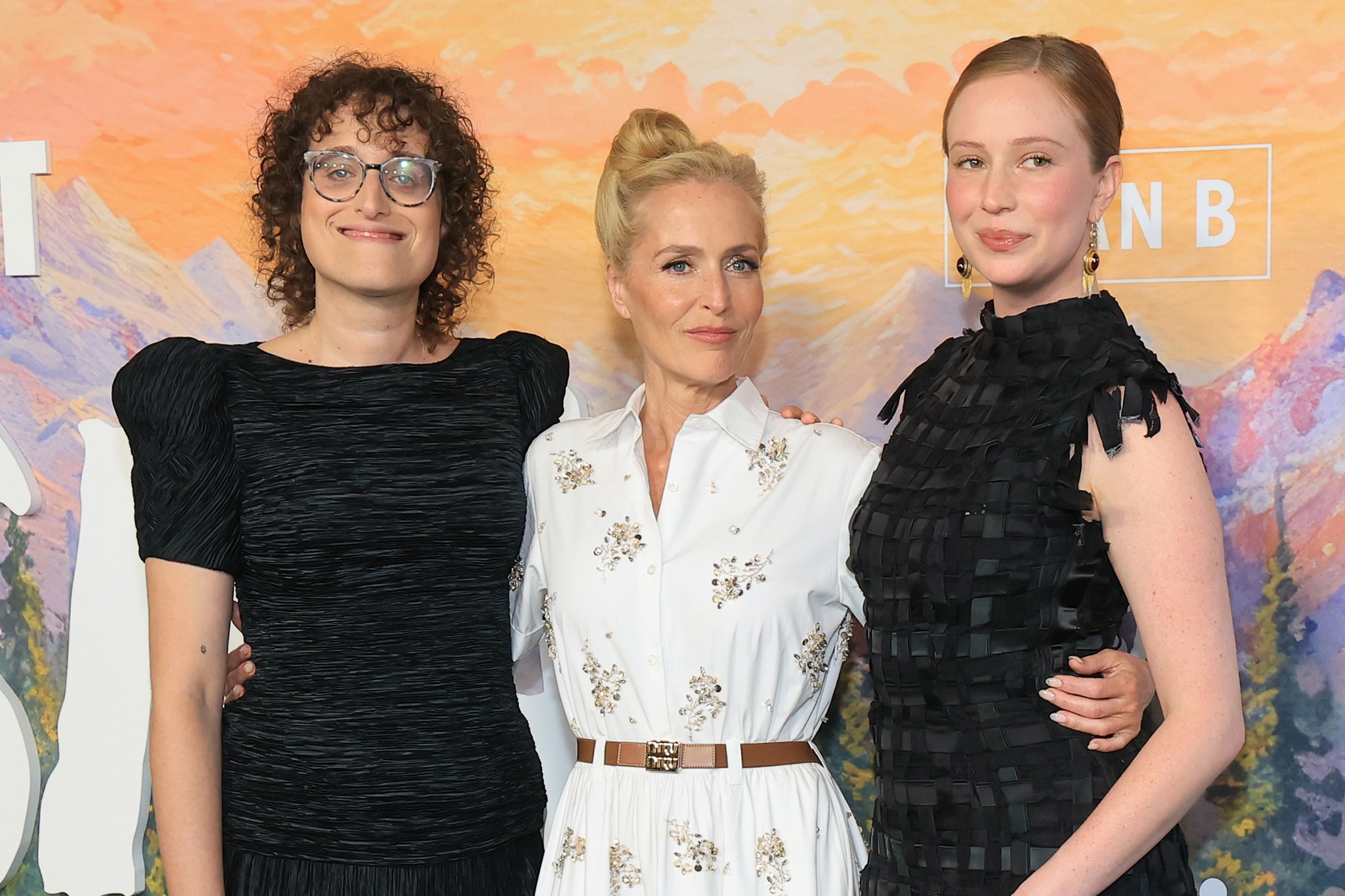
It is May, and we’re speaking a few hours before Camp Miasma’s Cannes Film Festival premiere – where it would go on to earn raves, and ultimately take home the event’s Queer Palm award. Next to a glamorously coiffed Anderson is a groggy Einbinder, 31, who is valiantly persevering through a press junket despite being struck down with flu. Like Anderson, she saw herself in Camp Miasma. She identifies as bisexual, with Kris’s “emotional journey” mirroring hers as a young woman. “You start with discomfort, then shame, then liberation,” she says. “I related to it enormously.”
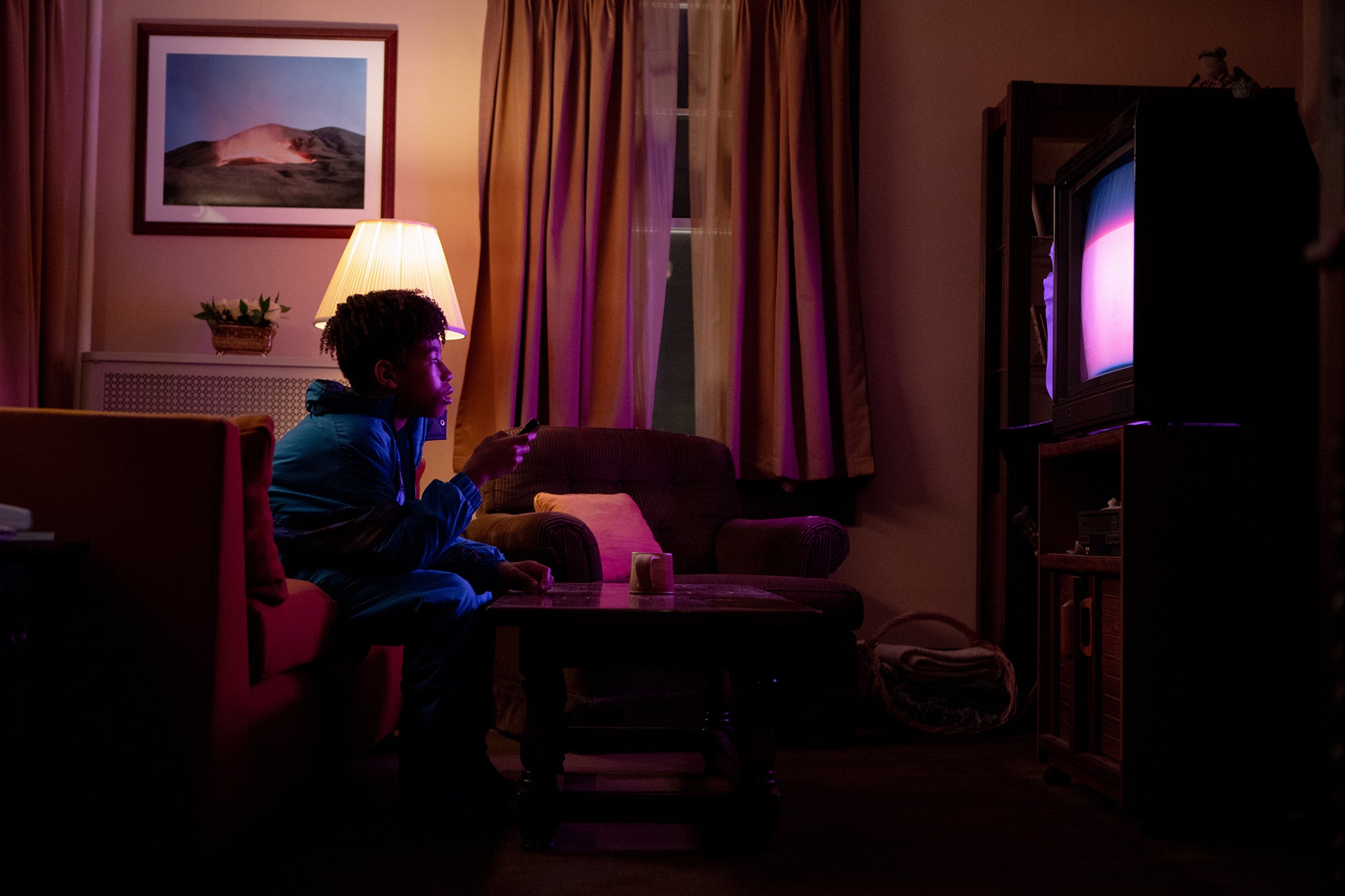
Kris, too, shares parallels with Jane Schoenbrun, who at 39 is the most exciting millennial filmmaker working today. They specialise in work that is spooky and nerdy and lightly otherworldly, rooted in pop culture ephemera and body horror both literal and supernatural. Their commercial breakthrough was 2024’s breathtaking I Saw the TV Glow, about two outcast teenagers drawn together by their shared love of a fictional supernatural drama called The Pink Opaque, which starts to bleed into reality.
Like Schoenbrun and their dysphoric 2021 thriller We’re All Going to the World’s Fair, Kris’s character in Camp Miasma debuted with a tiny independent film that was warmly received at the Sundance Film Festival – a remake of Psycho told from the perspective of the shower curtain. Also like Schoenbrun, who was sought out to direct a reboot of the flagging Leprechaun franchise (the 1993 original saw a terribly bewigged Warwick Davis chase around a pre-fame Jennifer Aniston), Kris is asked to take the reins of the long-dormant Camp Miasma movies (think an even grimier version of the Friday the 13th series). But unlike Schoenbrun, Kris accepts the movie offer, sending her down a rabbit hole with Billy that unlocks her own psychosexual malaise.

Watch Apple TV+ free for 7 day
New subscribers only. £9.99/mo. after free trial. Plan auto-renews until cancelled.
ADVERTISEMENT. If you sign up to this service we will earn commission. This revenue helps to fund journalism across The Independent.
 open image in gallery
Making Camp Miasma, Schoenbrun experienced a similar blossoming. They grew up watching horror movies that cast genderqueer or trans characters as sickos and deviants: think Psycho, The Silence of the Lambs, or the fascinatingly offensive Friday the 13th copy-paste Sleepaway Camp. “I knew that if I was to develop a more positive relationship to sex and to my own body, I had to return to those Buffalo Bills or Norman Bateses, who I loved as a young person but who also probably f***ed me up.”
Today, Schoenbrun stands alone in the Hollywood ecosystem, as the only out trans filmmaker commanding high budgets (relatively speaking, anyway) and major studio backing. It’s no exaggeration – even with The Matrix and Bound as her calling cards, Lilly Wachowski said this month that no one is willing to fund her $10m new indie. It’s a fact that Schoenbrun finds daunting. “The thing I’ve learnt is that financiers want to hear a sob story,” they explain. “They always want a minority filmmaker to talk about how their life has been hard, and why they’re dysfunctional.”
You basically have to fake it until you make it, Schoenbrun explains. “I’ve kind of mastered the language of the pitch meeting. I wouldn’t be sitting here if I hadn’t.” So in those rooms selling Camp Miasma, they leant into the critical acclaim they’d received for TV Glow, the fact that they’re a Sundance Film Festival fave, and that general audiences would love the big, attention-hogging idea of Gillian Anderson and Hannah Einbinder as lovers covered in blood. “It’s a process of making your work understandable to the world of capital, and that’s a very different process to actually making the thing,” they say. “They’re not going to care that much about gender transgression in the history of the horror film…”
 open image in gallery
It explains why Camp Miasma is two films in one – the first is an easier-to-sell slasher satire with severed heads and impalings, the second is a tender, sexy love story flush with queer existentialism. Schoenbrun Trojan-horses us, essentially. “It’s a story of queer liberation,” they say, directly inspired by their own gender journey. I Saw the TV Glow was conceived in a period of trauma at the very beginning of their transition, which explains its occasional fatalism. Camp Miasma, comparatively, is the product of a period of joy. “I often compare transition to getting on an antidepressant,” they joke. “You deal with all of the s****y side effects first, and it takes a couple months before the good stuff starts. This movie was made from a place of full enjoyment with the good stuff – the joy, sex and euphoria of becoming myself.”
Schoenbrun cast Anderson because of The X-Files, and Einbinder because of the physicality she saw in her stand-up specials (“she commits her whole body to performance and not only performance but, like, weird performance”). But there’s also a cool, understated muscle to both actors that makes them evenly matched on-screen, as evidenced by Anderson’s run of steely, impervious women (she’s played everything from Margaret Thatcher in The Crown to A Streetcar Named Desire’s Blanche DuBois at the Young Vic), and in Einbinder’s off-camera activism. Einbinder is currently one of the most high-profile Jewish anti-Zionists working in Hollywood, with her continued advocacy for Palestine – as well as her leftist politics generally – earning her repeated drubbings from conservatives. She says that the industry is set up in a way that makes it consistently difficult to navigate ethically.
 open image in gallery
“Life under capitalism implicates an individual in systems that are evil,” Einbinder says. “End of story, you know what I mean? It’s something that torments me on a daily basis.” How does she get through it? “The way I make sense of it is just to continue to act in a way that is in line with my morals. So I do speak to those things and put action behind them. But it’s not straightforward, and it does eat me up.”
For Anderson, she doesn’t think her own story has involved any real fighting, even when I suggest it probably wasn’t easy to use her X-Files clout to make something like her dazzling adaptation of Edith Wharton’s The House of Mirth, and not whatever Weinstein had in mind for her.
“I’ve never allowed anyone to force me into anything that I didn’t want to do,” she says. “It’s more been about choosing to step away for a period of time, or do theatre, or do an indie film, as opposed to whatever your trajectory is meant to be.” As she says this though, she starts to have second thoughts… “It’s funny, only sometimes in retrospect does one realise there might have been a divine plan all along. I think I’ve always stayed on a path that makes sense for me at any given time. And ultimately you get to a point where you feel like, yes – this does represent who I am.”
“This”, at the moment at least, being Camp Miasma – a bloody, profound and sapphic love story soaked in weirdness and joy. It just feels right that Dana Scully found a home there, doesn’t it?
‘Teenage Sex and Death at Camp Miasma’ is in cinemas