


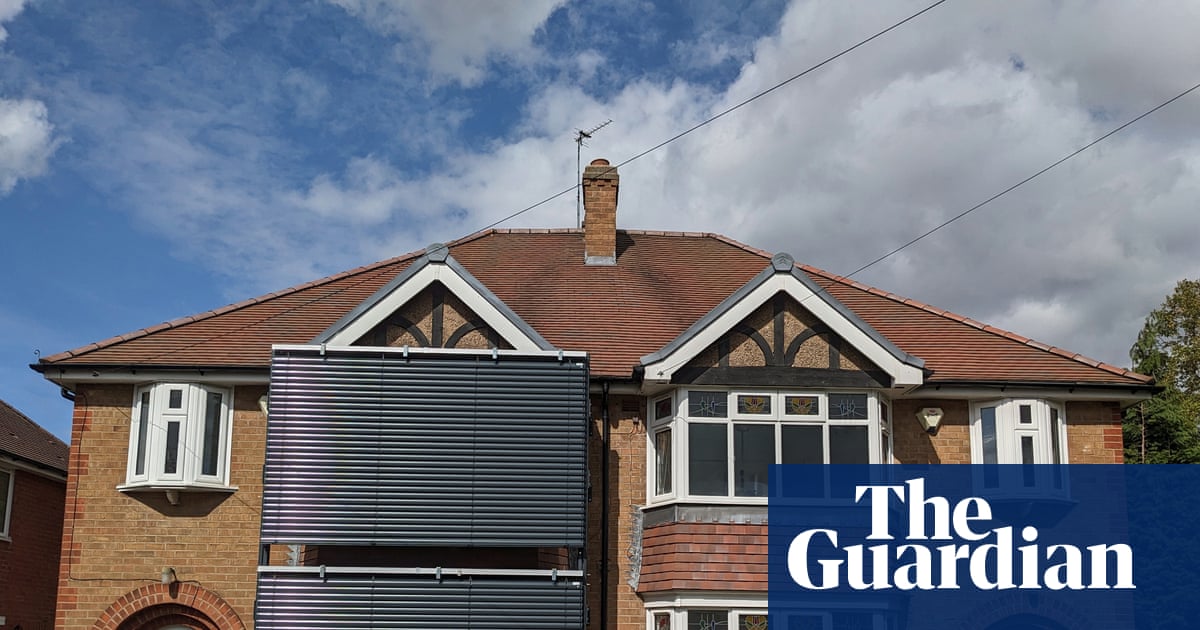
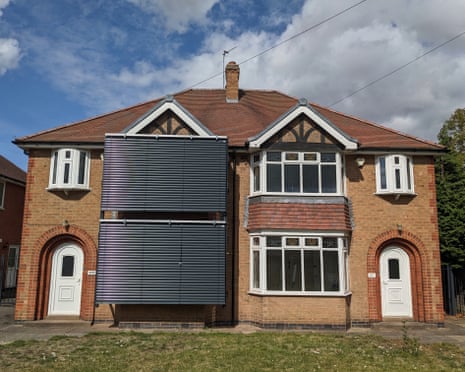
From yoghurt to luxury sails: how to shade your home from supercharged UK heatwaves
As hot weather becomes more common, companies and homeowners are coming up with innovative ways to keep properties cool
When graphic designer Marc Alabaster had a new set of glass doors installed at his West Sussex home eight years ago, he soon realised how they magnified the heat of the afternoon sun.
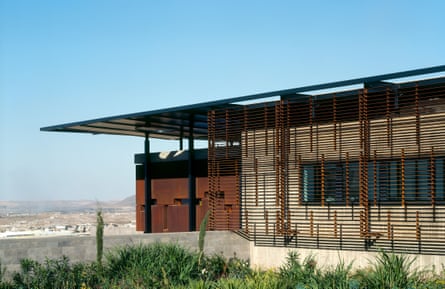
“The kitchen was 40-plus degrees,” he said. Then he went on holiday to Spain and saw an apartment building wrapped in louvre-like rows of angled fins or blades that shaded the external walls against the sun.
“I was like, ‘that’s fantastic’,” said Alabaster. He asked around and discovered the term brise-soleil, which he had never heard before. “It’s French for sun-breaker,” he said.
Alabaster now owns Brise Soleil UK, which has found a market among homeowners looking for ways of boosting shade around their properties, especially over large windows and glass doors.
The climate crisis is bringing more and more supercharged heatwaves to the UK. This week, some people have taken to sticking cardboard or reflective materials to their windows – or even smearing them with yoghurt – after the Met Office issued a rare red weather warning. But more permanent solutions are available, too, ranging from the affordable to the luxurious.
Most UK homes don’t have external shading, according to the Chartered Institution of Building Services Engineers (CIBSE). But it’s not only residential properties that are affected. Schools, hospitals and care homes in the UK also risk becoming unsafe during heatwaves, partly due to inadequate shading.
“The UK needs sustained investment in infrastructure and public spaces so that our buildings, transport systems and cities are designed to cope with future heat,” said Ruth Shilston, global discipline lead at engineering consultancy Mott MacDonald.
New regulations on overheating in new residential buildings came into force in England in 2022, but for the majority of people living in old housing stock, the responsibility for adapting their home to cope with the climate crisis falls to them.
Aimée Daniels, founder of Shaded, said the record-breaking heatwave of 2022 inspired her to come up with an aesthetically pleasing, window-shielding solution, primarily for residential homes. “It was just brutal,” she said, recalling conditions in her west-facing London flat at the time. “I was looking at my windows and thinking, ‘Why isn’t there something that you don’t have to drill in from the outside?’.”
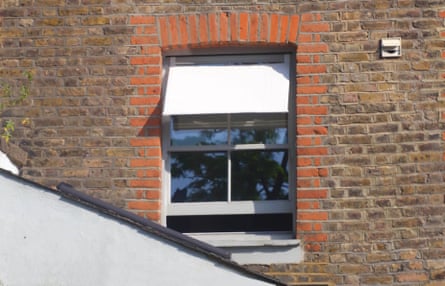
Daniels subsequently designed a mini awning that clips to sash window frames. It is installed from the inside and is detachable, making it renter-friendly. The awnings adjust to suit windows of various widths. At £89, she said she has aimed to keep them as affordable as possible. Sales have shot up this week. “I am slightly worried that there will be some demand I won’t be able to keep up with,” she said.
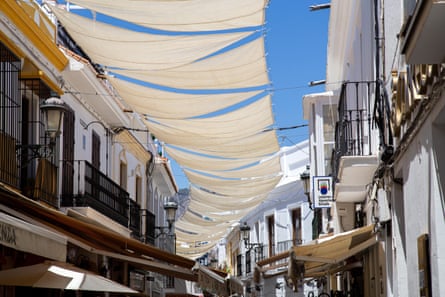
Outside a property, trees can cast significant shade – although planting them is not usually a short-term solution. Another option is a shade sail, a sturdy stretch of fabric suspended between walls or posts. Dorset-based Kemp Sails traditionally makes yacht sails but the owners realised some years ago that similar materials were used in Australia to cast shade outdoors. “We thought, ‘we’ve got loads of expert sewing machinists and large sewing machines – let’s apply that’,” said general manager Owain Peters.
And so, Shade Solutions was born. “It’s been a runaway success,” said Peters. The company’s workers take fabrics typically manufactured for shade-casting products sold in the Mediterranean and make them into shade sails using the same techniques required for a yacht sail. “We build them exceptionally strong,” he said.
The process uses a “triple-step zigzag stitch”, Peters added. While homeowners are increasingly purchasing his firm’s sails, he admits they are “not the most affordable way” to block the sun. A large sail from the company could set you back several thousand pounds.
Consumers are also soaking up more traditional options such as solar blinds, awnings and pergolas. Caribbean Blinds, of Suffolk, sells all of these. During May’s heatwave, inquiries shot up by 600%, said Stuart Dantzic, managing director of the firm and vice-president of the British Blind & Shutter Association (BBSA). The inquiries translated into a sizeable 56% boost in orders, he said.
One researcher who can confirm the impact of shading is Ben Roberts at Loughborough University. “What I’ve done today is I’ve put some bed sheets outside my window,” he said. Roberts and his colleagues have found that externally shading a window, for example with fabric, can reduce internal temperatures by 6C. This is much more effective than internal shading only.
Roberts and his colleagues’ experiments included trials funded by the BBSA, which compared temperatures inside two test houses on Loughborough’s campus. The researchers fixed various kinds of shade, including large, dark-grey fabrics, to the bay windows of one home while leaving the other exposed to the sun. For commercial products, the shades could be made much smaller, said Roberts. He pointed out that, when used externally, dark fabrics work well. They can reduce glare when the fabric is relatively loose, like a mesh.
Chartered engineer Tom Greenhill runs the Heatwave Toolkit website, focused on low-cost solutions to extreme heat. He has long advocated smearing yoghurt on windows to give them a frosted effect, which reduces solar gain. Whatever method of shading you choose, he said now is the time to adapt to the climate crisis. “We still see ourselves as a mild and damp nation – that’s not the case any more,” he said. “The culture has got to catch up.”
Things are changing, though, said Mina Hasman, co-chair of RIBA’s Climate Expert Advisory Group. “Shading is no longer being discussed simply as a matter of glare or privacy, but as part of compliance, resilience and public health,” she said. “That is a significant shift.”
Explore more on these topics