


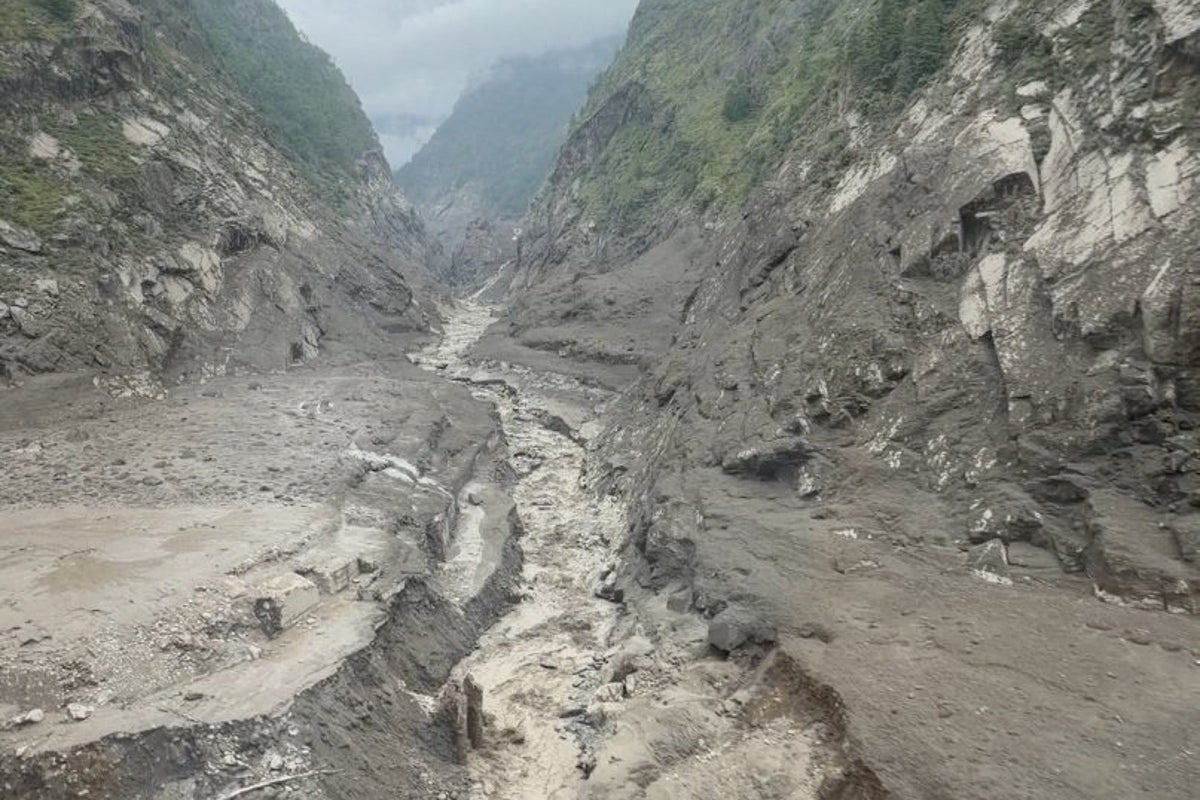
The latest satellite radar imagery by China has prompted warnings that glaciers that caused the flooding in Nepal remain at “risk of collapse”, raising the possibility of another surge of water, ice, and debris.
China’s Ministry of Water Resources on Monday warned of a “major risk” from the glaciers surrounding the Cuojian river in Nepal, a waterway where a high-altitude glacier collapsed at an elevation of around 5,140m, causing the devastating flooding across Nepal and Tibet.
The death toll from the catastrophic flooding in Nepal and China surpassed 1,000 on Tuesday. As many as 987 deaths have been counted in Nepal, with 3,916 people missing, including 583 foreigners, still missing, while 16 deaths have been reported by Chinese authorities in Tibet.
It was the worst disaster to hit the Himalayan country in years, after a glacier collapse on 26 August unleashed a torrent of an estimated five million cubic metres of ice, rock and debris along the Nepal-Tibet border.
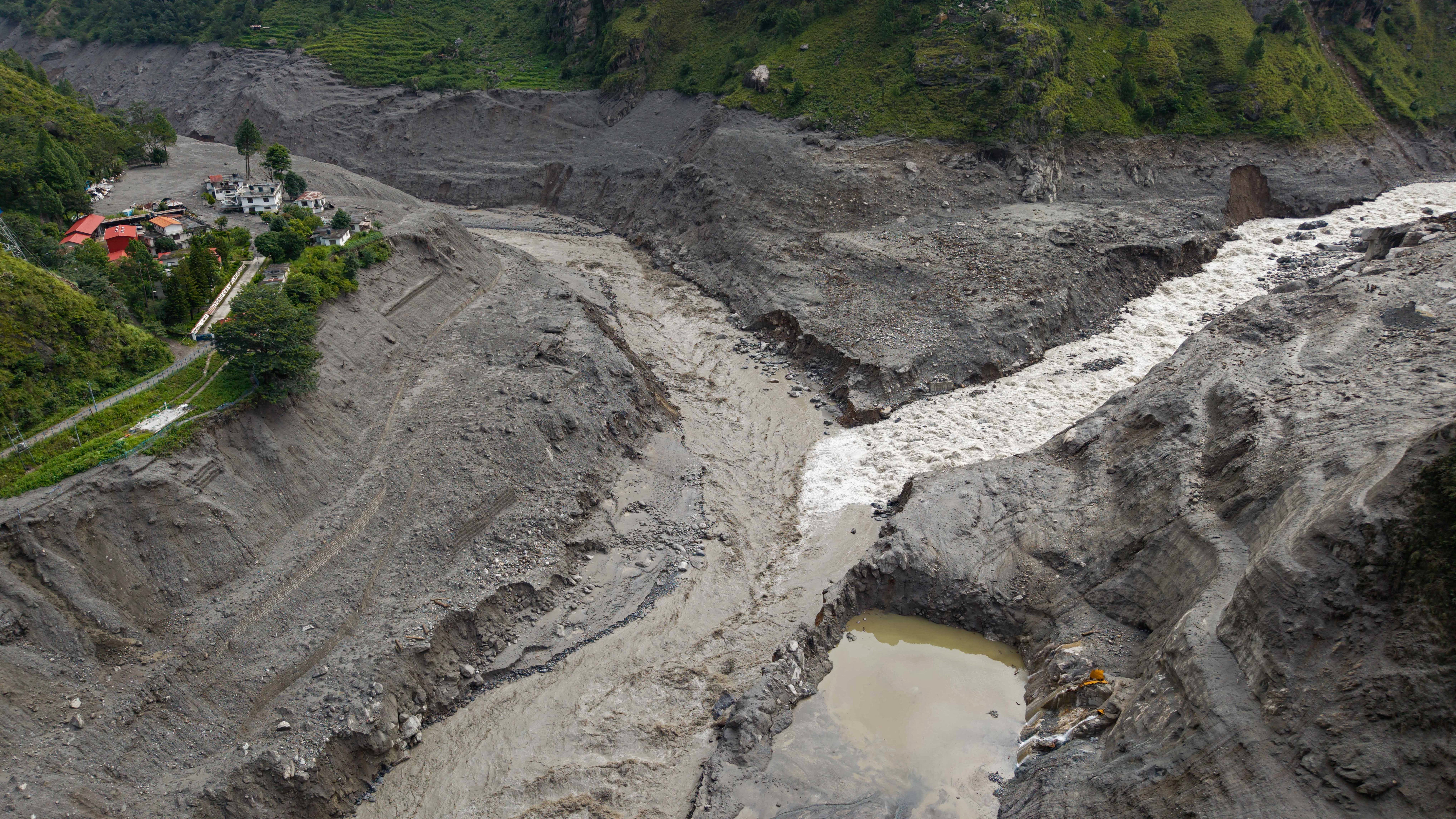
The ministry said water level at a barrier lake formed after flooding in Nepal has fallen significantly, but unstable glaciers and landslides downstream could trigger further flooding.
 open image in gallery
Synthetic aperture radar (SAR) imagery captured at 5.14am on Monday showed the area of the water body at the impact crater on Nepal’s Cuojian river had shrunk to about 83,000sqm, down from 108,000sqm at 11am on Sunday. The water volume was estimated at about 650,000m³, according to the ministry.
SAR is an active remote-sensing system that moves on a platform like a satellite or aircraft to create high-resolution, two-dimensional images of the Earth’s surface.
Drone footage showed multiple landslide masses along both banks of the river within 3km downstream of the former barrier lake. While water is currently flowing through the channel, further landslides could block the river and create another barrier lake, it said.
The China Meteorological Administration issued a warning for more rain in Gyirong county in Tibet autonomous region over the next three days.
It urged rescuers to remain on high alert, as more rain could complicate rescue efforts and make roads slippery for heavy machinery carrying out the critical work.
 open image in gallery
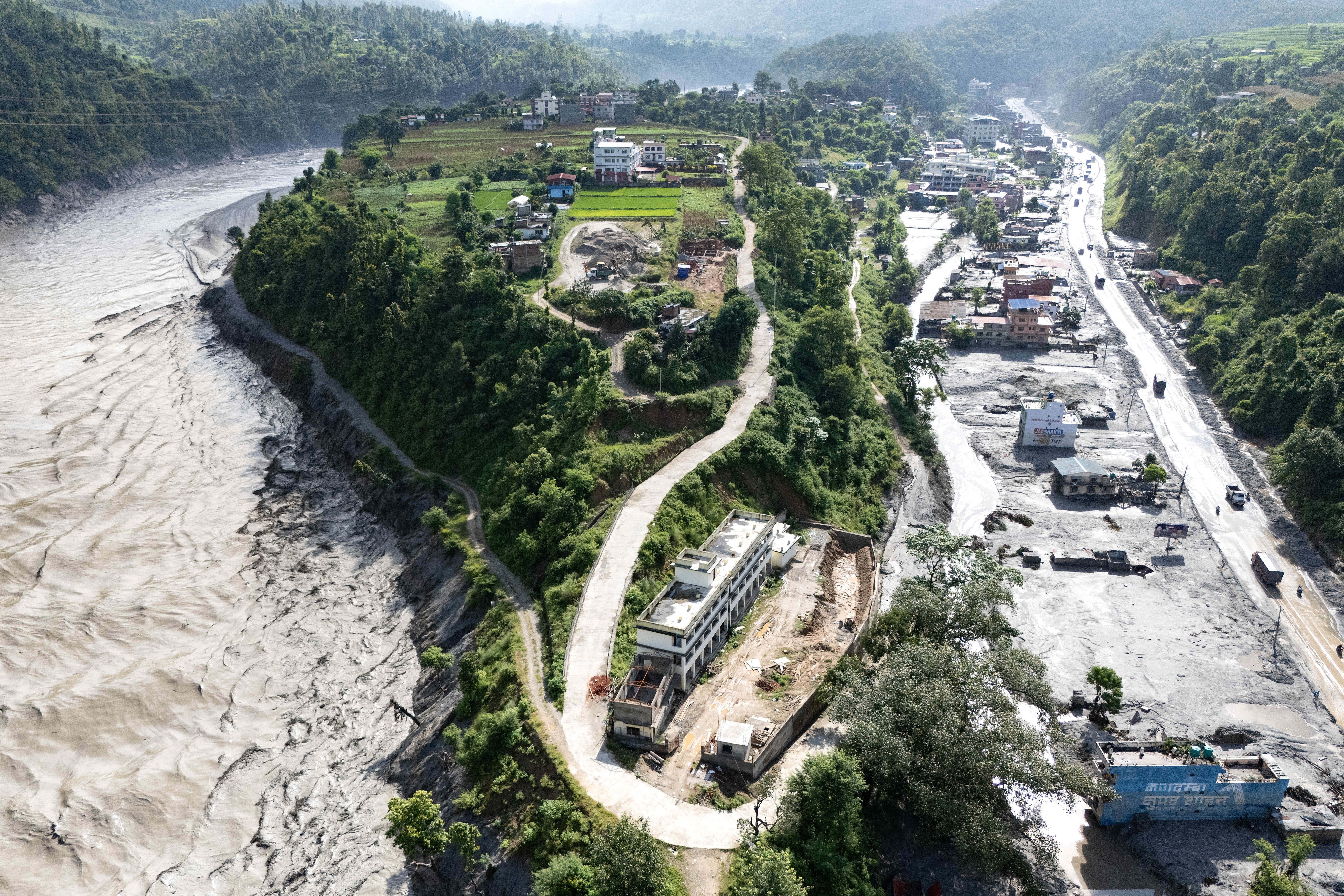
According to CCTV, the floodwaters on the mountainside opposite Gyirong Port reached more than 60m (197ft) at their peak, roughly the height of a 20-storey building.
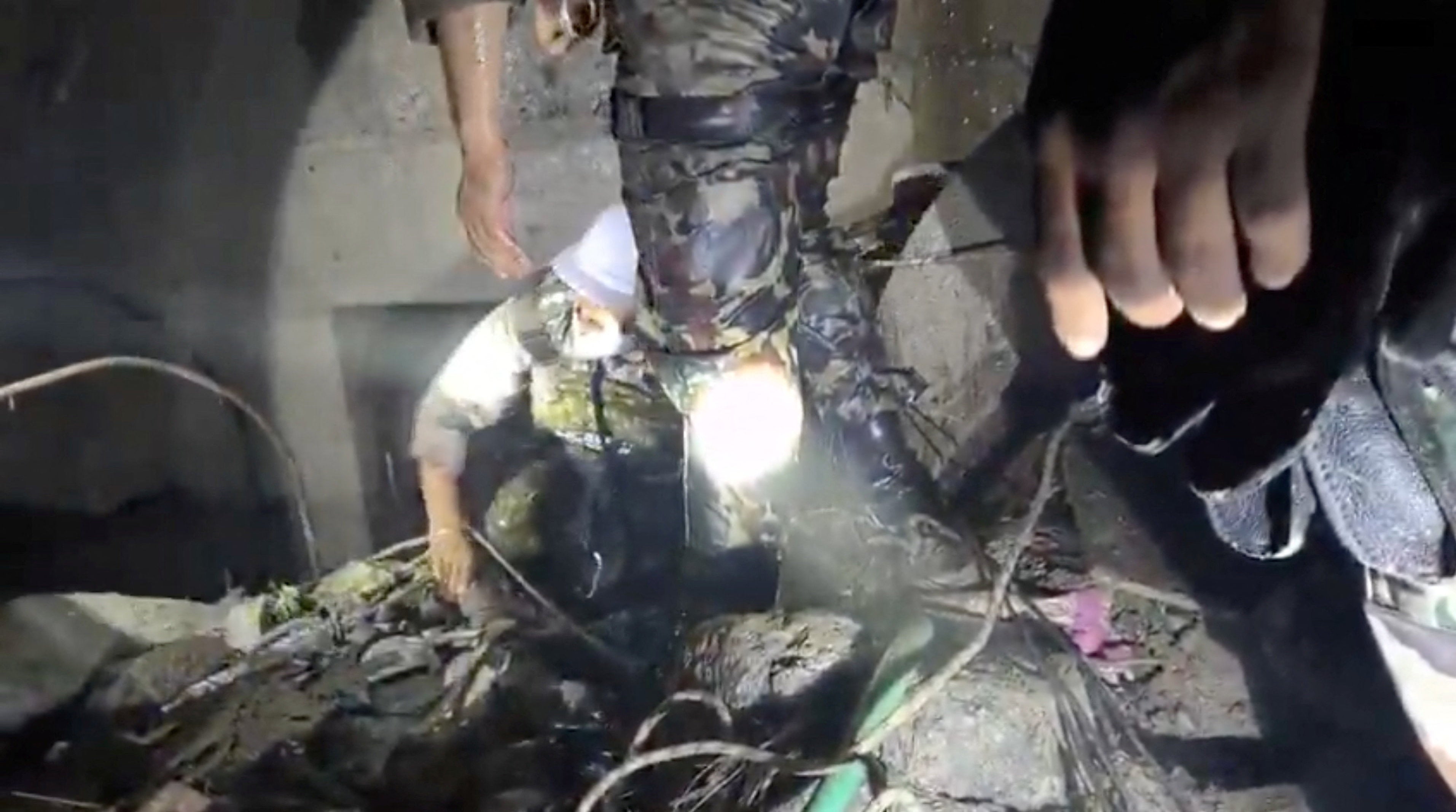
The latest warning comes as large-scale rescue operations led by Nepali and international rescue teams race to find survivors and those killed, with many trapped in tunnels.
As many as 639 people remain trapped inside hydropower project tunnels, with hopes fading for their safe rescue as the critical window of the first 72 hours has passed. Experts say the chances of survival drop significantly beyond that window as they remain without access to clean water.
 open image in gallery
The floods damaged at least 12 hydropower projects across Rasuwa and Nuwakot districts, trapping some 900, Mohan Kumar Dangi, president of the Independent Power Producers Association of Nepal, or IPPAN, said.
Authorities in Nepal have begun burying bodies of people who died in the floods and were not claimed by families in mass graves. More than 200 bodies have been buried so far, and more will rest in a mass grave in dense forest outside Nepal’s Bharatpur city. The move has sparked backlash as people in the Hindu-majority country, where bodies are cremated, lashed out against the government for not following Hindu funeral traditions.
Police said they were preserving the DNA samples, photographs distinguishing facial features and recording other identifying details of those being buried.
Meanwhile, China’s cybersecurity police have launched a crackdown on those who exaggerated casualty figures and misled the public.
According to Global Times, at least 10 cases have been filed against people allegedly spreading rumours about the flooding in Tibet and Nepal. It includes people who posted on social media with one posting “more than 3,000 people have died on the Chinese side”.
The cyber security police said the rapid spread of unverified casualty figures and fabricated disaster information can mislead the public, generate unnecessary panic and disrupt rescue and relief efforts.