Planes dump water on French wildfires as temperatures rise
ByJames WaterhouseReporting fromGironde region
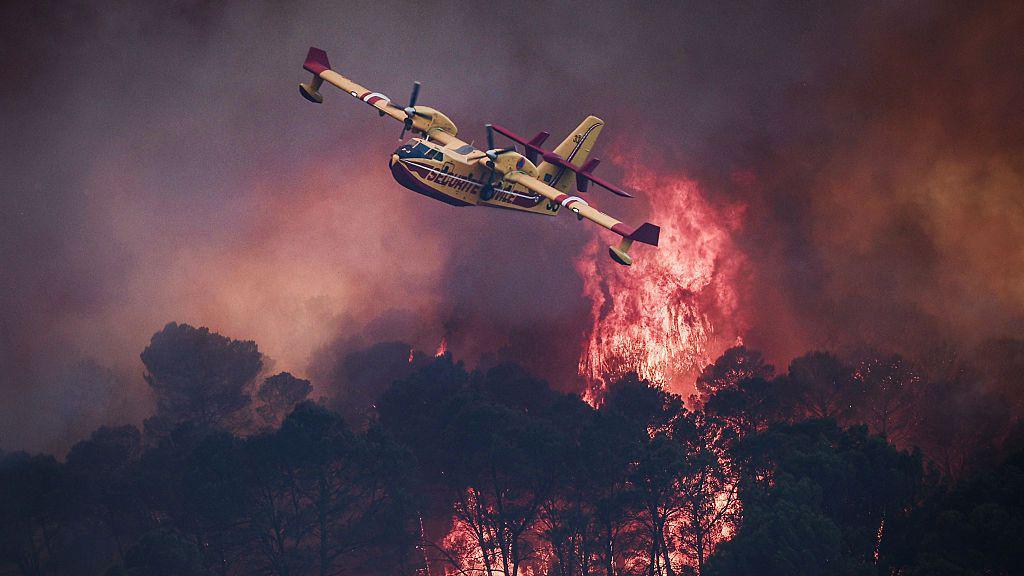
The aerial cavalry of three Canadair aircraft flying overhead look as impressive as they sound.
They arrive in formation, before sharply banking over towards the thick plume of black smoke ahead of us.
Their individual payloads of more than 1,000 gallons of water are then dumped onto the flames below.
A succession of helicopters then follows with their own streams of red fire retardant.
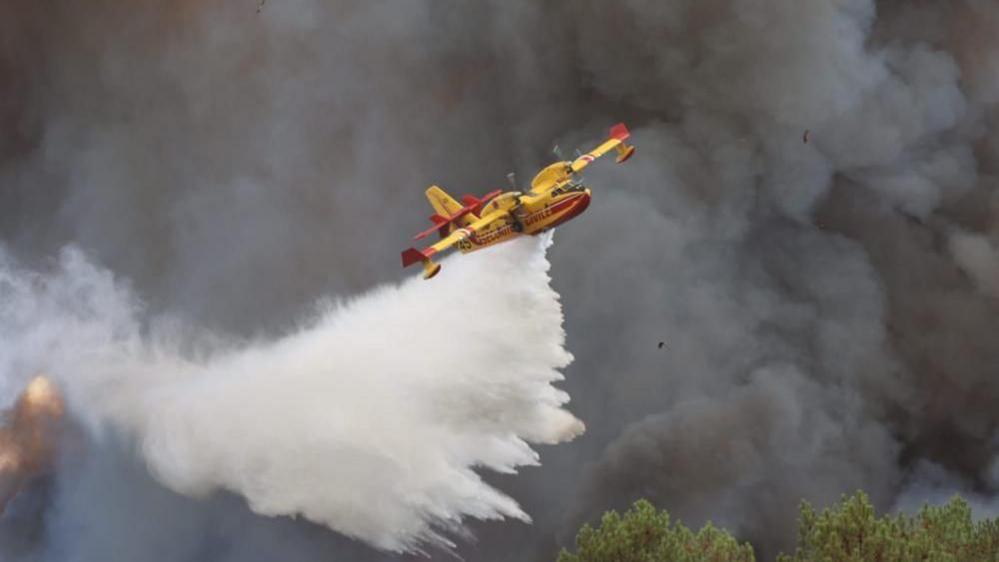 Image source, EPA
A Canadair aircraft dropping water across a burning fire
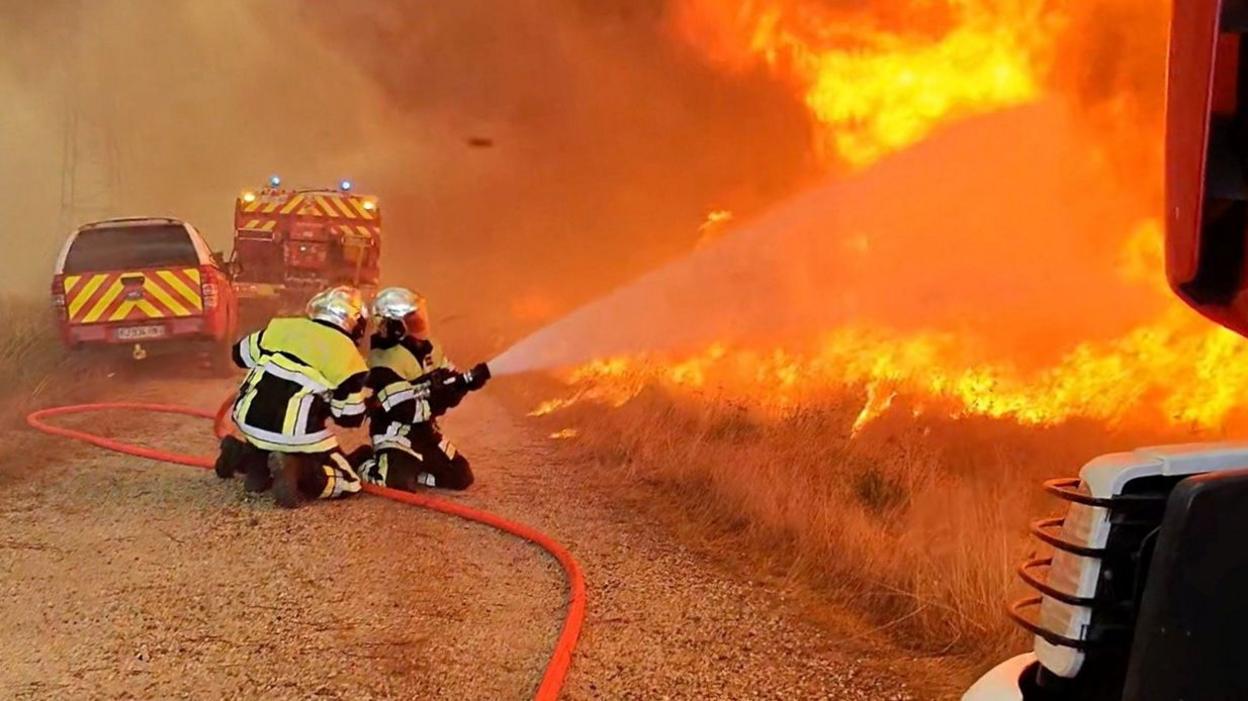
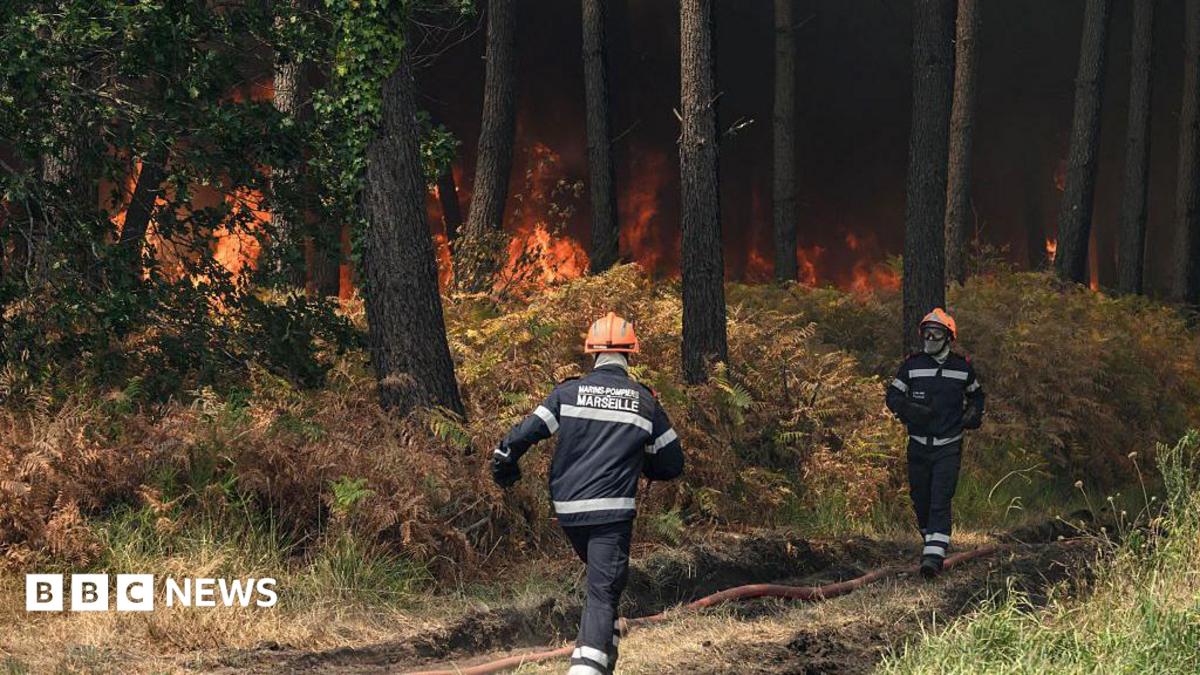
As the smoke eases, firefighters then move into the forest on foot to try and contain the latest flare-up.
They are the principal concern for the thousands of crews and volunteers combating the wildfires that have raged here for a week, forcing tens of thousands of residents and tourists to flee.
As temperatures peak at around 40C, fires restarting on their own are a constant threat.
After 20 minutes or so, the one we are watching is brought under control, only for another to suddenly emerge on the opposite side of the road.
“Leave now!” shouts an understandably irritable officer as he drives past. The smoke is becoming thicker and more aggressive. Indeed, time to leave.
Such is the vast scale of the infernos ravaging France’s south-western Gironde region, that it is not always obvious what direction the smoke is coming from.
It simply descends as you travel west from Bordeaux along empty roads and through deserted villages.
The soil is powder-like and covered in endless pinecones and dried leaves. It explains how the wildfires have spread at the rate they have.
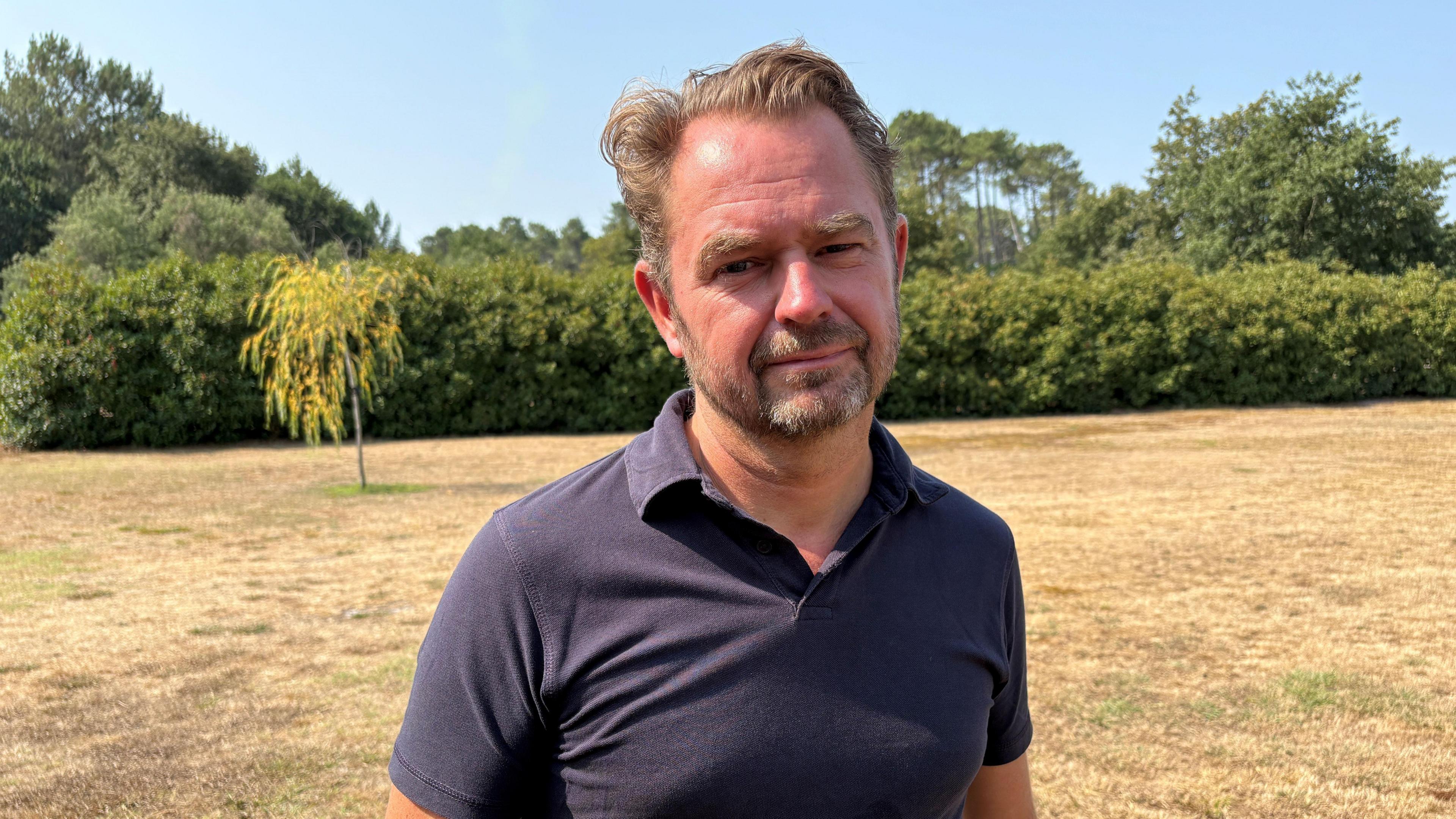
Pierre Alexandre had refused to leave his bungalow when asked by firefighters
“When [the police] said I had to leave, I said no!” confessed Pierre Alexandre. The epicentre of the fire started in the woodland next to his bungalow.
He shows a picture of him sitting on the roof of his house in the dark. Pierre Alexandre explained it was in fact taken in the afternoon, after he told his wife and daughter to leave.
He gave his 19-year-old son, Clement, the option of staying if he wanted, which he did.
“I told him: ‘Be careful because in front of us is a nightmare, we don’t know what will happen,'” explained Pierre Alexandre.
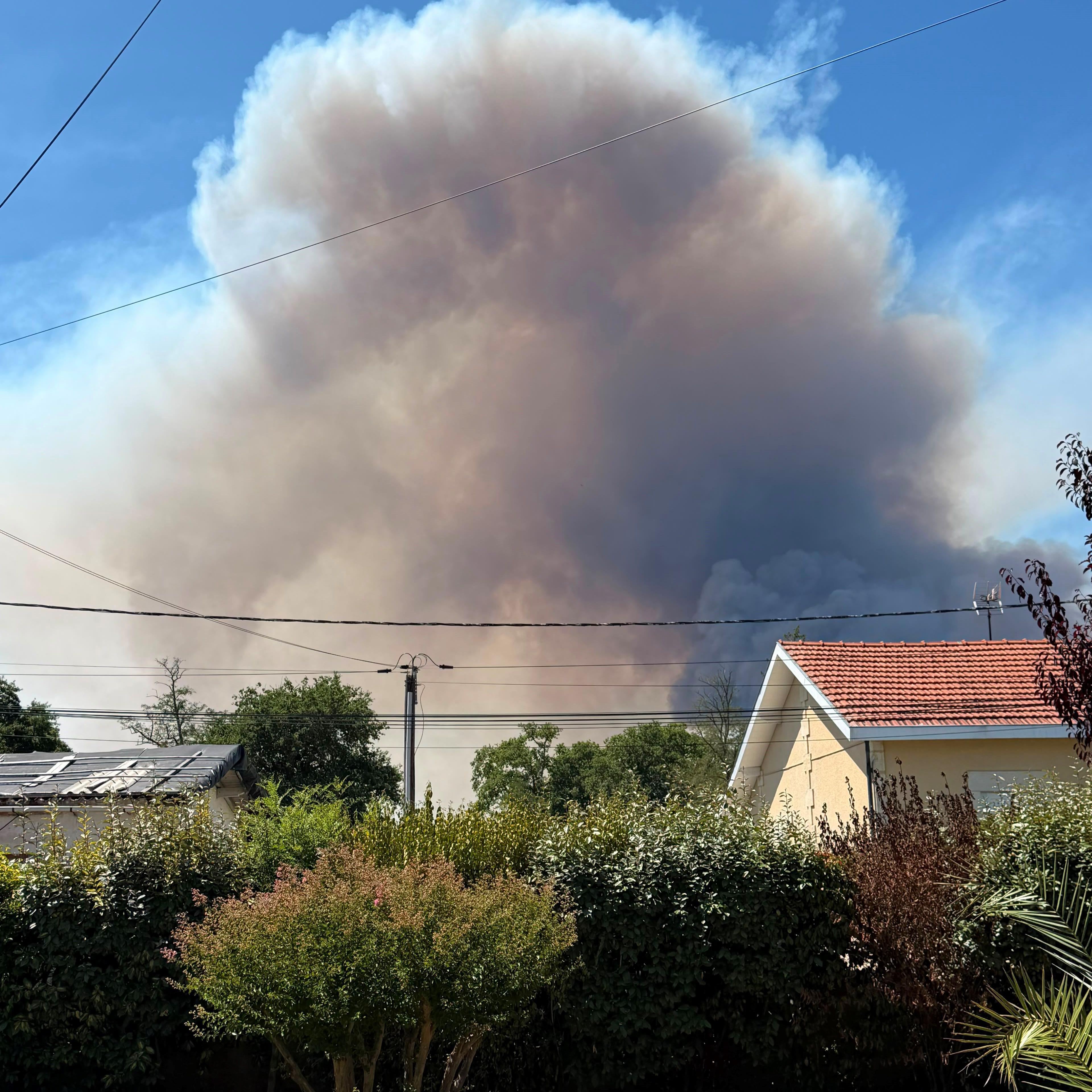 Image source, Pierre Alexandre
Smoke seen from Pierre Alexandre’s garden in Le Temple last Friday
His motivation for wanting to protect his home is relatable, but did he really believe he and Clement could stop the wildfires on their own?
“No, we’re not firefighters,” he conceded.
For those who are, controlling these wildfires is like witnessing a lethal game of “cat and mouse” or “Whack-a-Mole”. An operation of containment rather than cure.
Behind the professionals are an army of volunteers. They drive towards the danger to either deliver water or spray it themselves.
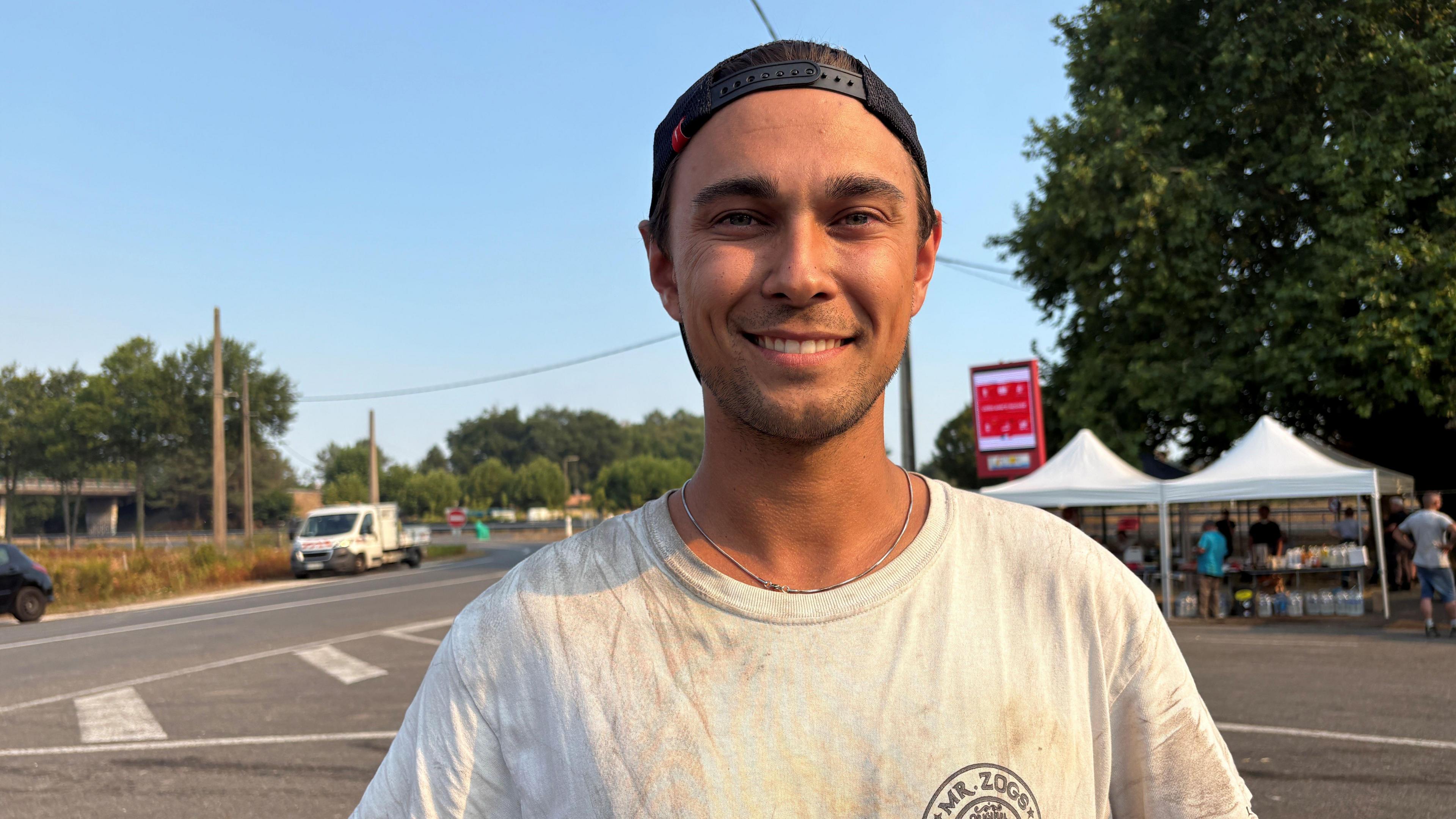
Hugo is one of the volunteers who drives to try and help put out the fires
“If it’s too late, at least we tried,” said a defiant Hugo, 26, as he refilled his water tank. “Fifty thousand hectares has already been destroyed, what will we tell our children?”
Hugo grew up in the area and has returned from his home in Bali to watch his mother’s house in the village of Arès, which is perilously close to the wildfires.
“It’s horrible, it’s our home, it’s our region, it’s our forest, it’s where we grew up, it’s where our family live, where we live, it’s horrible. I feel a lot of sadness,” Maëlys, 23, told us, her face covered in soot.
“I am a nurse and I’m here to help,” she added. Maëlys said her friends own big water tanks, which they then use to try to put out fires that flare-up to prevent them from spreading.
“In the morning I am at the hospital working, and in the afternoon I’m in the forest helping,” she said.
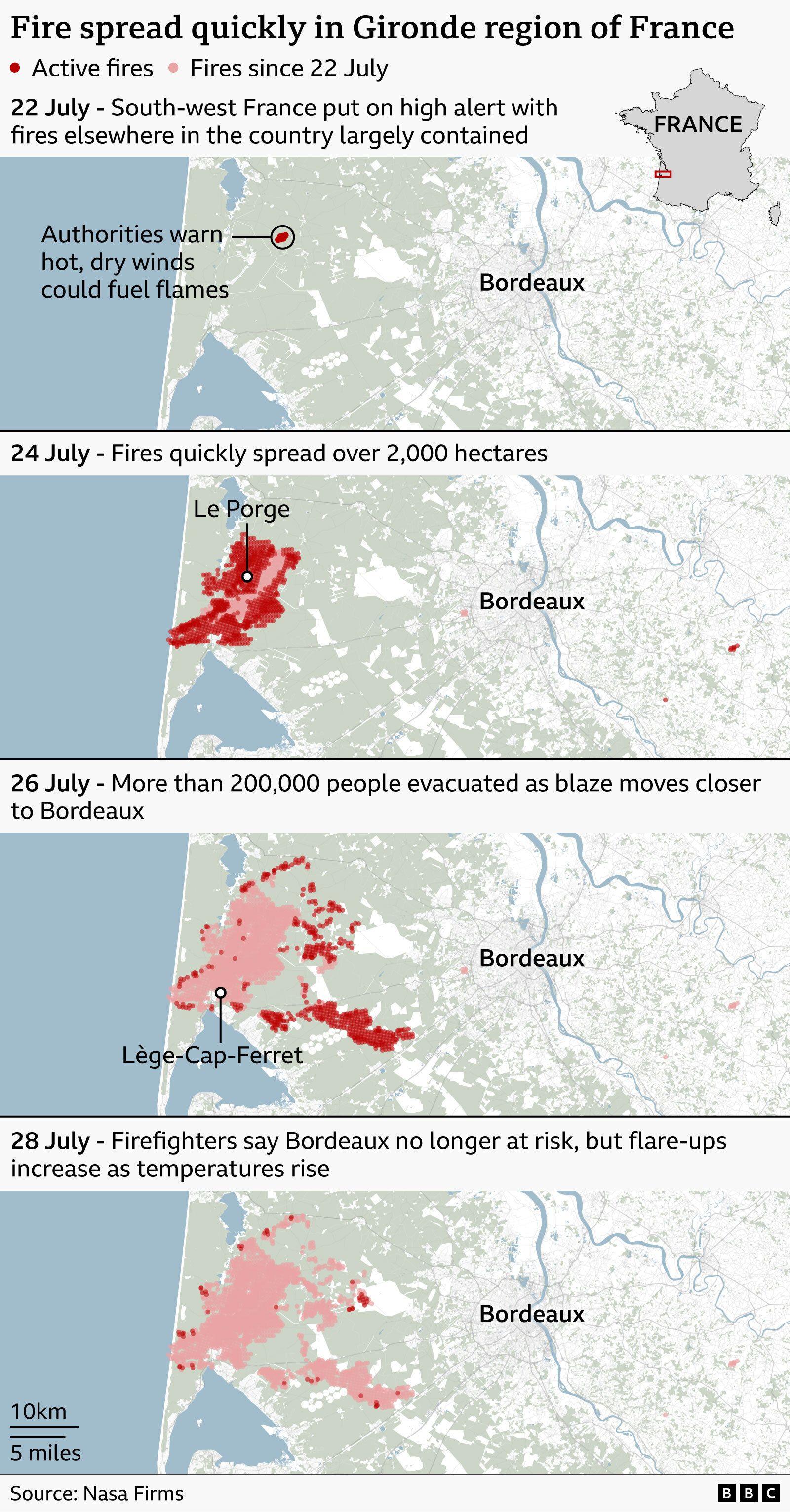
Fire crews have arrived in the south-west from all corners of France – from Brittany in the north to cities like Marseille and Lyon in the south. When not directly dousing the flames, they water the soil and vegetation to prevent future fires from progressing.
It is a process known as “noyer” which translates as “drowning” in French. The Gironde wildfires might be under relative control for now, but they are far from doused.
Additional reporting by Paul Pradier and Matt Logan