


Close up, the cathedral exterior is a masterpiece. Green and white marble stripes compete for attention with pointed arches, golden mosaics and an enormous rose window.
Beneath them, visitors shuffle across the cobbles of Piazza del Duomo, craning their necks towards one of Italy’s most extravagant cathedral facades. Somewhere inside, Renaissance masters await.
Florence is showing off again – or it would be, if it wasn’t more than a hundred miles away.
 open image in gallery
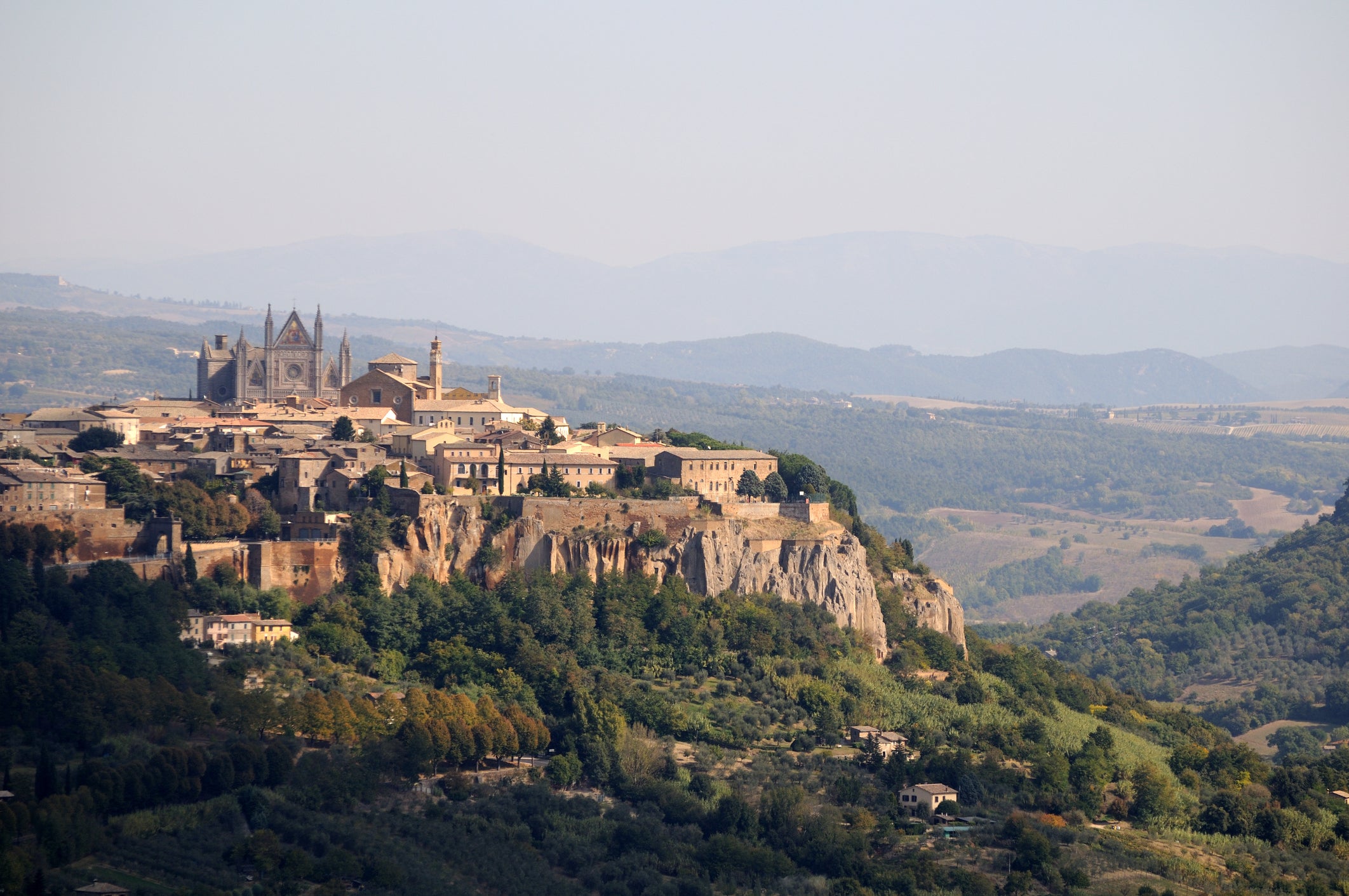
I’m standing in Orvieto, a small Umbrian city balanced improbably on a plug of volcanic rock. Despite the obvious resemblance to Florence’s Duomo, this isn’t imitation: the two cathedrals were developed and built in parallel, although Orvieto’s spectacular facade took more than two centuries to complete.
The neighbouring regions operate on very different scales. Tuscany recorded more than 15 million tourist arrivals in 2025; Umbria, just over three.
Looking up at the Gothic architecture as the light glints off the mosaics, it is clear that Tuscany doesn’t have a monopoly on medieval flamboyance.
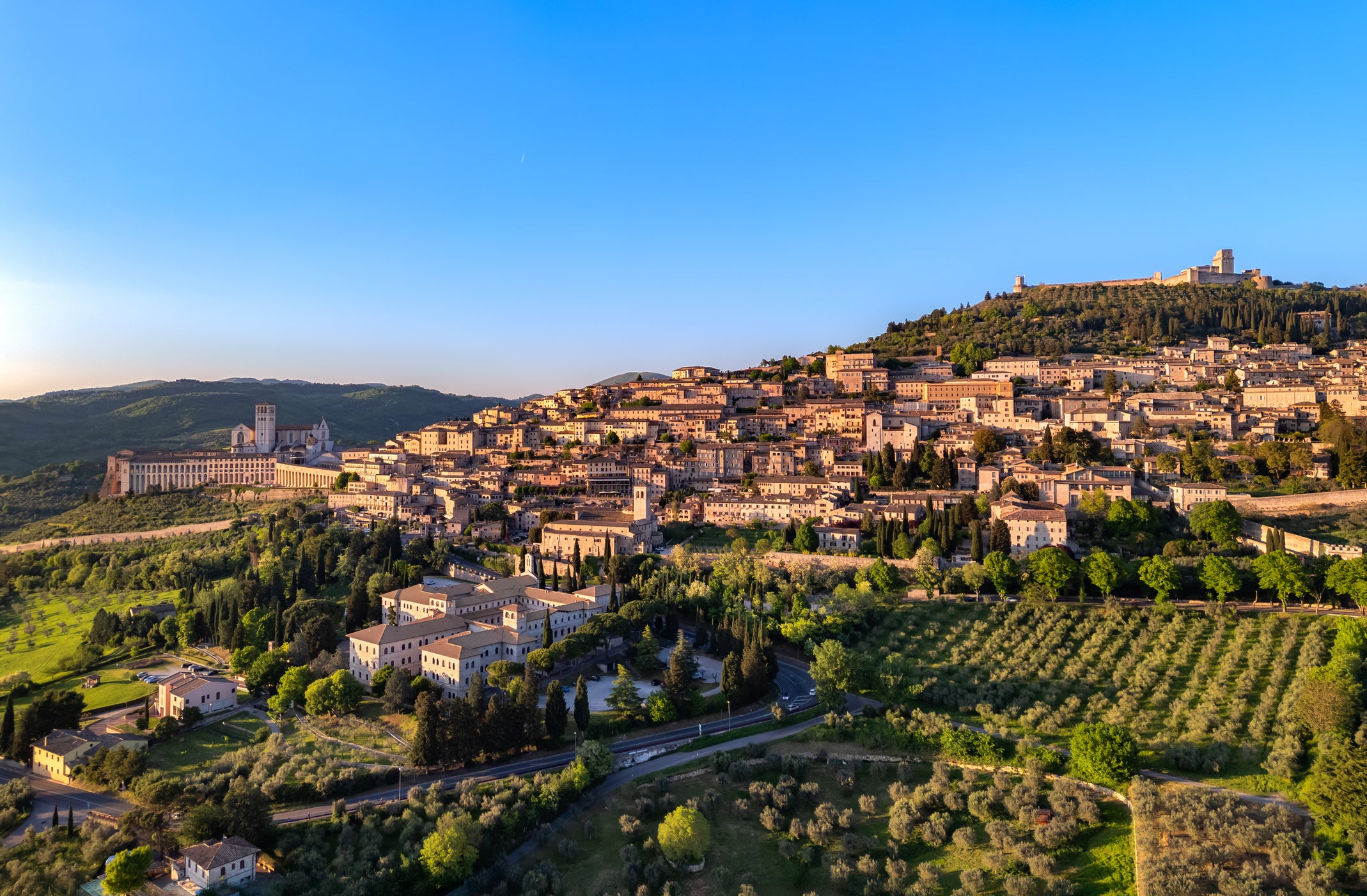
Tuscany may be far better known to the average traveller, but Umbria has hardly spent the past eight centuries waiting to be discovered. In Assisi, international pilgrims have been arriving since St Francis’s time. There are more of them than usual this year: 2026 marks the 800th anniversary of the saint’s death, bringing visitors from around the world back to the hill town where his story unfolded.
During my two days here, I discover Assisi’s history doesn’t begin with its most famous resident. En route to St Francis’s Basilica, squeezed almost improbably between a gelateria and souvenir shop, six Roman columns announce the first-century BC Temple of Minerva, now converted into a Baroque chapel. My guide Chiara cycles through its two thousand years’ of usage – place of worship, town hall, courtroom, warehouse, prison – before pointing towards a portrait of Saint Rita, hands clasped in prayer.
Among other things, Rita is the patron saint of impossible causes and difficult marriages. A crowded stand of flickering candles suggests neither is in short supply.
“Football fans and annoyed wives” Chiara explains. “She’s always popular”.
 open image in gallery
Read more: I checked into an Italian longevity spa – and the news wasn’t good
Day-trippers often miss Assisi at its best, during the hour before sunset. I walk downhill from the city walls as the soft evening light turns St Francis’s Basilica gold.
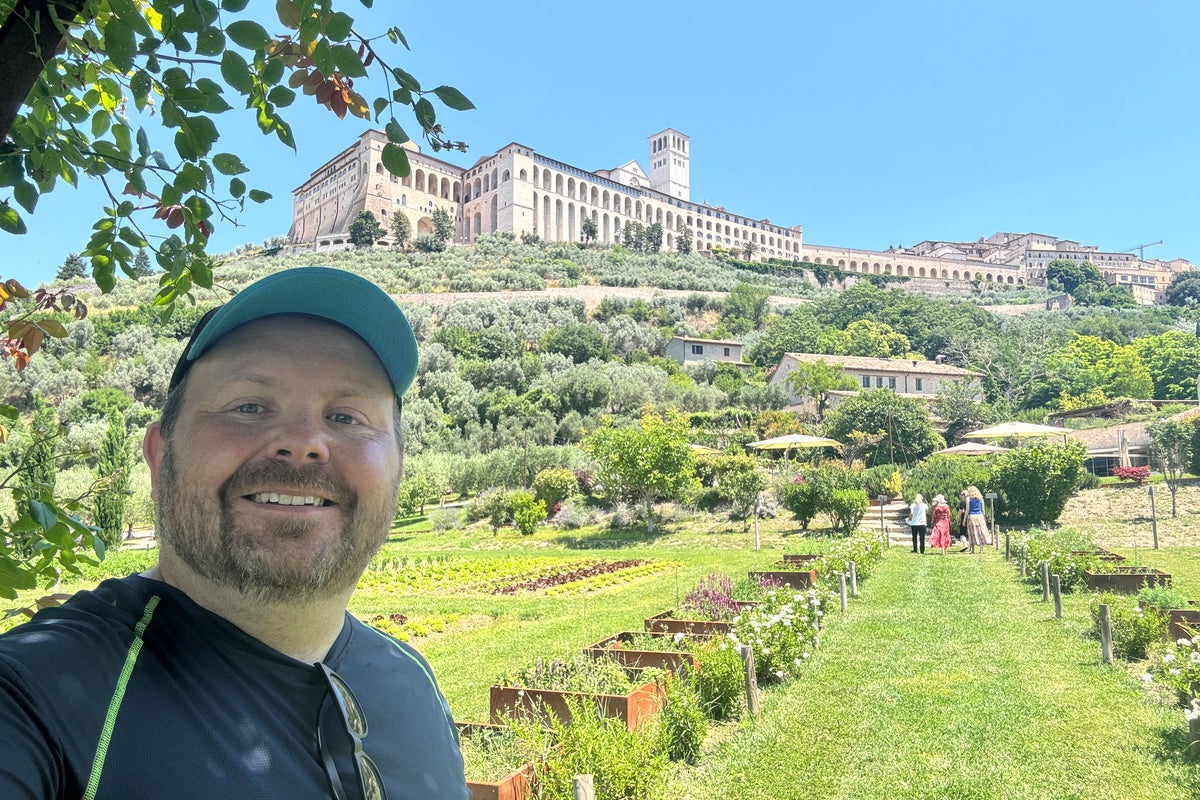
My bed for the night is at Borgo Antichi Orti, occupying a fifteenth-century former Benedictine monastery just beneath the Basilica. Its original pilgrim cells have been converted into rooms, complete with an airflow system the predates modern air conditioning by five centuries.
The Benedictine connection extends to the kitchen. Being one of only two landlocked Italian provinces, Umbria has always looked to the land, not the sea, for its produce and there is a pride in hyperlocal ingredients. Here, herbs and vegetables are picked from gardens arranged around the seasons, as they were in the fifteenth century, and truffles are foraged year-round from the surrounding forests. Sourcing ingredients from a town ten miles away is spoken about as though it’s travel to another timezone.
That fierce localism isn’t confined to restaurant kitchens. At Olio Decimi nearby, a family-run olive-oil producer just outside the town, I sign up for a tasting. An hour of olive oil initially feels excessive but within minutes, I feel as if I’ve stumbled into a sophisticated wine tasting.
 open image in gallery
“We think it’s the most flexible ingredient on Earth,” declares Romina Decimi. Alongside bread and crudités, she produces vanilla gelato slicked with olive oil, then pistachio and hazelnut creams created using their signature product. It’s delicious.
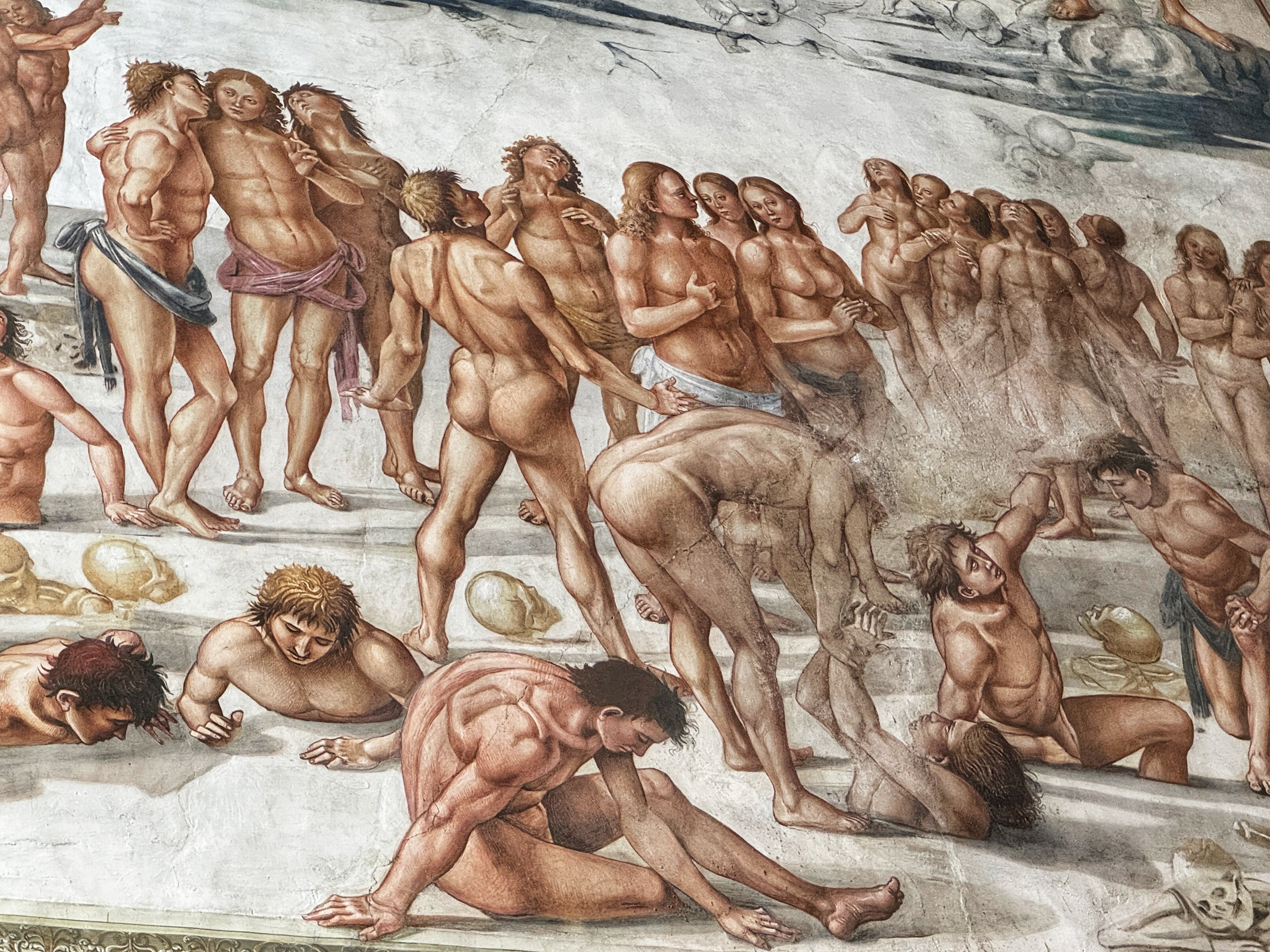
Two hours by train takes me back to Orvieto. Inside its cathedral, however, the comparison with Florence ends abruptly. The San Brizio Chapel is more like an animated Renaissance horror film, containing one of Europe’s most visceral depictions of the apocalypse.
Luca Signorelli’s frescoes show muscular, naked souls being dragged towards hell while the Devil, horns and all, whispers menacingly into the Antichrist’s ear. It’s difficult to know whether to blush or stand in awe.
 open image in gallery
Signorelli’s obsession with the human body would later influence Florence’s Michelangelo, whose own Last Judgment appeared in the Sistine Chapel three decades later. Signorelli even painted himself into the action, standing calmly at the edge of the Rapture, observing his handiwork.
Below my feet, more than 1,200 underground caves, wells and tunnels have been excavated from Orvieto’s soft volcanic rock, with the oldest dating back 2,500 years. Initially built by the Etruscans but used by later civilisations as olive and wine presses, this subterranean labyrinth was an aspect of everyday life for centuries. Escape routes into the hillside allowed aristocrats to flee during the region’s frequent bouts of civil unrest.
After a morning of exploring below ground and climbing the 13th-century Torre del Moro for a panoramic view of the Umbrian countryside, it’s time for a final liquid comparison to Tuscany.
 open image in gallery
Read more: How Mount Etna has turned Sicily into one of Italy’s best destinations for foodies
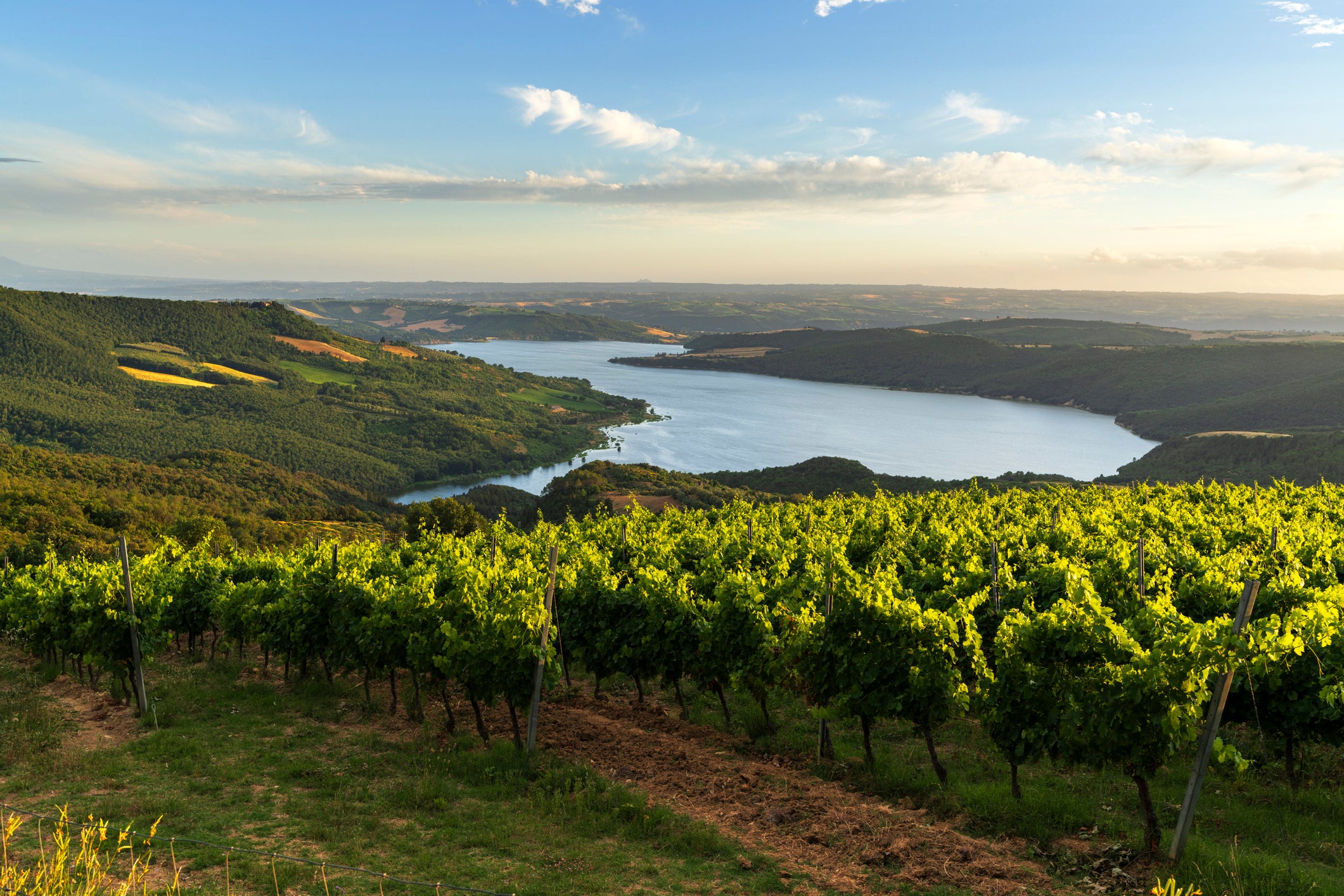
While Tuscany built a global reputation on muscular reds, chianti, and vino nobile, Orvieto’s calling card has always been white, traditionally blending local grechetto and procanico grapes into wines particularly suited to the region’s pasta and pork.
For Gianluca, a local vintner who leads tastings in the old town, the logic of ensuring a good match with local produce is straightforward.
“Why produce such a good wine if it’s fighting with what’s on your plate?”
After four days in Umbria, this seems an apt metaphor. Assisi and Orvieto needn’t compete with Florence or Siena. They offer what draws so many visitors to Italy in their own terms: extraordinary art, quiet medieval streets and piquant local produce.
Draining the last of my glass, it’s an inescapable conclusion. There’s far too much flavour here to be anyone’s alternative.
How to do it
Perugia, a 15-minute taxi ride from Assisi and one hour from Orvieto, has daily flights from London Stansted with Ryanair. Basic fares start at £65 return.
More convenient for many visitors will be to fly to Rome and catch the train to Orvieto (just over one hour) or Assisi (two hours) directly. Trains from Assisi to Orvieto take just under two hours with a change at Orte. Book tickets and check timetables using the Trenitalia website.
If you have your own car, both Orvieto and Assisi are a two-hour drive from Florence. It takes about an hour and a half to drive between the two. Parking in the hilltop old towns of both cities is non-existent so use facilities at ground level.
Where to stay
Assisi: Borgo Antichi Orti – once a Benedictine monastery, where guests stay in the cells and the pool is the former animal trough. On site restatuarant, Re Tartu, specialises in truffles and is one of the best meals you’ll have in Italy. Rooms start from £125 per night.
Orvieto: La Piazzetta – in a fantastic location in the upper city, this stylish B&B blends period features with modern amenities. Breakfast includes includes fresh fruit from the garden and local pastries. Rooms start from £110 per night.
Phil was a guest of Dovetail PR