


FG begins rehabilitation of 13 police training institutions
August 28, 2026 12:15 am

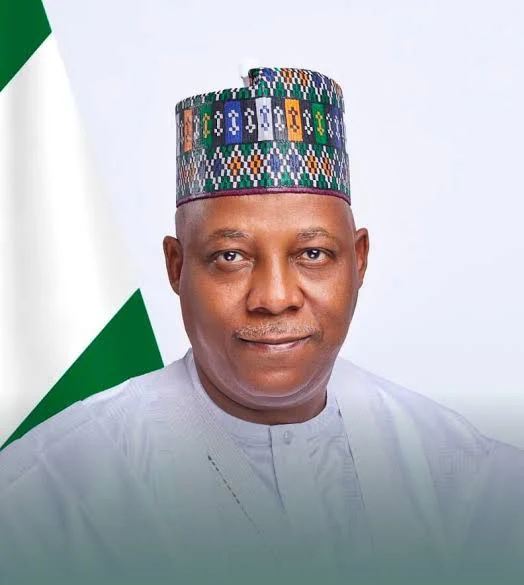
Vice President Kashim Shettima
The Federal Government on Thursday disclosed that contracts had been awarded for the rehabilitation of 13 police training institutions nationwide, with 80 per cent of contractors having already received their award letters.
This was as Vice President Kashim Shettima on Thursday charged the National Economic Council to sustain ongoing economic reforms until improvements in the economy translate into jobs, stronger purchasing power, business confidence and better living conditions for Nigerians, as the council received updates confirming Nigeria’s reclassification to frontier market status by index provider FTSE Russell.
Senior Special Assistant to the President on Media and Communications in the Office of the Vice President, Stanley Nkwocha, revealed this in a statement he signed Thursday titled ‘FG Commences Rehabilitation of 13 Police Training Institutions.’
Shettima, who chaired the 160th NEC meeting at the State House, Abuja, stressed that the government must remain focused on implementing policies beyond their announcement, stating that continuity and measurable outcomes were critical to earning public confidence.
“There is no doubt that a serious government is measured by the matters it refuses to abandon. While attention may reveal a problem, continuity determines whether the problem yields to policy,” he said.
He said macroeconomic indicators must ultimately be felt at the household level to carry political meaning.
The VP stated, “Macroeconomic progress must therefore continue its passage into jobs, purchasing power, business confidence and stronger subnational economies, because numbers become politically meaningful when citizens recognise themselves in their improvement.”
He urged council to maintain follow-through on existing programmes rather than allow new priorities to displace old commitments.
“Continuity is a form of accountability: yesterday’s promise still deserves a place on today’s table, and no new priority absolves us of an old responsibility,” he said, adding that President Bola Tinubu had placed on NEC the responsibility of converting policy into outcomes Nigerians could see and feel.
“A government that remembers earns the confidence of its people because its promises do not expire when the microphones are switched off,” the Vice President said.
Briefing journalists after the meeting, Governor Lucky Aiyedatiwa of Ondo State disclosed that contracts had been awarded for the rehabilitation of 13 police training institutions nationwide, with 80 per cent of contractors having already received their award letters.
He announced, “This afternoon, during the National Economic Council meeting, the council called for an update on the rehabilitation of police training institutions across Nigeria, and the council was made to understand that contracts have been awarded for the rehabilitation of the 13 police training institutions, and 80 per cent of contractors have received their award letters.”
Aiyedatiwa said the three-week rehabilitation exercise was aimed at putting the institutions in shape for the commencement of Nigeria Police Force training programmes.
“The rehabilitation work is for a period of three weeks, aimed at putting the institutions in shape for the commencement of training programs by the police force, and strong efforts are ongoing to expedite action in the release of funds for the actual commencement of the rehabilitation work.
“You are all aware that the insecurity in the country and our police force have to be trained further. Even though we are also looking at state policing, there is a minimum standard that has been set below which any of our police officers will not go.
“So training is very, very important, and that is why all of these training institutions have to be put in place in terms of the equipment, the infrastructure that will enable the police force to be well trained for the task that is ahead of us. Thank you,” he stated.
The Enugu State Deputy Governor, Ifeanyi Ossai, added that the Minister of Finance had committed to releasing the remainder of the funds needed to pay contractors by the following week, stressing that the training and retraining programme would be sustained rather than treated as a one-off intervention.
“The Minister of Finance has committed that by next week, the remainder of the funds needed to pay the contractors will be released, and council expects that the contractors selected will be prompt in delivering on the mandate given to them by virtue of the contract.
“And as the governor has said, council took seriously the issue of security, and a badly trained security personnel is worse than it’s better not to have a security personnel at all than to have a badly trained security personnel.
“But we also want to show Nigerians that this is going for a long haul. Aside from this quick fix, it’s going to be sustained.
“The training and retraining programme will be sustained, and we also expect cooperation from Nigerians to support the police because if we train them and we don’t support them in terms of information, in terms of collaboration, well, the law also empowers all of us as Nigerians to act when crime is being committed.
“Every Nigerian is a policeman. Even if a trained policeman is not there, until he arrives, we expect Nigerian support, the Federal Government effort to ensure that we can keep stabilising our country and making it safe for investment.” Said Ossai.
The Minister of Finance and Coordinating Minister of the Economy, Taiwo Oyedele, disclosed that FTSE Russell had reclassified Nigeria from an unclassified market to a frontier market.
Oyedele said the development would open the country up to a new pool of institutional investors.
According to him, “When FTSE Russell says they’ve now reclassified Nigeria to frontier markets, that automatically makes us eligible for investment.
“Or, put differently, we become investable to many institutional investors globally.
“The Nigerian capital market, as of the end of July/early August this year, was the best performing in the world. Even in the past one year alone, even in dollar terms, the market has returned more than 60 per cent, and this is even before the classification.”
The minister had briefed the council on the state of the economy, citing real GDP growth of 3.89 per cent for the first quarter of 2026, up from 3.13 per cent a year earlier, with full-year 2026 growth projected above four per cent.
“Headline inflation is down to 15.43 per cent at the end of July, from 24.94 per cent a year ago. Although food inflation is down, it remains elevated at 20.31 per cent at the end of July, compared to 26.2 per cent this time last year,” he said.
Oyedele said external reserves stood at $51.96bn, the highest level since January 2009 and up 38 per cent year-on-year, while the naira had appreciated 13.5 per cent year-on-year by the end of the first half of 2026, with the exchange rate now stable under N1,400.
He said federation account net revenues rose 44 per cent, from N15.2tn in 2024 to N21.9tn in 2025, and were projected to increase by at least 50 per cent in 2026.
This was as Nigeria’s trade surplus nearly doubled from N17.7tn in 2025 to N34.7tn by the first quarter of 2026, while total public debt remained moderate at under 37 per cent of GDP, amounting to N158tn, with debt service as a share of revenue declining from nearly 100 per cent in 2022 to below 60 per cent in 2025.
The minister disclosed that all three major rating agencies, Fitch, Moody’s and S&P, had upgraded Nigeria’s sovereign credit rating between April 2025 and May 2026, the first coordinated alignment in over a decade, and that Nigeria had exited the Financial Action Task Force grey list as of October 2025 and the EU’s anti-money laundering deficiency list as of January 2026.
Oyedele said council identified agriculture, energy, manufacturing, mining and the digital economy as priority sectors for accelerated growth, noting that 81.4 per cent of Nigerians work in agriculture and non-tradable services.
He said the council also flagged risks ahead, including geopolitical conflicts, commodity shocks, persistent food inflation, election-cycle fiscal risk and negative pre-election narratives not supported by data, and directed a review of fiscal and monetary measures to moderate high lending rates for businesses.
“The gains on inflation, reserves, the exchange rate, and credit rating are the direct result of sustained, consistent policy. They are reversible if we waver,” he warned.
Meanwhile, the Minister of Budget and Economic Planning, Atiku Bagudu, said council considered and approved the Revised National Social Protection Policy (2026-2030), noting that Nigeria’s first social protection policy dated back to 2017 before its programmes were consolidated under the Ministry of Humanitarian Affairs and Poverty Reduction in 2019.
He revealed that the council approved the reconstitution of a National Social Protection Council to be chaired by Vice President Shettima, with six state governors as members alongside the Ministers of Finance, Budget and Economic Planning, Labour and Employment, and Humanitarian Affairs and Poverty Reduction, with the Ministry of Budget and Economic Planning serving as secretariat.
The former Kebbi State governor said the revised policy would be presented to the Federal Executive Council for implementation, with states urged to align their social protection policies, laws and budgets accordingly.
Bagudu also noted that the council had earlier approved the completed mapping of all 8,809 wards nationwide to determine local economic and social opportunities and challenges, as part of a whole-of-society approach to spreading prosperity to the grassroots.
For his part, Akwa Ibom State Governor, Umo Eno, disclosed the latest federation account balances as at August 26, 2026, presented by the Finance Minister.
He said the Excess Crude Account stood at $535,823, the Stabilisation Account at N90.95bn, and the Natural Resources Development Fund at N256.4bn.
“This is a far improvement over what it was year-on-year last year, and that shows you that the economy is stabilising,” Eno said.
Borno State Governor, Prof Babagana Zulum, told journalists that the council received a presentation from the Minister of Trade and Investment on Nigeria’s forthcoming Content Week and the Intra-African Trade Fair scheduled to hold in Lagos, and endorsed mandatory participation by all state governments to showcase Nigeria’s local production capacity and position the country as one of the continent’s largest economies.
“These growth and development have not been showcased anywhere in the world to a larger extent, and therefore this event in Lagos should be seen as an opportunity for sub-nationals as well as the Federal Government to showcase our potential,” Zulum said, adding that states had given commitments to participate actively.
With three years of experience, Stephen, The PUNCH correspondent, has been covering Nigeria’s presidency, politics, security, immigration and trafficking in persons
All rights reserved. This material, and other digital content on this website, may not be reproduced, published, broadcast, rewritten or redistributed in whole or in part without prior express written permission from PUNCH.
Contact: [email protected]