


 Image source, Reuters
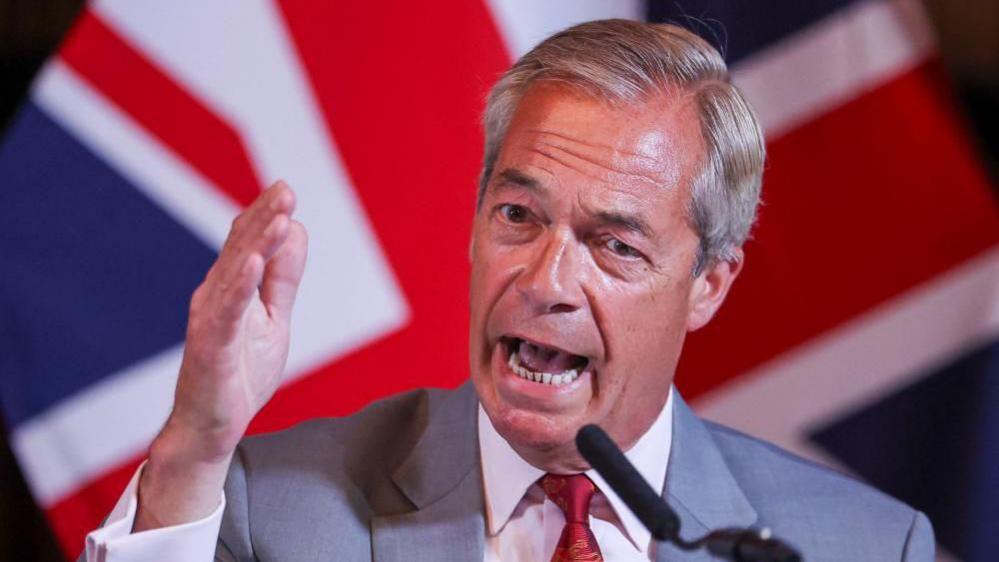
Nigel Farage said voters in Clacton had “stuck two fingers up at the entire political establishment”
ByJoe PikePolitical correspondent
Nigel Farage did not turn up to savour his victory in the by-election he triggered himself.
Overnight he told a rally of Reform UK supporters he had been advised there was an “organised campaign to disrupt and degrade the result” and wanted to avoid being “demeaned and humiliated by nobodies”.
When the official result did come in hours later, it confirmed the Reform UK leader had indeed won this by-election convincingly with 22,239 votes, but without any serious opposition after the other main parties did not put up candidate.
Farage’s allies say he has been both emboldened and re-energised by this race, and it is not difficult to work out why.
He is clearly popular in the constituency, his party has had a commanding lead in national opinion polls for much of the past 18 months, and he has achieved something remarkable in turning his upstart organisation into a mass-membership movement with a serious chance of getting into government.
But today’s result won’t stop the Metropolitan Police investigation into donations to Reform UK, questions about Farage’s friendship with a convicted fraudster, or the parliamentary investigation into why he did not register a £5m gift from a billionaire donor.
And given Farage triggered this race and the result was entirely predictable, what was the point of it all?
When he made his surprise announcement last month that he was resigning to run for a seat he already represented, the Reform leader said “the people of Clacton should be the judges of my actions” – and he wanted to “fight to continue the political revolution that Reform has started”.
Could he have predicted that continuing his “revolution” would descend into a bizarre electoral battle involving a record 34 candidates, a 90cm long ballot paper, with his most prominent challenger being a man dressed as a bin?
Labour say Farage has been trying to “dodge scrutiny”, and the Conservatives argue he triggered this race because he was having a “hissy fit”.
One thing the Reform UK leader could have anticipated is the cost. In a constituency with the most deprived neighbourhood in England, the council estimates taxpayers will need to fork out £250,000 for the organisation of this by-election. Reform UK has offered to foot the bill, but that is not allowed under electoral law.
Now the election is over, Farage is likely to face renewed scrutiny on those outstanding questions about his finances.
The most high profile row around the Reform UK leader relates to the revelation that shortly before the 2024 general election, he secretly received £5m from the Thailand-based crypto-billionaire and Reform donor Christopher Harborne.
The money, which Farage has described as an “unconditional gift”, was first revealed by the Guardian this year., external
Farage has given various explanations as to why Harborne gave him the money, including as a reward for Brexit, and to pay for personal security for the rest of his life.
It is being investigated by parliament’s standards commissioner because it was not registered by the Reform leader.
He says he didn’t need to, has done “nothing wrong” and parliament’s investigation is “being used as a political tool”.
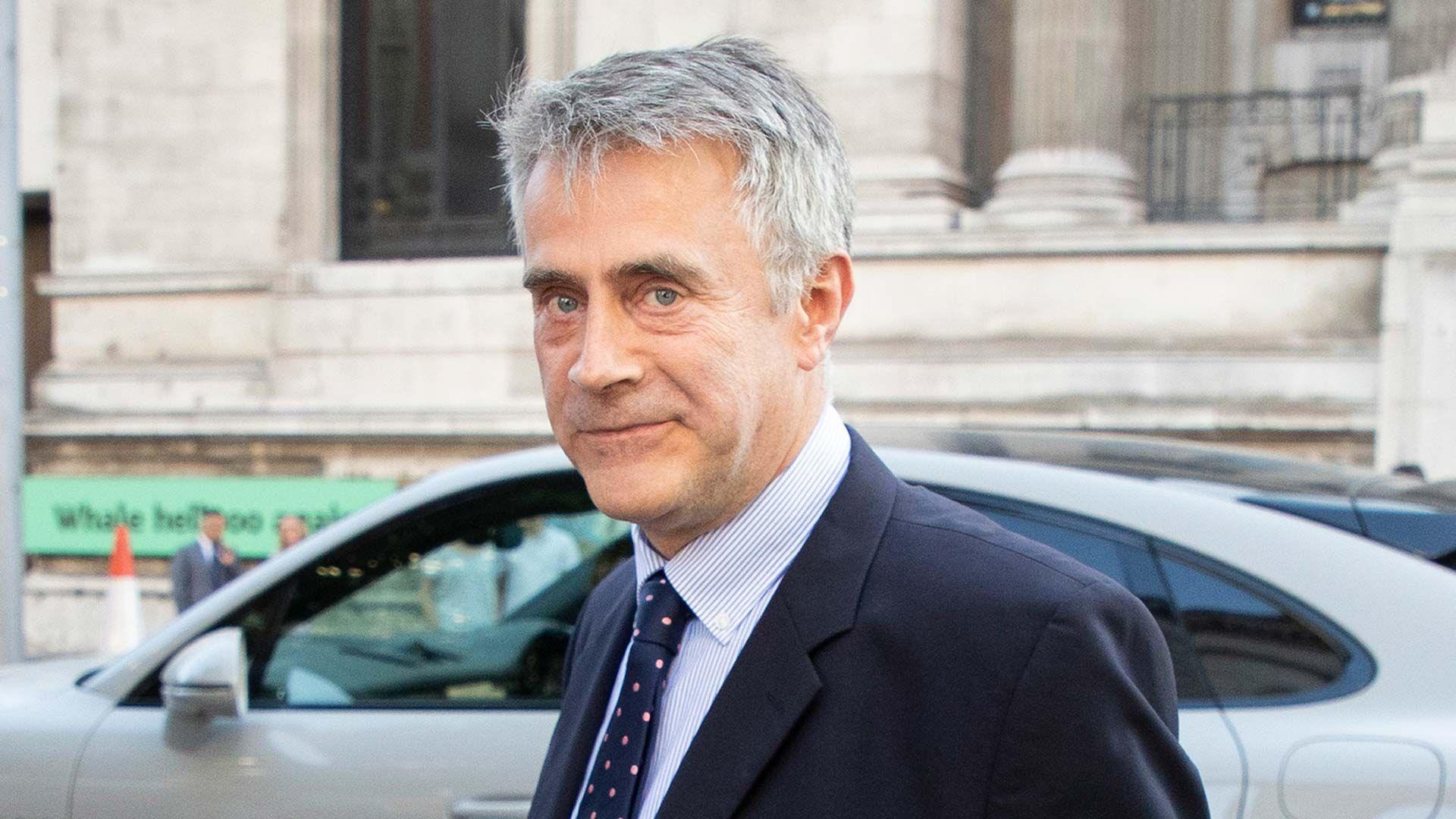 Image source, George Cracknell Wright/LNP
Christopher Harborne is a cryptocurrency investor and aviation entrepreneur
Meanwhile, the Met Police has been investigating large donations to Reform UK for more than a year. They have confirmed two people have been interviewed but made no arrests.
The investigation is said to relate to allegations of concealing or disguising donations derived from an “impermissible” donor to a party, or the use of “false” information about a donation.
Reform UK sources say no party officials have been interviewed by the police.
The police investigation into Reform UK donations and the parliamentary investigation into Farage not registering his £5m gift will continue, although both could take many months to conclude.
Farage has also received financial support for his security and social media staff from the convicted fraudster George Cottrell, known to colleagues as “Posh George”.
The 32-year-old, who was arrested in a US airport while travelling with Farage, admitted a count of wire fraud in the US in 2017.
The Sunday Times first revealed, external Cottrell’s support for Farage, as well as the fact it included use of a luxury flat near Buckingham Palace.
Parliament’s standards watchdog has not confirmed whether it is investigating this, but Farage has said there was “no wrongdoing”, he followed the rules, and he is considering legal action against the paper.
Meanwhile, the Met Police has been investigating large donations to Reform UK for more than a year. They have confirmed two people have been interviewed but made no arrests.
The investigation is said to relate to allegations of concealing or disguising donations derived from an “impermissible” donor to a party, or the use of “false” information about a donation.
Reform UK sources say no party officials have been interviewed by the police.
The police investigation into Reform UK donations and the parliamentary investigation into Farage not registering his £5m gift will continue, although both could take many months to conclude.
If the Reform UK leader is found to have breached parliament’s rules, it is possible that the sanctions could lead to a second by-election. If that comes to pass, the party is confident they will win again.
Aside from a personal boost to the leader, this campaign has perhaps been most beneficial for Reform UK in allowing the party the opportunity to build up a wealth of local voter data.
That will be invaluable if parliament’s investigation into Farage’s finances eventually prompts a second by-election which the main parties actually take part in.
The far bigger problem for Reform UK is that nationally, there are signs their leader’s popularity is on the slide.
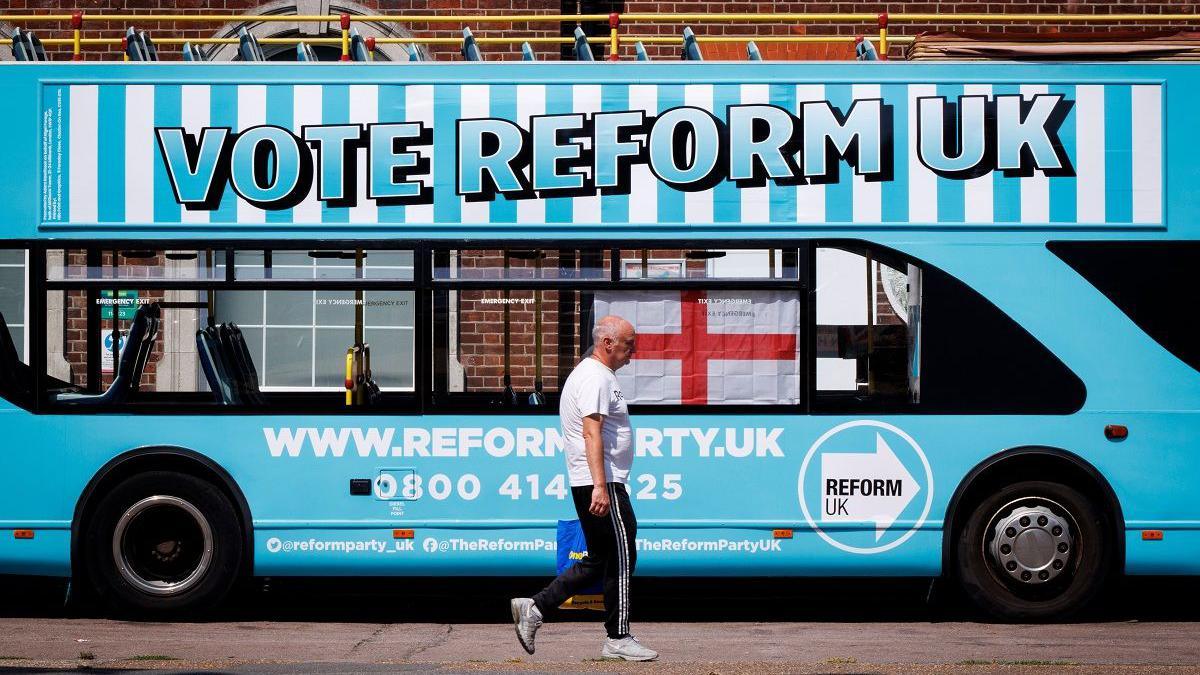 Image source, EPA
“This time last year Farage had the highest approval of the main party leaders”, says pollster Luke Tryl from the organisation More in Common. “Yet earlier this month he fell to his worst score since the general election.”
“What will worry Farage is not only that his negative approvals have risen, which may signal greater willingness to vote tactically against the Reform leader, but there are also fewer people expressing a positive view suggesting an erosion in his base”, Tryl says.
More in Common’s research suggests around 80% of voters are aware of questions around Nigel Farage’s finances, but opinions on them are mixed.
“Farage’s strongest supporters often take the view it’s an ‘establishment stitch up'”, says Tryl. “And for his opponents, it is a further reason to dislike him.”
Farage has managed to professionalise Reform UK, secure significant funding, and recruit high-profile figures like Robert Jenrick and Zia Yusuf to prove that the third political party he has led during his long career is not just a one-man-band.
He may be bullish after this risky (and self-imposed) by-election battle, but his rivals are framing it as a waste of money and a personal embarrassment.
Ultimately it is voters nationally, and not in this corner of Essex, who will decide if this by-election will mark a downward shift in Farage’s brand, or whether it be a springboard towards achieving his bigger aspiration of getting to Downing Street.

Sign up for our Politics Essential newsletter to keep up with the inner workings of Westminster and beyond.