


Eleven Years of Keeping Its Promises
August 10, 2026 5:51 am

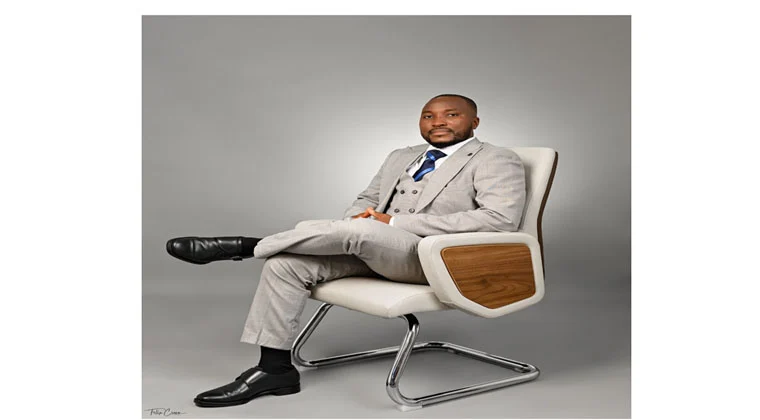
Ayoolanrewaju J. Kuyebi, MD/CEO GodMade Homes Limited (GMH Luxury)
How GMH Luxury Responded to Nigeria’s Currency Crisis Without Compromising Its Commitments
When Nigeria’s currency crisis reshaped the economics of real estate, many developers were forced to rethink their commitments. GMH Luxury chose a different path: protecting client trust, preserving quality, and honoring its commitments despite unprecedented economic pressure.
There is a revealing truth about every enduring institution: its defining story is rarely written during seasons of prosperity. Rather, it is forged in moments of uncertainty, when markets lose their equilibrium, carefully laid plans unravel, and leadership is forced to choose between what is expedient and what is right. Those are the moments that reveal the true architecture of an organization, not the concrete and steel that shape its buildings, but the principles that shape its decisions.
For GodMade Homes Limited, popularly known as GMH Luxury, that defining story did not begin with an ambitious development, a successful capital raise, or even the celebration of its eleventh anniversary. It began in the quiet intensity of boardroom deliberations during one of the most turbulent periods in Nigeria’s recent economic history, when the floating of the naira fundamentally altered the assumptions on which countless businesses had built their futures. What followed became a defining test of corporate character, demonstrating that while markets fluctuate and currencies depreciate, integrity remains one of the few assets capable of appreciating under pressure.

It is against this backdrop that GMH Luxury marks eleven years of purposeful enterprise. The anniversary is more than a corporate milestone; it is an affirmation of a philosophy that has guided the company since its inception in 2015: that real estate is, above all, a business of trust. Buildings may define skylines, but trust defines reputations. Homes may be constructed with brick, glass and concrete, yet the relationships that sustain a real estate company are built on promises consistently honored over time.
That philosophy has shaped GMH’s evolution through a decade of transformation in Nigeria’s property market. Few industries reflect the nation’s economic realities as vividly as real estate. Inflation, exchange-rate volatility, rising construction costs, financing constraints and changing customer expectations have continually reshaped the landscape. Success has therefore depended not only on access to capital or prime locations, but also on the ability to anticipate change, adapt with discipline and preserve client confidence even when prevailing conditions encourage compromise.
Over the past eleven years, GMH Luxury has quietly earned that confidence. Through a portfolio of thoughtfully conceived developments across Gbagada, Lekki and Ikoyi, the company has pursued a clear vision of premium living that balances design excellence, investment value and disciplined execution. Yet impressive developments alone do not explain its distinctive position within Nigeria’s increasingly competitive real estate sector. Its enduring strength lies in an organizational culture that treats reputation not as the outcome of success, but as the foundation upon which lasting success is built.
That culture would soon face its greatest examination.
By the time Nigeria’s foreign exchange reforms reshaped the economy in 2023, GMH Luxury had eight major off-plan developments underway. Like many developers, the company had entered binding agreements with clients who had committed funds months earlier based on carefully calculated construction costs. Those projections assumed a level of currency stability that disappeared almost overnight. As the naira depreciated sharply, the cost of imported materials surged, supply chains came under renewed pressure, and budgets that had once appeared prudent quickly became detached from economic reality.
The consequences extended far beyond GMH. Across Nigeria’s real estate industry, projects conceived under one economic environment suddenly had to be delivered in another. The value of funds collected from clients had changed, but the obligations attached to those commitments had not. It was a challenge that confronted developers with difficult questions: How should commitments made before the devaluation be honored afterwards? Who should bear the burden of circumstances that neither developers nor clients had anticipated? More fundamentally, what does corporate responsibility demand when economic realities render long-standing assumptions almost impossible to sustain?
Within GMH’s leadership meetings, those questions were approached with discipline rather than emotion. There was no search for convenient explanations or attempts to minimize the scale of the challenge. Instead, the company responded as disciplined organizations do in moments of uncertainty: by returning to rigorous analysis. Financial advisers were engaged to examine every project, every liability and every possible scenario. The exercise was about more than understanding the numbers; it was about determining whether the values that had guided the company through years of growth could withstand the pressures of crisis.
The analysis presented GMH’s leadership with two clear paths.
The first reflected what many would have considered commercial pragmatism. Existing clients could be asked to absorb part of the additional costs resulting from the currency devaluation. From a purely financial perspective, the argument was compelling. Construction costs had risen sharply, and revising existing pricing structures offered the quickest path to restoring project viability. Across the industry, similar approaches were already becoming commonplace.
Yet leadership is defined not only by the options available, but by the principles that guide the choices made.
For GMH, transferring the consequences of an external economic shock to clients who had entered into agreements in good faith would have undermined the very relationship the company had spent a decade building. Customers had fulfilled their obligations based on the terms agreed at the outset. Asking them to bear the burden of a national currency crisis might have protected short-term financial performance, but it would have come at the cost of something far more valuable: trust.
The alternative demanded far more.
Clients who had completed payment for their homes would have their investments protected despite the dramatically altered economics of construction. Those still midway through their payment plans would be offered an option that, under the prevailing circumstances, was almost unprecedented: if they chose not to continue under the new market realities, GMH would refund them in full rather than compel them to navigate an uncertain financial future.
It was not the easier decision.
From a purely commercial standpoint, it was unquestionably the more painful one. Yet institutions are rarely remembered for the convenience of their decisions. They are remembered for the convictions that shape them.
There is a familiar observation in business leadership: values become meaningful only when they become expensive. During periods of economic stability, integrity requires little more than good intentions. It is in moments of profound uncertainty that integrity carries a measurable cost. GMH Luxury discovered precisely what that cost would be and accepted it with remarkable clarity.Rather than preserving liquidity at the expense of customer confidence, the company chose to preserve confidence, even when doing so demanded sacrifices far beyond its balance sheet.
That decision soon required an extraordinary financial commitment, testing not only the resilience of the business but also the strength of the relationships it had spent eleven years building.
The financial implications were immediate and profound. Between 2023 and 2025, GMH Luxury refunded more than ₦4 billion to clients who chose to withdraw from their payment plans rather than continue under the new economic realities. In an industry where contractual disputes can become protracted and customer confidence is difficult to restore once lost, the decision represented an extraordinary affirmation of principle. It was, in effect, a declaration that trust was too valuable to compromise.
The refunds came at a considerable cost. Capital that would ordinarily have accelerated construction was redirected towards meeting obligations to clients. More remarkably, the company chose to borrow, not to fund expansion or acquire new assets, but to honor commitments that many organizations facing similar circumstances might have sought to renegotiate. It was an unconventional decision, yet one that reflected a deeply held conviction: reputation is not preserved through persuasive marketing, but through conduct, especially when doing the right thing becomes expensive.
The consequences were inevitably felt across the business. Maintaining momentum on eight simultaneous developments while meeting substantial refund obligations demanded exceptional financial discipline. Fresh capital became increasingly difficult to secure in a market where caution had become the prevailing instinct and many developers were slowing projects, postponing delivery schedules, or quietly retreating from commitments made during more optimistic times.
What sustained GMH through that period was not simply access to finance, but the confidence it had earned over more than a decade. Long-standing investors, financial partners and family principals who knew the business recognized that its greatest asset was not its inventory, but its credibility. They had seen the projects. They understood the market. More importantly, they had witnessed the organization choose the more difficult path when an easier alternative was readily available. Their willingness to provide fresh capital became further proof that integrity, though costly in the short term, often proves to be one of the soundest long-term investments.
Reflecting on that defining period, the Managing Director and Chief Executive Officer,Ayoolanrewaju J. Kuyebi, says:
“It’s in the moment that you face your deepest weakness that you receive the chance to forge your greatest strength.”
The response from clients validated the significance of that decision. At a time when confidence across the industry had been shaken, GMH’s willingness to honor its commitments reinforced the trust it had spent years building. It demonstrated that credibility is earned not through favorable market conditions, but through the choices an organization makes when those conditions become most difficult.
That confidence enabled GMH to continue what it had begun. Every one of the eight affected developments remained active. More importantly, every project retained the quality standards upon which the company’s reputation had been built. At a time when economic pressure tempted many developers to reduce specifications, substitute materials or quietly lower expectations, GMH made a conscious decision: if compromise became unavoidable, it would be in delivery timelines, not in quality.
The distinction is important. Construction schedules can be recovered. Reputation rarely can.
Accordingly, project timelines inevitably extended as the company rebuilt its capital position while carefully managing resources across multiple developments. Yet the homes clients eventually received were not diminished versions of those they had originally purchased. Architectural integrity was preserved. Finishing standards remained uncompromised. Engineering quality continued to reflect the company’s long-held philosophy that excellence is not an optional enhancement, but an obligation to those who place their confidence in the brand.
As the company enters its second decade, that philosophy finds tangible expression in two flagship developments: one in Lekki and another in Ikoyi, scheduled for delivery to the standards originally envisioned before the economic turbulence began. They stand not merely as completed projects, but as tangible evidence that difficult circumstances need not diminish institutional character. In many respects, they represent the outcome of a decision taken several years earlier: the decision to protect promises before protecting margins.
Yet GMH Luxury’s story extends beyond its response to economic adversity. The company’s growth over the past eleven years has been shaped by a disciplined understanding of market dynamics that distinguishes thoughtful developers from merely ambitious ones. Rather than pursuing expansion for its own sake, GMH has consistently demonstrated an ability to identify opportunities where genuine demand intersects with long-term investment potential.
Its portfolio illustrates this philosophy with quiet confidence. From Gbagada to Lekki, from Ikoyi to emerging growth corridors, each development has been conceived not as a replication of an existing formula, but as a considered response to the character of its location and the aspirations of its intended market. Whether serving homeowners seeking refined living environments or investors pursuing sustainable rental income and capital appreciation, the company’s developments reflect an understanding that successful real estate is ultimately about understanding people as much as property.
This strategic discipline has earned GMH the confidence of discerning investors who recognize that enduring value is rarely created through speculation alone. The most successful developments are those that anticipate how communities evolve, how infrastructure reshapes demand, and how thoughtful design continues to command relevance long after construction has been completed. By aligning its projects with these broader realities, the company has steadily strengthened its position within Nigeria’s premium residential market.
Equally significant has been its willingness to embrace innovation without losing sight of the fundamentals that underpin lasting success. In an era increasingly defined by digital transformation, evolving sustainability standards and changing customer expectations, GMH has approached innovation not as a fashionable corporate expression, but as a practical instrument for delivering greater efficiency, transparency and long-term value. Within this philosophy, technology serves to reinforce trust rather than replace it.
Behind this institutional evolution stands leadership distinguished by both technical competence and strategic vision. Under the stewardship of its Managing Director and Chief Executive Officer, Ayoolanrewaju J. Kuyebi, GMH Luxury has developed a corporate identity that extends beyond property development to the broader pursuit of wealth creation, community building and generational impact. His leadership reflects an understanding that the true measure of a real estate company is not simply the structures it completes, but the confidence it inspires among those who choose to invest their futures in its vision.
That philosophy is perhaps best captured in the words of the Managing Director and Chief Executive Officer, Ayoolanrewaju J. Kuyebi:
“Buildings are temporary achievements. Trust is the permanent foundation upon which every enduring institution is built.”
That sentiment finds expression throughout the organization. The accomplishments of GMH are not the work of leadership alone, but of a management team that has cultivated a culture of professionalism, accountability and disciplined execution. Architects, engineers, project managers, finance professionals, administrators, marketers and numerous others have contributed to an institutional ethos in which excellence is regarded not as an aspiration, but as a daily responsibility. Their collective efforts have enabled the company to navigate one of the most demanding periods in Nigeria’s recent economic history while preserving the confidence of clients, partners and investors alike.
Perhaps this explains why the company’s eleventh anniversary resonates beyond the customary language of corporate celebration. It is tempting to measure eleven years by the number of developments completed, the capital raised or the milestones achieved. Important though those accomplishments are, they tell only part of the story. The more enduring narrative lies in the decisions made when circumstances rendered every option difficult and every outcome uncertain.
Anniversaries invite reflection because they reveal patterns that are not always visible in the urgency of daily operations. Looking back across more than a decade, one observes not a succession of isolated projects, but the steady emergence of an institution shaped by consistency of purpose. One sees a company that has sought to balance commercial ambition with ethical responsibility, growth with prudence, innovation with discipline, and profitability with an unwavering respect for the people whose confidence sustains its existence.
As GMH Luxury embarks upon its second decade, its aspirations remain as expansive as the horizon it continues to help shape. New developments will undoubtedly rise. Markets will evolve. Economic cycles will continue to present fresh challenges and new opportunities. Yet if the company’s first eleven years offer any indication of its future trajectory, its most valuable asset will remain neither its land bank nor its balance sheet. It will be the reputation painstakingly built through decisions that placed long-term trust above short-term convenience.
In the final analysis, that is the true significance of this anniversary. Eleven years have produced impressive buildings, thriving communities and meaningful investment opportunities. More importantly, they have produced something far rarer in any industry: the quiet confidence that a promise, once made, will be honored.
For in real estate, structures may define skylines, but character defines legacy. And if legacy is measured not only by what a company builds, but by what it refuses to compromise in the process of building it, then GMH Luxury has every reason to celebrate not merely eleven years in business, but eleven years of keeping its promises.
All rights reserved. This material, and other digital content on this website, may not be reproduced, published, broadcast, rewritten or redistributed in whole or in part without prior express written permission from PUNCH.
Contact: [email protected]