


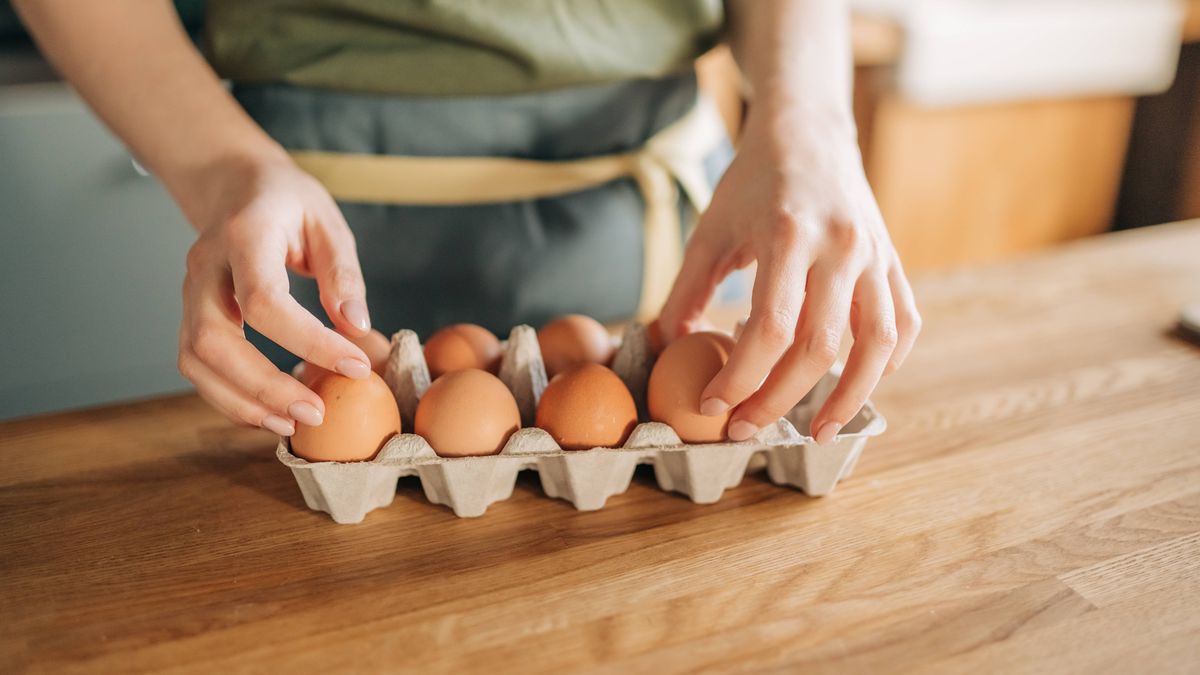
The debate over how to store eggs remains divisive, with some people favouring refrigerated eggs while others prefer keeping them at room temperature. In the US, eggs are washed and sanitised, stripping away their natural protective layer and making refrigeration essential. This doesn’t apply to eggs sold in the UK, yet many Brits still opt for chilled eggs for extended storage.
Dean Harper, the chef behind Harper Fine Dining, said eggs “should definitely be stored in the fridge, but not just anywhere,” explaining: “Warmer temperatures and frequent handling can speed up the decline of freshness-that’s why it’s said to treat your eggs gently.
“On the other hand, keeping them consistently cold and undisturbed slows this down, and this method’s stuck with me since my early culinary days.”
That’s why Dean favours the fridge’s chilled environment, which ought to be maintained between three and five degrees Celsius (37F to 40F). According to the expert, the “best spot” for eggs is the main compartment of the fridge, not the door, reports the Express.
 View 3 Images
Avoid keeping eggs in the door of the fridge where the temperature fluctuates most(Image: Getty)
“Temperature fluctuations from opening and closing the door can cause the whites to break down faster. This is a tip I picked up ages ago, and it truly makes a difference”, said Dean. Watery egg whites are frequently the result of eggs losing carbon dioxide and moisture. Dean remarked, “As an egg ages, it starts to lose moisture, and this affects the texture. Such changes can be subtle, but even a few days can affect your poached eggs.”
It’s not solely the fridge that does all the heavy lifting in maintaining eggs firm and fresh at home.
Dean pointed out that Fortnum & Mason consistently stores its eggs in cartons. He explained, “That’s key. The carton helps prevent the eggs from absorbing strong odours from other foods and shields them from light, which can break them down faster.”
He said: “What fascinates me is that sometimes, the simplest steps are often overlooked, yet they make all the difference in food quality.”
 View 3 Images
Watery egg whites are generally safe to eat, but it might indicate the egg is getting old(Image: Getty)
Specialists at British Lion Eggs also prefer straightforward egg cartons over novelty holders or even an egg compartment in the fridge.
The packaging protects the eggs and displays the best-before date. Yet, Sophie Trueman, UK&I Country Director for Too Good To Go, insists this shouldn’t be treated as a rigid rule for when to throw eggs away.
Article continues below
These dates show when the eggs will be at their optimum freshness. Unlike Use by or Expiry dates, which relate to safety, Best Before dates provide some leeway, Sophie noted.
You’ll recognise if an egg has gone off when you crack it open. Fresh eggs ought to have a neutral, clean aroma, so if you notice a sulphurous or foul smell, it’s advisable to bin the egg. Should the egg appear and smell perfectly normal, you can move on to a quick taste test. Prepare a small amount and sample it before deciding to eat the egg in its entirety.