


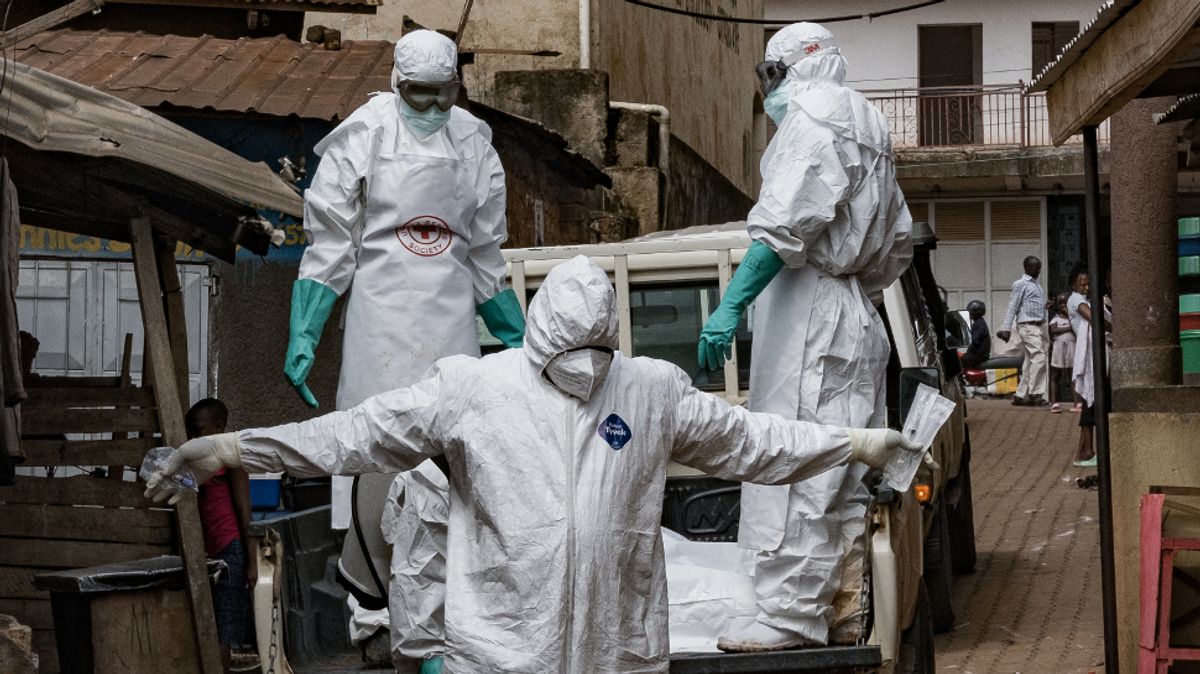
Experts fear that the latest outbreak of the deadly Ebola virus has spread across an ocean and reached as far as Brazil, with concerns over the lack of medical aid being raised.
There are now more than 1,000 suspected cases of the virus in the Democratic Republic of Congo with medical charity Doctors Without Borders warning the rapid spread was “deeply alarming”. The worst hit region is the northern Ituri state, which borders Uganda and South Sudan.
With at least 246 deaths, neighbouring countries have shut their borders with DR Congo, despite the World Health Organization urging nations not to. In the latest development, Brazilian health authorities have revealed they are investigating two suspected Ebola cases in the South American country.
 View 4 Images
Worker checking the temperature of a man in Uganda(Image: Anadolu via Getty Images)
A man, 37, from the DR Congo showed “symptoms meeting the definition of a suspected case” and has been isolated, according to officials in Sao Paulo. Another man, from Uganda, forced authorities in Rio de Janeiro to bring in emergency measures after he displayed “viral symptoms”.
Doctors Without Borders shared a warning about the rapid spread of the deadly virus, saying: “Never before has an Ebola outbreak recorded so many cases so soon after its declaration”. The deputy director, Dr Alan Gonzales, added that the teams on the ground in the DR Congo were “witnessing a response that has not yet caught up to the rapid spread of the epidemic”.
 View 4 Images
Uganda Red Cross worker sprayed with disinfectant after evacuation of suspected Ebola victim in Kampala(Image: AFP via Getty Images)
Gonzales added: “The reality today is that nobody knows the true scale and severity of this outbreak. New suspected cases are being reported daily, yet hundreds of samples remain untested.”
The DRC said the first person died from the virus on April 24 in Bunia, the capital of the Ituri region, but the confirmation did not come for weeks. The body was repatriated to the Mongbwalu health zone, a mining area with a large population. The country’s health minister Samuel Roger Kamba said: “That caused the Ebola outbreak to escalate.”
This outbreak, despite being the 17th to hit the DR Congo, has sparked particular concern as it was identified to be the rare Bundibugyo species which has no vaccine. Last week, UK scientists at Oxford University revealed they were developing a new vaccine to target this rare strain of the virus and it could be ready for clinical trials within the next two to three months.
 View 4 Images
Director General of the World Health Organization, Tedros Adhanom Ghebreyesus, visits health workers in Bunia, Congo(Image: AP Photo/Moses Sawasawa)
The head of the WHO, Dr Tedros Adhanom Ghebreyesus, visited the Ituri region of Congo last week and issued a warning to people about the dangers of funerals amid the outbreak. He said: “Certain practices including touching of bodies of those who have died from Ebola, can spread the virus further.
Article continues below
“While we grieve for those we’ve lost, we must do everything we can so that we don’t lose another, and get into a cycle of grief.”