


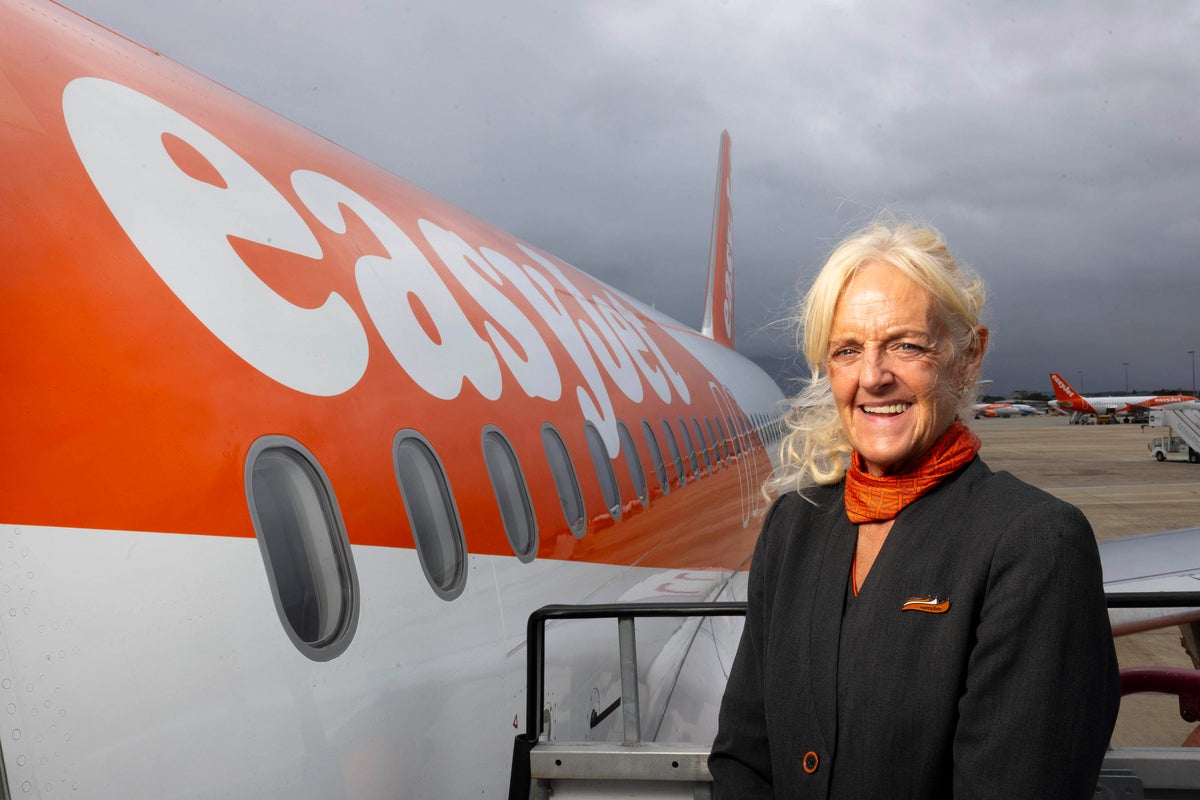
Francesca Hicks was over 60 when she applied to be a flight attendant. The former business owner, 64, had enjoyed a long and storied career, doing everything from secretarial work to managing holiday properties to working in dementia care. But after moving back to London from Cornwall, she was frustrated by the lack of opportunities for women her age.
“I just wanted a new career, but I was having a real problem with ageism and sending in my CV and being dismissed because of the date of birth,” she says. “But I’m not a grey rinse old lady, I’m still young at heart.”
Then, she happened upon a news story about easyJet; the budget carrier was recruiting cabin crew. More specifically, it was looking to hire people over the age of 50. Francesca was immediately intrigued.
“I heard about it on BBC TV one morning while I was getting ready and I was adamant that I was going to find out how to apply,” she recalls.
 open image in gallery
After attending a taster day, she was completely sold on the idea, and in the 19 months since she completed her training and became a fully fledged member of crew, she has “never been happier”.
“I love it,” she says. “I really enjoy meeting new people every day, even new crew from all different walks of life. And I think aviation is one of the best things that humanity has got to offer: connecting people, places, culture and travel.”
Francesca has been to 23 countries and worked about 270 flights at last count. Her age, if anything, has proved an advantage, thanks to a lifetime of experience to draw upon. It’s also the perfect career for someone who is embracing an empty nest, finally free from the demands of family life as children head out to university, or start their own careers.
She encourages anyone over 50 to consider it for themselves: “If you have the passion for service and creating great experiences and are excited to work and travel, it’s a really good career. As long as you’re willing to learn new skills and you’re a people person, you can do this job.”
EasyJet has clearly seen the value in midlife workers where other companies have remained oblivious. It has just launched another cabin crew recruitment drive specifically targeting more mature candidates, following a previously successful campaign in 2022.
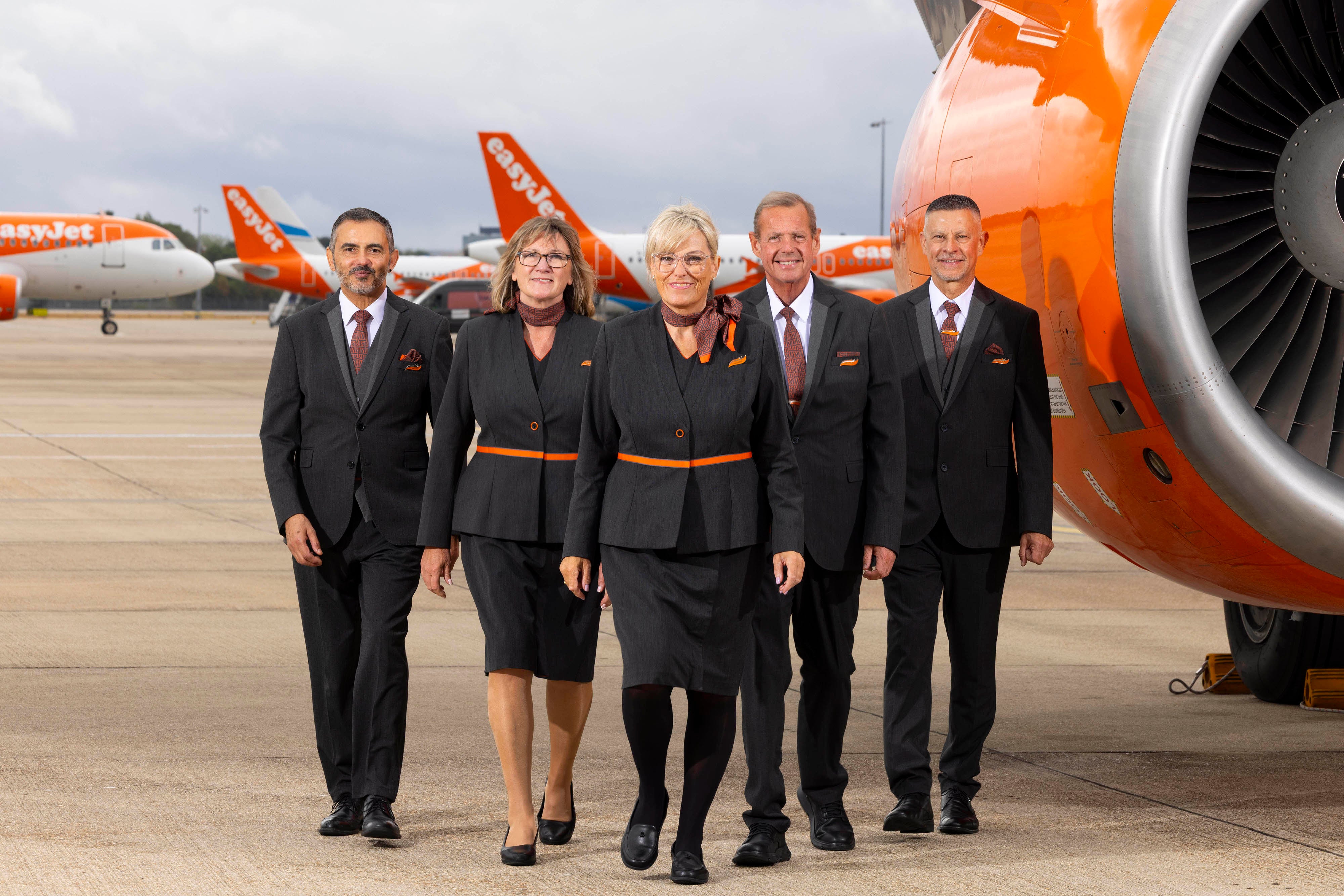
Staff aged over 50 have more than doubled and flight attendants over 60 have nearly quadrupled since the airline first introduced its targeted hiring scheme, and it’s hoping the new campaign will have a similar effect.
“With the over 50s, bringing that life experience and a different career path and a different perspective really helps the dynamic on board the aircraft,” says Lisa Bailey, easyJet’s head of cabin crew. “No two days are the same in the cabin crew world, so drawing on your own personal experiences really does help to be able to deal with those situations.”
As long as you’re willing to learn new skills and you’re a people person, you can do this job
Francesca Hicks, flight attendant
Peer-to-peer relationships have strengthened as a result of creating more diverse crews; “naturally, an older cabin crew member might take on the role of a mentor to some of our younger cabin crew,” says Bailey. Positive customer feedback on how older staff have handled situations on board has also shown just what a shrewd move hiring more mature flight attendants has been.
Many people mistakenly believe that cabin crewing is a young person’s game, according to easyJet, which revealed that applicants in their fifties and sixties often fear they’ll be the oldest person on the team. “We are all trained to the same level,” Bailey counsels. “It really doesn’t matter what the age is of somebody joining us.”
Hiring staff with a wealth of experience and soft skills acquired over a decades-long career makes perfect sense, especially when recruiting for a role that’s responsible for both critical safety protocols and exceptional customer service amid a challenging environment.
“From a company perspective, it’s no-brainer,” argues Jennifer Howze, editorial director for Noon, a community to help women in midlife embrace their next chapter. “There are lots of skills – communication, problem solving, remaining calm under pressure – that you really want with cabin crew, right?
“We also know a lot of midlife people, women in particular, have got those soft skills that are really part of creating team cohesion – which is definitely something you want, both from the airline’s perspective and from a passenger perspective.”
 open image in gallery
It is a refreshing tale amid a cultural landscape that has seen people of a certain age – especially women of a certain age – increasingly struggling to get hired. There has been talk of “Botoxing” CVs; of candidates forced to underplay their work experience or remove previous positions to even land a job interview.
The issue came to the fore in late June when Stacey Duguid, a 52-year-old former fashion editor and magazine columnist, went viral for posting about her experience of being broke and unemployed on Instagram. She shared that she had been applying for jobs for 16 months – sending out 150 CVs and applying for everything from a brand director on six figures to a part-time job taking photos in a warehouse – with almost no replies or interviews whatsoever.
The response to this unfiltered honesty was “insane”, she said; thousands of women aged 40 to 65 sent her messages to say they were in the same boat, ghosted by potential employers and ostracised from the world of work despite their extensive experience and desire to get stuck back in.
It’s a particularly sexist state of affairs: women are still far more likely than men to take a career break to look after children, leading many to struggle to break back into the workforce. ONS data suggests that mothers face more insecure and lower-paid work after having kids, not to mention facing much smaller pension pots as a result of trading full-time for part-time work due to caring responsibilities. Research from Scottish Widows projected that a woman in her twenties will have £100,000 less in her pension than her male counterparts by the time she retires.
The craziest part of shutting midlife women out of roles is that this demographic is incredibly influential and economically valuable. Midlife women – or “queenagers”, to use the fabulous term coined by British journalist and Noon founder Eleanor Mills – are super consumers, outspending millennials by 250 per cent, according to Forbes. Women aged 45 to 65 are also behind 90 per cent of all household consumer spending decisions, according to the AARP in the US.
Perhaps most significantly of all, research by Noon found that 54 per cent of university-educated UK women aged 45-60 are more likely to buy from a brand that represents them. And how can a brand possibly hope to represent them, if it doesn’t employ any of them?
The question is, how did such a valuable asset get locked out of the workforce when they still have a potential 20 years of career left to give?
I used to work in the tech industry in New York and there was this idea that all the new ideas are from young people … That’s bled over to every segment of industry
Jennifer Howze, Noon
“In the past, 50 used to be a lot older than it is now,” says Howze. She cites women in the Noon network who have retrained as pilots or taken up martial arts in their fifties and sixties – but public perceptions have yet to catch up.
“I used to work in the tech industry in New York and there was this idea that all the new ideas are from young people,” she continues. “It was all about twentysomethings and this notion that anybody older couldn’t understand the tech, couldn’t understand what was happening. That’s bled over to every segment of industry – that somehow being older means you’re out of touch.”
There’s also a sense, she says, that younger managers are anxious about potential power struggles: “Sometimes within organisations there can be a sense of tension or fear that if I hire somebody older than me, are they going to take directions? Are they going to follow orders? Or are they going to ignore me and do their own thing?”
Yet finally, employers are waking up to the benefits of hiring older workers. MI6 and GCHQ, for example, led a recruitment drive for “mid-career” women, advertising on Mumsnet, with flexible working and the importance of “high emotional intelligence” stressed in recruitment literature.
BT Group has also been on a mission to hire older people after seeing a disconnect between its young call centre staff and customer base of majority over 50s; Just Group plc has created more part-time roles to attract mature staff members to sell pensions; and John Lewis Partnership is encouraging midlife employees to take on apprenticeships to develop their skills.
Rest Less, meanwhile, has curated a list of “age-inclusive” employers known for their progressive appreciation of the fact that diversity can strengthen a workforce and improve results. And businesses that embrace the untapped resource of talented, diligent midlife workers might just find it’s the secret to success.