


Domestic refineries supply 75% of Nigeria’s petrol
August 27, 2026 12:50 am

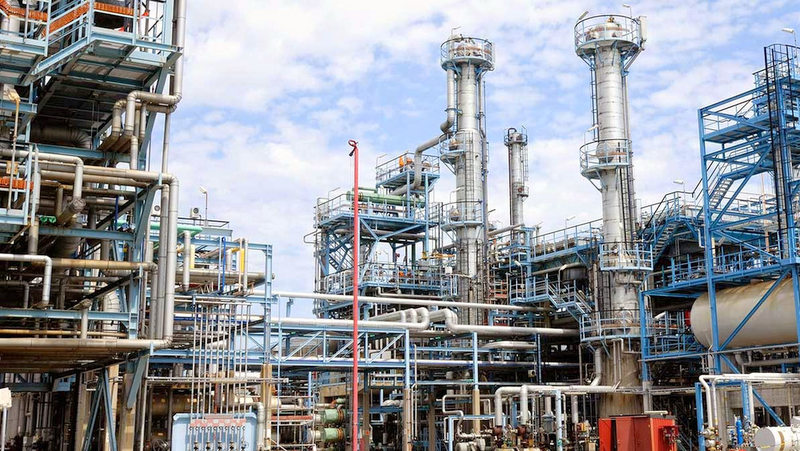
A file photo of Port Harcourt refinery
Despite a sharp resurgence in petrol imports, domestic refineries, led by the Dangote Petroleum Refinery, emerged as Nigeria’s largest source of petrol supply in the first seven months of 2026, accounting for nearly three-quarters of the country’s total Premium Motor Spirit (petrol) supply, while imports fell sharply compared with the corresponding period of 2025.
This comes amid increasing dependence on imported petrol in June and July after the authority issued import licences and supplies from domestic refineries dropped sharply, forcing a bigger contribution from imports despite the country’s expanding refining capacity.
An analysis of the Nigerian Midstream and Downstream Petroleum Regulatory Authority’s monthly fact sheets by The PUNCH on Wednesday showed that domestic refineries supplied approximately 7.41 billion litres of petrol between January and July 2026, compared with about 4.27 billion litres in the corresponding period of 2025.
The figure represents an increase of approximately 3.14 billion litres, or 73.5 per cent, within one year. Petrol imports, however, fell from approximately 6.58 billion litres between January and July 2025 to about 2.48 billion litres in the corresponding period of 2026, representing a decline of about 4.10 billion litres, or 62.3 per cent.
The seven-month figures confirm a dramatic reversal in Nigeria’s petrol supply structure, with domestic refining displacing imports as the country’s dominant source of PMS.
Of the approximately 9.89 billion litres of petrol supplied between January and July 2026, domestic refineries accounted for 74.9 per cent, while imported petrol contributed 25.1 per cent.
This contrasts sharply with the corresponding period of 2025, when Nigeria relied primarily on imported petrol. Between January and July 2025, the country received approximately 10.85 billion litres of PMS, comprising 6.58 billion litres from imports and 4.27 billion litres from domestic refineries.
Imports therefore accounted for approximately 60.6 per cent of the total petrol supply during the seven-month period in 2025, while domestic refining accounted for 39.4 per cent.
The data show that domestic refining gained more than 35 percentage points of Nigeria’s petrol supply market within one year, while the share of imports dropped by the same margin.
To reach this conclusion, our correspondent analysed NMDPRA data on daily average domestic and imported petrol supplies from January to July 2025 and compared them with the figures for the corresponding period of 2026. The analysis covered the actual number of days in each month.
The latest NMDPRA fact sheet for July showed that domestic refining supplied an average of approximately 25.8 million litres of petrol per day, while imports contributed about 19.7 million litres daily.
This translates to approximately 799.8 million litres from domestic refineries and 610.7 million litres from imports during July, based on the 31 days in the month.
The July figures showed that while imports increased compared with some of the preceding months, domestic refining remained the larger source of petrol supply.
The development extends the trend recorded in the first half of the year, when domestic refineries supplied approximately 6.61 billion litres, compared with about 1.87 billion litres supplied through imports.
However, the July figures also showed that Nigeria’s domestic refining system remains vulnerable to fluctuations in refinery output, as imported petrol continues to serve as a major source of supply whenever local production declines.
Overall, domestic refinery supply increased by approximately 73.5 per cent between the January-to-July periods of 2025 and 2026, while petrol imports declined by about 62.3 per cent.
A month-by-month analysis revealed that domestic petrol refining supply recorded a mixed performance in the first seven months of 2026. Supply started at 40.1 million litres per day in January but fell by 26.7 per cent to 29.4 million litres daily in February.
It recovered in March, rising by 16.3 per cent to 34.2 million litres per day, before increasing further by 19 per cent to 40.7 million litres daily in April. The upward trend continued in May, when domestic supply rose marginally by two per cent to a seven-month high of 41.5 million litres per day.
However, the gains were reversed in the following months. Domestic refining supply fell by 21.7 per cent to 32.5 million litres daily in June and dropped by another 20.6 per cent to 25.8 million litres per day in July, the lowest level recorded in 2026.
In contrast, domestic refining supply in 2025 recorded only one month of growth during the January-to-July period. Supply rose by 29.8 per cent from 19.1 million litres per day in January to 24.8 million litres daily in February.
Thereafter, supply declined for five consecutive months. It fell by 7.7 per cent to 22.9 million litres daily in March, declined by 6.1 per cent to 21.5 million litres in April and dropped by 14 per cent to 18.5 million litres daily in May.
The downward trend continued in June, when domestic supply declined by 2.2 per cent to 18.1 million litres per day, before falling by another 8.8 per cent to 16.5 million litres daily in July.
Overall, the figures show that while domestic petrol refining supply in 2026 was significantly higher than in 2025, the sector experienced greater volatility. Supply climbed to a peak of 41.5 million litres per day in May 2026 before declining sharply by about 38 per cent to 25.8 million litres per day in July. In 2025, the decline was more gradual but persistent, with supply falling for five consecutive months after its February peak.
Despite the substantial increase in locally refined petrol, Nigeria’s overall PMS supply declined slightly during the period. Total petrol supply fell from approximately 10.85 billion litres between January and July 2025 to about 9.89 billion litres in the corresponding period of 2026, representing a reduction of about 957 million litres, or 8.8 per cent.
The figures underline the rapid transformation of Nigeria’s downstream petroleum market following the ramp-up of operations at the Dangote Petroleum Refinery and other domestic refining facilities.
The Dangote refinery, with a nameplate capacity of 700,000 barrels per day, has emerged as the dominant contributor to Nigeria’s domestic petrol supply since commencing commercial operations.
Its increased output has significantly reduced Nigeria’s dependence on imported PMS, which for decades accounted for the majority of fuel consumed in the country.
However, the volatility in monthly domestic supply has continued to expose the fragility of the country’s transition away from imports.
In June, for instance, domestic refinery supply fell sharply compared with May, while imports rose substantially to fill the resulting supply gap. The July data showed that imports remained elevated, supplying more than 610 million litres during the month, although domestic refineries still supplied nearly 800 million litres.
The development came amid continuing disagreements between the Federal Government and the Dangote Petroleum Refinery over crude supply, petrol imports and the structure of Nigeria’s downstream petroleum market.
The refinery has repeatedly raised concerns about access to locally produced crude and foreign exchange required to purchase feedstock. According to a recent Bloomberg report, the refinery increasingly directed products towards export markets as it struggled with crude supply and foreign exchange constraints under the naira-for-crude arrangement.
“We are exporting as much as possible,” Bloomberg quoted the Group Vice-President of Dangote Refinery, Devakumar V.G. Edwin, as saying. “We are not able to get enough dollars from the Central Bank, and it doesn’t make any sense to be selling the products in naira and not being able to buy dollars. We need the dollars to buy our feedstock.”
The January-to-July figures nevertheless show that Nigeria’s petrol market has undergone a fundamental shift. Within one year, domestic refineries moved from supplying less than two-fifths of the country’s petrol needs to accounting for about three-quarters of total supply, while the dominance of imported products weakened considerably.
The figures suggest that Nigeria’s transition from an import-dependent petrol market to a domestic-refining-led system is accelerating, although the continued supply of more than 2.48 billion litres of imported petrol in seven months shows that imports remain important in bridging supply gaps.
The development has also renewed the debate over the future of petrol imports.
Amid the crisis, the Independent Petroleum Marketers Association of Nigeria in July urged the Federal Government to halt petrol importation, arguing that imported products had become more expensive than locally refined fuel and were undermining efforts to stabilise prices in the downstream sector.
Speaking with The PUNCH, the National Publicity Secretary of IPMAN, Chinedu Ukadike, said the continued issuance of import licences was failing to achieve its intended objective of moderating domestic fuel prices.
Ukadike said, “Independent marketers have looked at the issues of price volatility, import licences and the sale of petroleum products in dollars. I want to use this opportunity to urge the Federal Government to transparently review these issues through the Nigerian Midstream and Downstream Petroleum Regulatory Authority, which is the industry’s regulator.
“The recent import licences, which were expected to serve as a guide and a check on the prices of petroleum products refined locally, are not yielding the results we expected. We were shocked that the licences issued to depot owners to import petroleum products are resulting in prices of about N1,350 per litre, which is far higher than what Dangote has been selling to us.”
He stressed that the objective of allowing fuel imports was to create competition capable of checking domestic prices but argued that the policy had failed to deliver the expected outcome.
The latest NMDPRA figures, however, indicate that while domestic refining has now become Nigeria’s largest source of petrol, imported products still play a significant role in maintaining supply whenever refinery output falls.
The seven-month data therefore underscore the importance of reliable crude supply, stable foreign exchange access and consistent refinery operations if Nigeria is to consolidate the gains from its growing domestic refining capacity and further reduce its dependence on imported petrol.
Damilola Aina is a journalist at Punch Newspapers with over five years of experience covering energy, business, investment, infrastructure, and property sectors. He specializes in producing well-researched and insightful reports that inform readers and provide clarity on complex topics. Damilola’s work demonstrates practical newsroom experience, editorial insight, and a strong commitment to accurate and engaging journalism.
All rights reserved. This material, and other digital content on this website, may not be reproduced, published, broadcast, rewritten or redistributed in whole or in part without prior express written permission from PUNCH.
Contact: [email protected]