


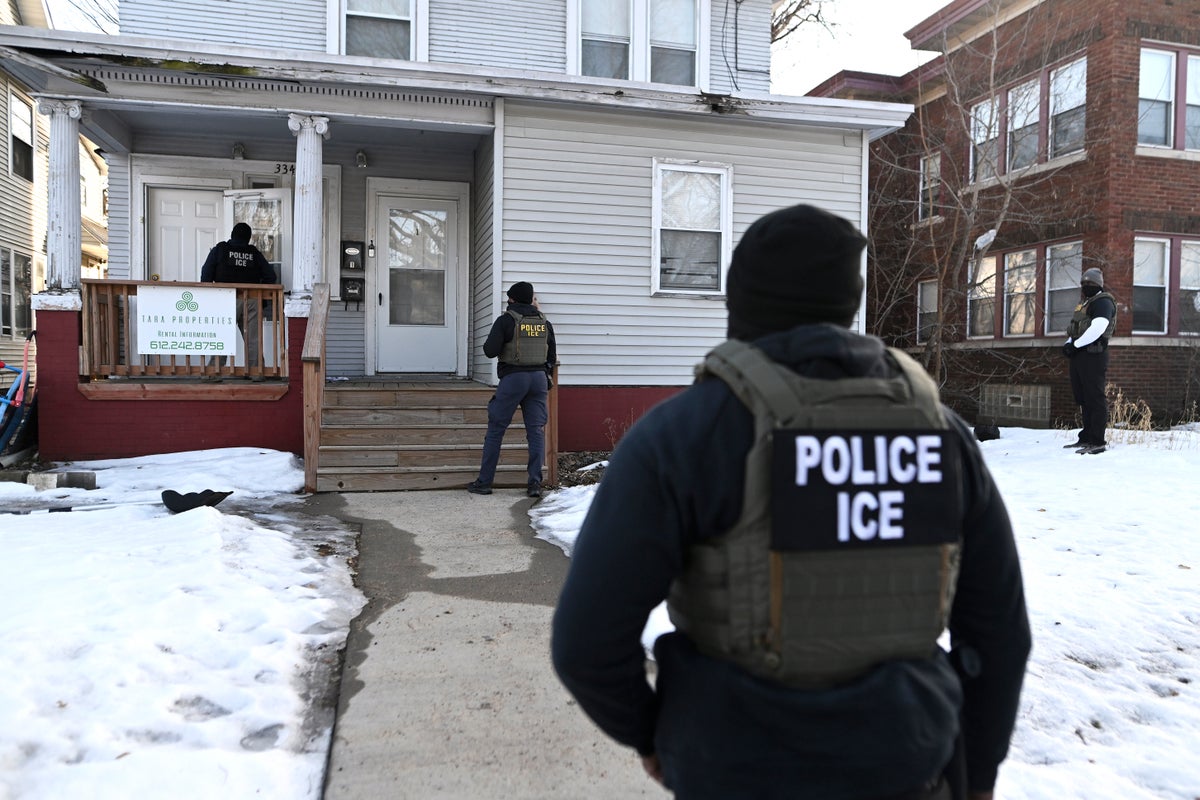
The administration of President Donald Trump has initiated legal action against four states, alleging their refusal to provide undercover license plates to federal agents constitutes unconstitutional obstruction. This move marks the latest escalation in the ongoing dispute between the White House and Democratic-led states regarding the president’s immigration enforcement policies.
Separate lawsuits filed by the Department of Justice on Thursday target Maine, Massachusetts, Oregon, and Washington state. The federal government contends these states are imposing restrictions that hinder law enforcement operations and jeopardize the safety of federal agents.
Acting Attorney General Todd Blanche stated, “By denying undercover license plates to DHS components, including ICE, while issuing them to their own state agencies, these governors are pursuing discriminatory and obstructionist policies against federal law enforcement.”
However, officials in the targeted states have pushed back against the allegations. Some argue their policies are designed to enhance public safety by preventing the use of aggressive tactics by unidentified agents involved in President Trump’s mass deportation agenda.
The policies in question generally prohibit the undercover license plates for civil enforcement operations that include immigration. That means the affected vehicles instead would have plates that clearly identify them as part of the federal government’s vehicle fleet.
“These actions undermine federal immigration enforcement, allow dangerous criminals to escape justice, and terrorize American communities,” Blanche argued.
The Justice Department filed the suits on Wednesday in U.S. district courts in the respective states. The four state governments are accused of trying “to obstruct the Federal Government’s immigration enforcement efforts, even though control over immigration and the nation’s borders is an exclusive federal power.”
Additionally, the Justice Department argues in the suits that the U.S. Constitution’s Supremacy Clause bars state governments from regulating federal law enforcement.
State officials defend their policies
Maine Secretary of State Shenna Bellows, who oversees her state’s plate program and is also a Democratic candidate for governor, predicted Maine’s policies would stand up in court.
“What ICE did in Maine and continues to do was terrorize our friends and neighbors,” Bellows said in an interview Thursday. “There are no secret police in a democracy and we will always stand up for our Mainers’ safety and freedom.”
Washington Gov. Bob Ferguson said his state continues to assist federal criminal law enforcement, but he stood by his state’s denial of plates for civil enforcement.
“Judges across the country have found that the Department of Homeland Security’s tactics in conducting civil immigration enforcement routinely violate the Constitution,” the governor told AP in an email. “That is unacceptable. Our state will not facilitate that misconduct.”
A spokesperson for Massachusetts Attorney General Joy Campbell said the state’s lawyers are “reviewing the complaint and will defend the RMV policy to the greatest extent possible.”
In Oregon, a spokesman for Gov. Tina Kotek noted that the state Department of Motor Vehicles has temporarily paused the issuance of new undercover license plates to federal agencies as it reviews its policies and rules. Kotek is aware of that review, Kevin Glenn, the spokesman, told AP in an email.
“State and local law enforcement are unaffected by this pause and the federal agencies that participate in the program are able to continue to use their existing unexpired plates,” he said.
Feds say agents are endangered when easily identified
The administration asserts that federal agents “frequently investigate and apprehend violent criminals, including cartel members, gang members, sex offenders, human traffickers, and other violent offenders” and says making those authorities easily identifiable subjects them to increased harassment and potential physical harm.
The lawsuit comes after a back-and-forth between the DOJ and some state officials. The administration previously sent state officials letters demanding they justify their policies.
Maine Attorney General Aaron Frey answered the Justice Department last week, disputing the DOJ’s contention that it has hampered federal enforcement actions.
“Rather, the program reflects a legitimate and constitutional policy choice by the SOS not to allow its resources to be commandeered by the federal government for use in civil immigration enforcement activities that have, in Maine and elsewhere, resulted in multiple incidents of abusive and unconstitutional conduct by DHS officials,” Frey wrote.
Bellows, in her role as secretary of state, announced a pause on confidential license plates in January, after federal authorities ramped up their immigration enforcement activities in the state. Bellows said at the time that the state wanted to be “assured that Maine plates will not be used for lawless purposes.”
The federal suit against Maine argues that the state “has issued confidential license plates to law enforcement agencies for many years” and that “such plates are explicitly authorized under Maine law.” The state’s review this year, the suit argues, resulted in unlawful state regulation of the federal government by requiring federal applicants for state license plates to attest that federal vehicles that obtained confidential plates would not be used for civil immigration enforcement. The suit also states that Maine did not impose commensurate requirements on state or local agencies applying for the plates, making the program discriminatory against the federal government.
Bellows has previously defended her decision.
“When ICE asked for confidential license plates, I said no” because “covert civil immigration enforcement is not something Maine will facilitate,” she said last week.
Arguments are similar to debate over agents’ masks
The Trump administration’s arguments on the license plates are similar to its defense of federal agents wearing masks on their deployments to American cities. That became a flashpoint in an extended government shutdown over Department of Homeland Security funding, as Democrats on Capitol Hill demanded key changes to how Trump’s mass deportation plans were carried out after masked federal agents killed two U.S. citizen protesters in Minnesota.
The White House and DHS have maintained the agency’s mask policy, and the administration already has won a federal court order blocking a California law that barred law enforcement officials from covering their faces in the state.
Additionally, the administration has been at odds with so-called sanctuary cities where local law enforcement does not assist federal authorities with immigration enforcement. And Blanche has instructed the Justice Department’s Civil Division to identify all state and local laws, policies, and practices that could impede what the administration describes as “lawful federal operations.”