



Defence contractor Babcock has disclosed a significant £140 million financial setback, stemming from extensive late-stage reworks required on its new Royal Navy warships.
The London-listed firm, a key supplier to the Ministry of Defence, informed investors that this charge on its Type 31 contract had adversely affected its annual financial performance.
Under the terms of the agreement, Babcock is tasked with constructing five frigates at its Rosyth facility in Fife. The initial two vessels were launched over the past year, following a four-year construction period.
But Babcock said on Wednesday it had experienced “higher than expected levels of rework as a result of changes to the design” and that the work “is being performed in the later stages of completion, and therefore is more complex and more costly”.
The third and fourth ships are still in early construction stages so will not be as affected by reworks as the first two, it said.
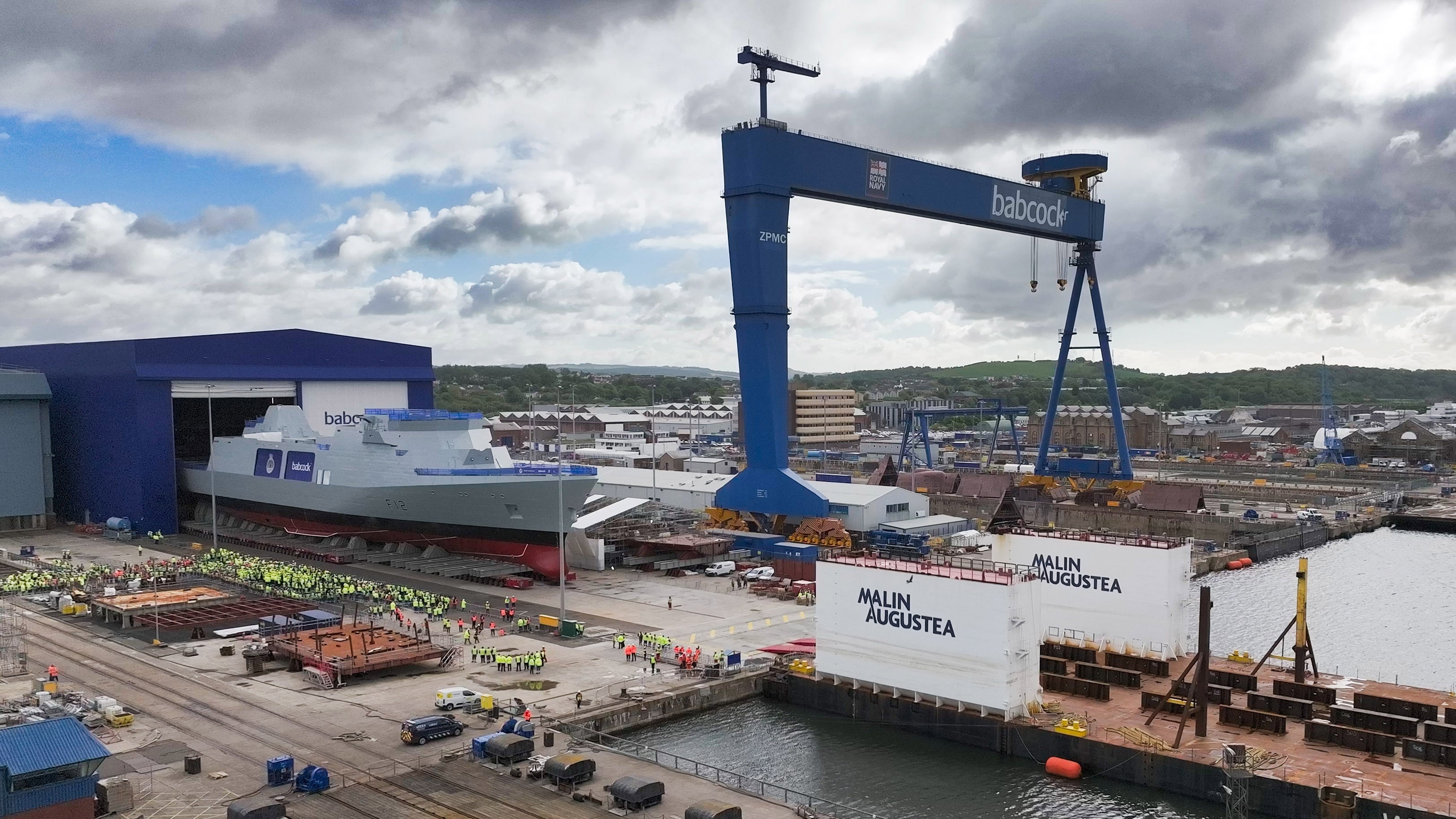
Babcock said the £140 million charge reflects the revised costs needed to complete the design and building of the Type 31 programme, including an estimated £100 million worth of revenue reversal.
The five frigates are set to patrol the ocean for the next decade, supporting future maritime operations, including interception and disruption of those using the sea for unlawful purposes, intelligence-gathering, defence engagement and humanitarian support.
Meanwhile, Babcock said its revenues increased in the year to the end of March particularly following a stronger performance for its nuclear and aviation divisions.
However, its underlying operating profit fell to £293 million from £363 million the prior year, including the impact of the Type 31 charge.
“As the nature of defence and energy security continues to evolve amid an increasingly complex and rapidly changing geopolitical context, Babcock’s critical defence and nuclear energy capabilities remain highly relevant to its customers,” the company told investors.
Babcock also announced plans to return a further £200 million to shareholders through buybacks after completing its previous programme.