


CSOs urge FG to publish MoU on $2.5bn JBS livestock deal
August 12, 2026 9:18 pm

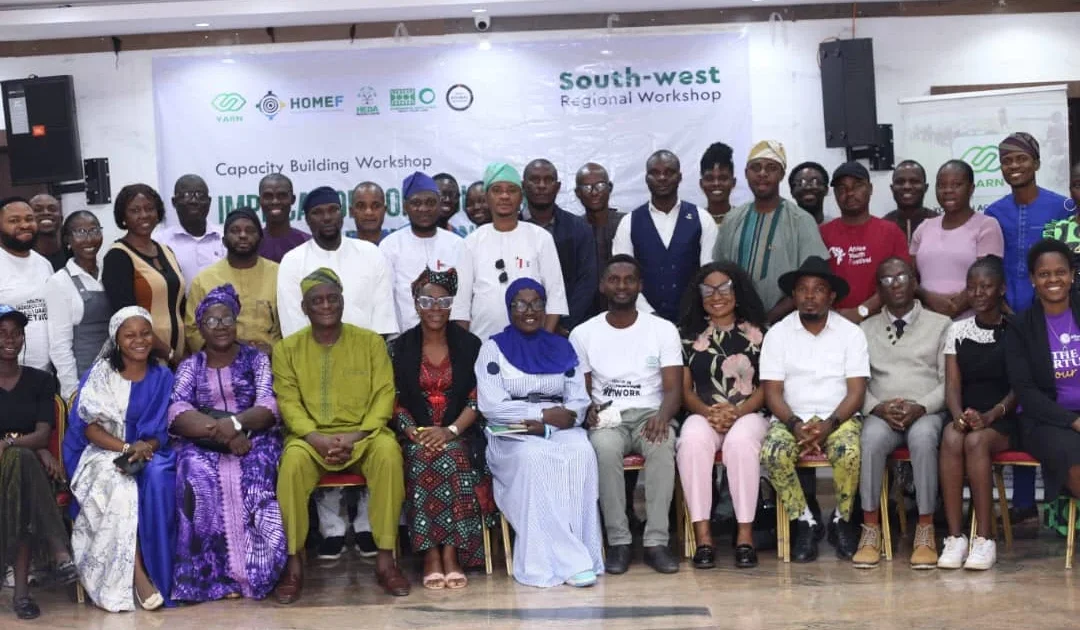
Cross section of participants at the workshop. Photo: Bankole Taiwo
Civil society organisations and other stakeholders have urged the Federal Government to make public the Memorandum of Understanding reportedly signed with Brazilian meat-processing company JBS over its proposed $2.5bn investment in Nigeria.
The stakeholders said access to the agreement was necessary to enable Nigerians to scrutinise its terms and identify possible environmental, economic, health and social risks associated with the proposed establishment of six large-scale industrial animal-farming facilities.
They made the demand on Wednesday at a capacity-building workshop organised by the Youth in Agroecology and Restoration Network for CSOs in the South-West on sustainable alternatives to industrial animal farming in Abeokuta, Ogun State.
Speaking at the event, YARN’s Director of Consultancy, Oluwaseyi Olayemi, said the organisations were not opposed to foreign investment or development but wanted adequate safeguards to protect communities and the environment.
Olayemi said making the MoU available would enable CSOs to examine its provisions and offer recommendations before JBS commenced full operations.
He explained, “When oil first came, we saw it as a blessing. But due to mismanagement and other factors, it turned into the opposite. What we want to do from the inception here is say, if JBS is coming to Nigeria, we aren’t saying they shouldn’t come, but let us guide them so that what we experienced in the oil sector is not repeated.
“Our call to the government remains the same: we are not anti-development, but the government needs to do the needful. Let civil society have access to this MoU so that we know what is in it. If we know what is there, part of this problem will automatically be solved, and it will help us work together with the government.
“We are all Nigerians, after all. It is good for all of us to see what is inside this MoU so that if there is anything we need to rectify or correct now, we can do so before JBS starts operating fully in Nigeria.”
The YARN Director also called for strict enforcement of Nigeria’s environmental and agricultural regulations, saying government agencies must ensure that foreign investors comply with the country’s laws, while outdated regulations should be reviewed where necessary.
Olayemi said access to the MoU would enable CSOs to determine whether adequate provisions had been made for environmental protection, public health and community rights. He said attempts to obtain the document had produced conflicting responses from government authorities.
He alleged that the Federal Ministry of Livestock told the groups that the MoU was domiciled with the states, while officials in Ogun, Niger, Cross River and other states allegedly referred them back to the Federal Government. “It’s just like a puzzle or riddle, so we don’t really understand. And it’s difficult for us to really criticise because we also don’t have the privilege of seeing that MoU,” he said.
Olayemi also expressed concern over alleged developments in Niger State, claiming that some farmers and communities had been displaced and that government assurances had not adequately addressed their concerns. He urged CSOs, smallholder farmers, youths and affected communities to pursue accountability through constructive engagement rather than unnecessary confrontation with the government.
Also speaking, a representative of Advocacy on Conservation Innovation and Green Initiative Concept, Basiru Okanlawon, said the workshop was important because CSOs needed accurate information to educate communities on the implications of the proposed investment.
Okanlawon said Nigeria needed investment for development but should be cautious about projects capable of worsening existing environmental and public health challenges.
He called for a critical assessment of the components of the proposed investment before implementation, noting that stakeholders had been briefed about the agreement but had yet to gain access to the document. “As of today, I’m talking to you, nobody has ever been privileged to see the MoU,” he said.
Okanlawon urged CSOs and other stakeholders to intensify advocacy and use legislative and other institutional channels to secure access to the agreement.
In a communiqué issued at the end of the workshop, participants raised concerns about the potential effects of large-scale industrial livestock production on food-system self-reliance, smallholder farmers and host communities.
They identified possible risks, including land-use conflicts, displacement, waste generation, groundwater contamination, air pollution, biodiversity loss, greenhouse gas emissions, public health concerns and antimicrobial resistance.
The participants called for the promotion of agroecology, regenerative agriculture and farmer-led food systems, as well as diversification of protein sources.
They also urged the Federal and relevant state governments to publicly disclose the JBS MoU and conduct independent and comprehensive Environmental and Social Impact Assessments before approving industrial animal-farming projects.
All rights reserved. This material, and other digital content on this website, may not be reproduced, published, broadcast, rewritten or redistributed in whole or in part without prior express written permission from PUNCH.
Contact: [email protected]