Many AfD supporters believe modern Germany should be proud of its history and focus less on its Nazi past
ByJessica ParkerBerlin correspondent, Reporting fromQuerfurt, Germany
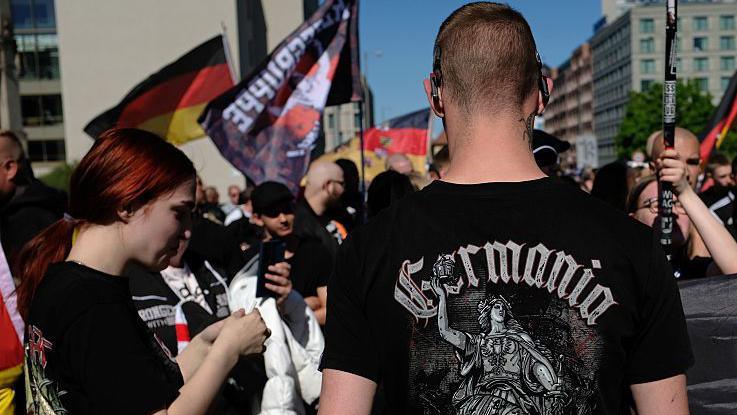
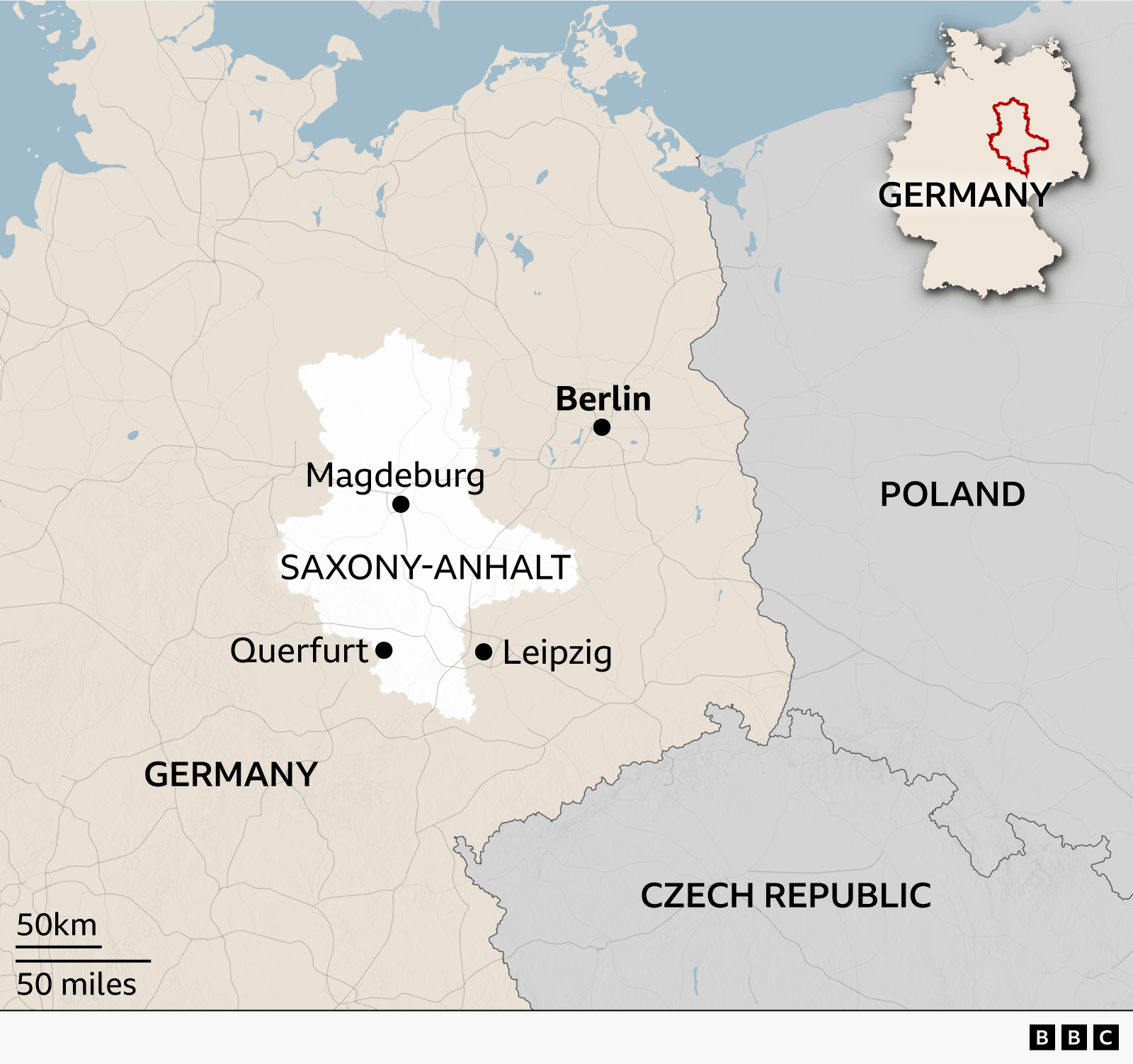
A party that wants to defund “anti-German” art and teach children less about Hitler, as part of a “patriotism” agenda, could soon take power in a German state.
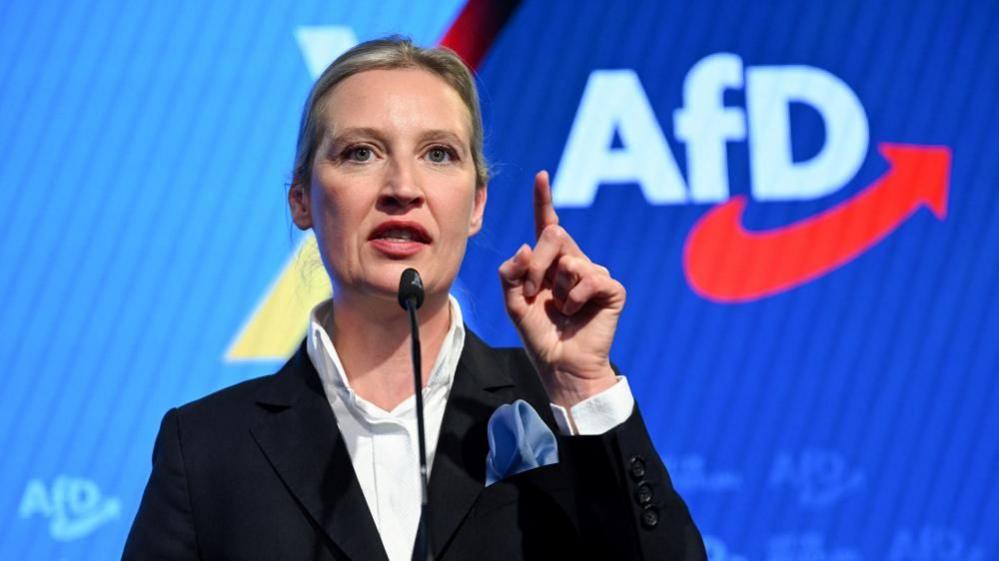
The far-right Alternative für Deutschland party (AfD) is polling way ahead in the eastern region of Saxony-Anhalt before state elections on 6 September.
It describes German memory culture, in its manifesto, as a “guilt complex”.
It is a claim that is deeply divisive in a country where facing up to Nazi crimes has long been seen as the nation’s moral anchor.
At an election rally in the town of Querfurt, 70-year-old Gerd has tacked a small, frayed German flag to the handles of his mobility scooter.
You can’t “wipe away” history, says the AfD supporter, but “the Second World War has nothing to do with us any more”.
Gerd believes it’s important to look both to the future and to a history before the Nazi era, when German-speaking lands were known as a place of “poets and thinkers.”
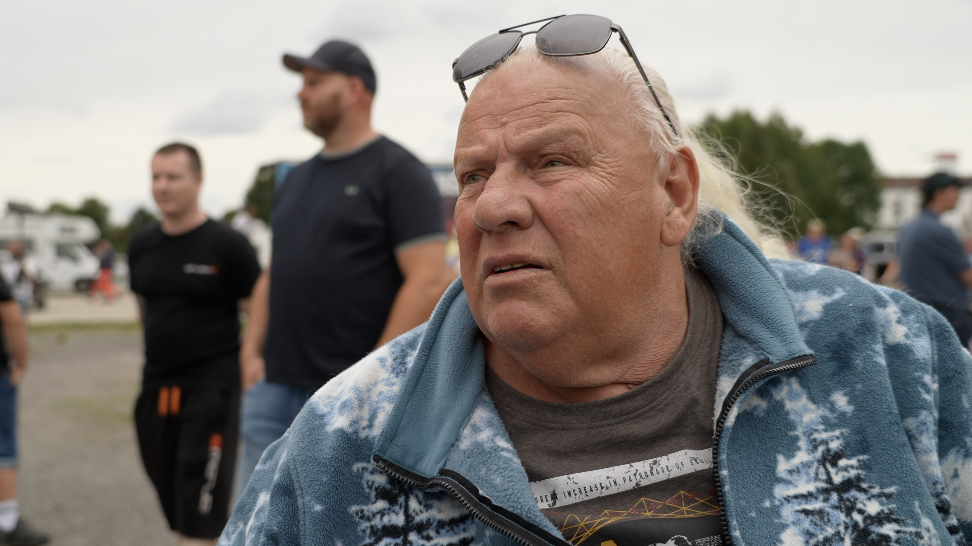
Gerd, an AfD supporter, argues that Germany should be remembered as a country of “poets and thinkers”
The AfD wants to change how German history is taught in Saxony-Anhalt, if it wins power.
It has also pledged to raise the German flag every weekday at public schools and better preserve war memorials to German soldiers.
Other parties won’t go into coalition with the AfD, which is classed as right-wing extremist in several states, including Saxony-Anhalt since 2023.
Domestic intelligence found that the local party branch was anti-democratic and its goals permeated by a “racist ideology”. The AfD generally dismisses these designations as politicised smears.
It is aiming at winning enough votes to take a parliamentary majority in Saxony-Anhalt: a remarkable feat in German politics.
Polling suggests that is possible but by no means inevitable.
If it did pull off that level of victory, the party would take control of services including culture, policing and education.
It is proposing to change the school history curriculum by placing more emphasis on the century that came before the catastrophic conflicts of World War One and Two.
Hans-Thomas Tillschneider, who masterminded the programme, has said there would “of course” still be teaching on National Socialism “but somewhat less so”.
Speaking on an ARD programme last year he summed it up as “More Bismarck, less Hitler”, referring to Otto von Bismarck, the chief architect of German unification in 1871.
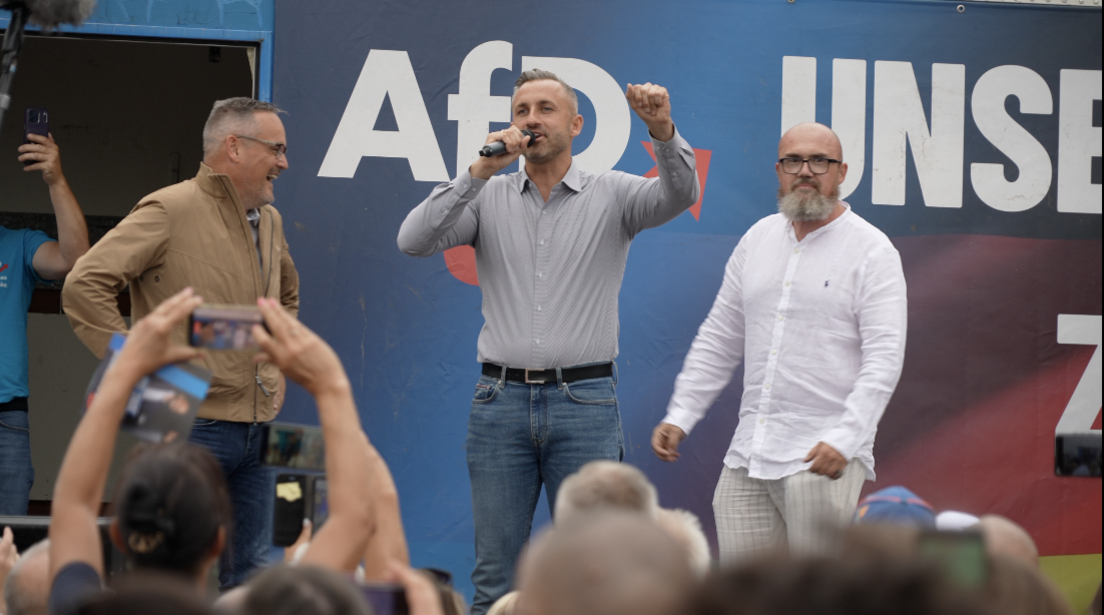
Should the AfD win enough votes in Saxony-Anhalt, Ulrich Siegmund (centre) will become state premier. He has a considerable lead in the polls
Senior figures within the AfD have previously been accused of seeking to downplay the darkest chapter of German history partly, claim its critics, as a way of appealing to its more extremist supporters.
In 2018, former party co-leader Alexander Gauland likened the Nazi era to a “speck of bird poop” while, a year before, Björn Höcke, who leads the party in the state of Thuringia, described Berlin’s Holocaust Memorial as a “Monument of Shame”.
In Saxony-Anhalt, the man who could become the AfD’s first ever state premier, Ulrich Siegmund, defended the party’s patriotism agenda, telling the BBC it was “the most normal thing in the world” for people to be proud of their country.
“We want to get that back,” he said. “We have a diverse history, stretching back many hundreds of years, and we want to teach that history in its entirety, with all its highs and lows but with pride and a positive outlook.”
Siegmund, a 35-year-old former air-freshener salesman, has become an AfD superstar with his energetic campaign-style and savvy use of social media.
In Querfurt, people queued for hours to get a photo or handshake with him as he merrily signed copies of a front-page splash in Der Spiegel magazine that declared him to be Germany’s Most Dangerous Man.
The AfD has consistently rejected allegations of extremism or comparisons to National Socialism.
In 2024 there were renewed calls to ban the party, after it emerged that senior figures – including Ulrich Siegmund – were among those at a gathering attended by Austrian far-right activist, Martin Sellner.
Sellner has a neo-Nazi past that he has since described as a folly of youth.
He is now known for championing the concept of remigration: an increasingly slippery term but one widely understood to mean mass deportations, or the pressured removal of people with a migration background.
The AfD has insisted its “remigration” policy would be lawful and focus on deporting, for example, criminals and those in the country illegally.
When the BBC asked Ulrich Siegmund if he was still in touch with Sellner, he said he had not seen him since the single meeting, which happened in Potsdam just outside Berlin in 2023.
Some critics of the party are clear that the AfD’s plans for Saxony-Anhalt carry echoes of National Socialism, including its pledge to cut financial support for “anti-German” art.
The Nazi regime held a tight grip over all spheres of Germany’s cultural life, most notably displaying works it deemed unacceptable at the “Degenerate Art Exhibition” in 1937.
“How can somebody say it’s not German enough, and what does it mean?” asks Frank Martin Widmaier, director of a local theatre in the town of Eisleben.
Like the majority of theatres in Germany, Widmaier’s playhouse is heavily reliant on state funding. He finds the AfD’s plans both vague and menacing.
“This is playing with Nazi propaganda,” he says. “To threaten people, to threaten the institutions.”
The AfD says that, while the law protects artistic freedom, taxpayer cash should mainly support art that helps cultivate a German identity.
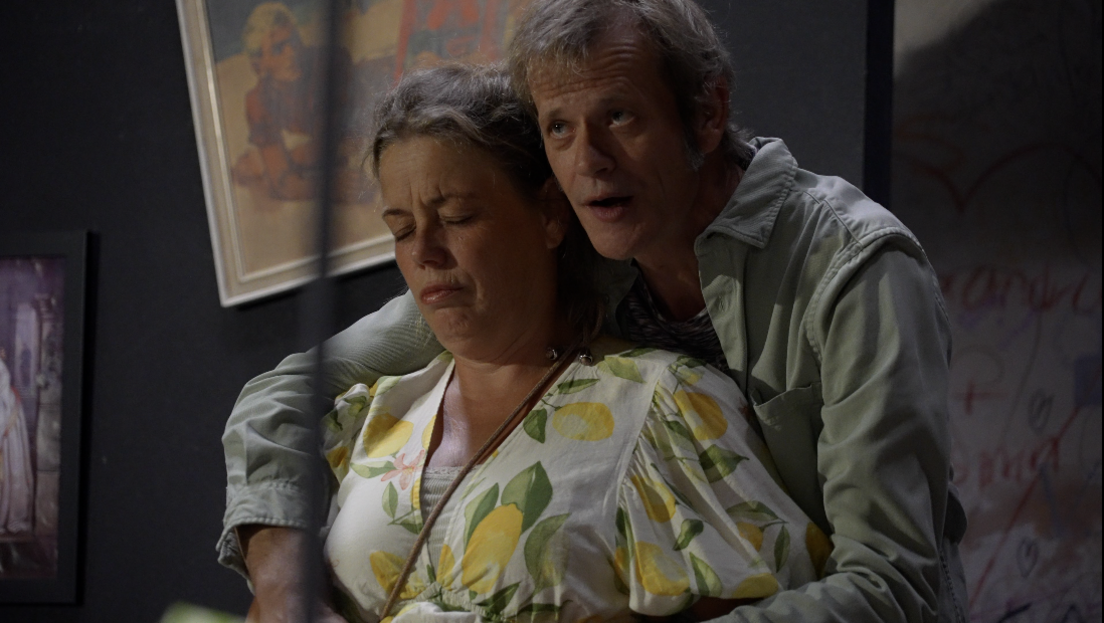
The AfD has pledged to cut financial support for “anti-German” art. Theatres have voiced concern
It is all part of what the AfD promotes as a “patriotic shift” that can help “restore” the country’s self-confidence.
The controversial claim, that Germany’s culture of remembrance – Erinnerungskultur – has created a damaging identity crisis, is not new.
But the AfD’s popularity is breathing new life into the argument, as it tops the polls not just in Saxony-Anhalt but nationwide – albeit with a less dramatic lead at a federal level.
Widmaier rejects the notion that Erinnerungskultur amounts to a guilt complex.
“You don’t have to feel guilty,” he says, especially when talking about the generations who were born after World War Two.
“But you have to deal with all of that to make it never happen again. That’s part of our DNA in Germany.”
The election in Saxony-Anhalt is potentially a watershed moment for Germany, in several ways.
Not least because the formation of an AfD government would mark the first time a far-right party has held significant power in Germany in the post-war period.
It would also be the first real road test of the party’s patriotism agenda which, for its critics, camouflages a dangerous revisionism.