


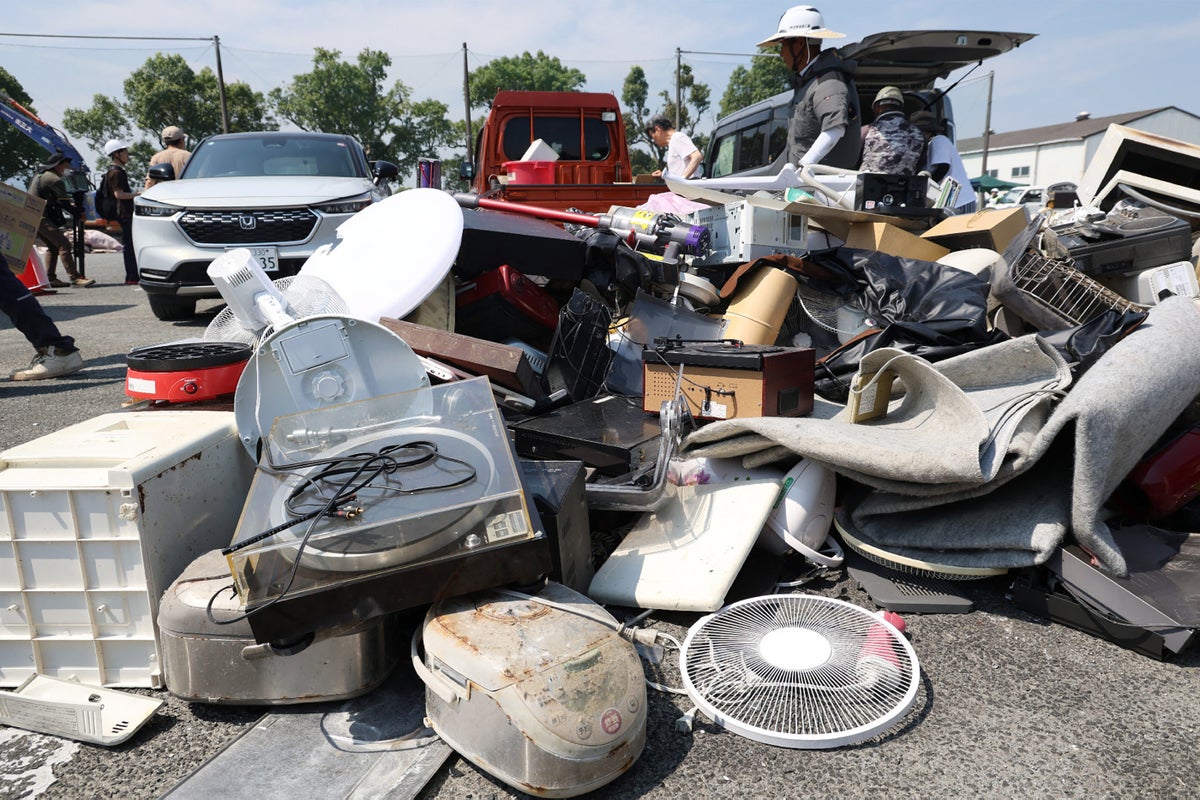
False claims about the earthquake that killed 38 people in Japan have spread on social media, from denials that the tremor occurred at all to fabricated images of the wreckage.
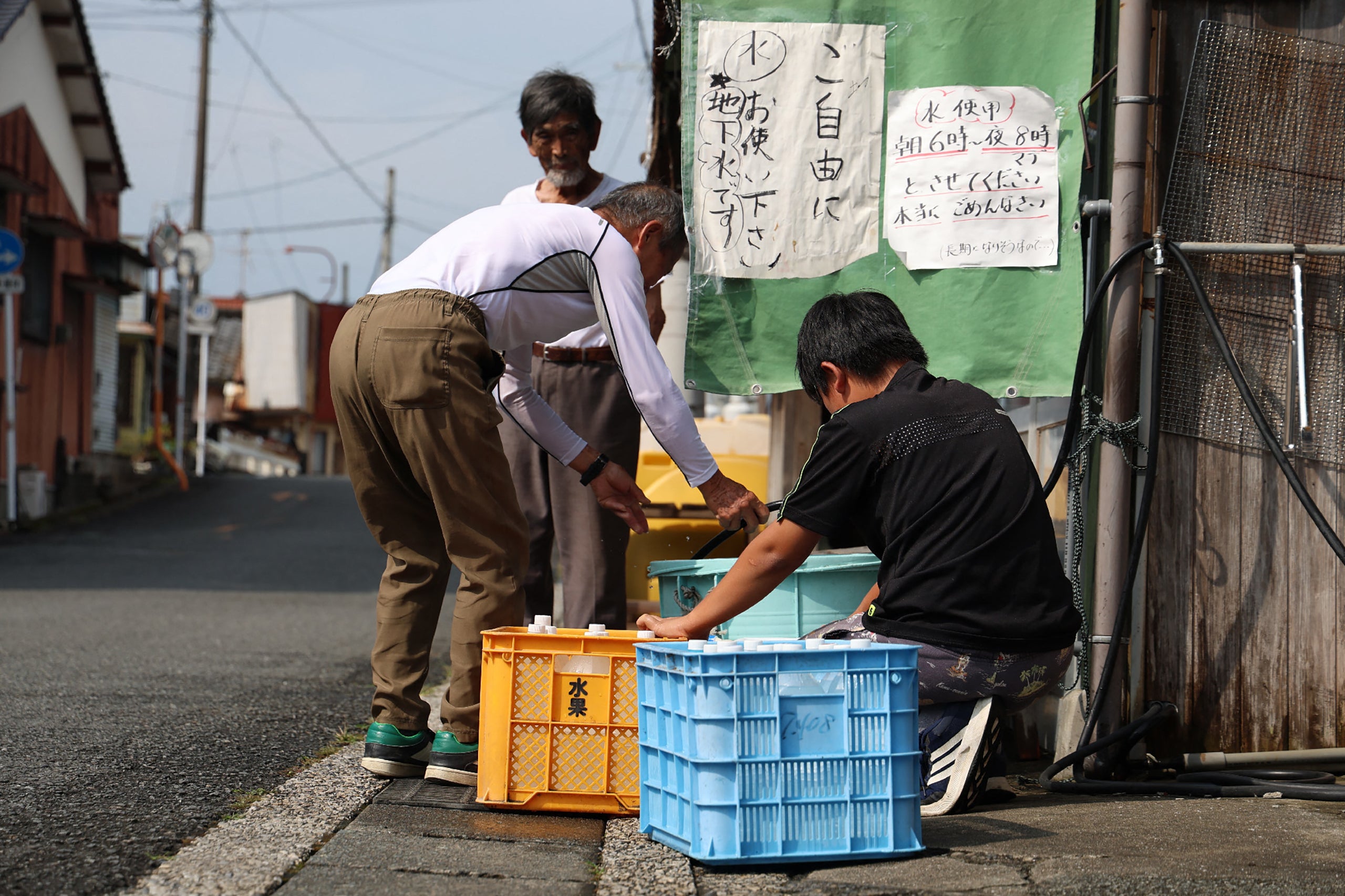
The magnitude-6.8 earthquake hit the southern island of Kyushu in Kumamoto prefecture on 28 July, collapsing a part of a shopping centre in Kashima when thousands of people were inside and prompting the evacuation of nearly 300,000 residents. The prefectural government said on Monday that 38 had died and more than 120 injured.
The main strand of falsehood holds that the earthquake, like many before it, was man-made.
Posts in Japanese referring to an artificial earthquake numbered in the hundreds in the days before the Kyushu tremor struck, according to an analysis by the American monitoring firm Meltwater. They jumped to about 10,000 on the day itself and 38,000 the day after.
Such posts are still appearing daily in the tens of thousands, though many are refuting the claim rather than making it.
One account with a record of spreading false claims about earthquakes wrote in a post viewed about three million times that the reading showed an explosion rather than a tremor.
Claims of manufactured earthquakes have been so widespread that the Seismological Society of Japan, the main body of earthquake scientists in the country, has added a section to its website to address the idea, describing it as unrealistic.
Setting off an explosion at the depth of a real earthquake would mean drilling a shaft 10km down into the ground or deeper, the society noted, which would take a great deal of time and money. Generating the energy required would present further difficulties.
Nuclear tests do register on seismographs but the society said the technology to detonate a device at the bottom of a deep borehole had not been developed. The deepest hole ever drilled, the Kola Superdeep Borehole in the Soviet Union, reached about 12.3km after roughly 20 years of work.
Some posters denied that the quake had happened, dismissing shaky footage broadcast by NHK, the public broadcaster, as fake, according to the Japan Times, which examined the material circulating in Japanese and other languages.
AI images showing the Aeon mall in flames were distributed while other widely shared posts said the explosion there, reportedly caused by damaged gas pipes, was staged or was being covered up.
Much of the politically motivated content targeted foreigners, the newspaper found.
Far-right posters described as pro-immigration propaganda the widely reported account of young Vietnamese residents helping free an elderly woman trapped under rubble.
Other users accused foreigners of robbery and arson, circulating a video of people sitting outside a convenience store eating rice balls that they alleged had been stolen.
The man who filmed the video said on Threads that the food had been emergency supplies handed out to Japanese and foreign workers alike.
He said he had taken the video down and asked others to stop sharing it, and reported it to police.
He wrote that he had learned a great deal from the experience of seeing his footage repurposed to push anti-immigration sentiment.
Taiwan’s offer of help also drew false claims, according to the Japan Times. Images said to show a badge worn by Taiwanese rescue teams on the ground in Kumamoto were shared widely by influencers on Instagram and X, but the paper found the patches were pre-order items sold online by a Taiwanese company, which said it was donating the proceeds to a Japanese foreign ministry relief account for Kumamoto.
The Japan Fact-check Centre, a non-profit that examines claims circulating online, says such theories are spread both by people who believe them and by people who know they are false, and that the way social media platforms pay users for engagement encourages the traffic, according to Kyodo News.
“When you encounter conspicuous information,” the centre’s editor-in-chief, Daisuke Furuta, told Yomiuri Shimbun, “judge its authenticity by referring to official information from public and media organisations.”
In April 2016, after earthquakes killed 277 people in Japan, a false report claiming a lion had escaped from a zoo circulated widely and a 20-year-old man was arrested for it, though charges were dropped after he apologised. A version of the same claim reappeared last week.