


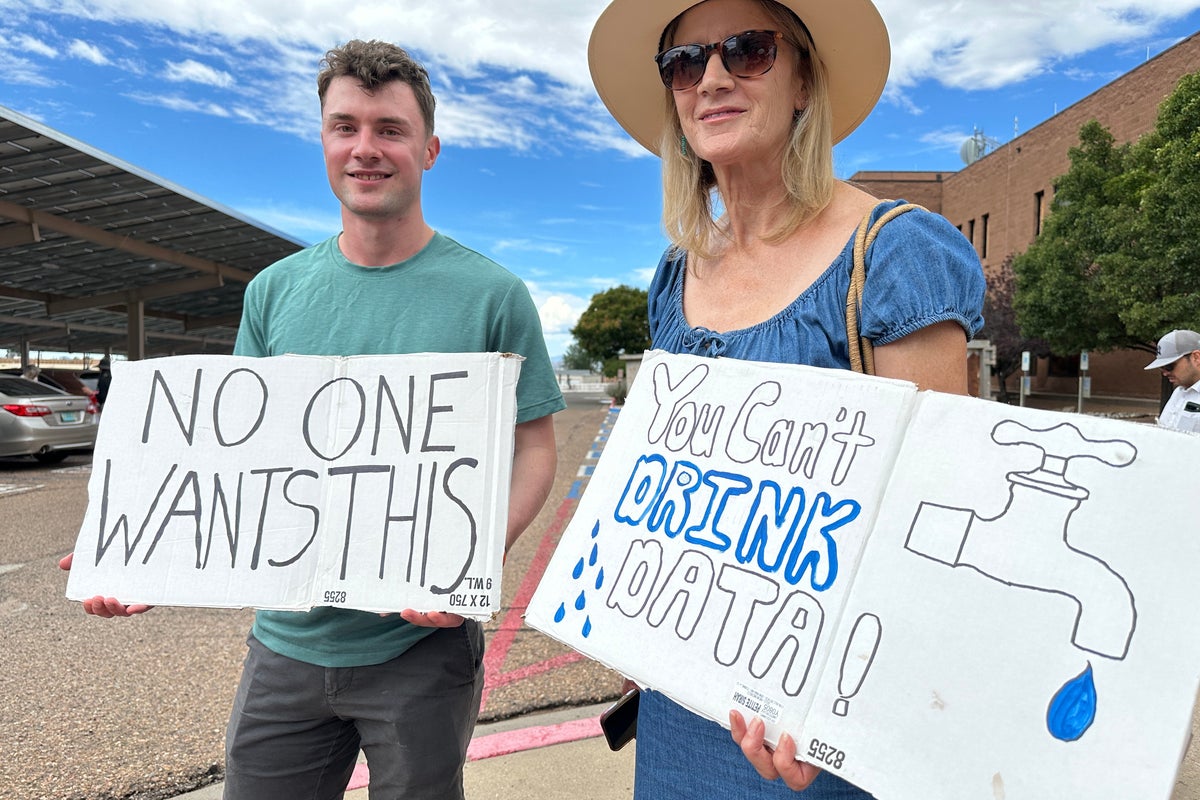
Some Americans who oppose data centers being built in their communities have learned you can fight city hall — but the battle will wind up in court.
Three cities in Kansas filed lawsuits against their own residents over petitions seeking to ban the controversial Big Tech facilities, according to recent reports.
One defendant, Kimberly Twente of Edgerton, Kansas — which sits about 35 miles southwest of Kansas City, with a population of about 1,924 — called her local government’s move a “scare tactic,” especially the legal demand for “costs, interest and other charges allowable by law.” They were some of the people who signed a petition calling for the centers to be banned and for the entire city to vote on an ordinance.
However, city officials filed suit to stop the measure from appearing on a ballot.
“I don’t think anyone was expecting citizens to personally be held liable to a civil lawsuit, which is the bullying and retaliation,” Twente told The Topeka Capital-Journal.
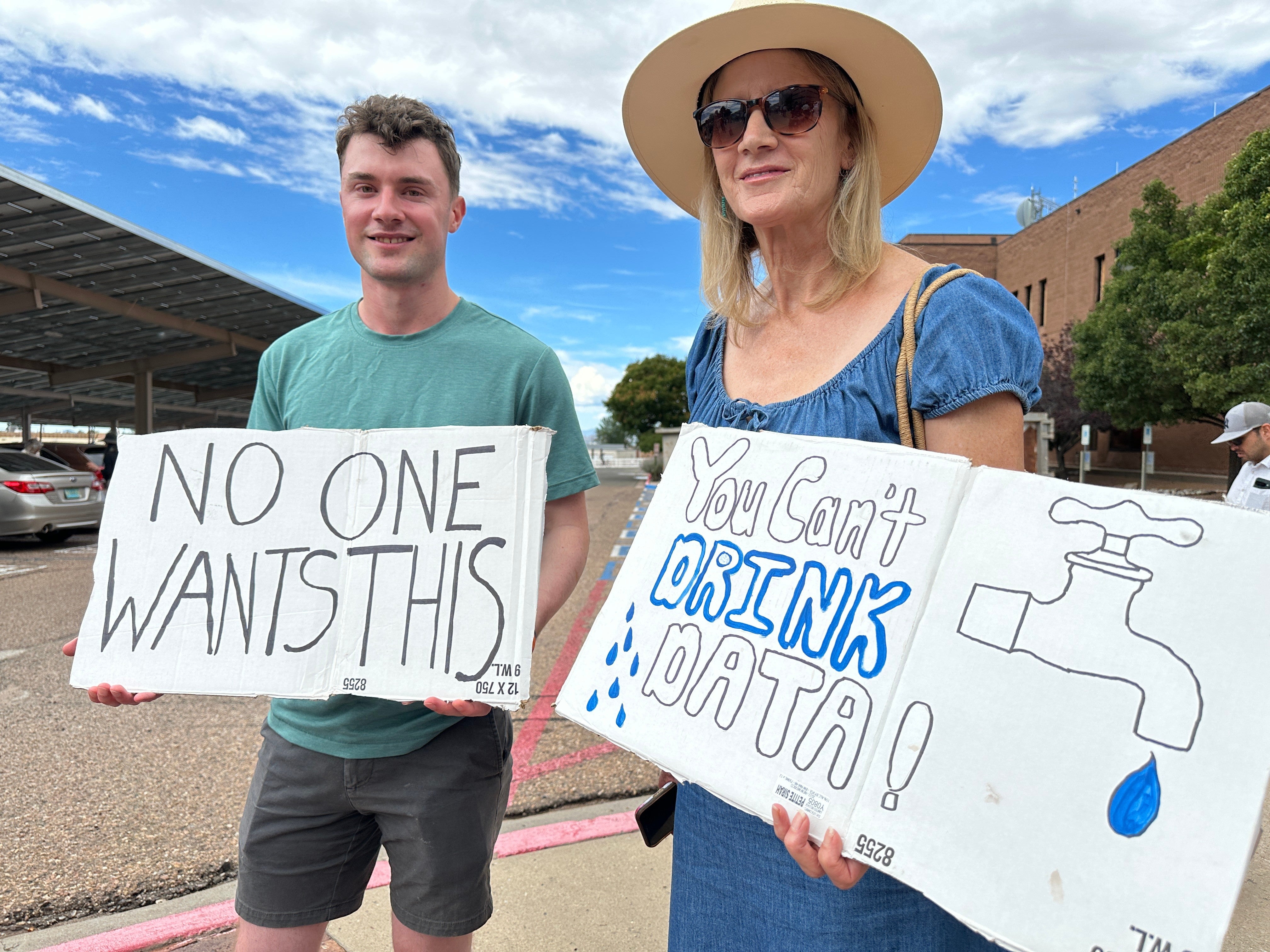
The larger cities of El Dorado and Emporia — both located between Topeka and Wichita, with populations of about 12,780 and 24,137, respectively — also sued their residents for filing petitions under terms of a state law that requires cities to pass ordinances demanded by the signers or let local voters decide.
 open image in gallery
Spokespersons for all three cities didn’t directly respond to inquiries from The Independent about suing their citizens, but an Edgerton government spokesperson said a hearing in the case was set for Thursday.
The Edgerton spokesperson also pointed to a prepared statement on the city’s website, where City Attorney Todd Luckman officials were asking a judge to decide “whether the proposed ordinance can legally proceed to a vote.”
Luckman said that “Kansas law requires that people whose interests would be affected by the decision must be named…and we wanted to make sure they were notified and involved in that process.”
Luckman also said there was “some statutory language about court costs in the filing, but that’s standard and we don’t expect the court would order those costs anyway.”
An El Dorado spokesperson also referred The Independent to a statement on the city’s website, which says that the City Commission had approved a November ballot question about banning data centers in response to a court ruling that sided with the petition organizers.
 open image in gallery
An Emporia spokesperson told The Independent only that the matter “remains pending before the court.”
Twente, one of three defendants named in the lawsuit filed by Edgeron, said the issue was “much bigger” than her legal battle.
“This fight is about every other city or township that has to go through something like this,” she told the Capital-Journal.
Troy Harp, who lives in Osowatomie — about 60 miles southwest of Kansas City, with an estimated population of 4,182 — became an anti-data-center activist earlier this year after a neighbor told him one was proposed nearby.
“We’re not against progress and development, but we’re against something that’s going to ruin this town forever, in my opinion,” he told TV station KMBC in May.
 open image in gallery
The multibillion-dollar proposal, called Project Catalyst, would cover 283 acres and offer the promise of potentially eliminating local property taxes in a city that’s been starved of revenue since the Missouri Pacific Railroad relocated to Kansas City in the late 1950s, according to The Kansas City Star.
Harp said his son, Thomas, who’s in medical school, helped him draft a petition to ban high-impact data centers to “prevent the structural collapse of public utility infrastructure, preserve the water and energy municipal rights of citizens, and protect the lives and safety of the citizens of Osawatomie.”
In response to an inquiry from The Independent, Osawatomie City Manager Bret Glendening said Monday, “The current status of the petition is: the form of the petition was approved. The subject matter was not. The county clerk verified the requisite number of signatures.”
“What the city plans to do going forward is covered by attorney-client privilege,” he added.
Harp told the Capital-Journal that he shared his petition with other data center opponents, including those in the three cities that sued their residents for filing petitions.
Harp said he wasn’t surprised by the lawsuits, saying that “when you’re trying to stop [a] $1, $2, $3 or $4 billion project, you’re not going to make people happy.”
“But the problem is that people in this community should have a voice when it comes to something of this magnitude,” he added.