


AdvertisementScienceChinaScience
Chinese scientists find some Yangtze flood controls may do more harm than good
By compressing rivers and stripping away natural defences, human engineering may be worsening flood impacts, prompting a global rethink
3-MIN READ3-MIN Listen
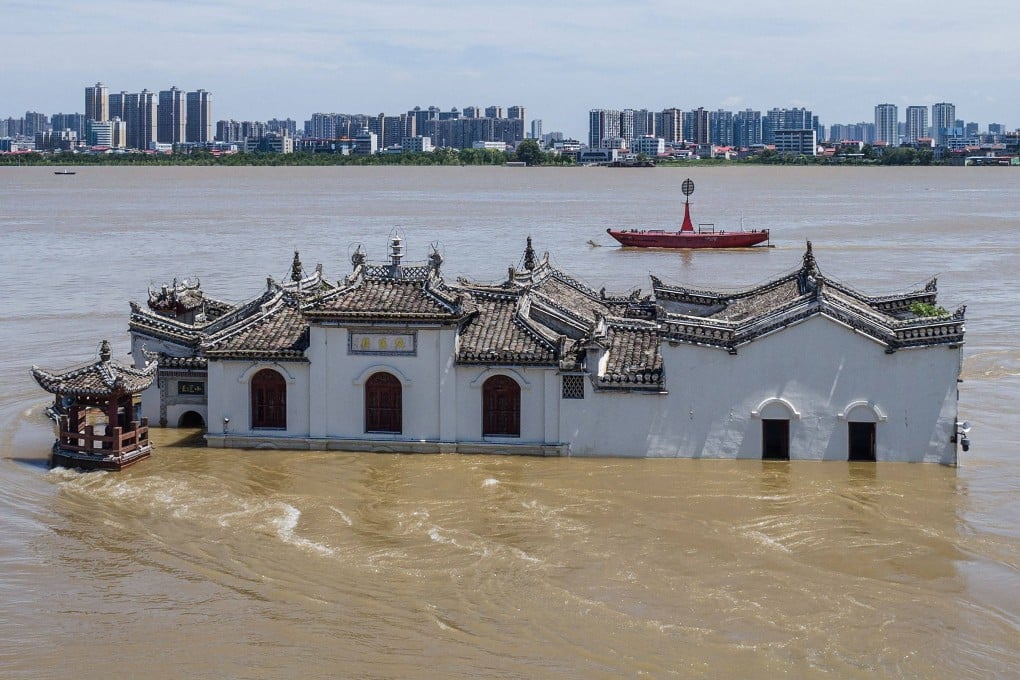
Holly ChikPublished: 12:00pm, 8 Aug 2026For centuries, the Yangtze River has been China’s vital lifeblood, yet its floods have claimed countless lives. To tame its waters, flood-control systems have evolved from ancient dykes to the engineering marvel of the Three Gorges Dam.
But a new study has uncovered a paradox: some human interventions may have inadvertently worsened the very flood risks they were built to mitigate.
“We show that flood frequency peaked during the Little Ice Age [1500−1850] … and that human interventions, particularly embankments and lake reclamation, amplified climate-driven flood magnitudes,” a group of scientists in China and Europe wrote in a paper published on Monday in the Proceedings of the National Academy of Sciences of the United States of America.
The team reconstructed 500 years of Yangtze River flood variability since 1500 using lake sediment archives, historical documents and high-resolution climate reanalysis data.
They found that while climate remains the primary driver of flood occurrence, human interventions on the Yangtze River actually intensified climate-induced flood risks, rather than mitigating them.
Their analysis showed that constructing embankments and lake enclosures for agricultural use amplified the magnitude of 100-year floods, which have a 1 per cent chance of happening in any year, by 18 and 8 per cent respectively.
AdvertisementSelect VoiceSelect Speed00:0000:001.00x