


A new solar power breakthrough in China has improved the efficiency of desalination using sunlight, an advance that could lead to the drinking water production from seawater becoming cheaper than bottled water.
Amid a global freshwater shortage, water treatment and reuse has become essential, but the technology behind it still heavily relies on fossil fuels, making it unfeasible for harsh regions.
While solar thermal evaporation is a promising method to treat water in such areas, its application has been limited by inefficiency and production constraints.
Now, scientists from the Chinese Academy of Sciences have developed a new three-dimensional (3D) structure that significantly improves the efficiency of this technology to convert seawater to drinking water.
 open image in gallery
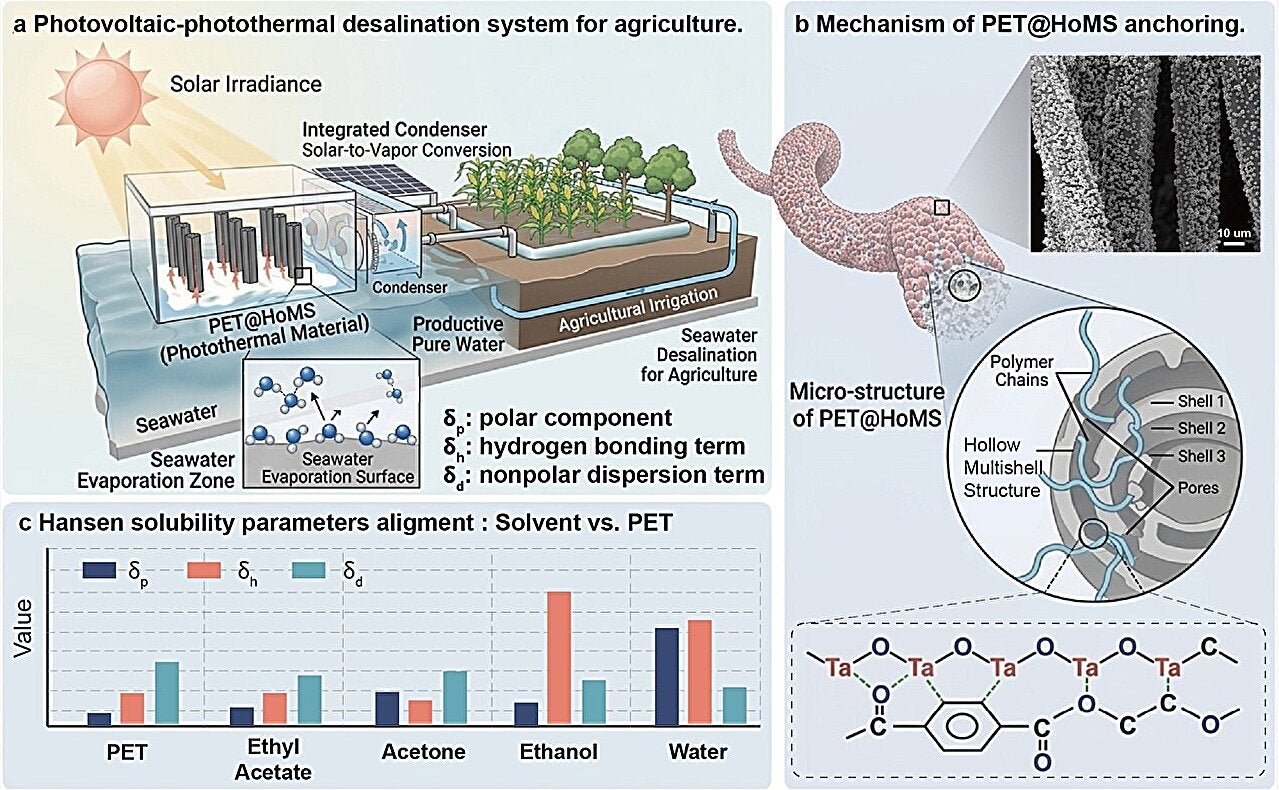
The structure contains tightly linked polymer chains with hollow shelled structures that provide a record evaporation 8.5 times higher than rates previously reported for the technology.
This unique structure maximises sunlight capture and decreases the energy consumption for evaporation by nearly 50 per cent, scientists say.
“This structure exhibits 90.2 per cent broadband solar absorption and reduces the energy consumption of evaporation by 45.7 per cent,” scientists wrote in the study published in the journal Advanced Materials.
 open image in gallery
Tests also showed that the materials used had good durability and reliability during long-term use.
“The excellent photothermal conversion and water transport capacity deliver such outstanding evaporation performance,” said Wang Dan, one of the authors of the study.
Researchers then built a real-world outdoor desalination device with the material.
 open image in gallery
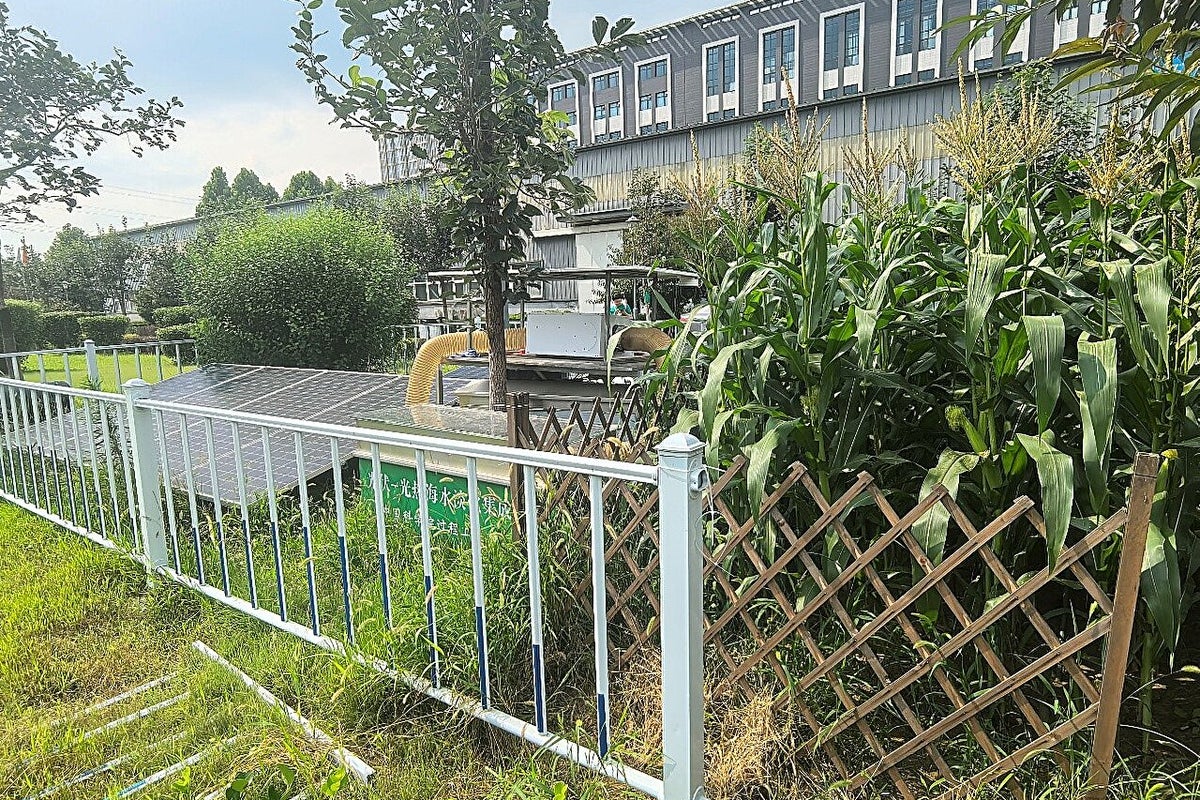
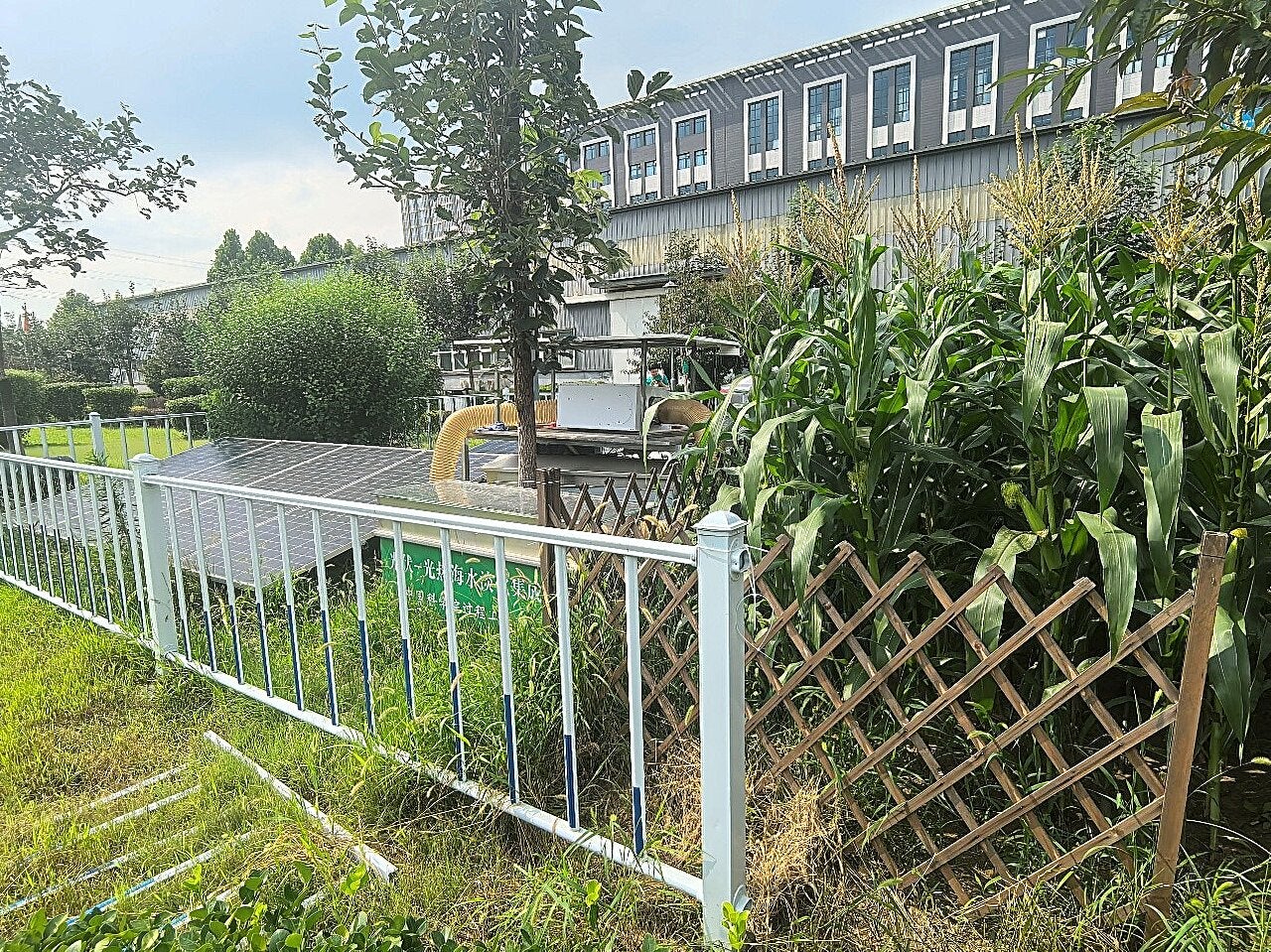
Under natural sunlight, the system produced 20l (5.33gal) of freshwater per day, with water quality meeting World Health Organization drinking water standards.
The small set up taking up only about 0.75sqm could produce enough water to satisfy the basic daily drinking needs of about 10 people, scientists noted.
Desalinated water from the device was also successfully used to irrigate a small field.
“The produced water successfully supported the full-growth cycles of various crops in a five square metre demonstration plot with lower cost,” scientists wrote.
 open image in gallery
The water from the set up enabled the full growth cycle of spinach, corn and Chinese cabbage, hinting that the technology could support agricultural irrigation in water-scarce regions.
Researchers estimate that after two years of operation, the cost of water produced by this technology would be lower than that of commercial bottled water.
They hope the new material may offer a practical solution for sustainable freshwater production in regions facing water shortages.