


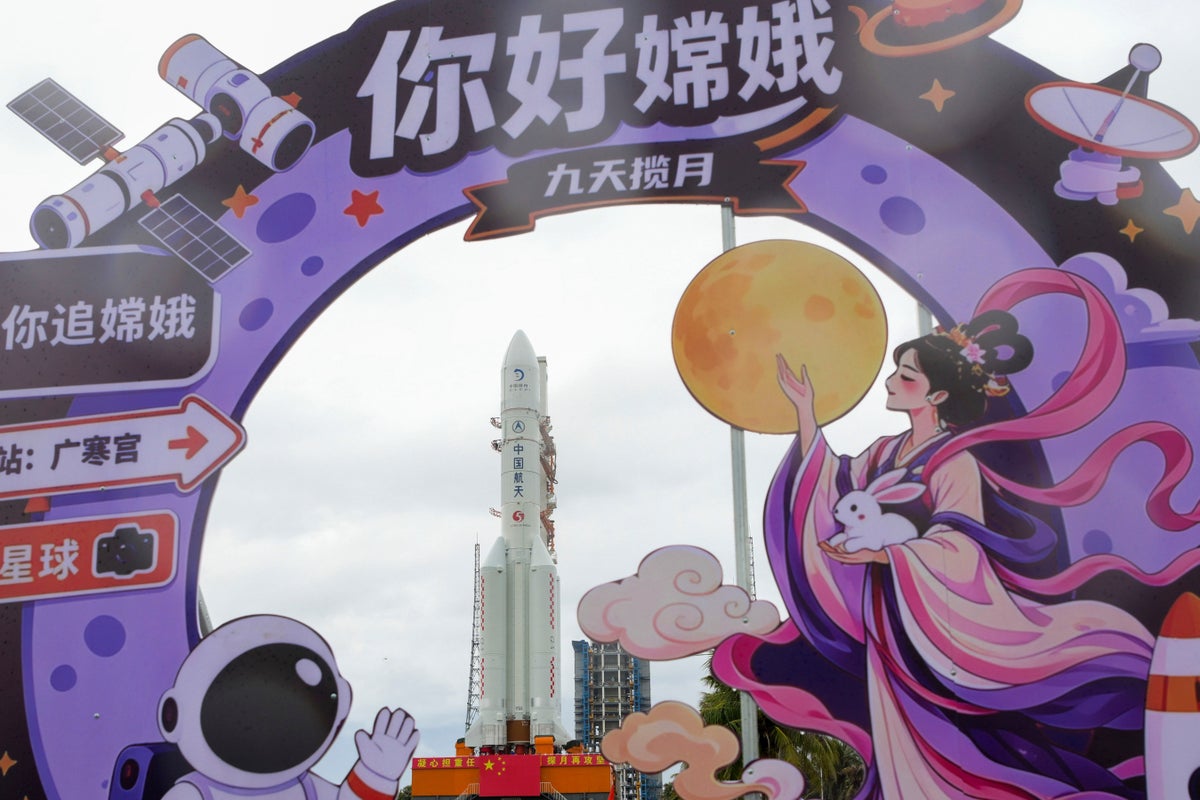
China has abruptly postponed its Chang’e-7 lunar mission, an ambitious plan to explore the Moon’s surface including a search for water rice.
It was set to explore permanently shadowed craters on the moon and conduct environmental and resource surveys of the lunar south pole, the Xinhua report said, citing the space agency.
Chang’e refers to a Chinese moon goddess. The Chang’e-6 probe returned to Earth in 2024 with rock and soil samples from the far side of the moon in a world first.
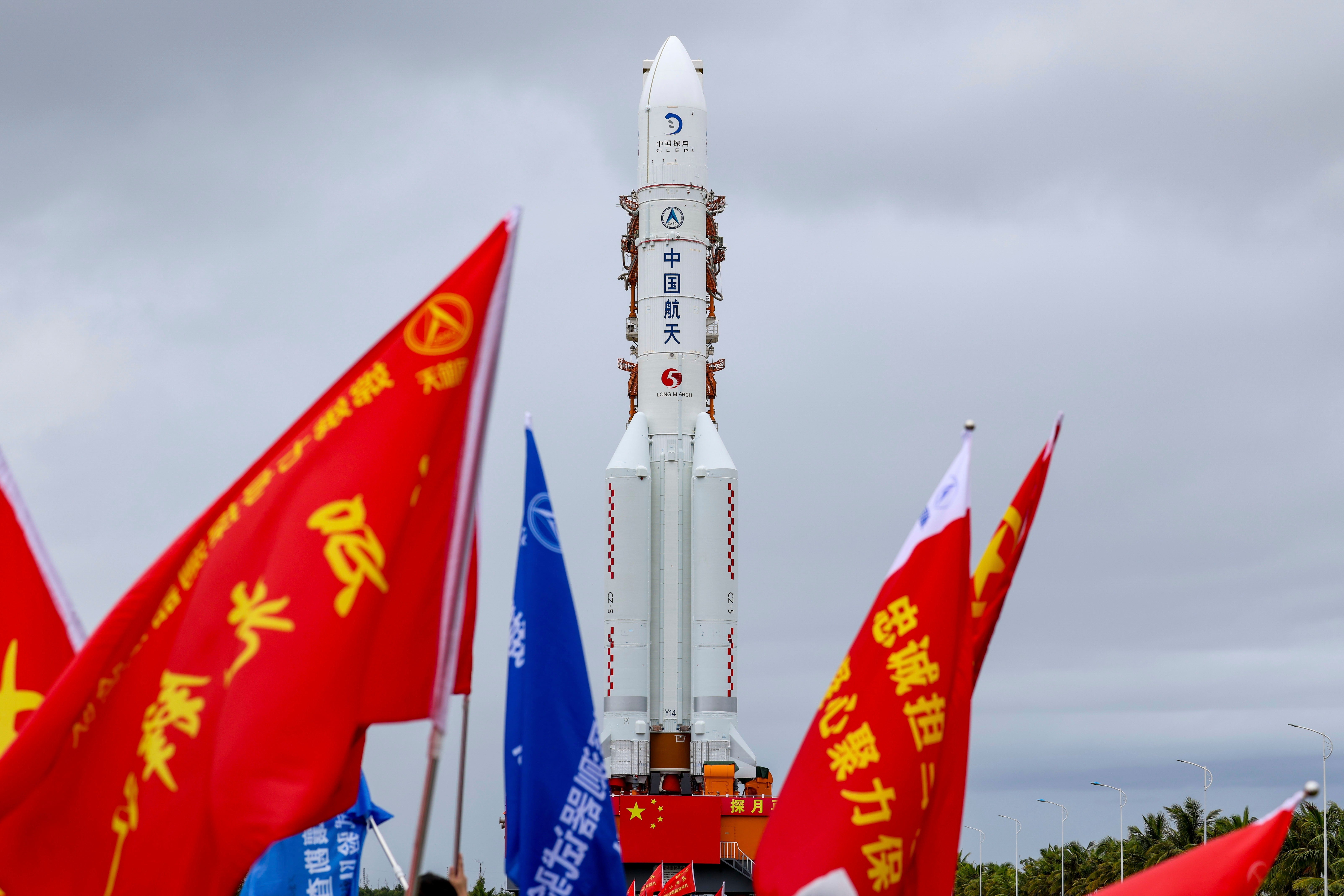
The Chang’e-7 spacecraft was originally set to lift off in the coming days from the Wenchang Space Launch Site on China’s southern Hainan island.
 open image in gallery
The mission does not meet the launch conditions, said the China Manned Space Agency in a brief statement, and “cannot take place during the planned window this year.”
The decision was made following a “comprehensive assessment,” the agency added, and was based on the principles of “prudence, reliability and absolute mission success.” It did not further elaborate on the reasons behind the decision.
Preparations have been carried out at the Wenchang launch site for the Chang’e-7 mission over the past weeks, the seventh in the Chang’e moon exploration program. It aimed at making breakthroughs in key technologies, the official Xinhua news agency previously reported.
China has sent a number of spacecraft to the Moon, starting with the first Chang’e in 2007 and its first lander, Yutu, in 2013. The Chinese lunar exploration programme has also led to the first landing on the Moon’s far side, in 2019, and the first return of samples from the Moon’s surface to Earth the following year.
As with other space agencies such as Nasa, China’s ultimate plan is to work towards more permanent habitats on the Moon. In 2031, China hopes to build a habitat either on the surface or in orbit, in collaboration with other countries including Russia.
It is competing with Nasa’s Artemis programme, which aims to put people back on the Moon in 2028. The space agencies hope that landing and living on the Moon will provide better ways of doing science and other research on the lunar surface – as well as eventually serving as a stop off on the way to Mars.